
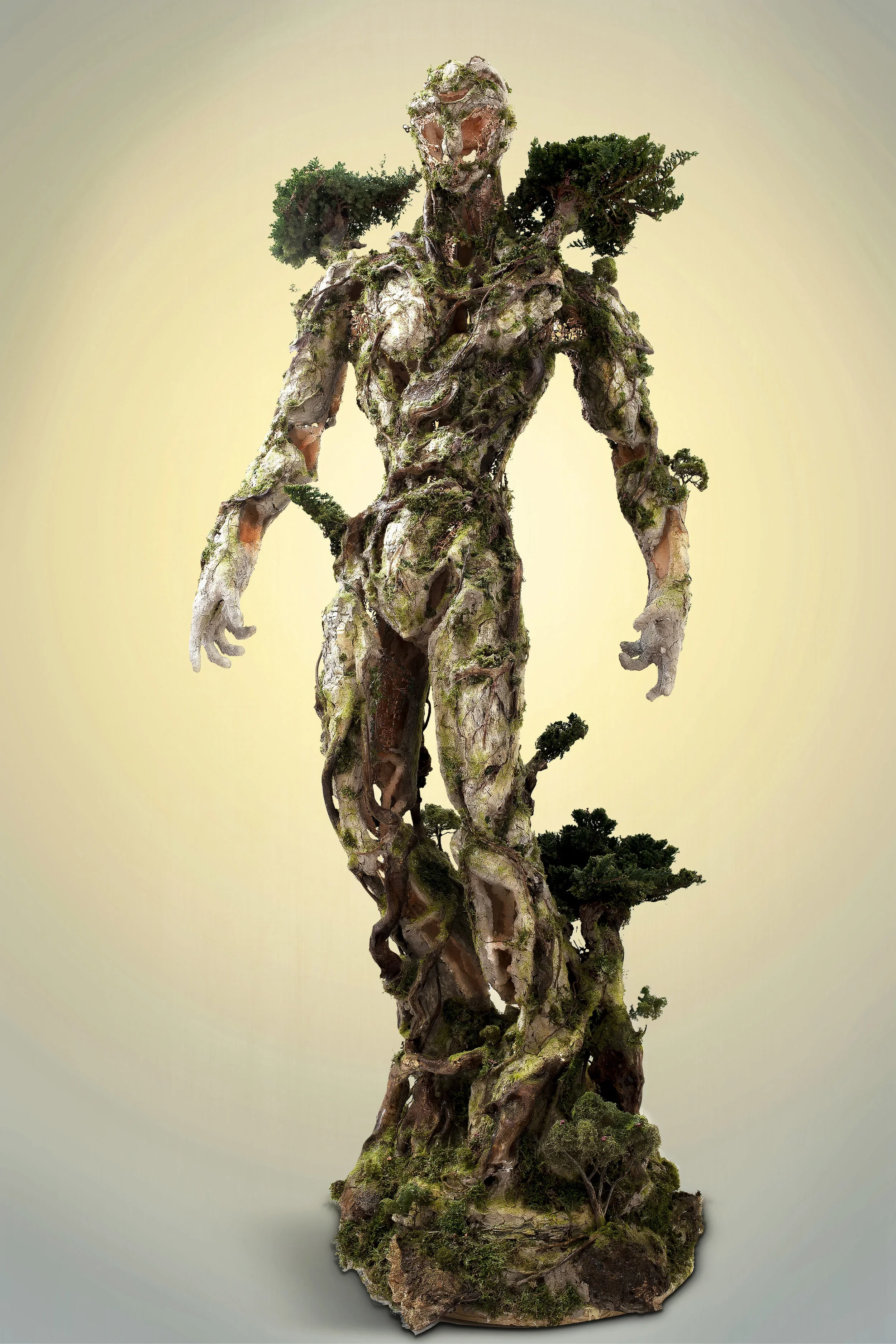
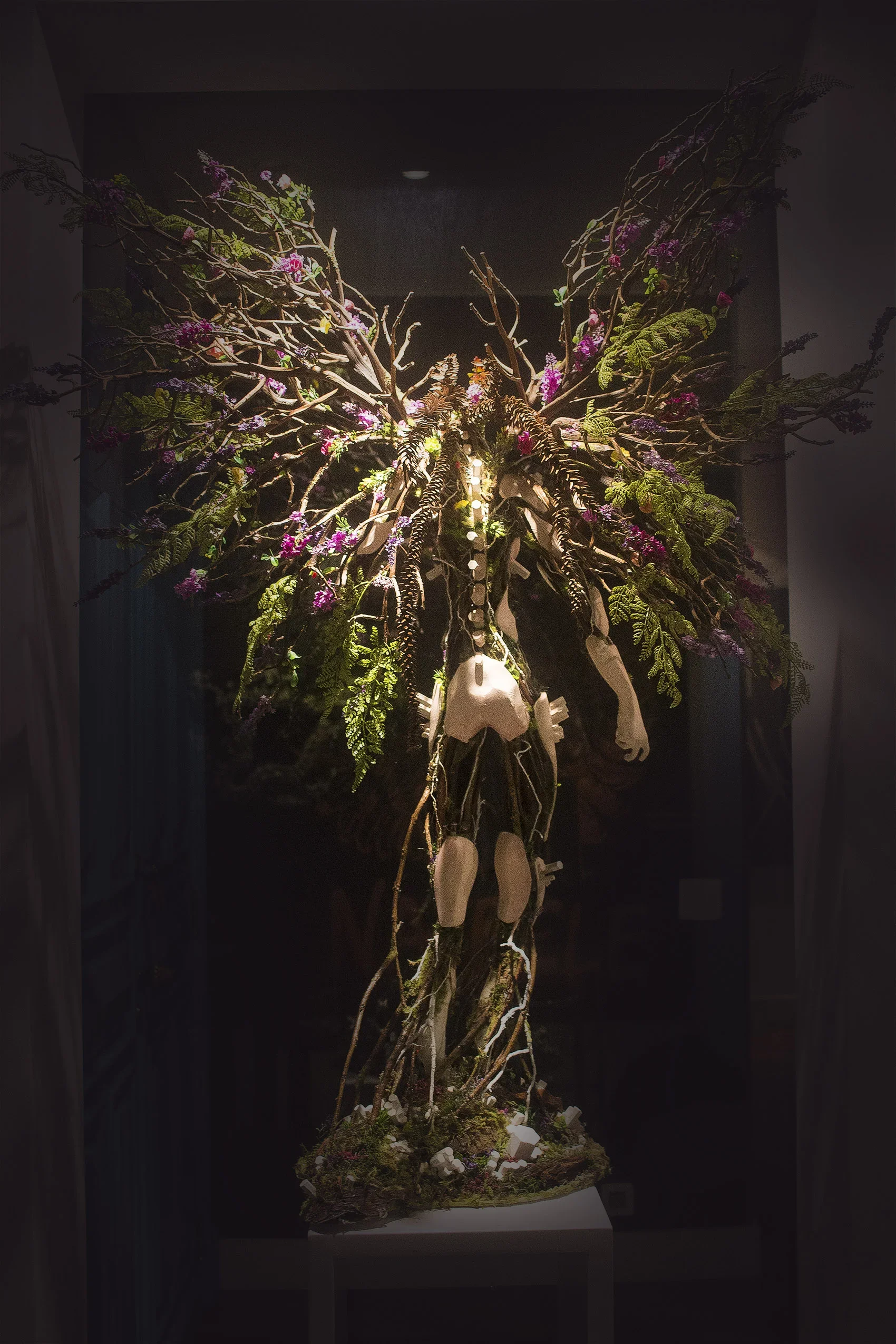
Golemecha
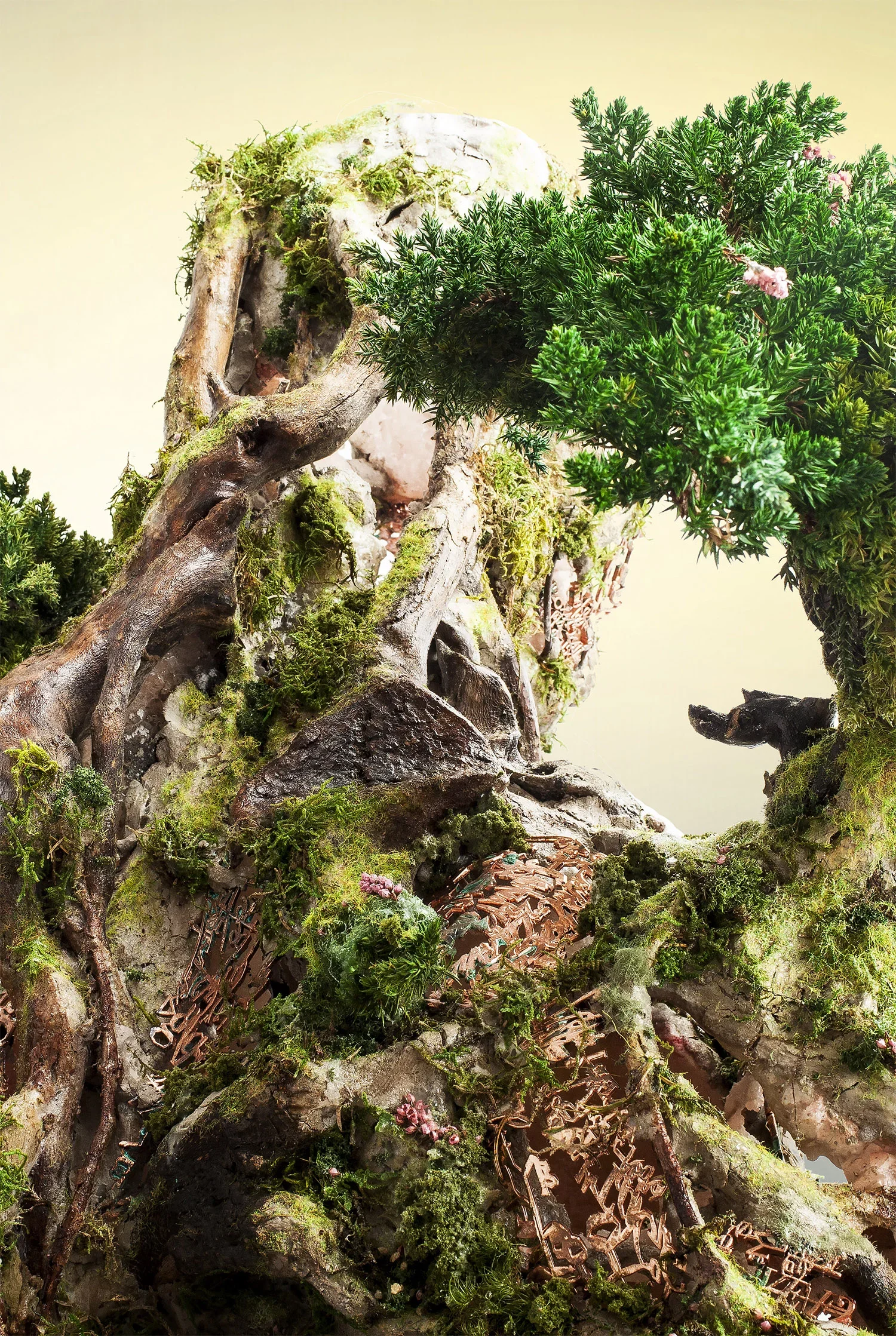
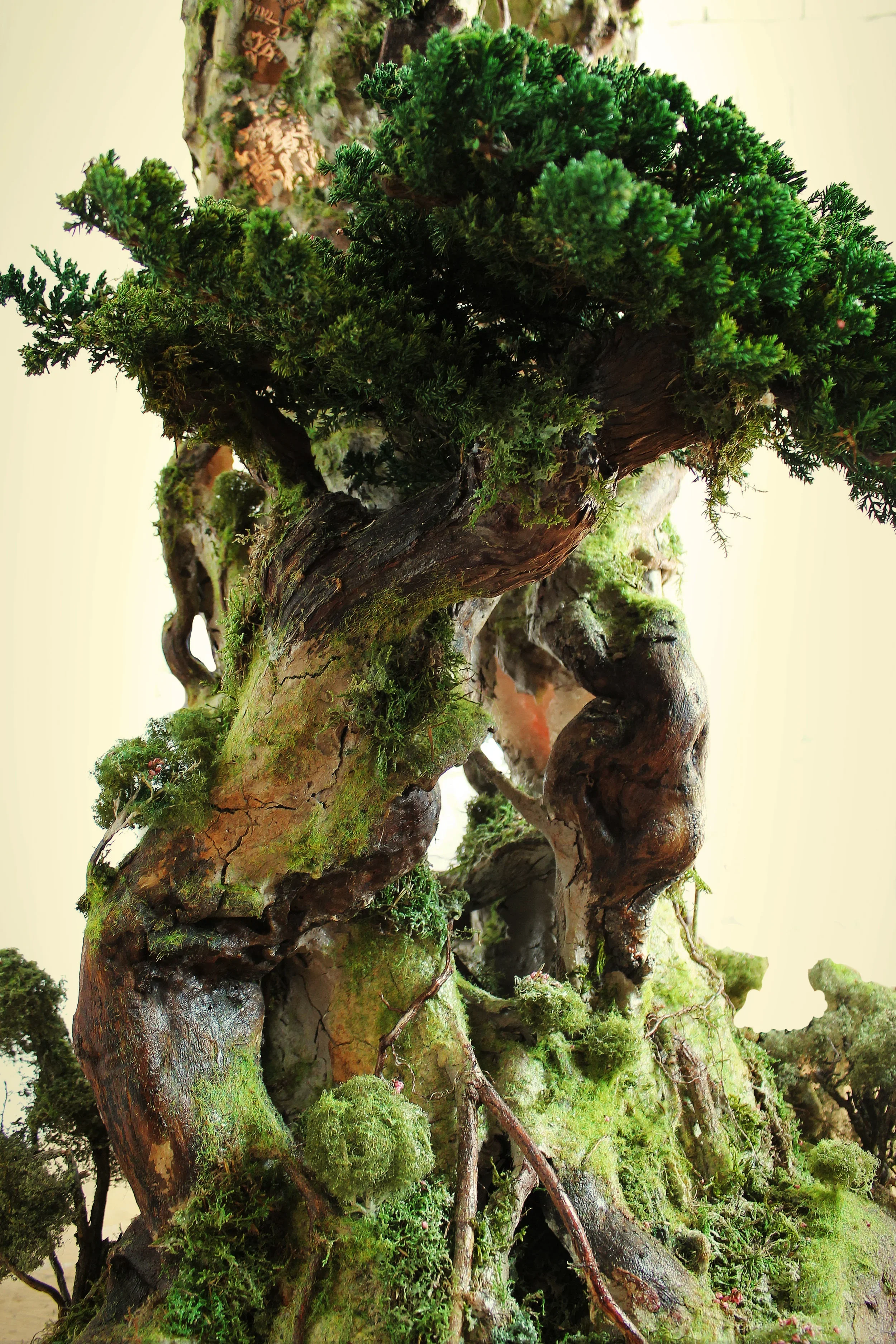
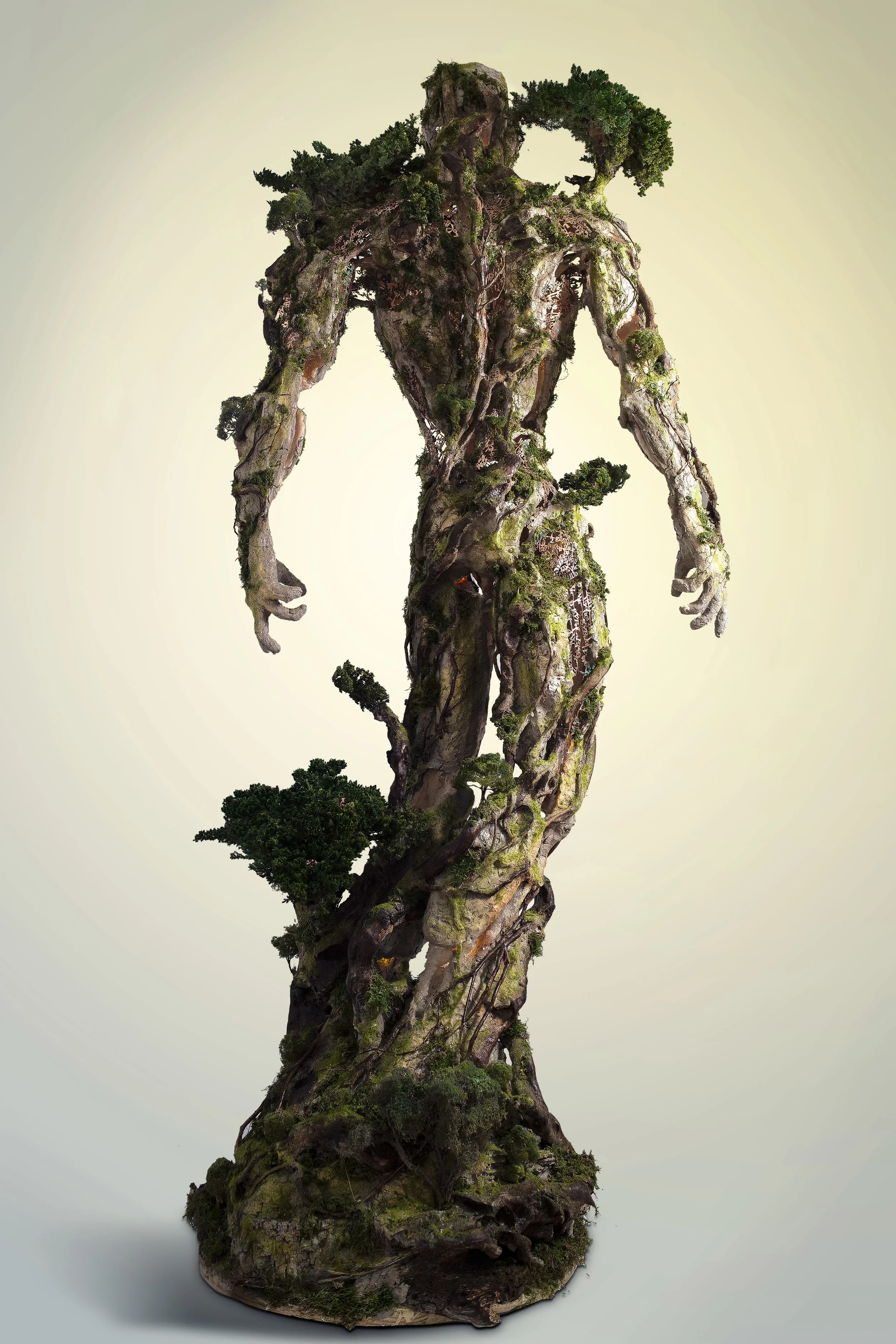
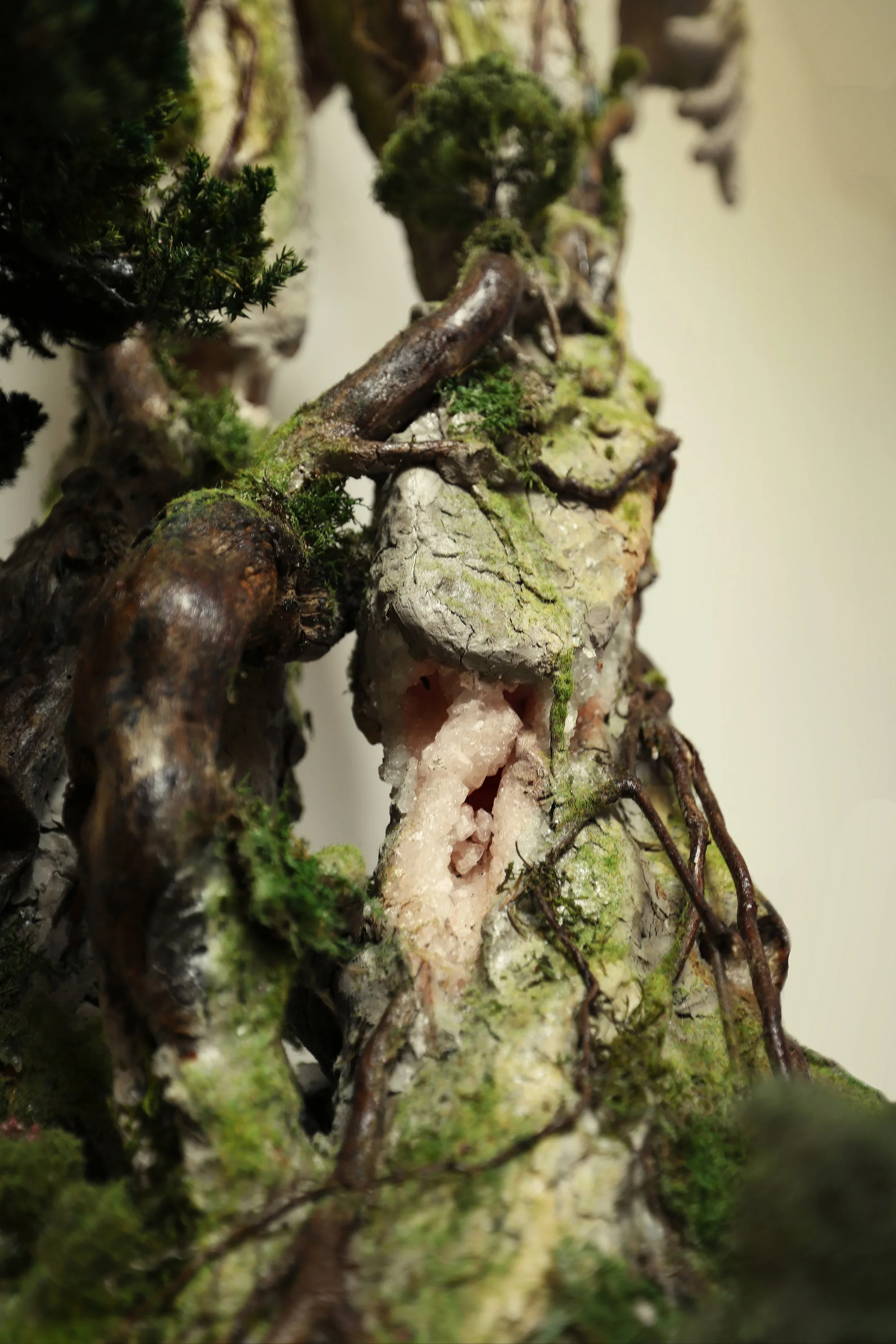
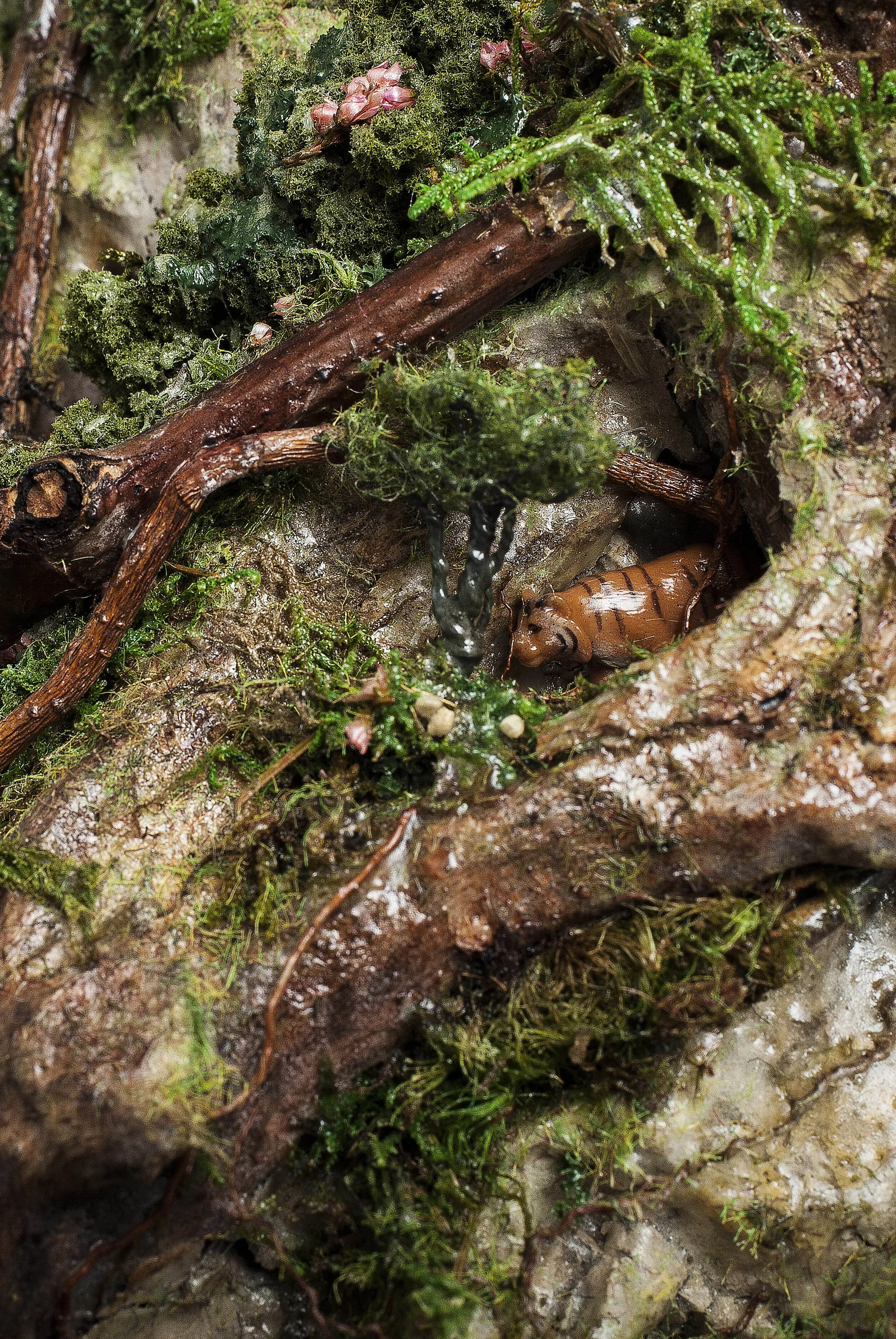
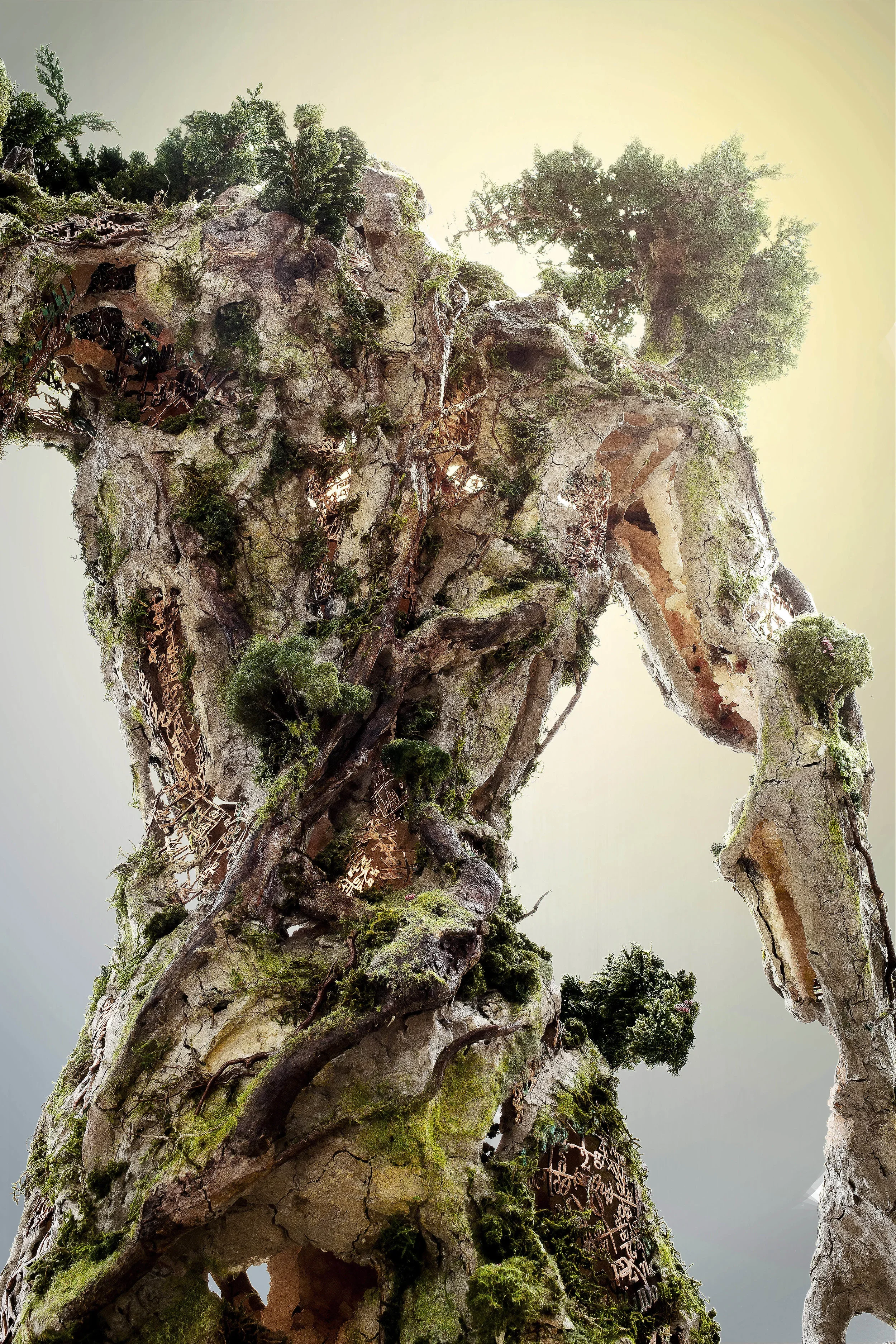
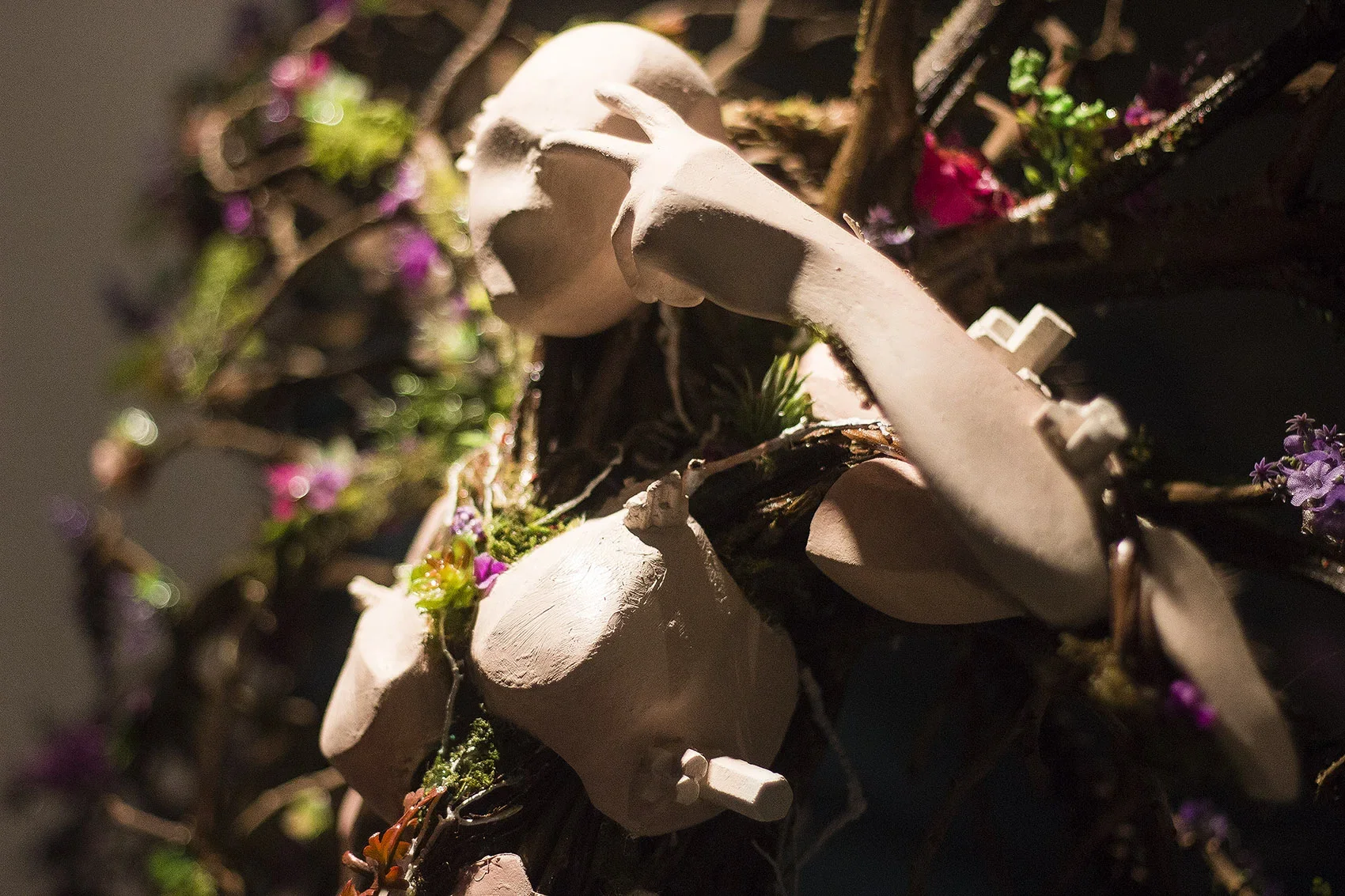
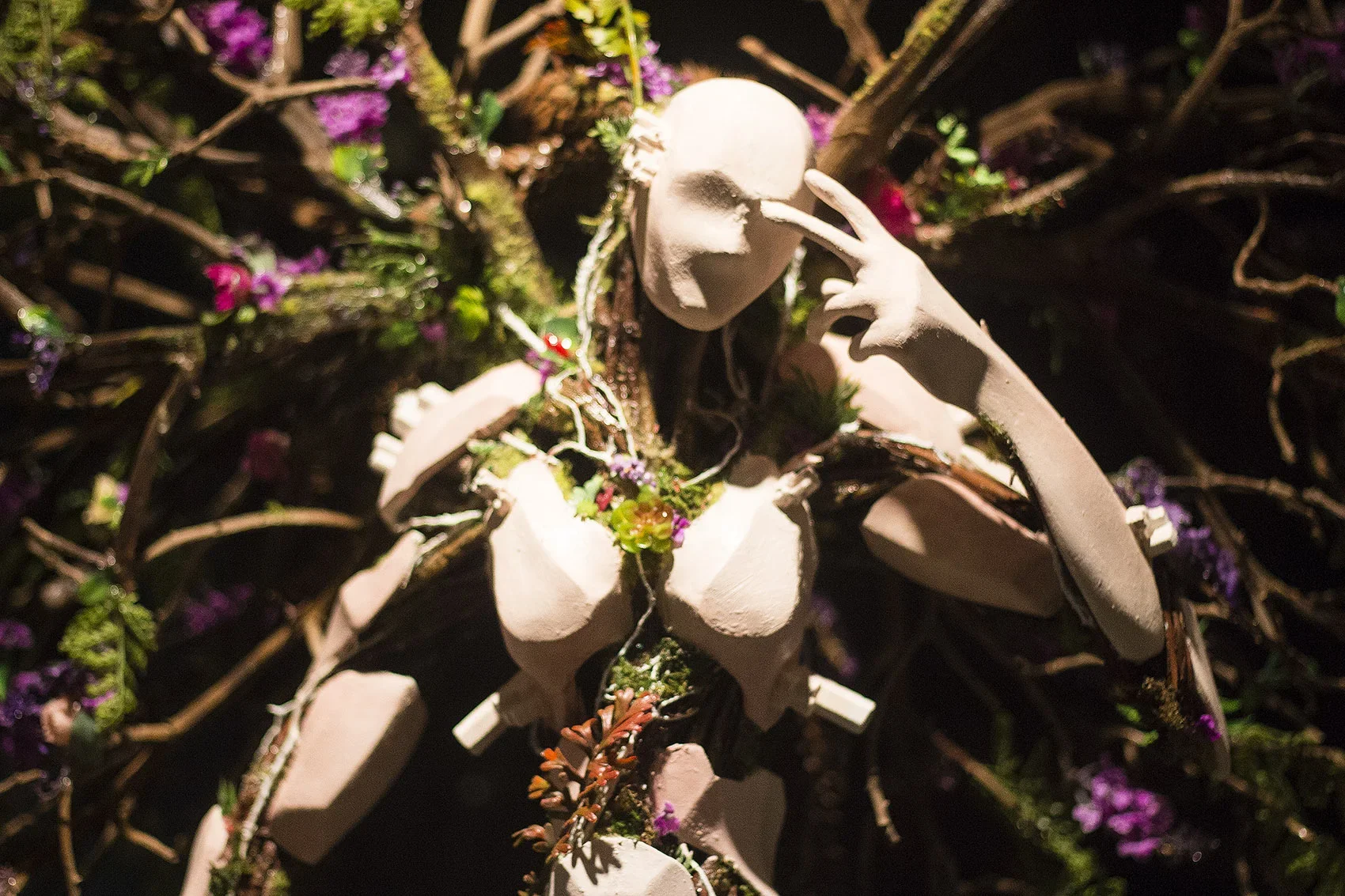
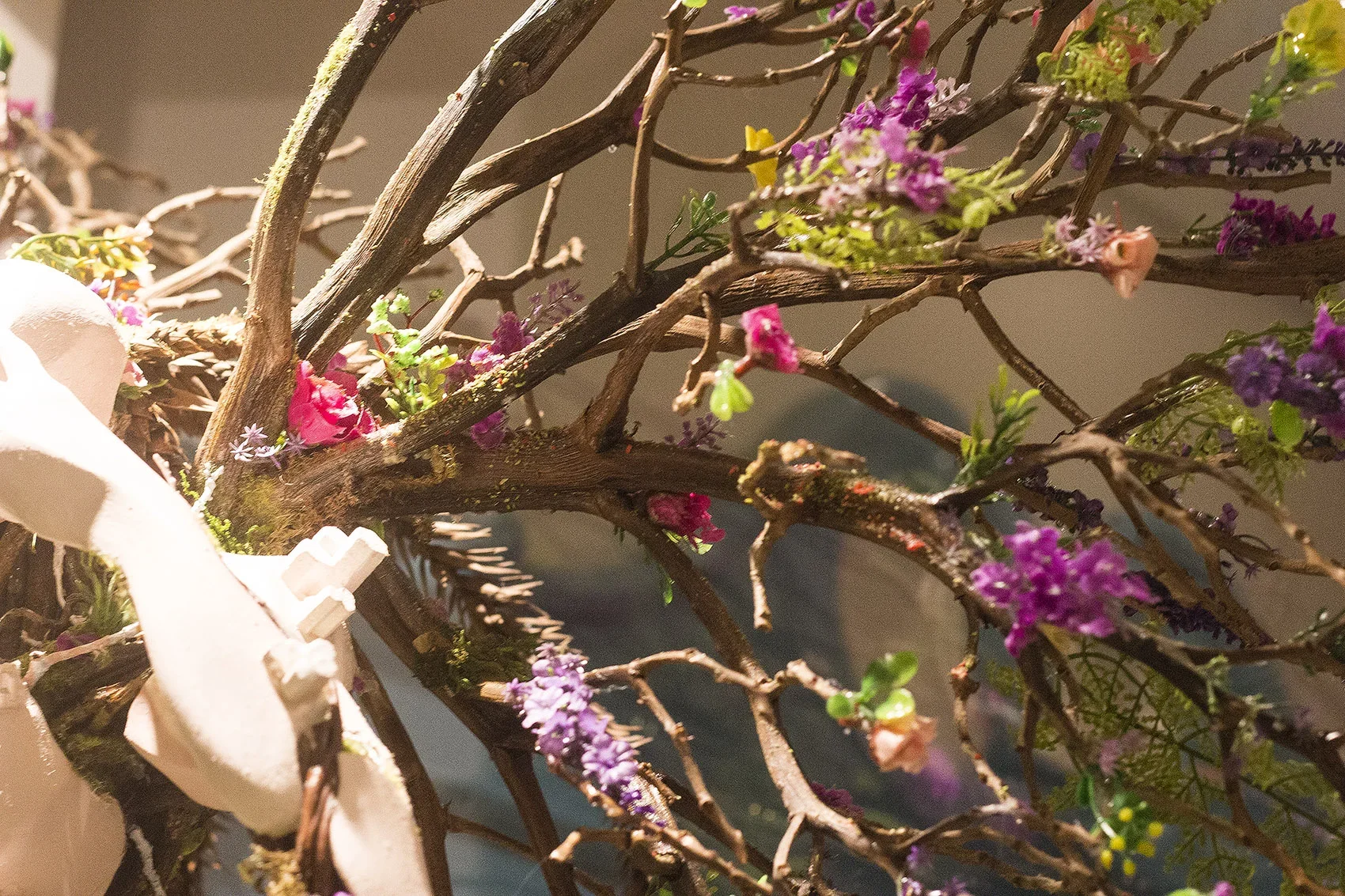
Plastic, welded metal rods, wire mesh, plaster wrap, 3D-printed parts, glue, spray paint, borax, branches, roots, model tree kits, LED kits, preserved moss, preserved bonsai, copper plating, and patina kits
Garret Kane, 2017
Mixed media sculpture
84" × 48" × 60"
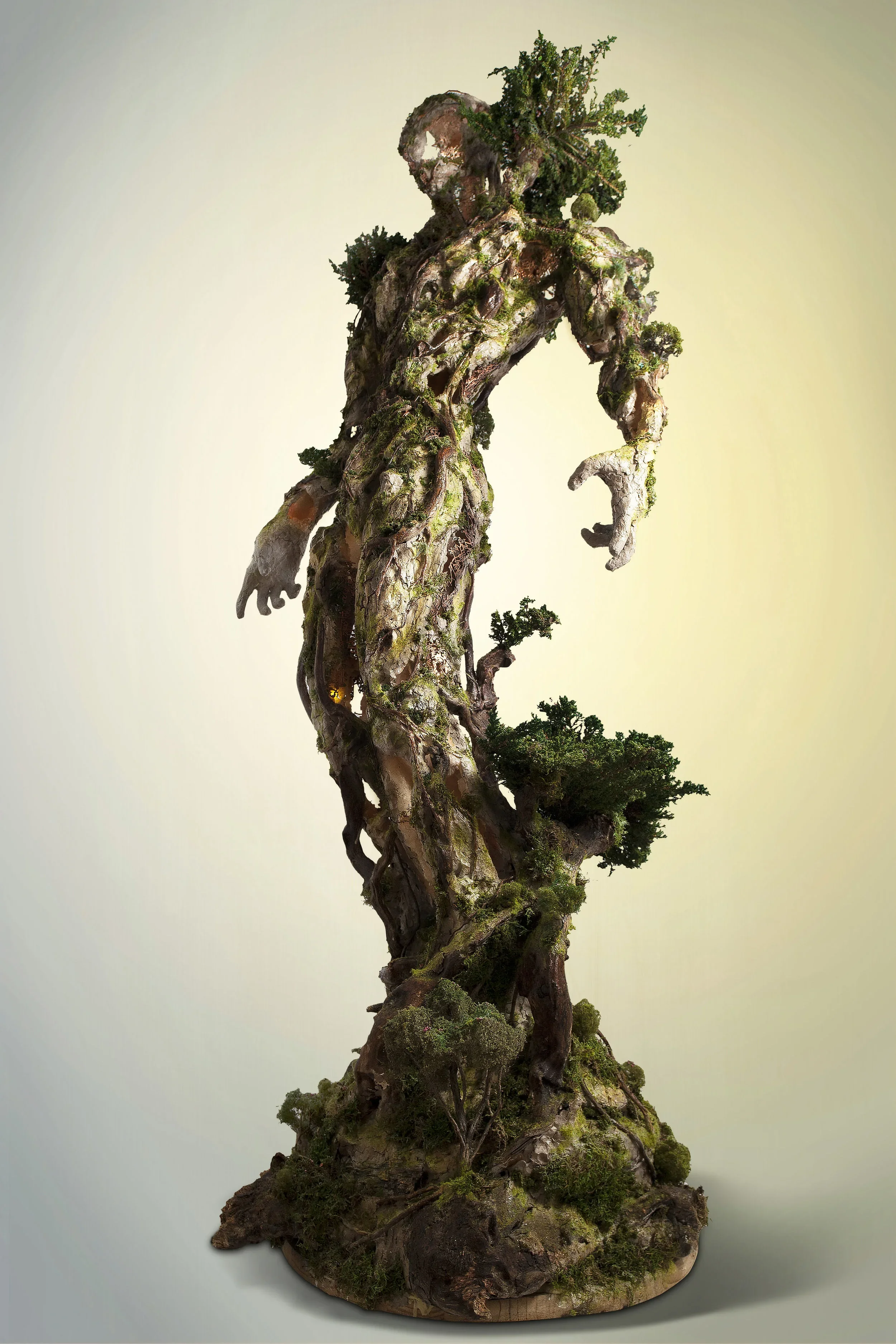
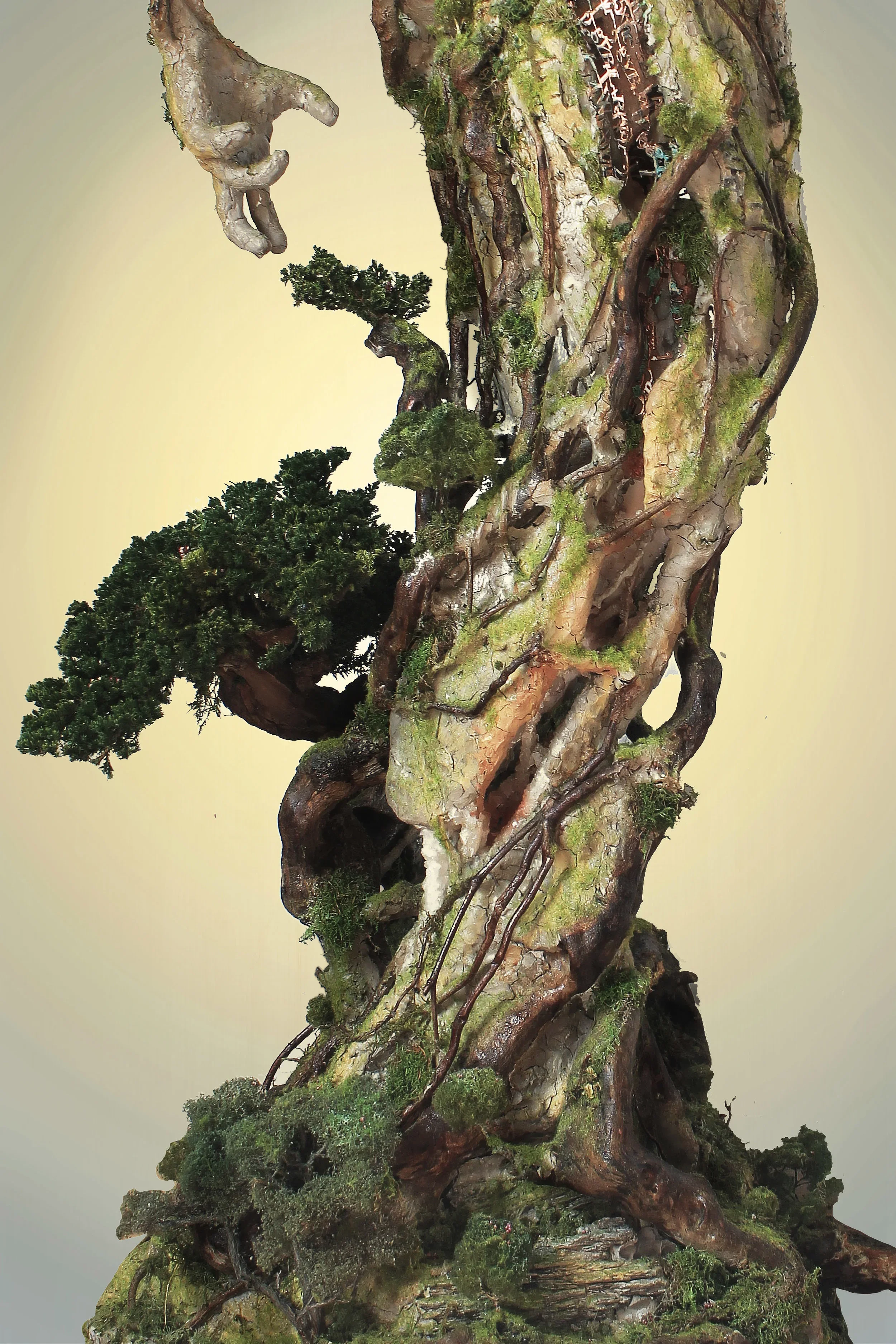
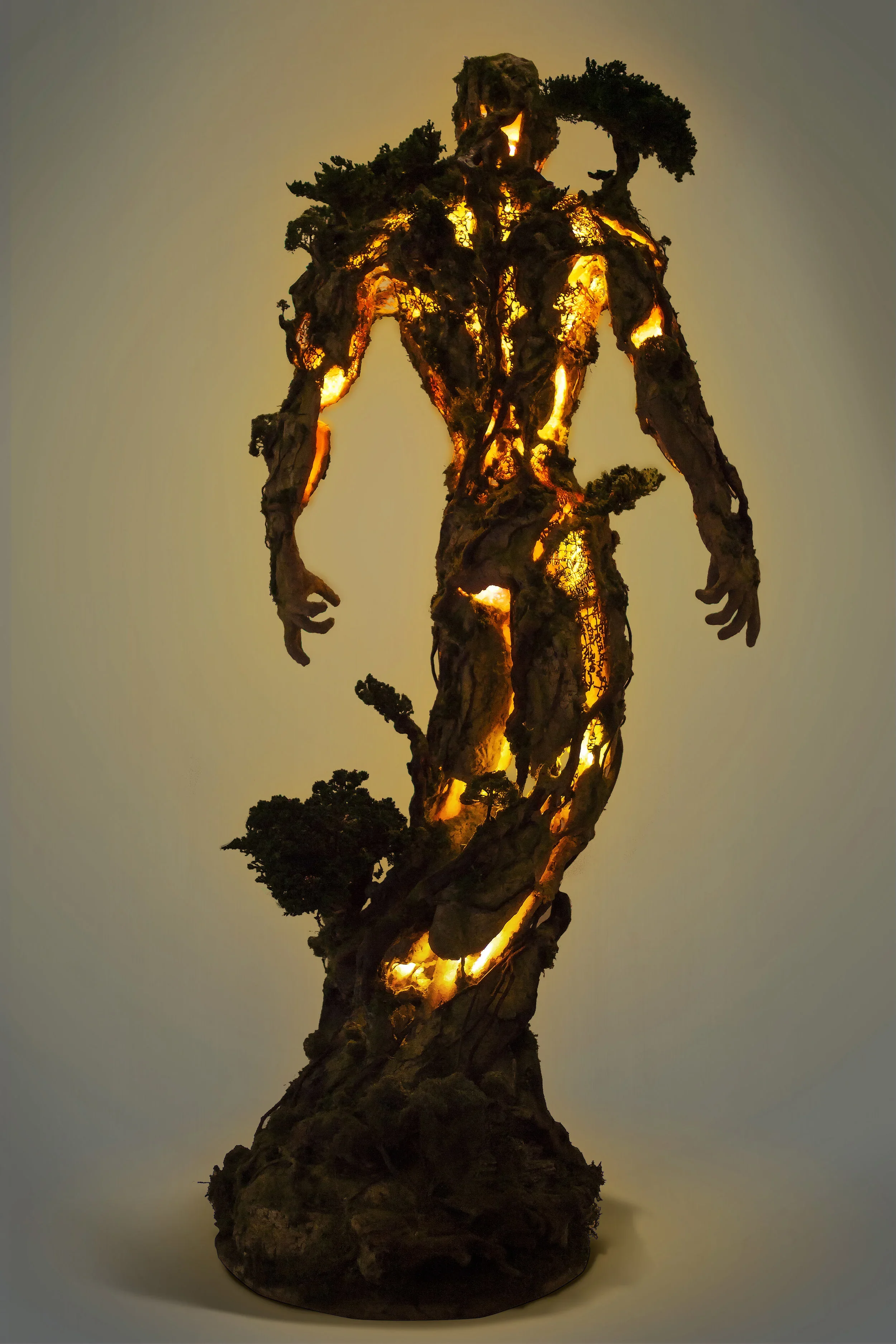
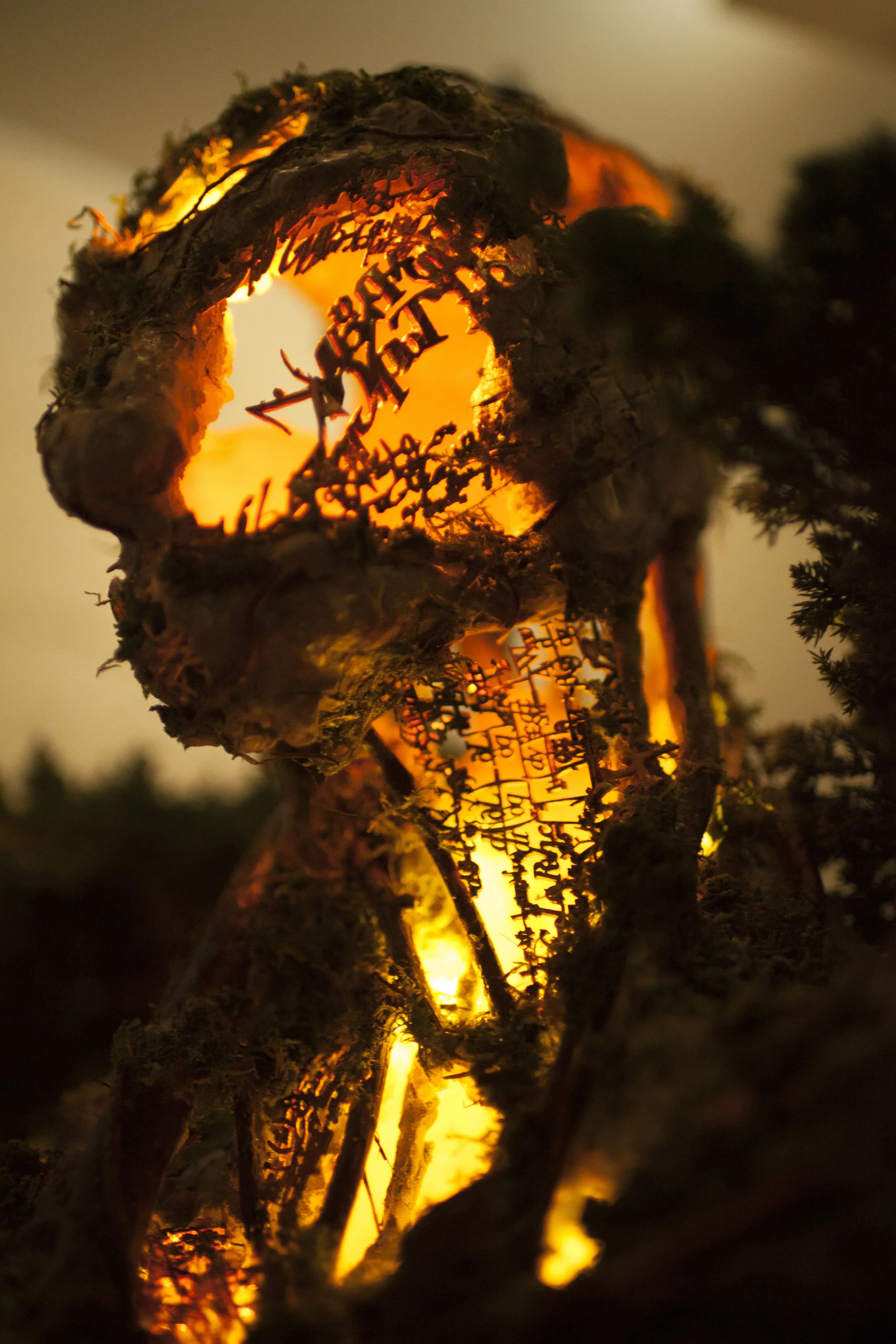
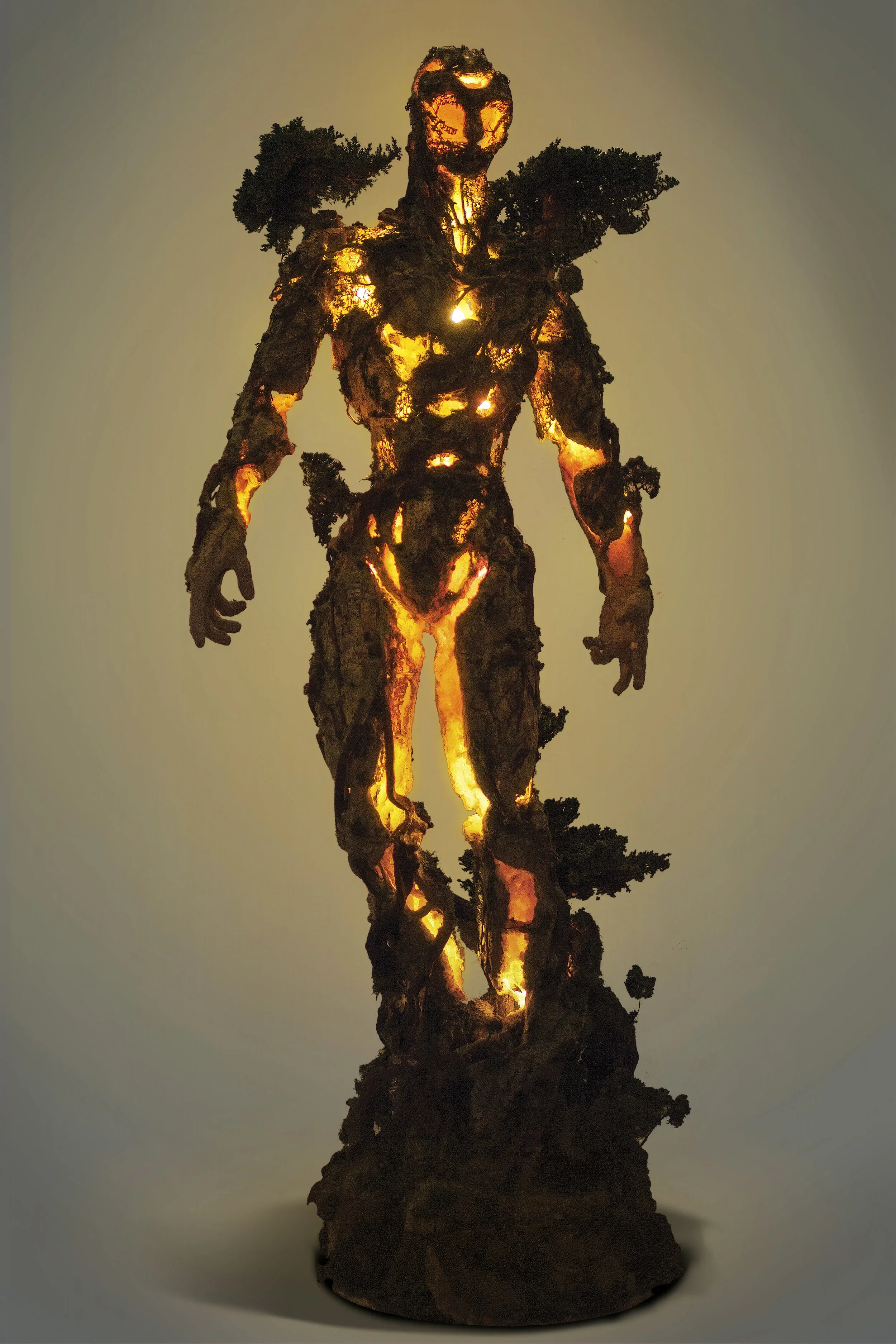
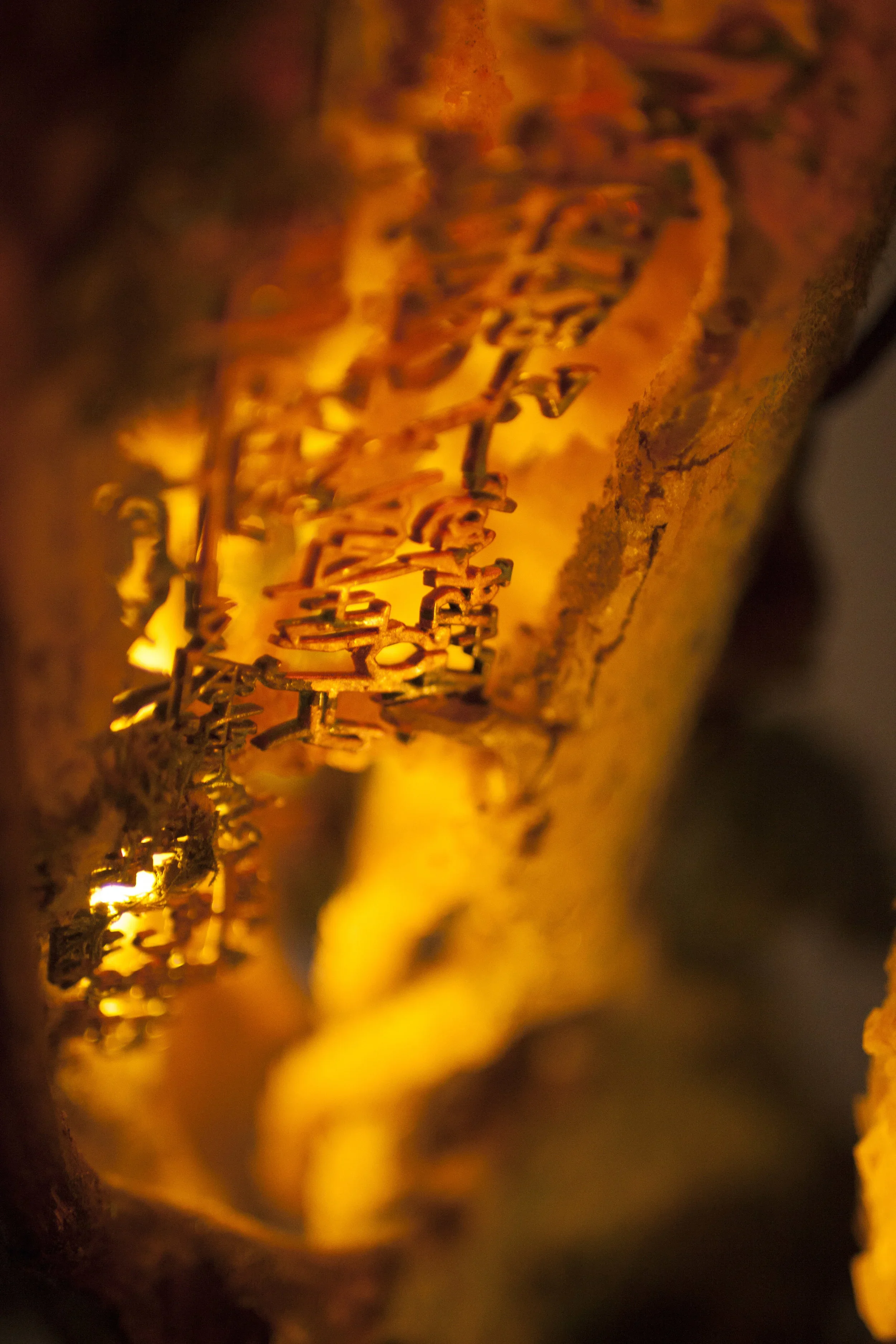
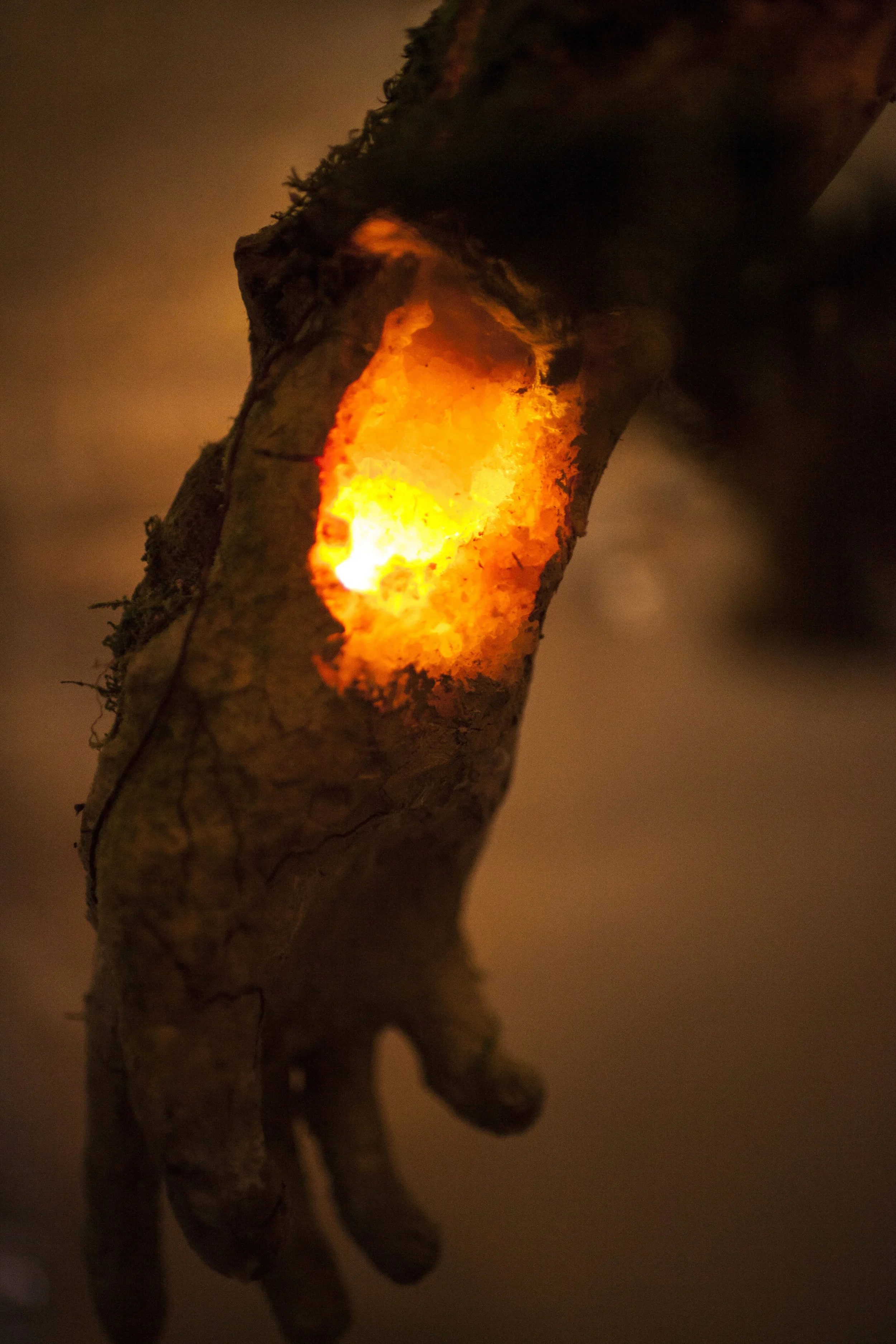
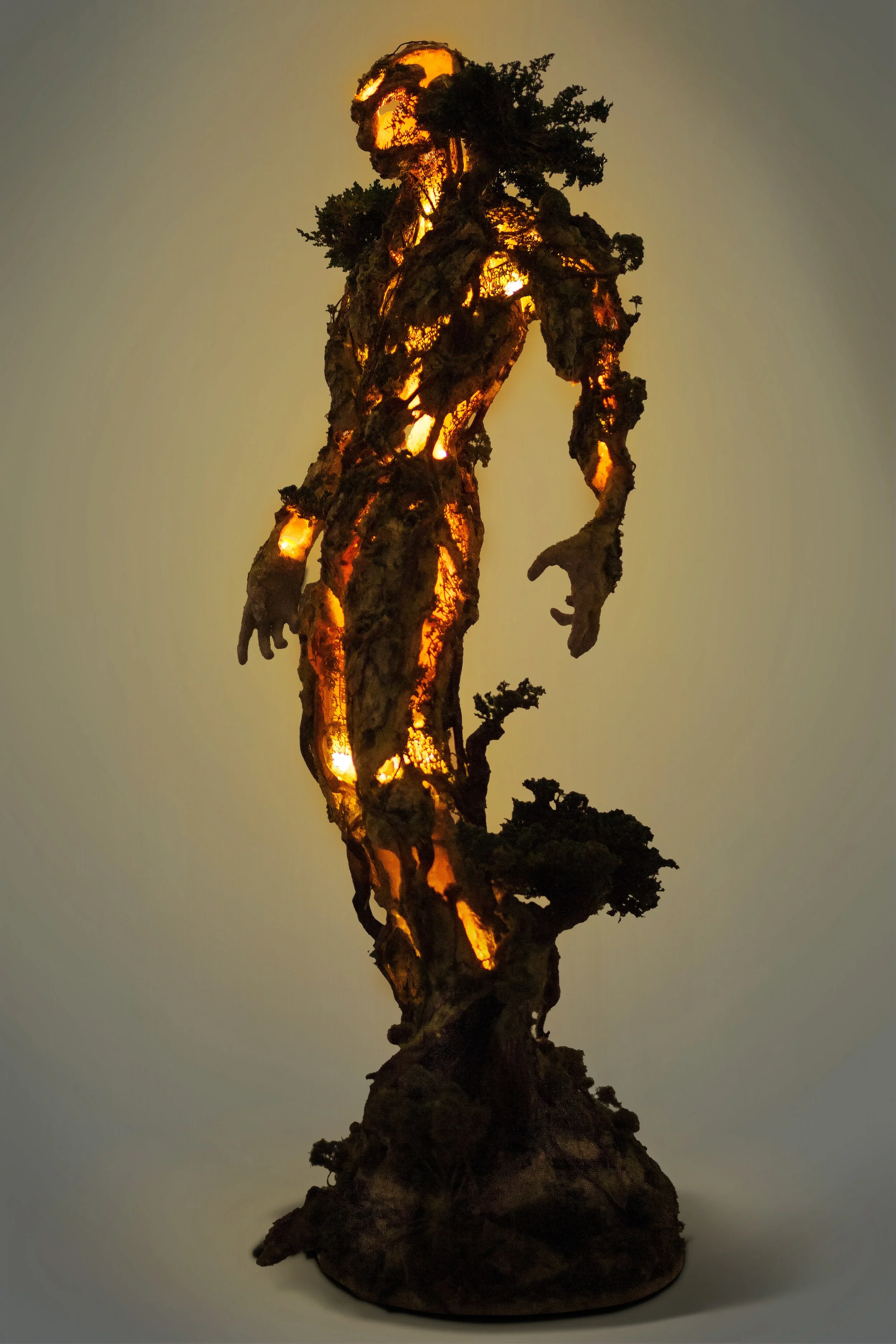
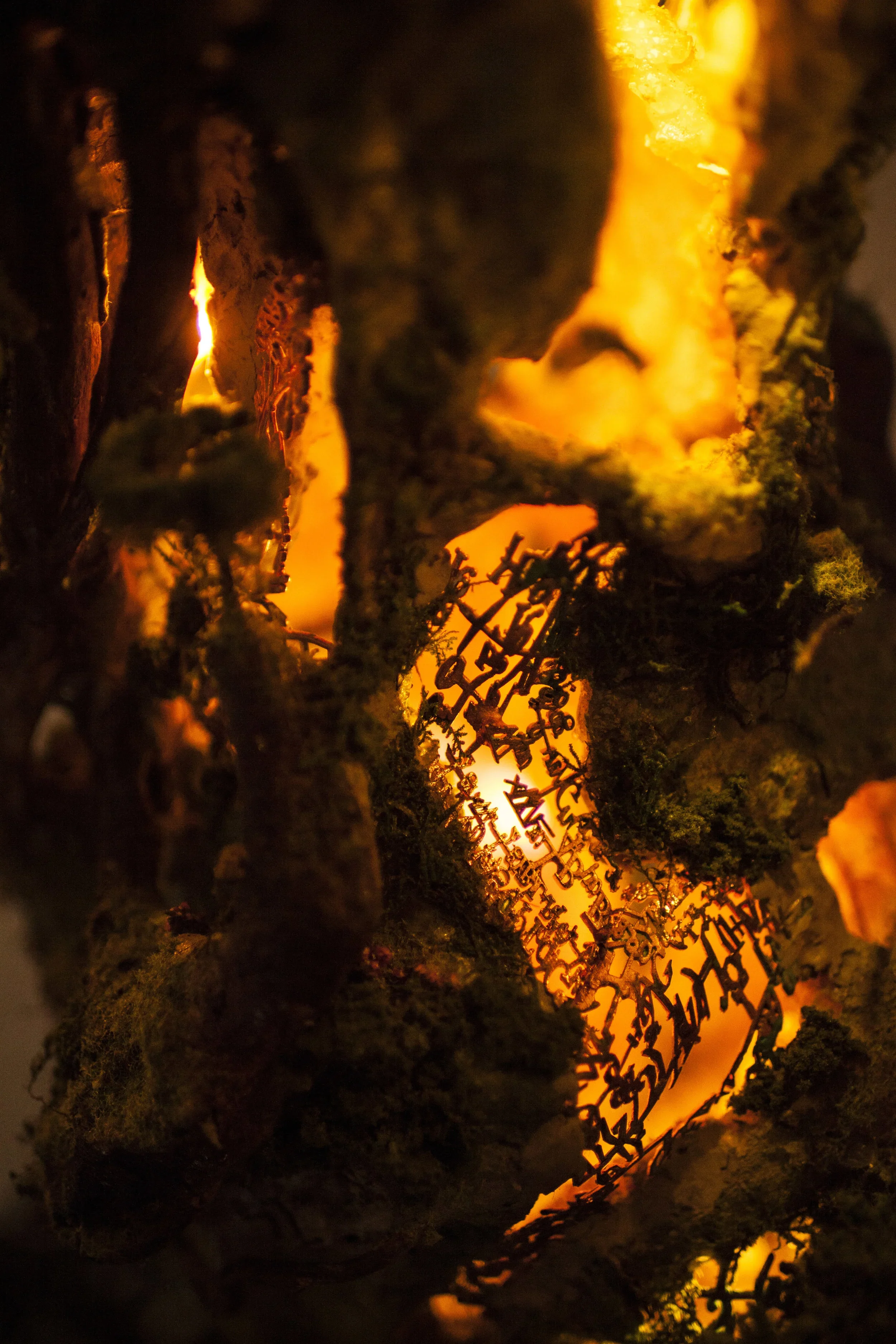
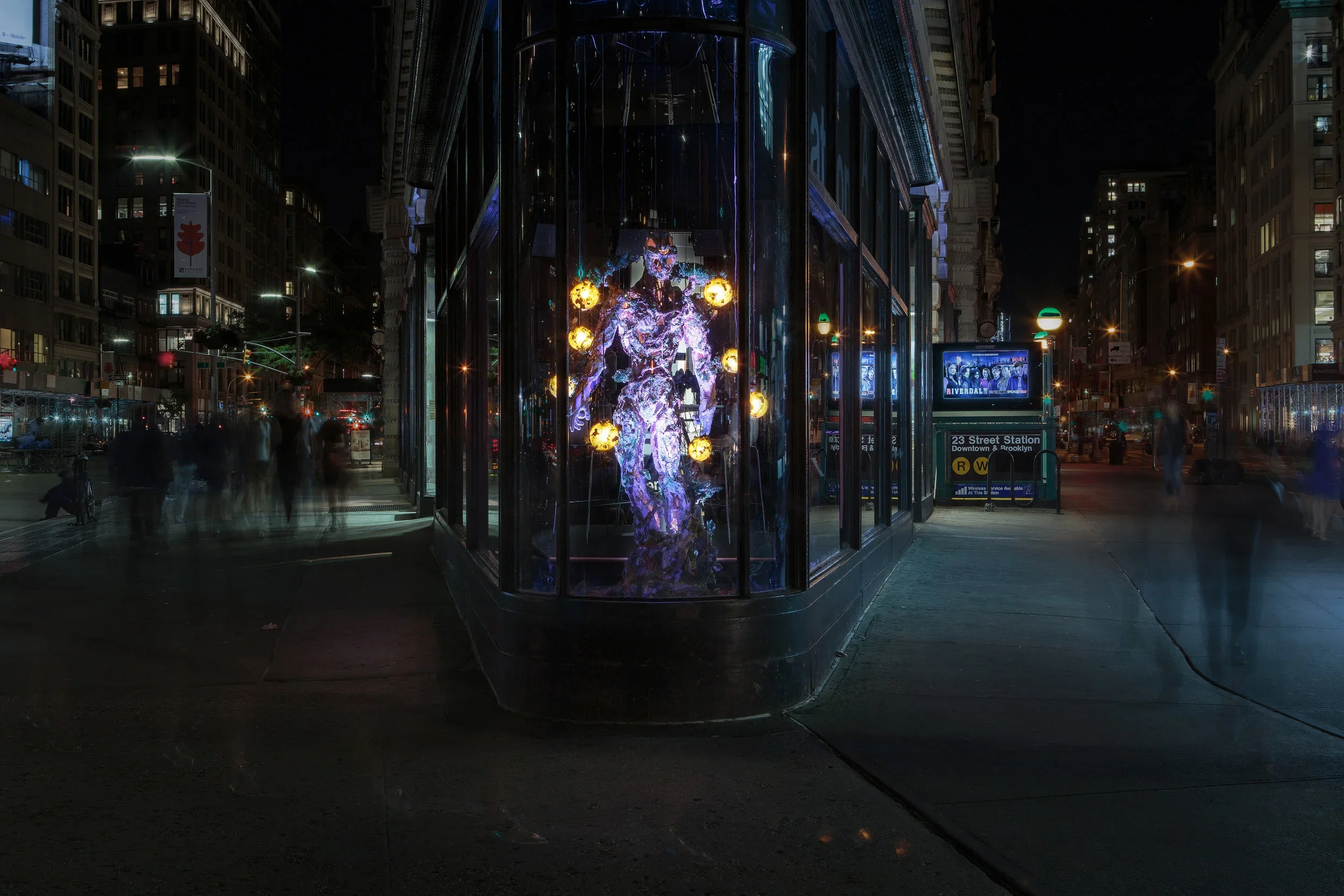
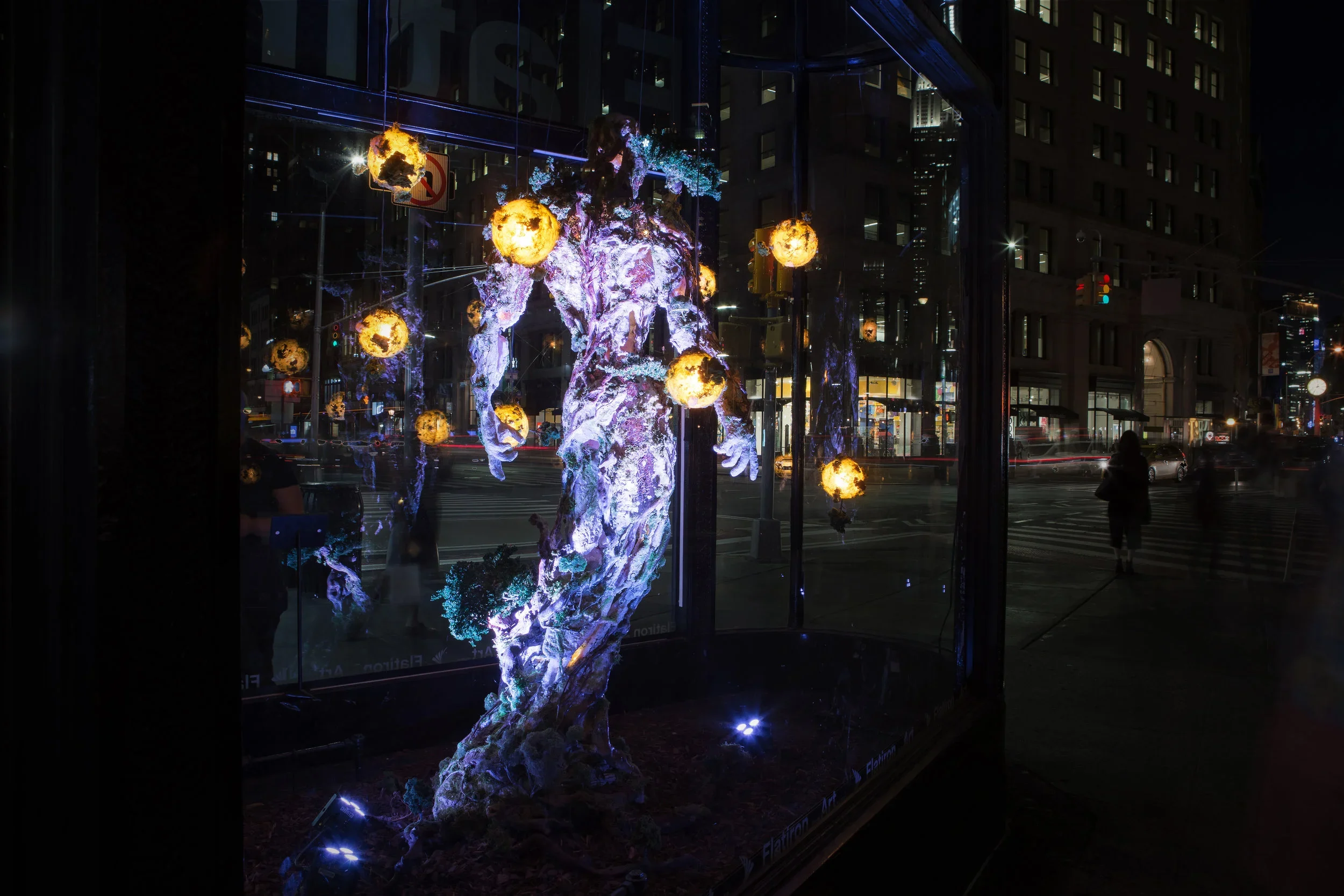
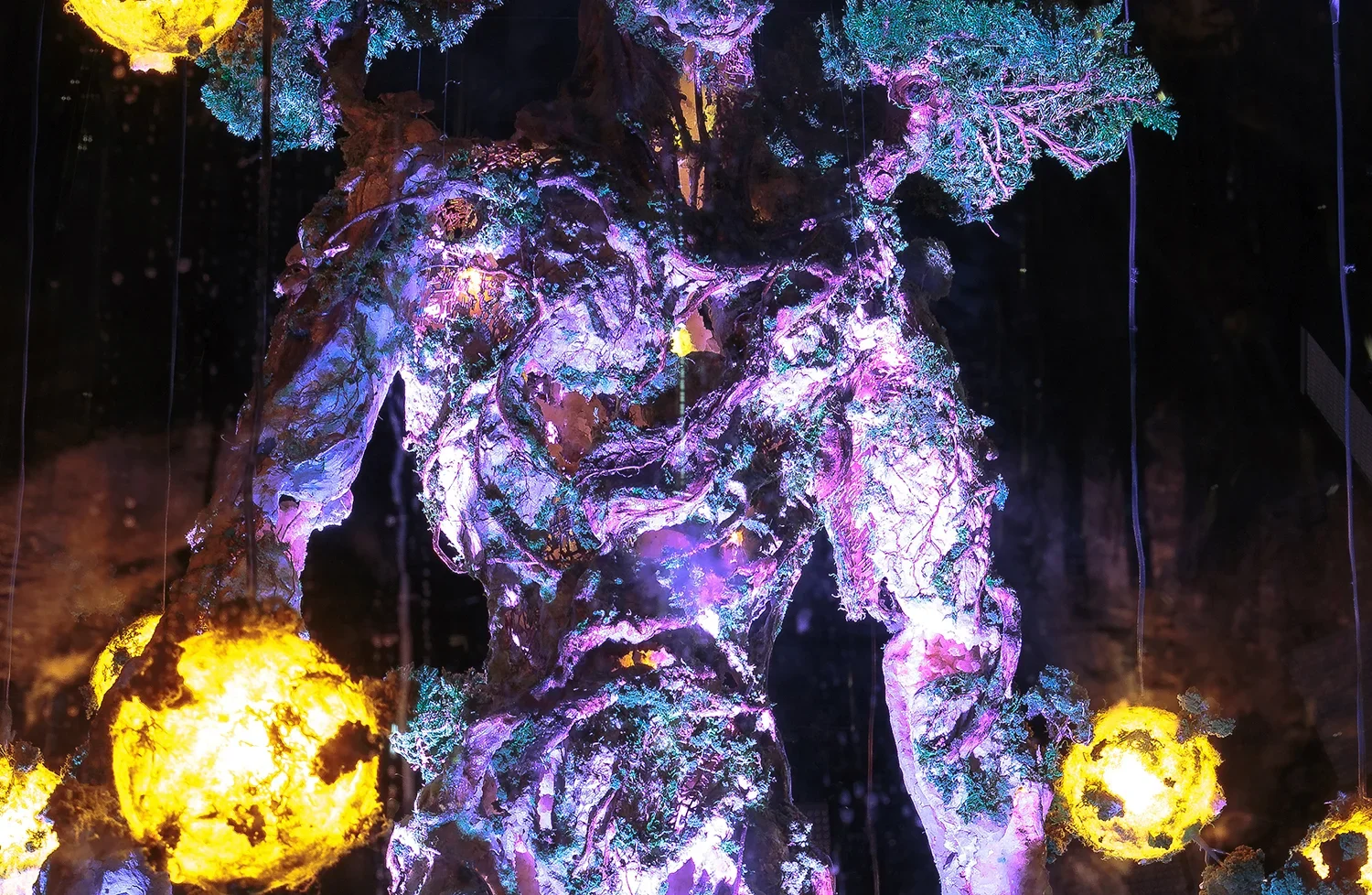
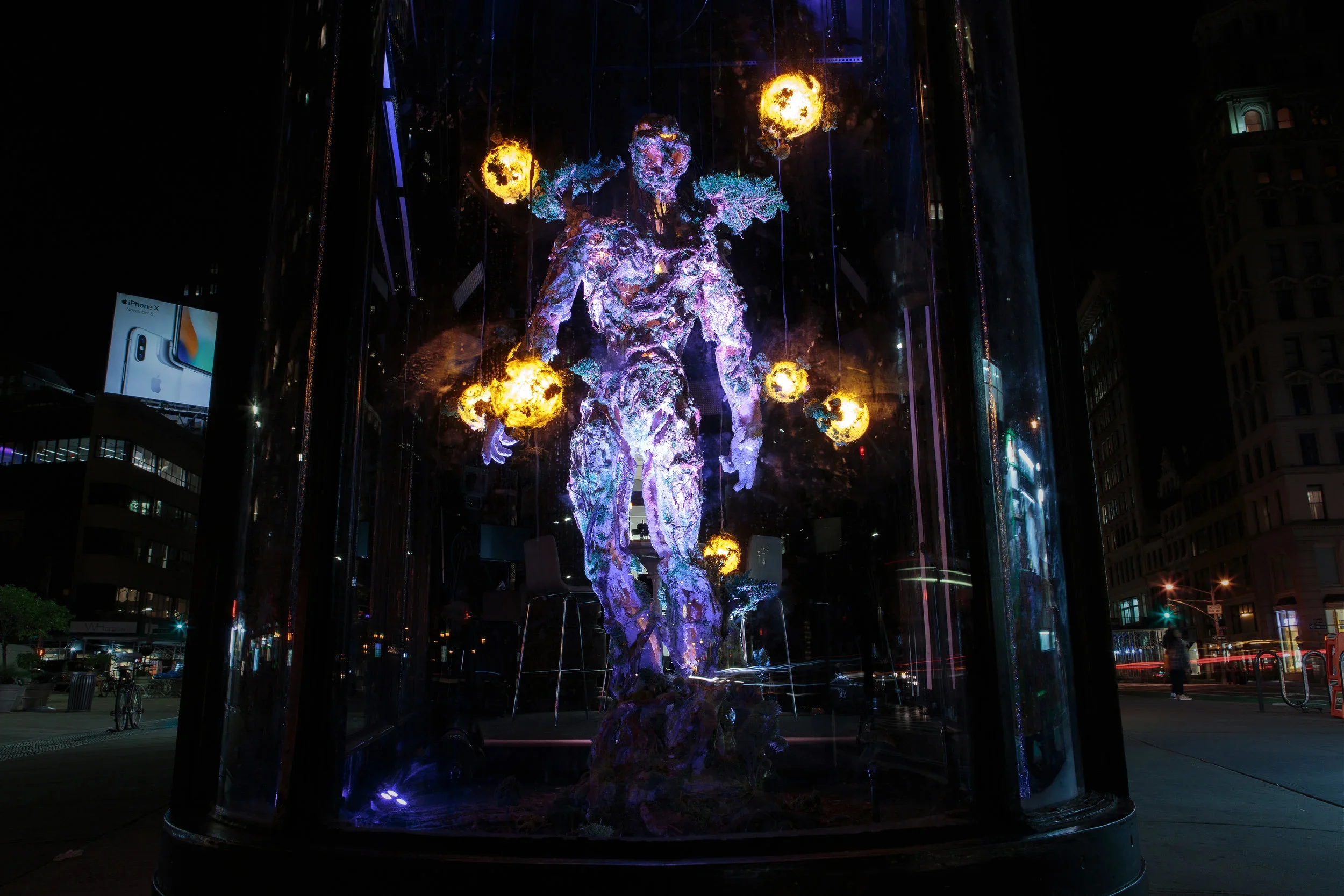
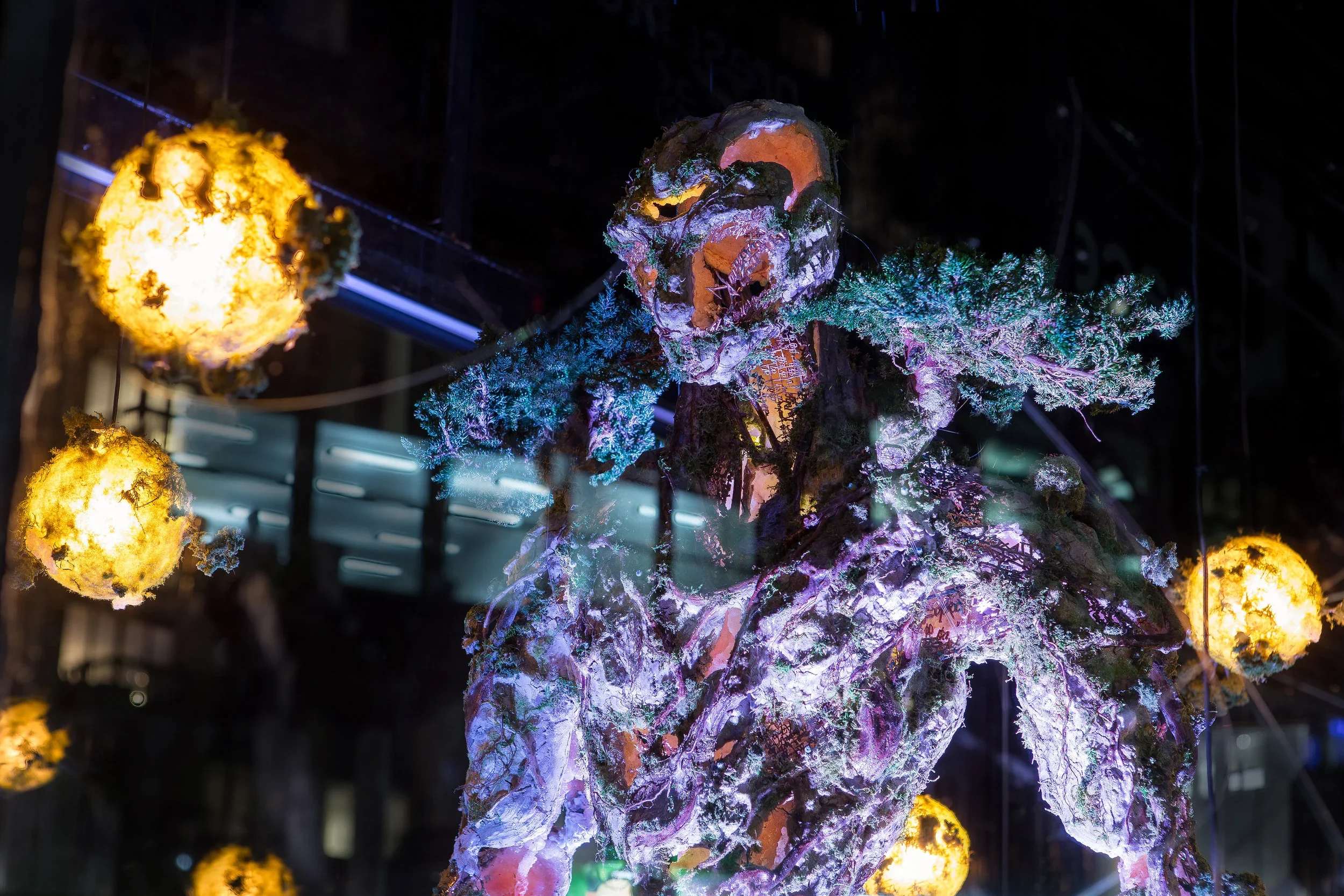
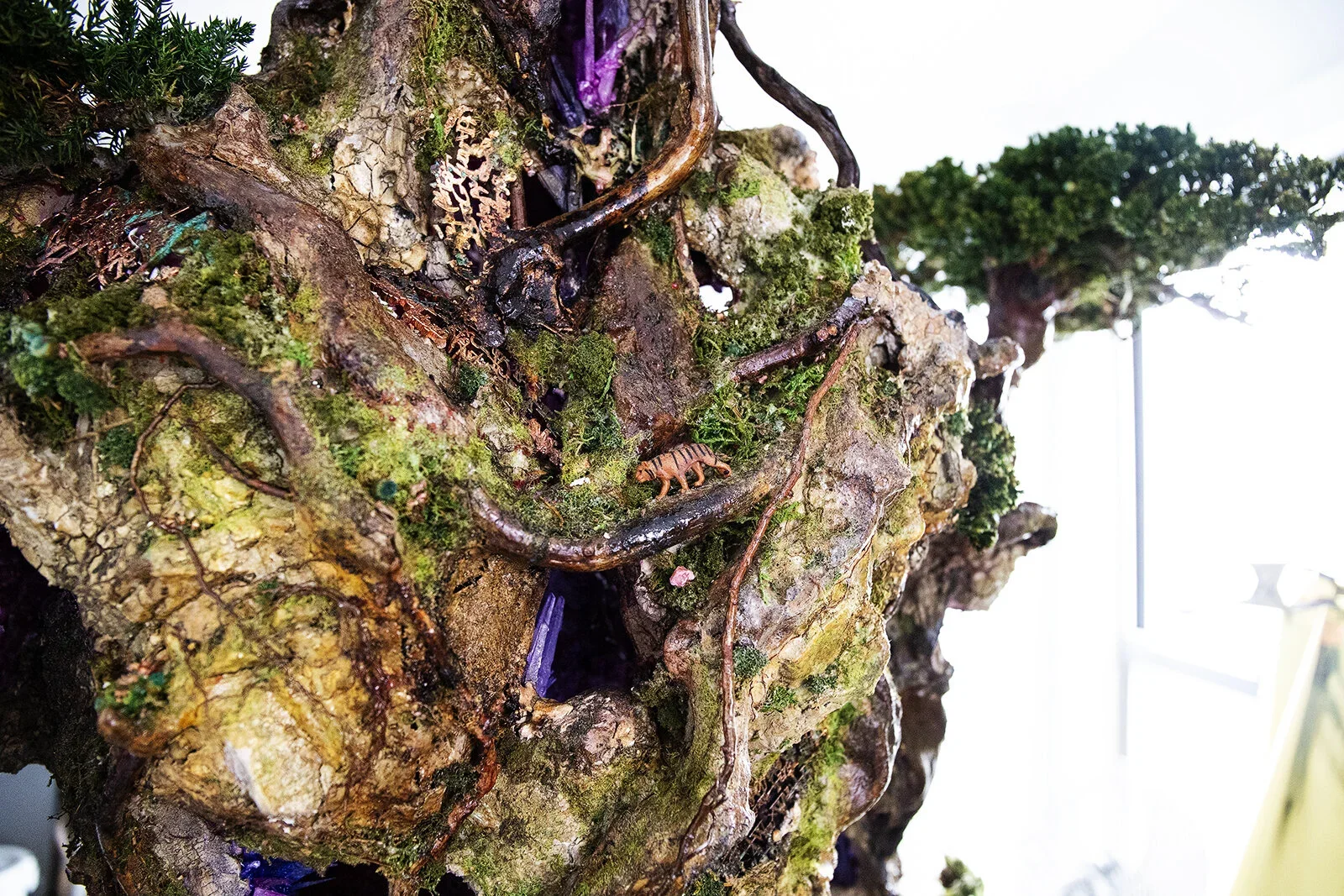
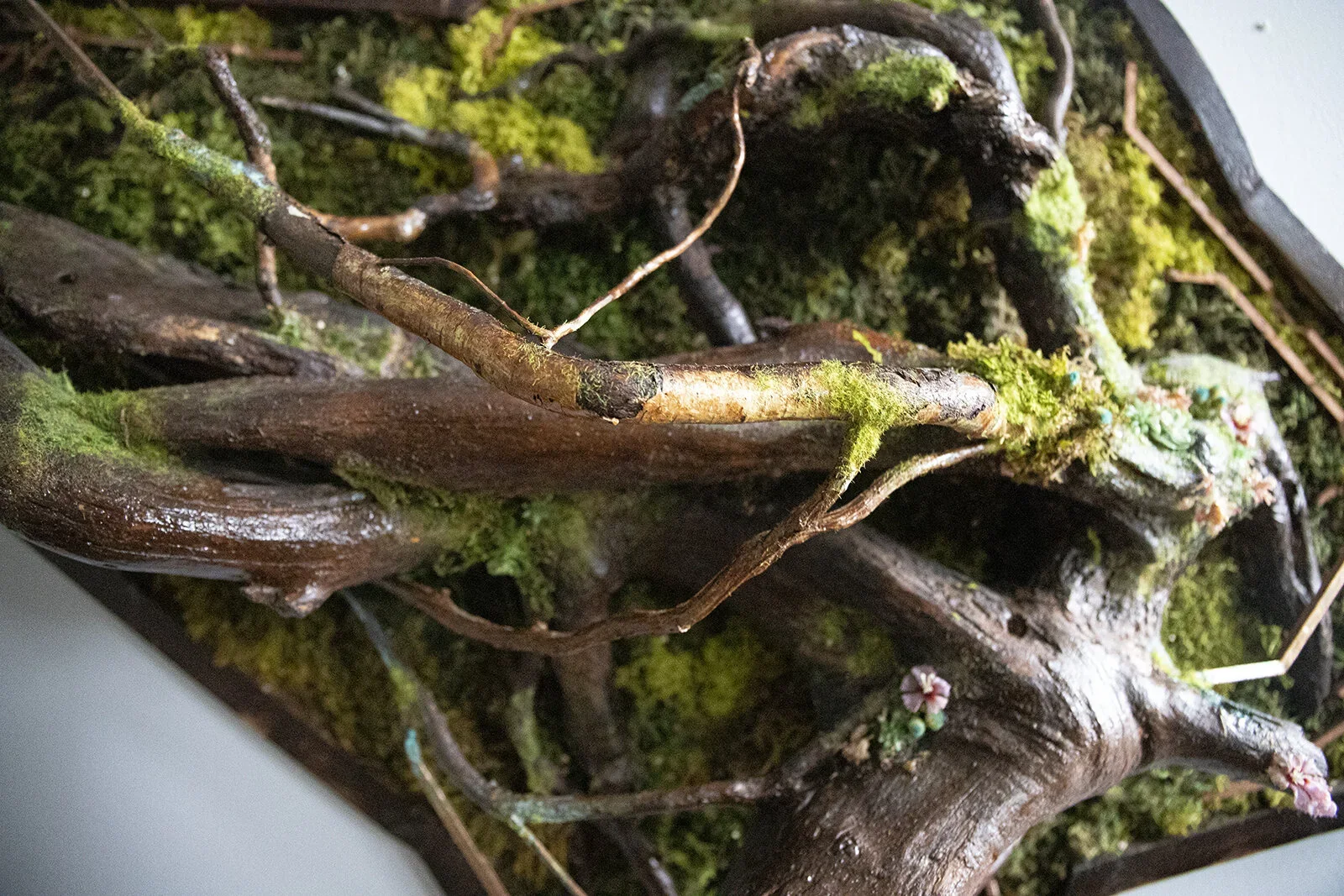
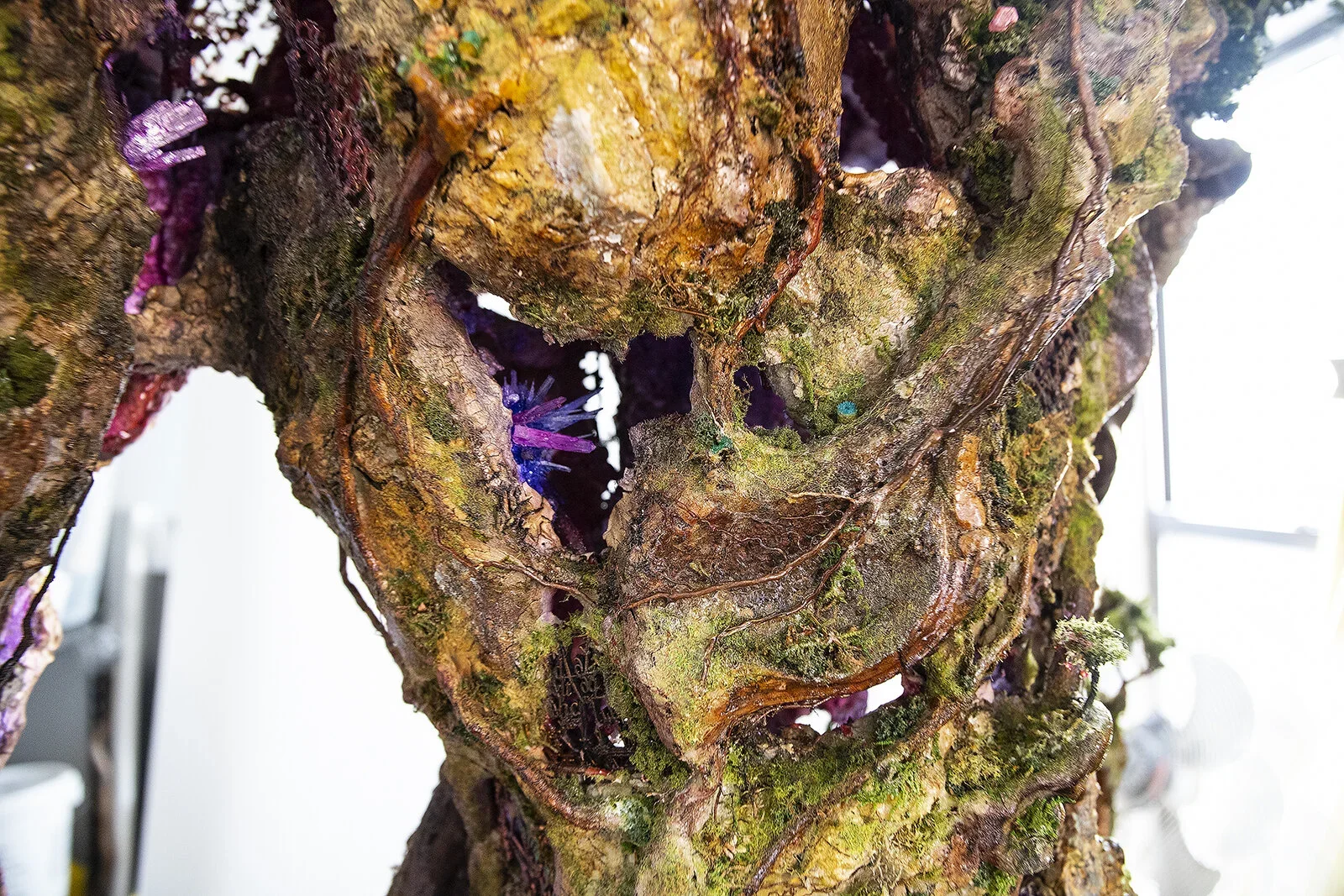
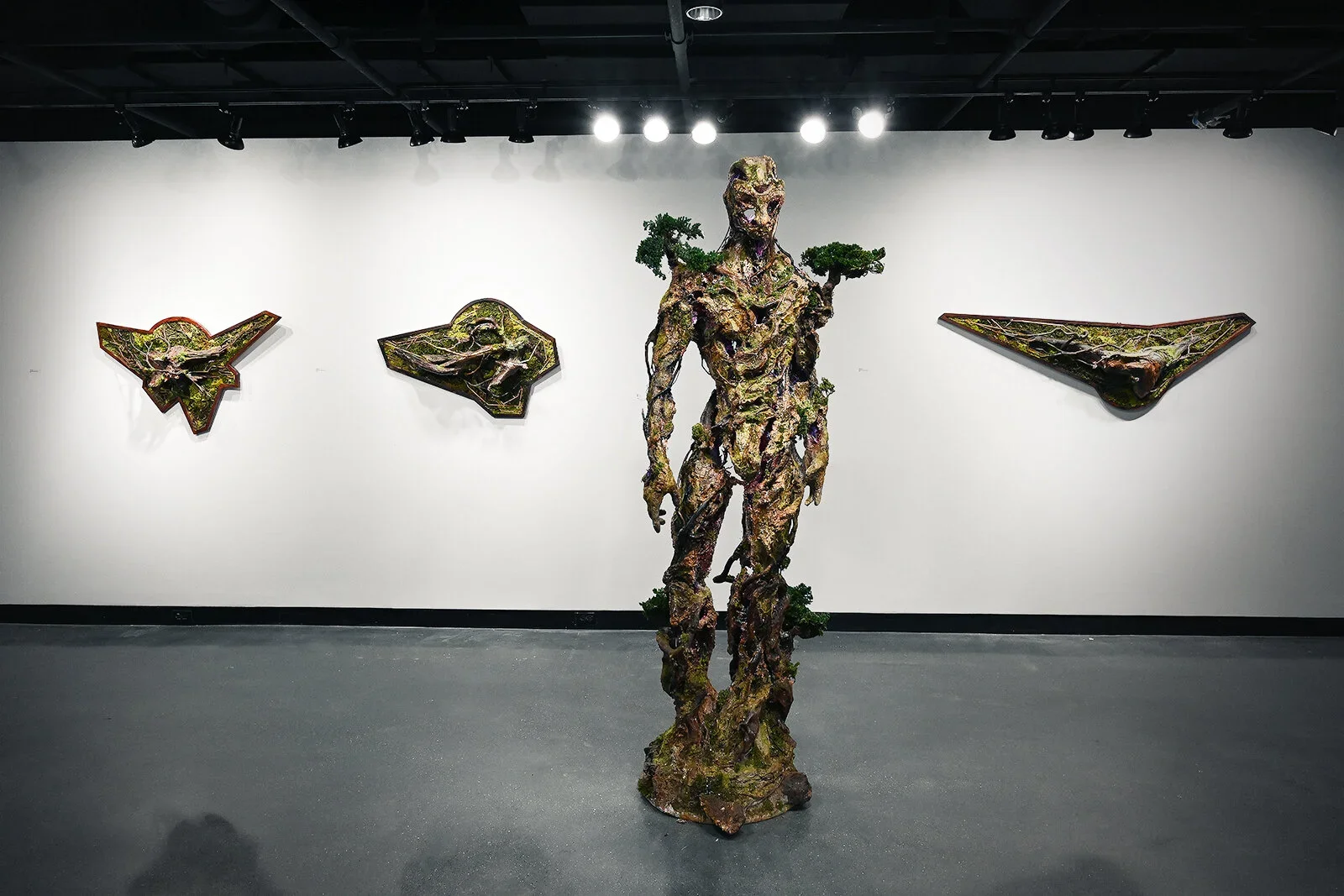
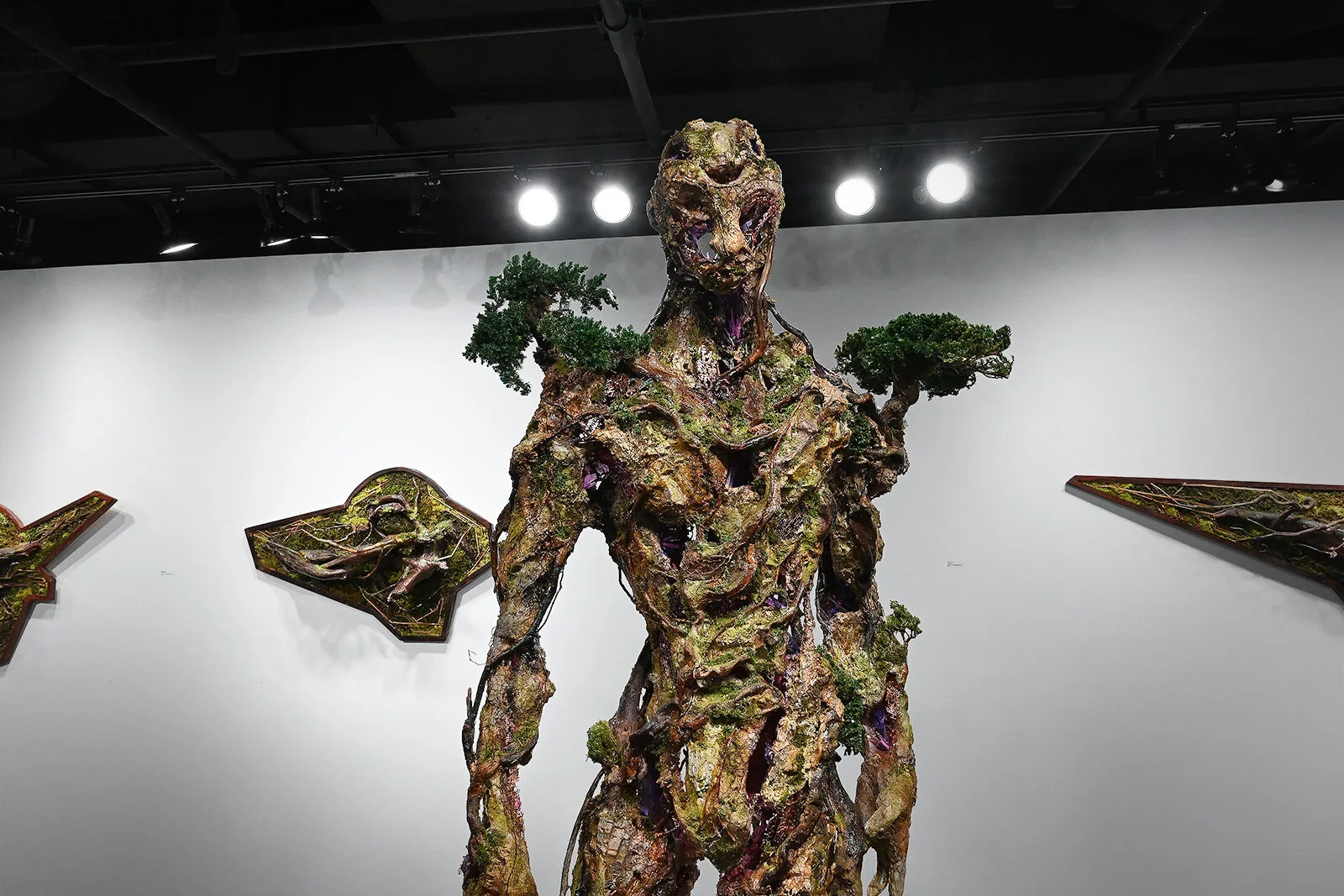
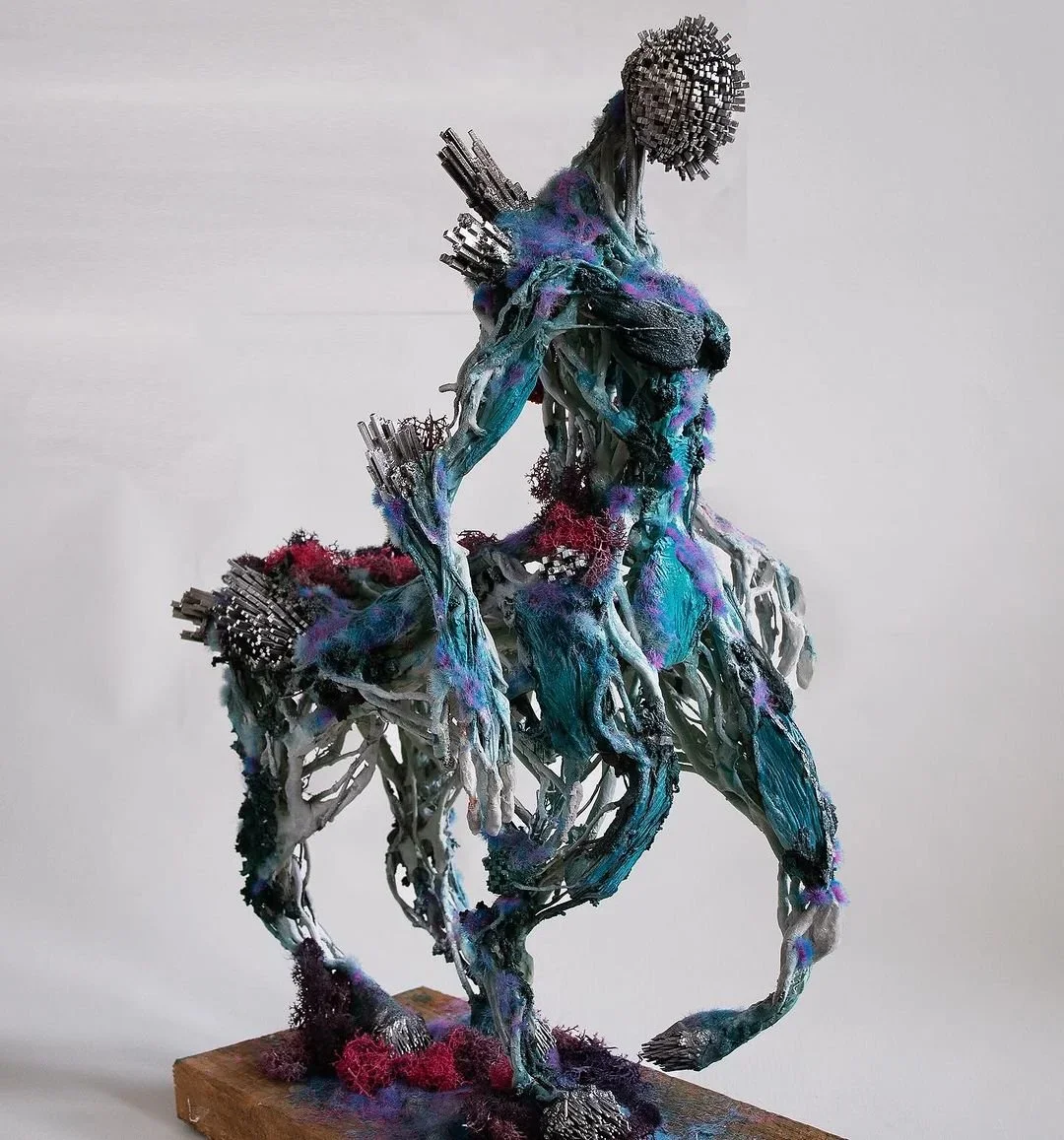
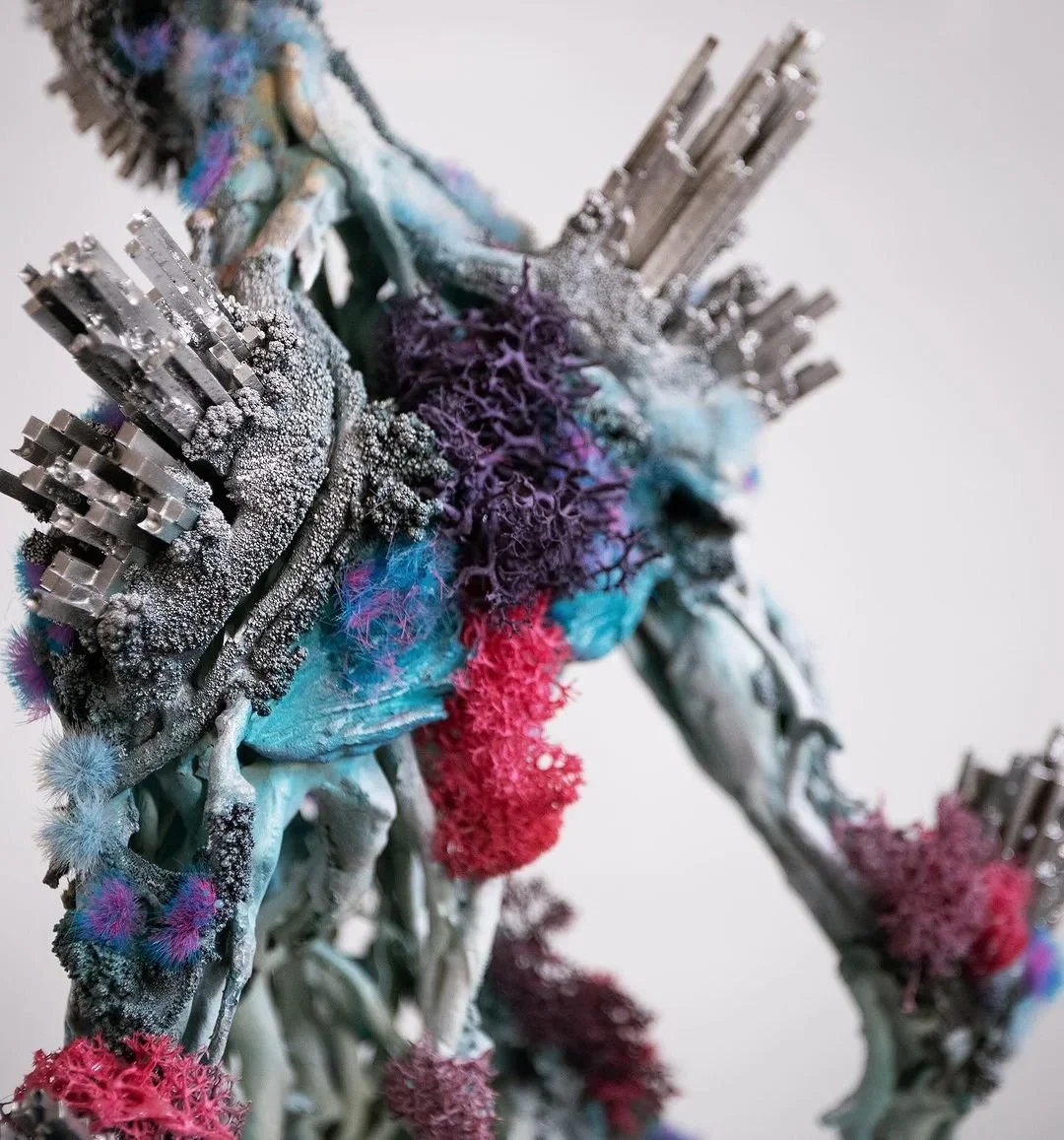
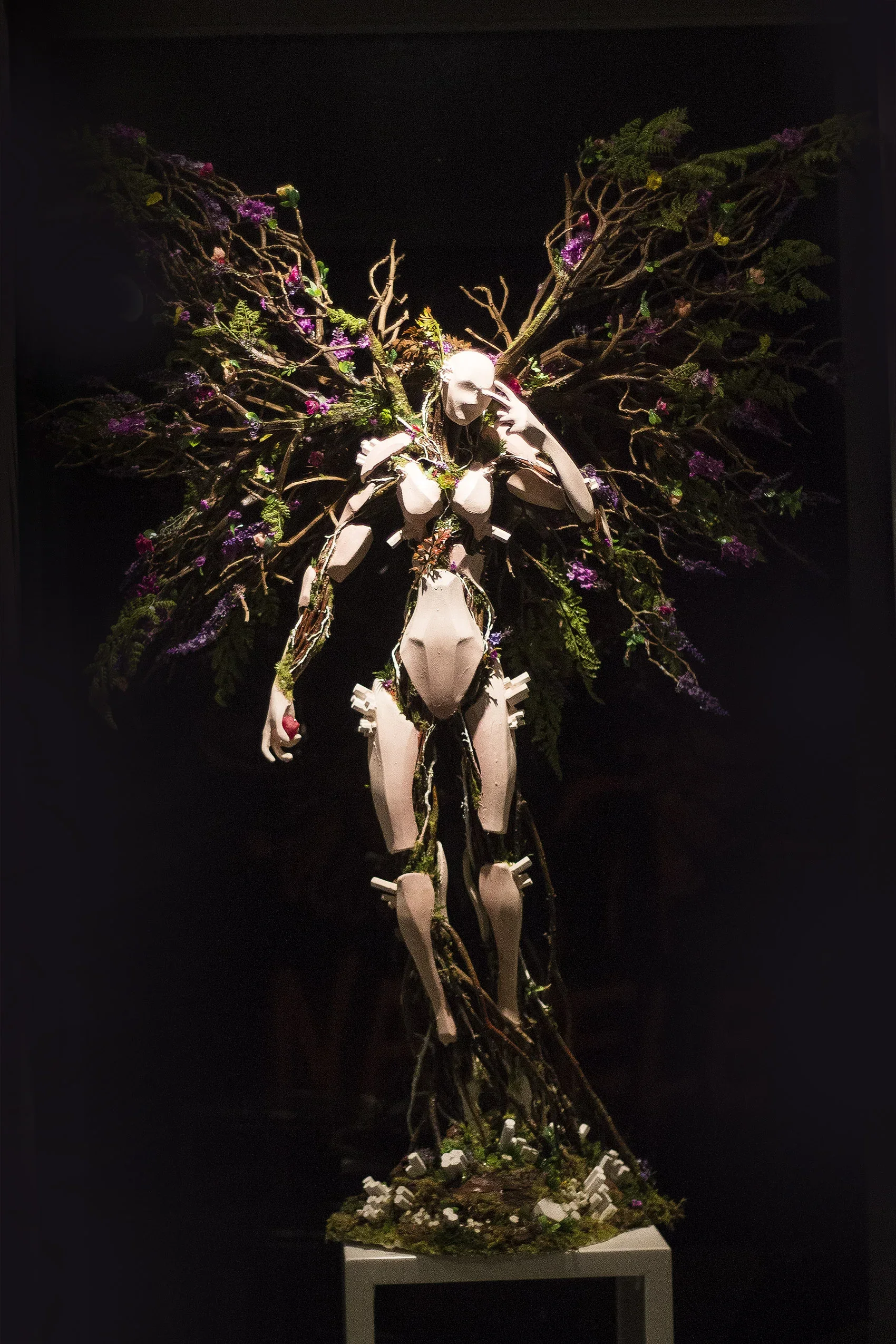
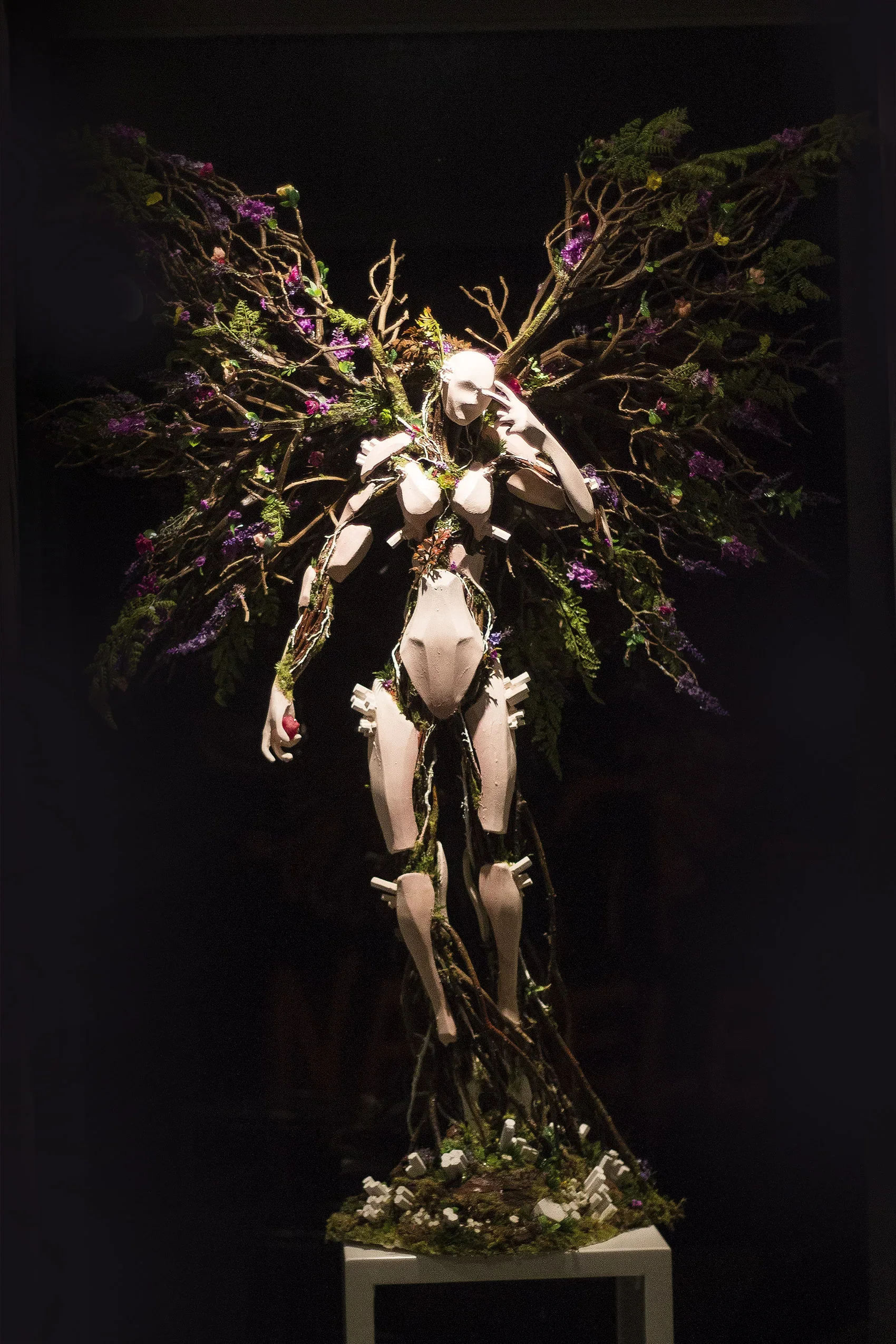
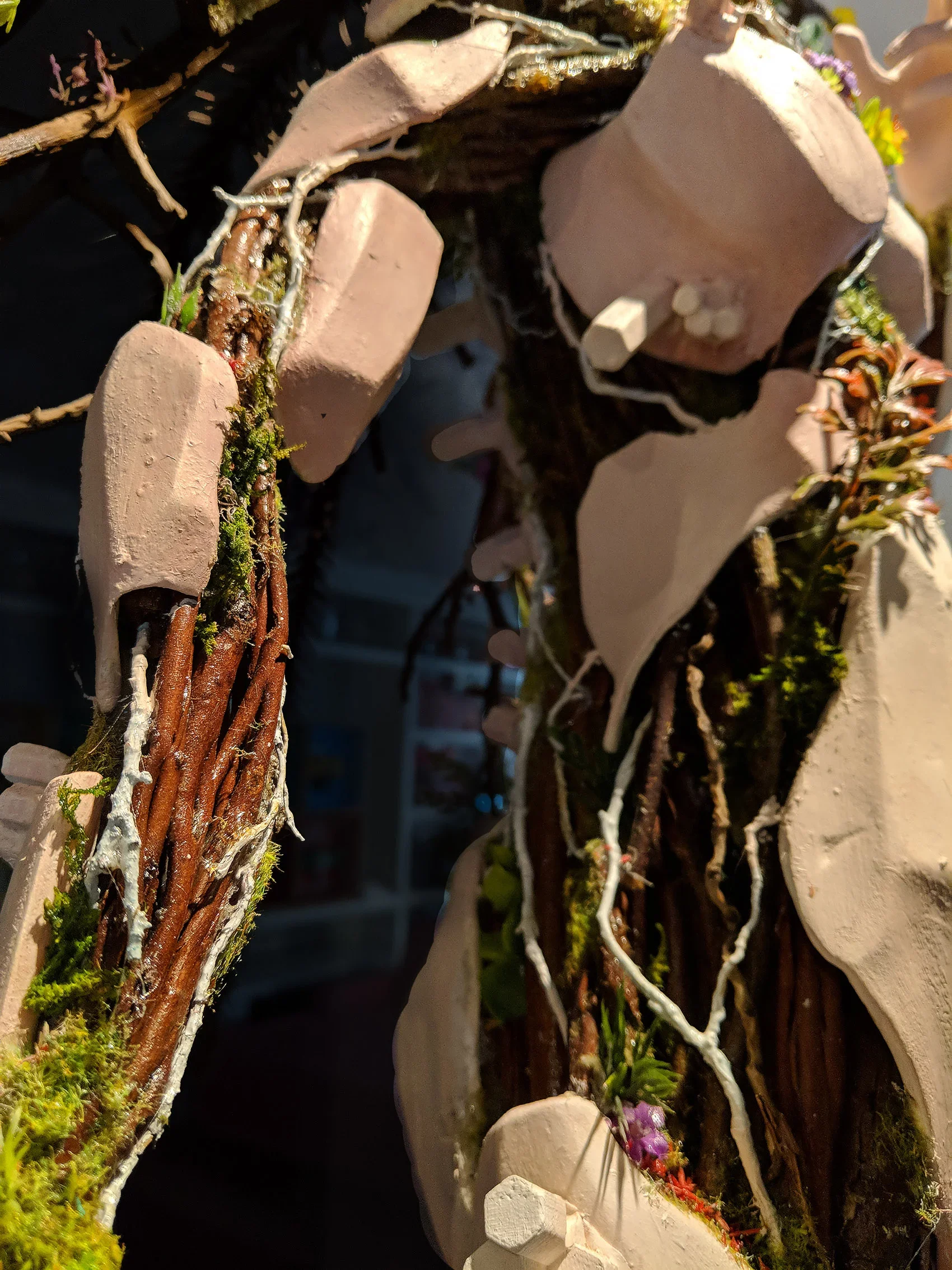
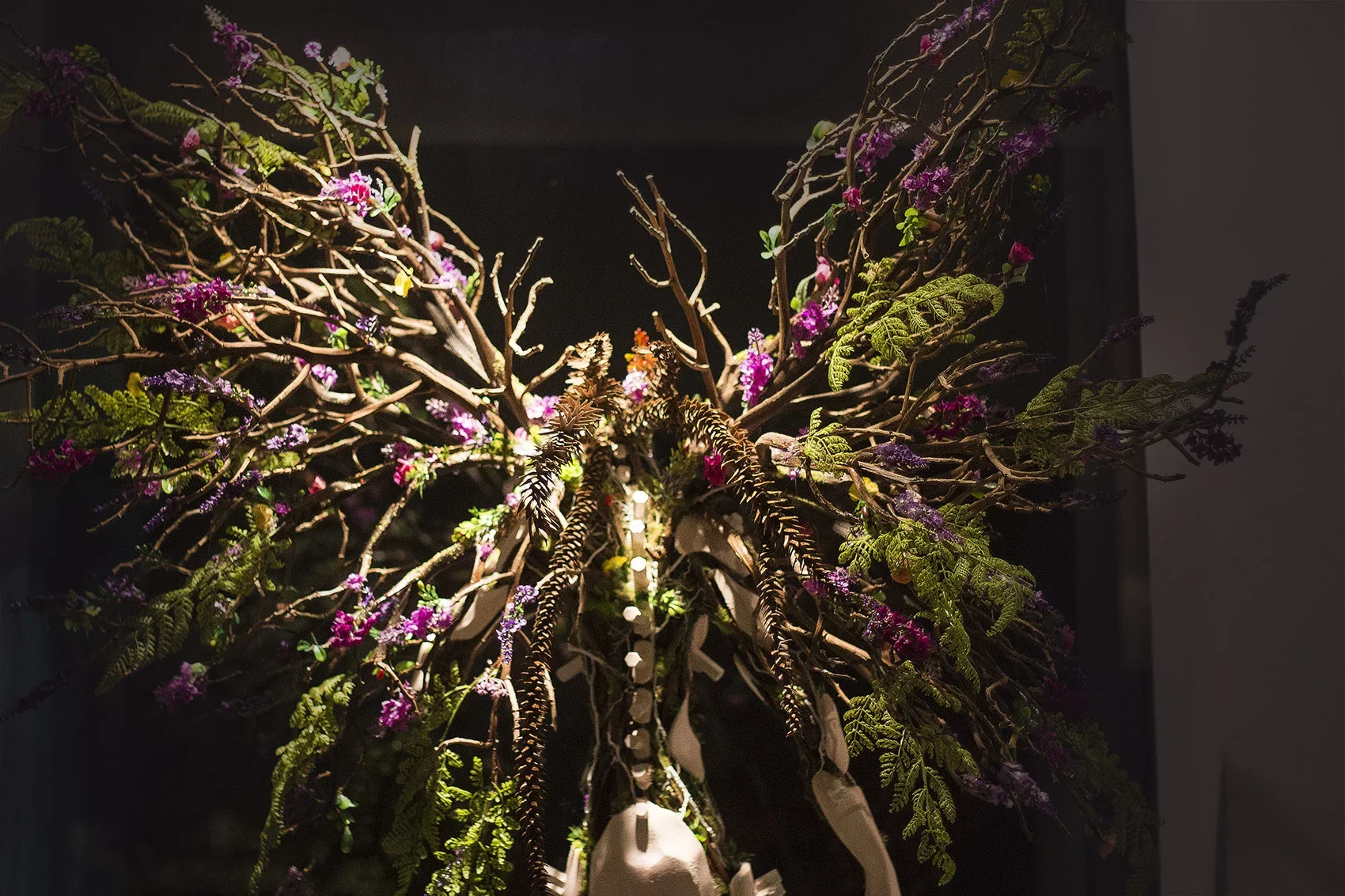
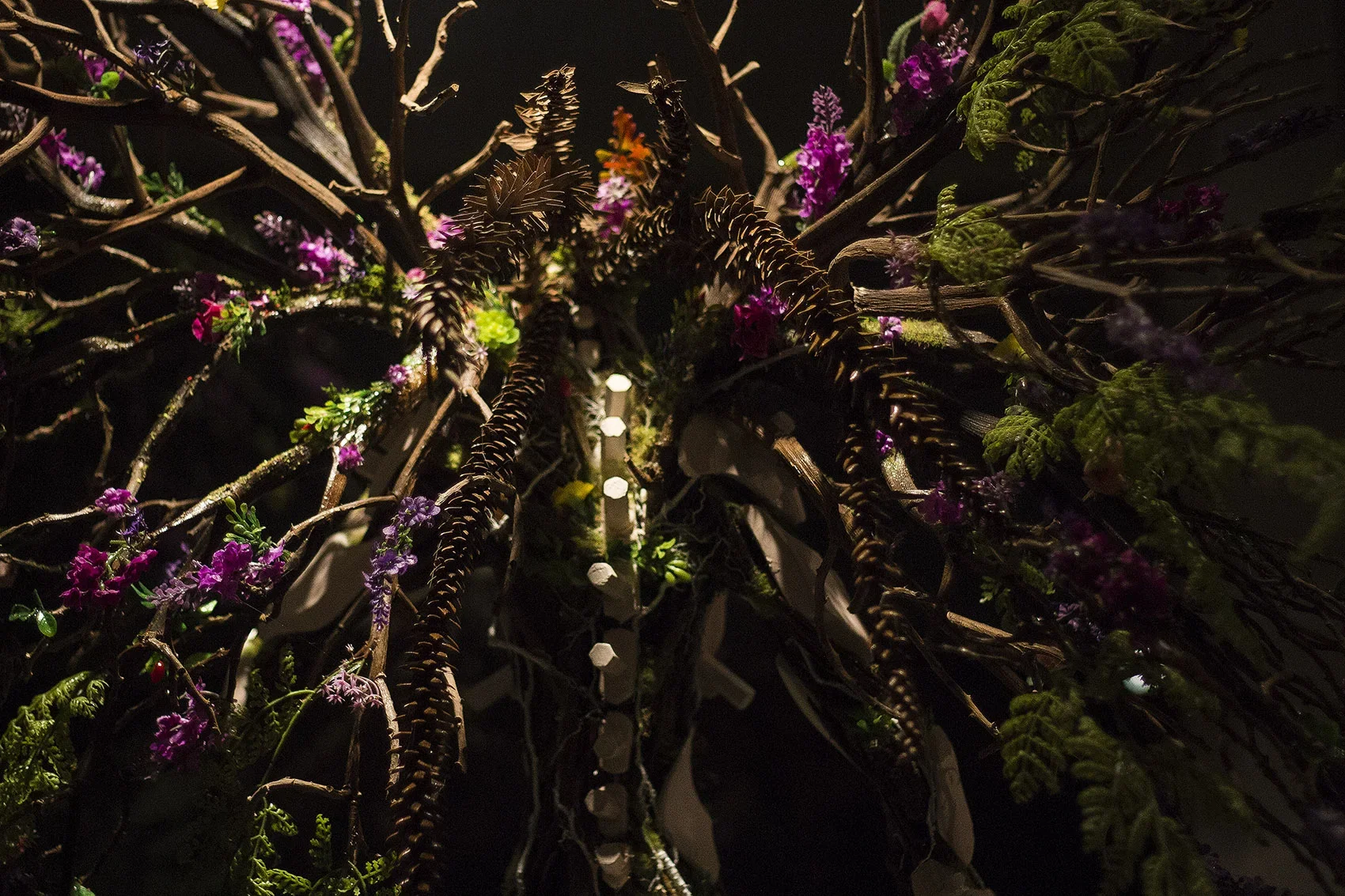
Golemecha combines two mythic protectors: the golem, a being from Judaic folklore formed from earth and matter, and the mech, a robotic warrior drawn from Japanese science fiction and anime.
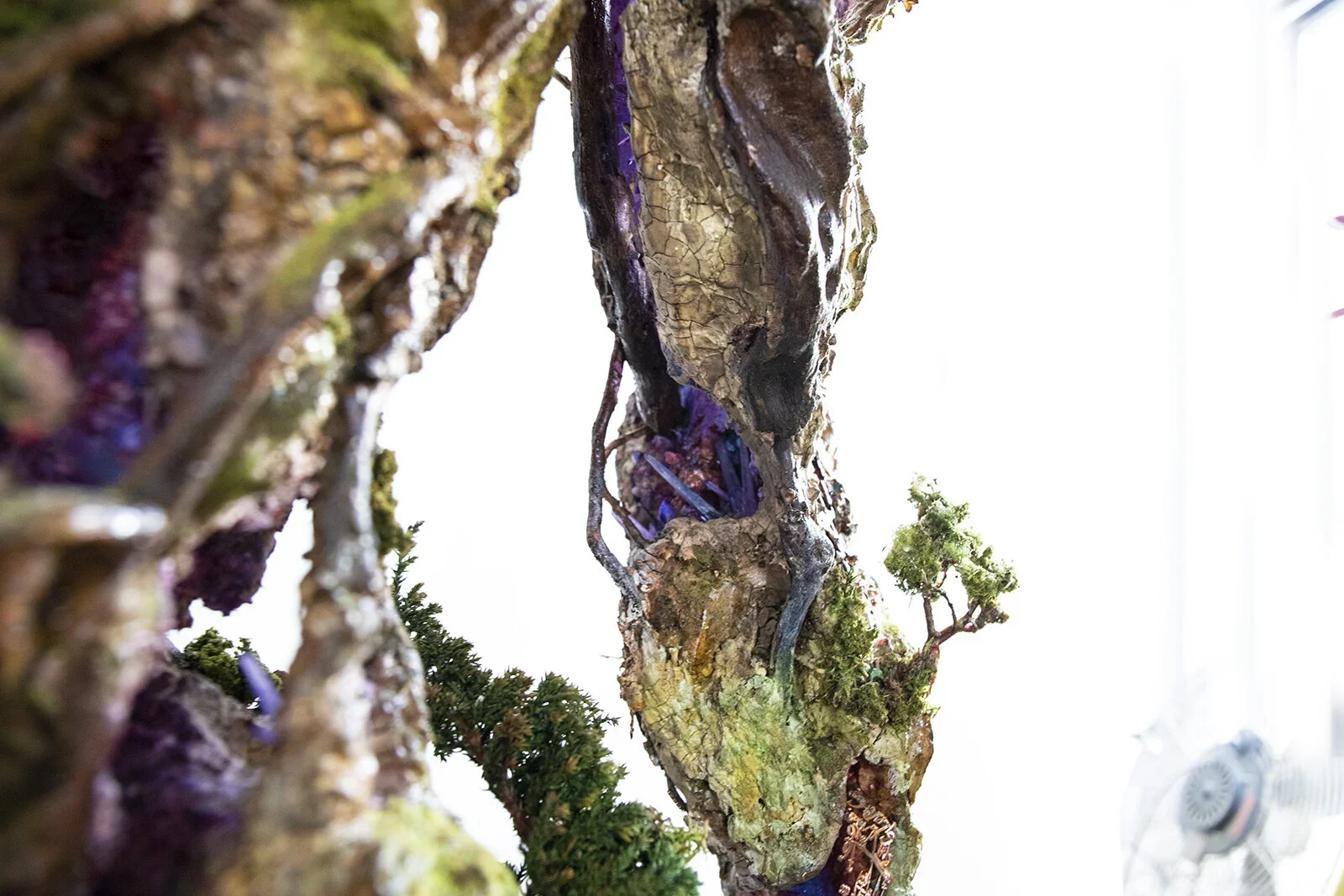
The sculpture imagines a new kind of guardian built from both nature and technology. Its body fuses branches, roots, metal, plastic, 3D-printed elements, moss, and mechanical structure into a hybrid figure that feels ancient, synthetic, and alive.
Installed in New York City’s Flatiron Building Prow Art Space in 2017, Golemecha was under-lit with purple LEDs and surrounded by nine glowing globes representing celestial bodies.
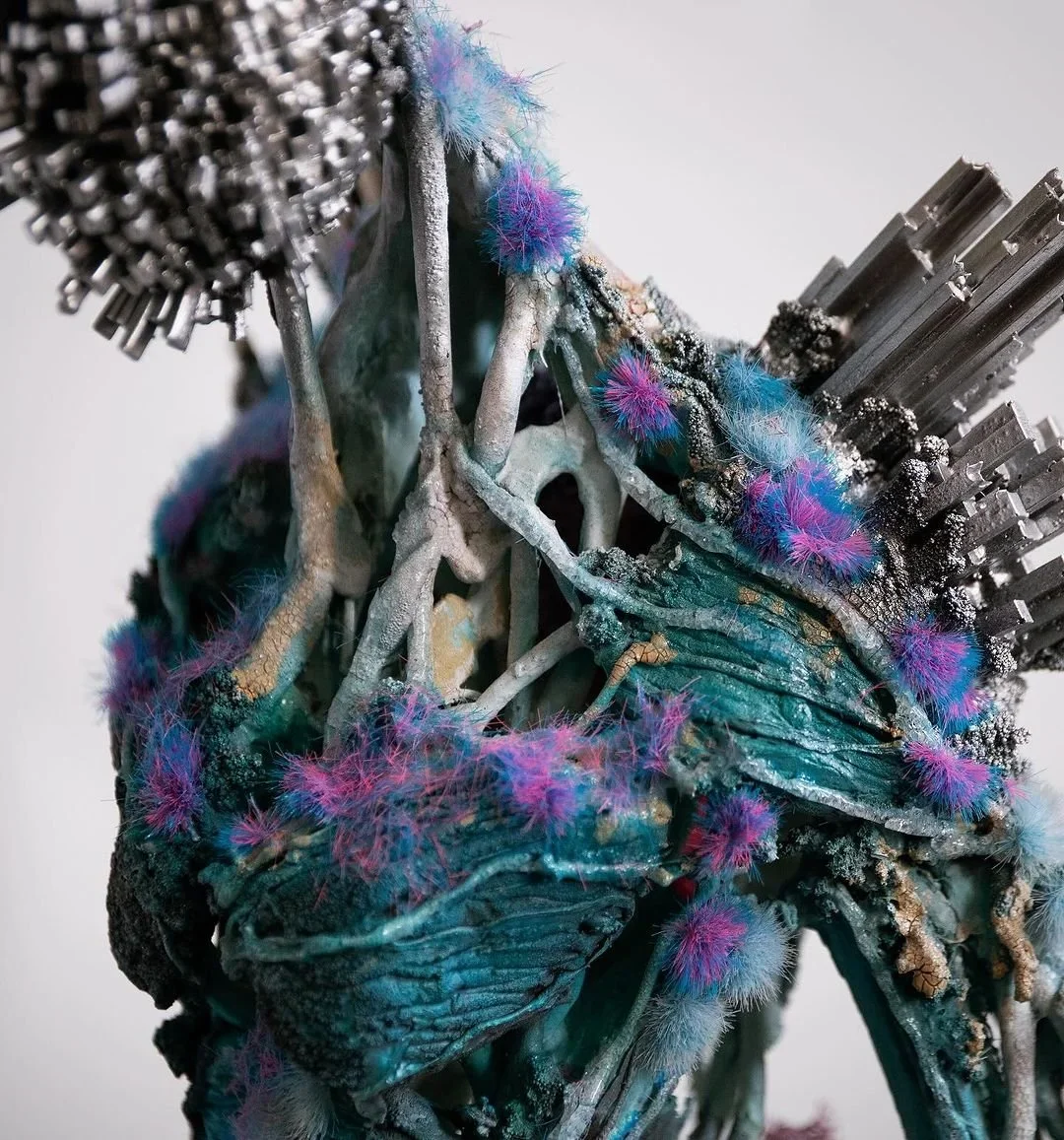
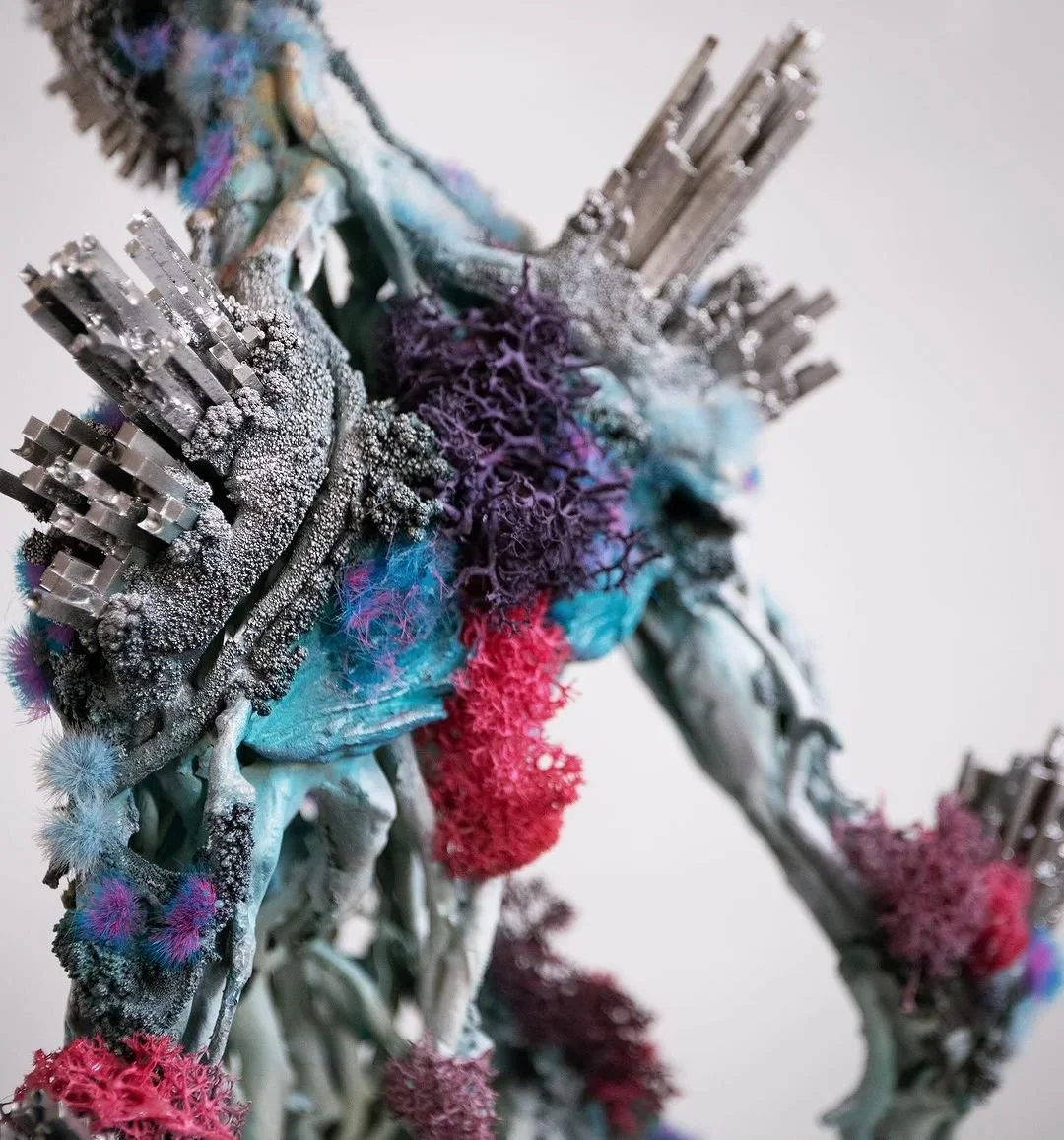
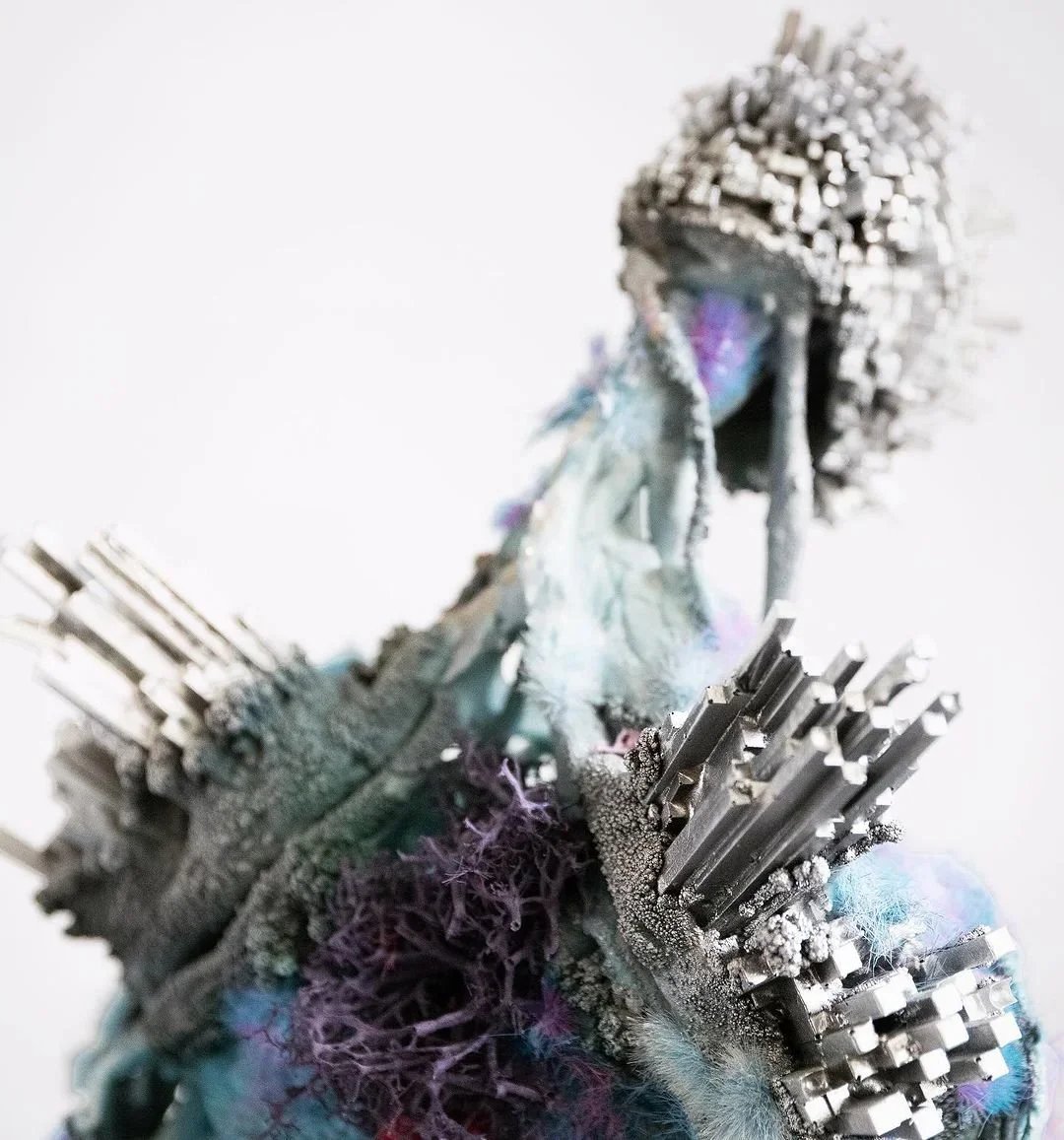
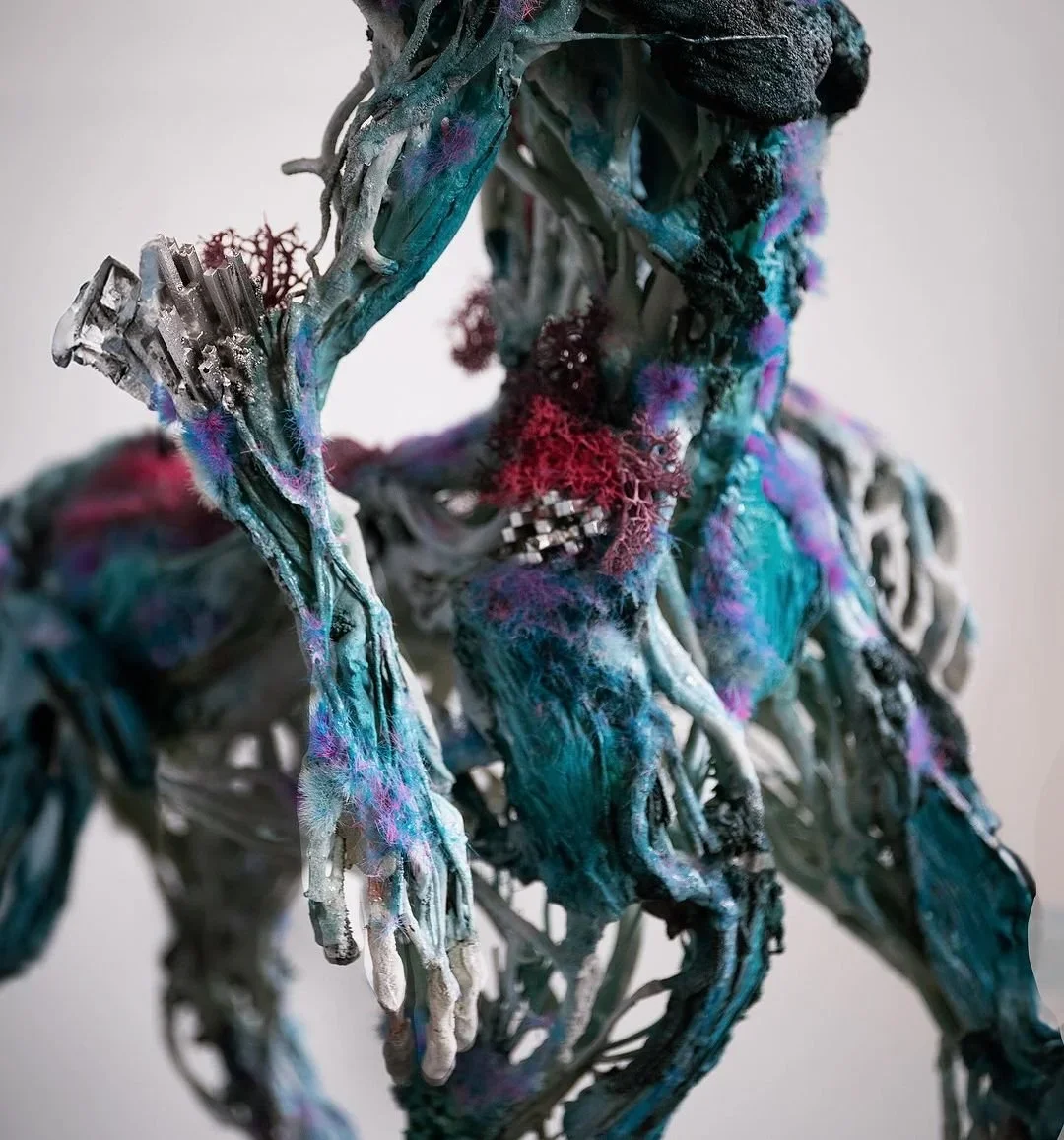
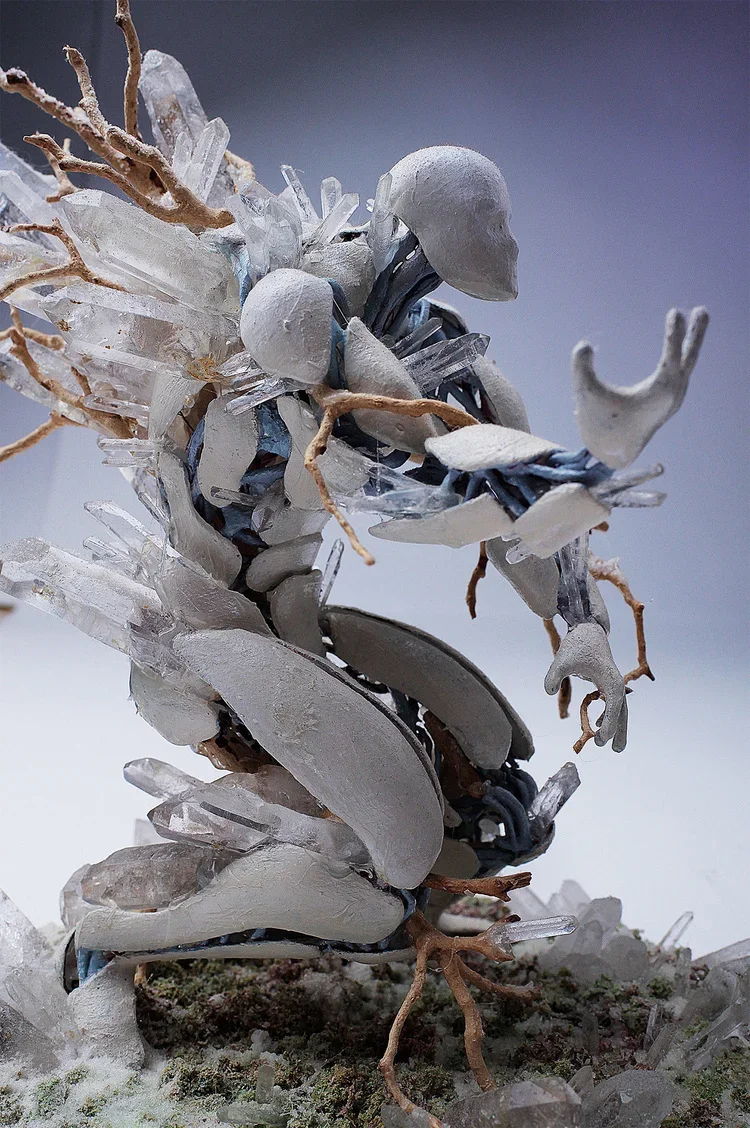
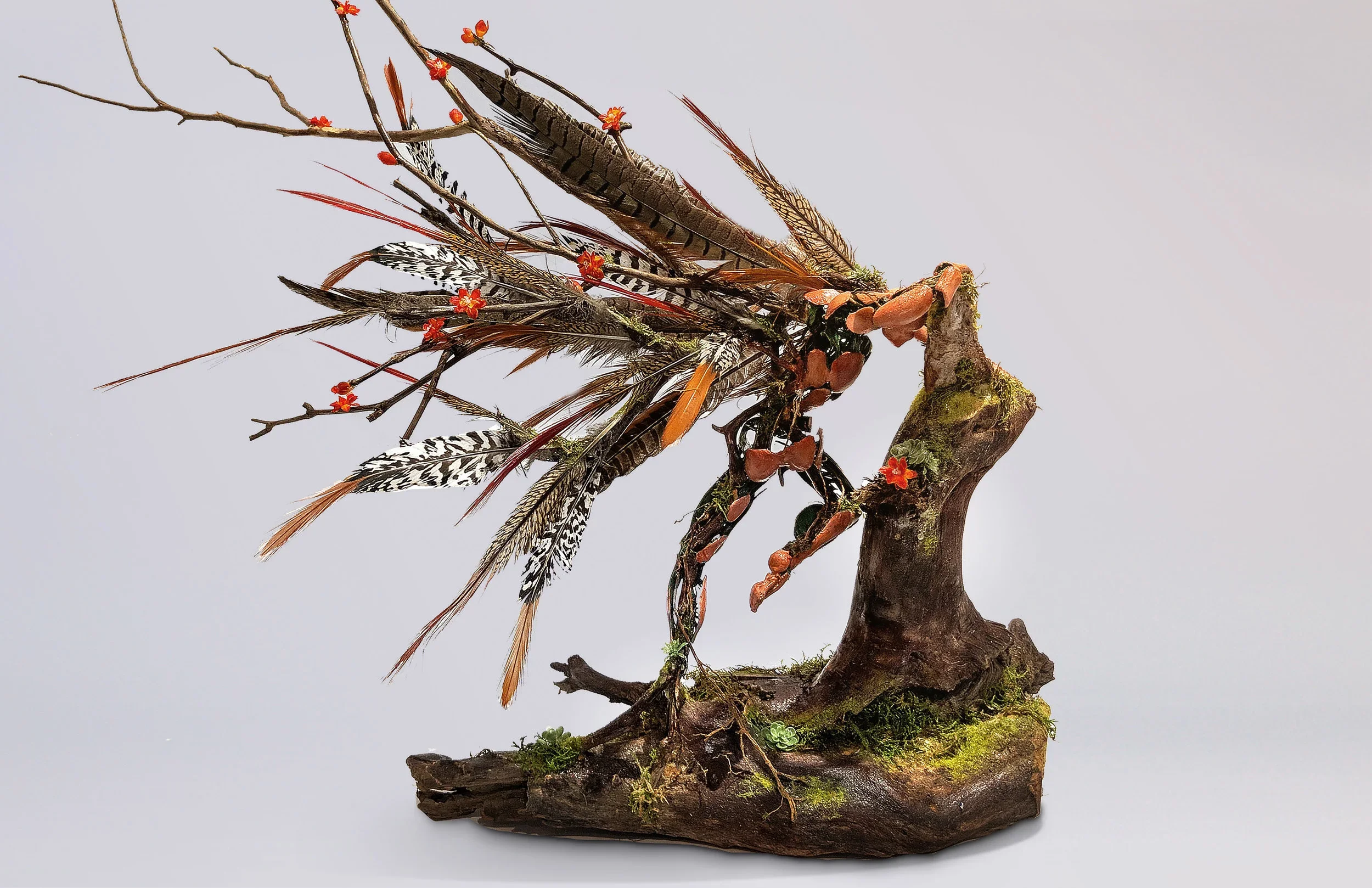
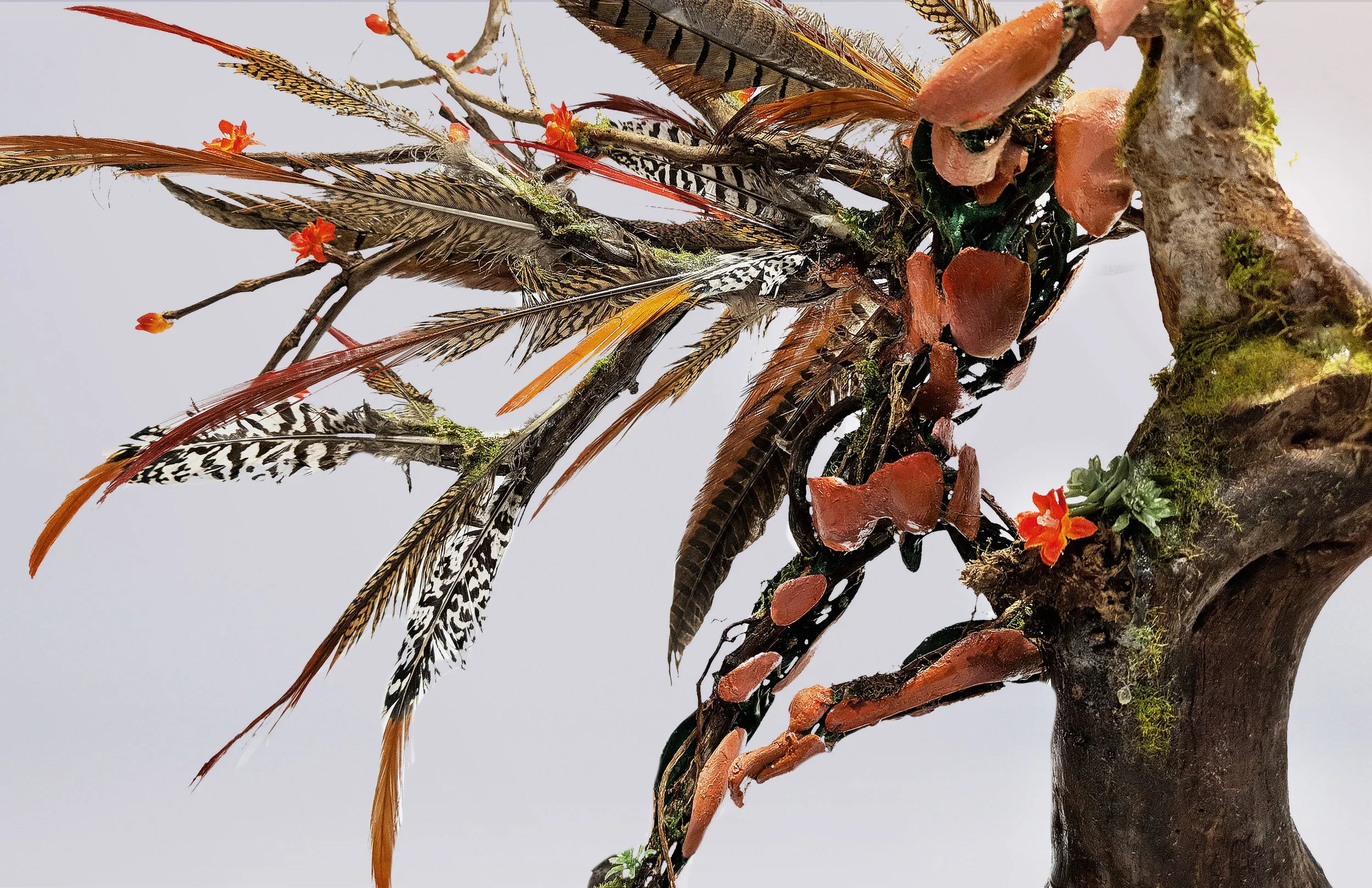
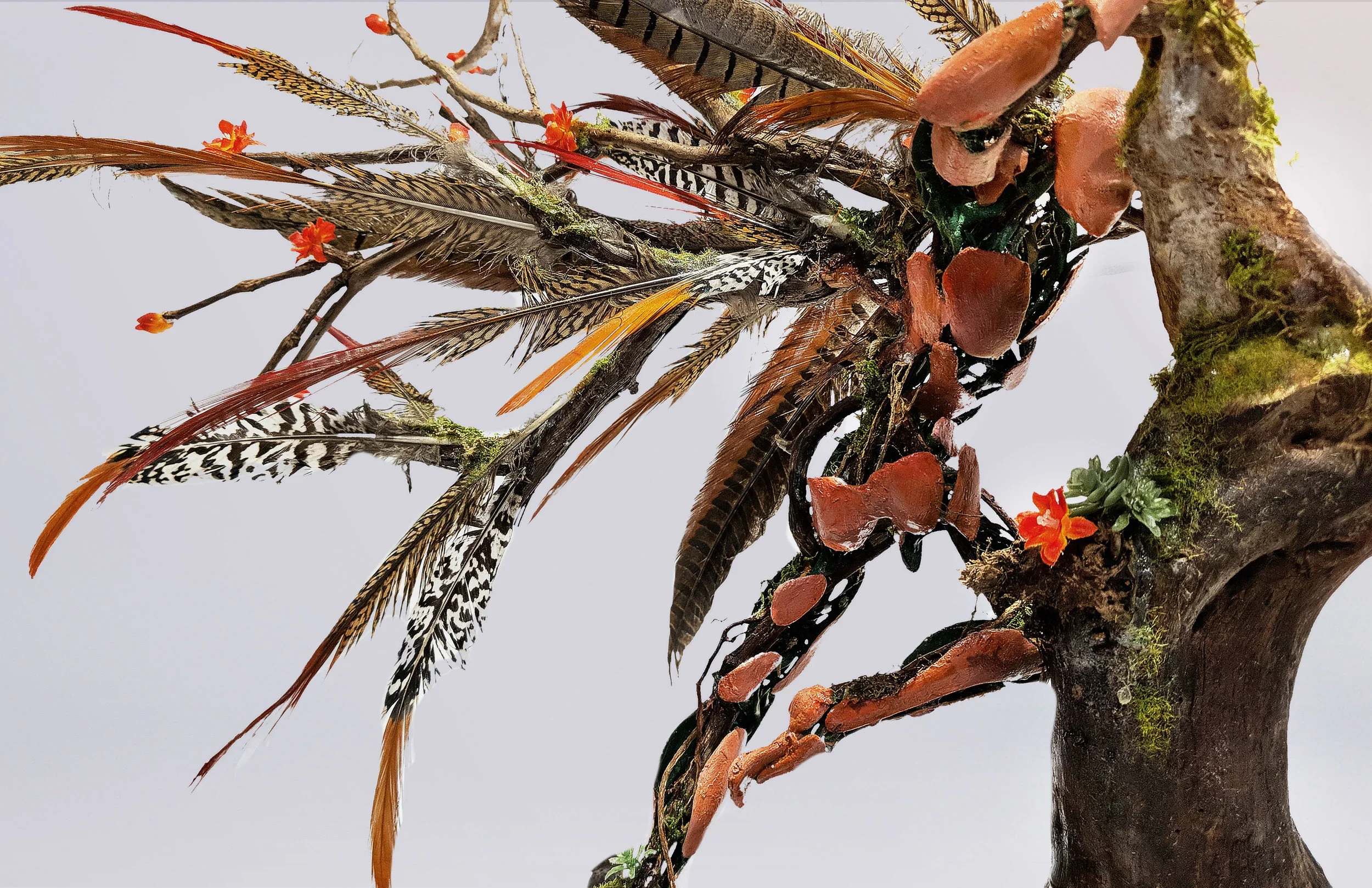
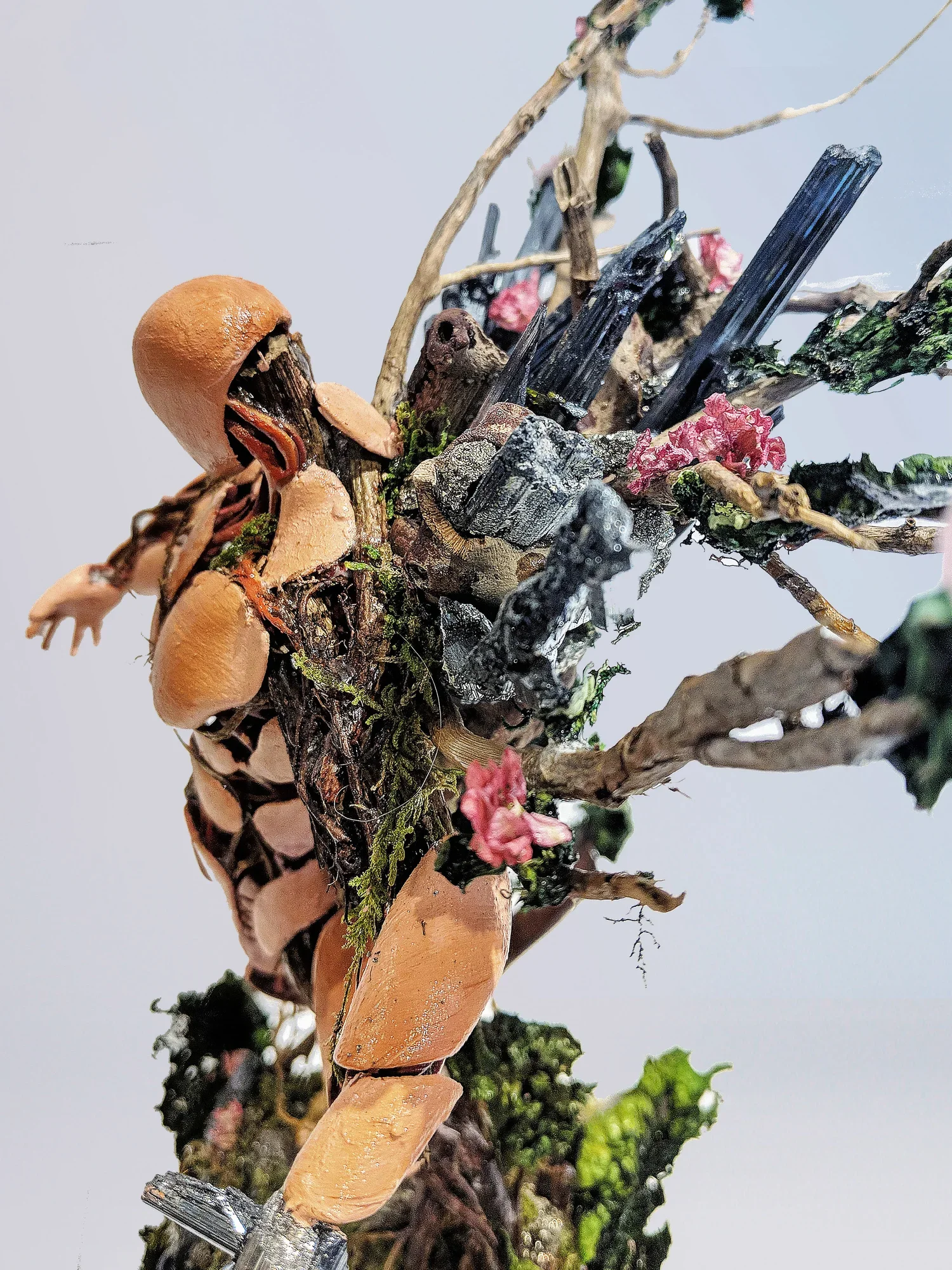
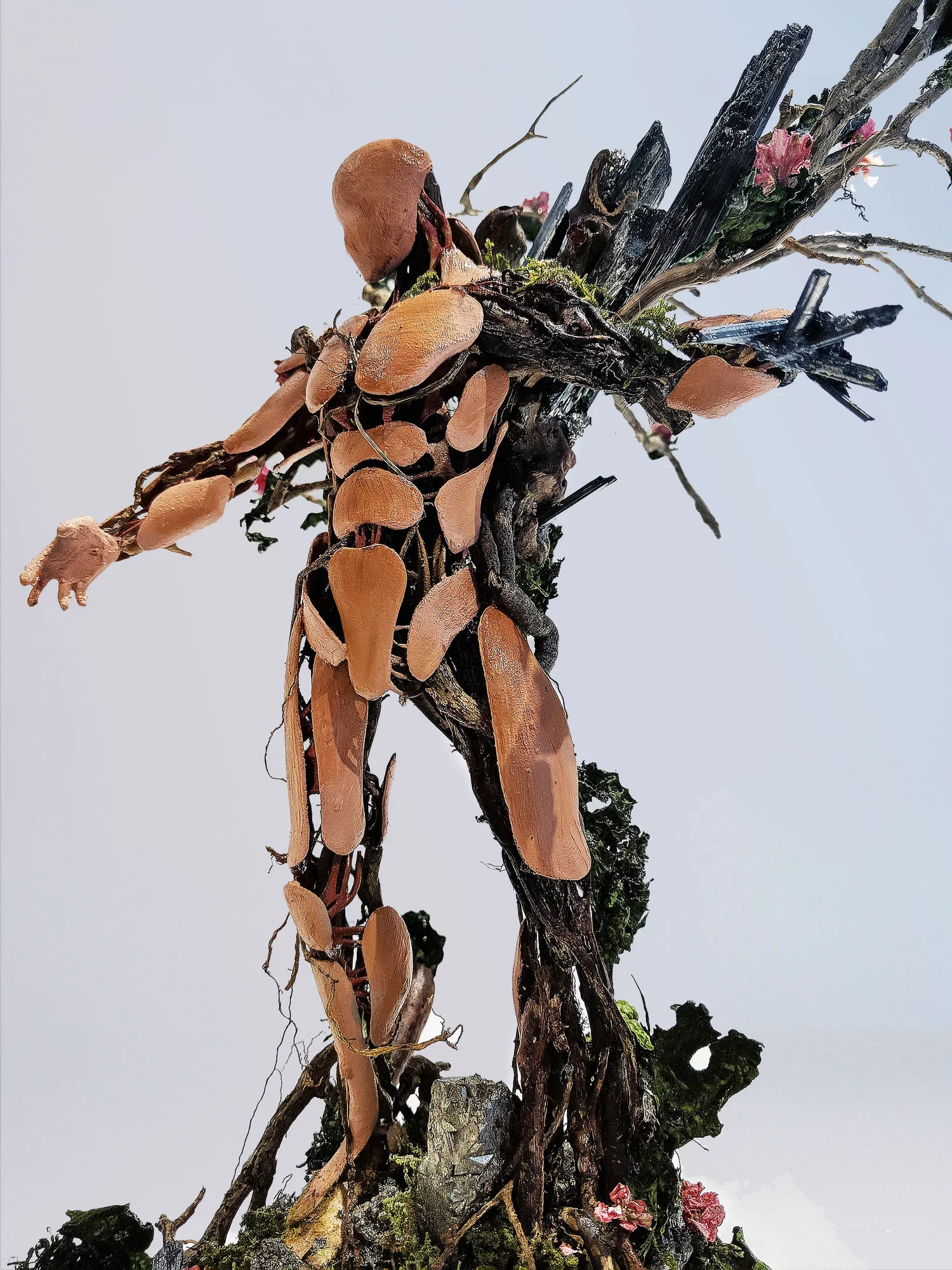
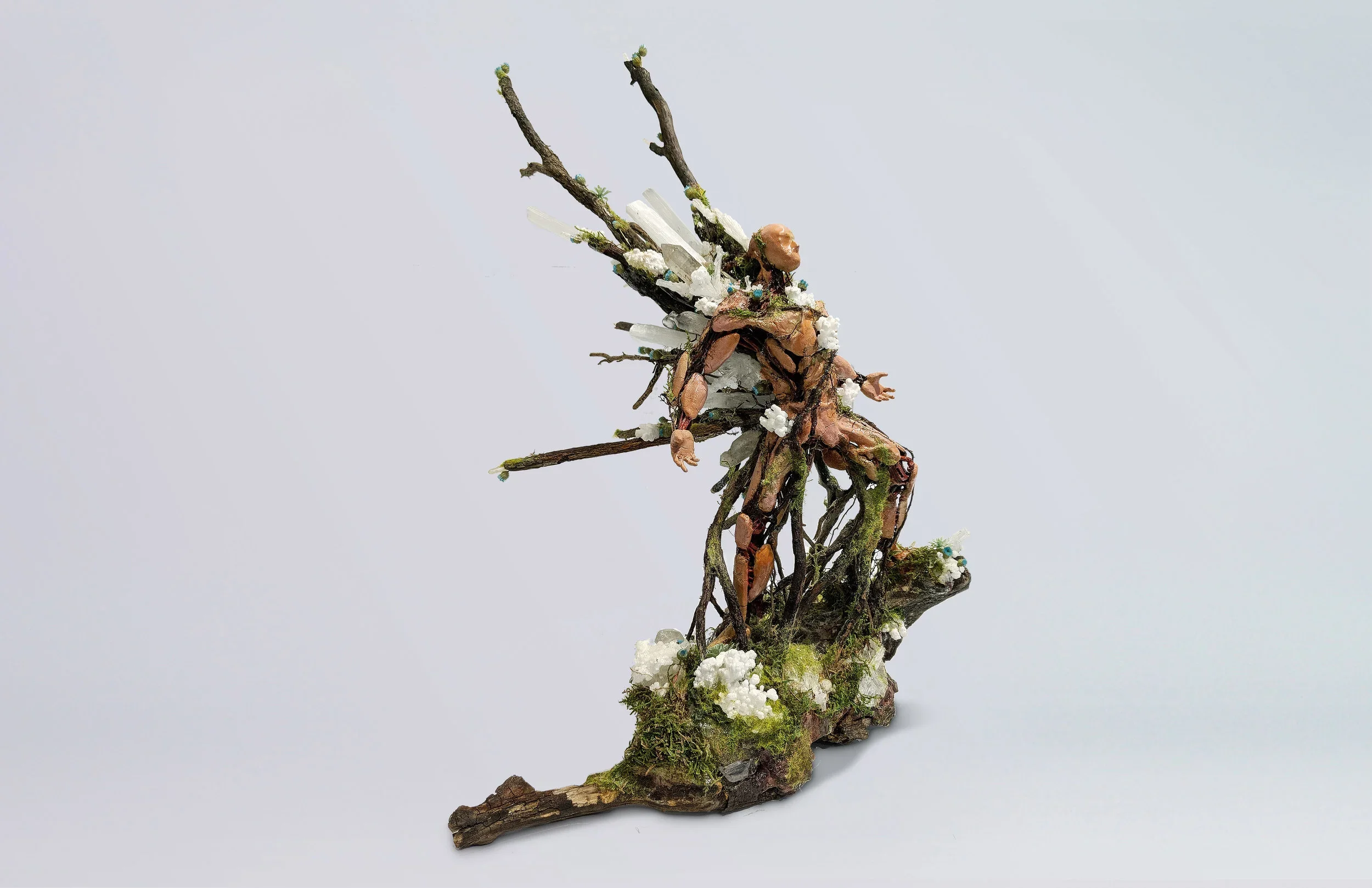
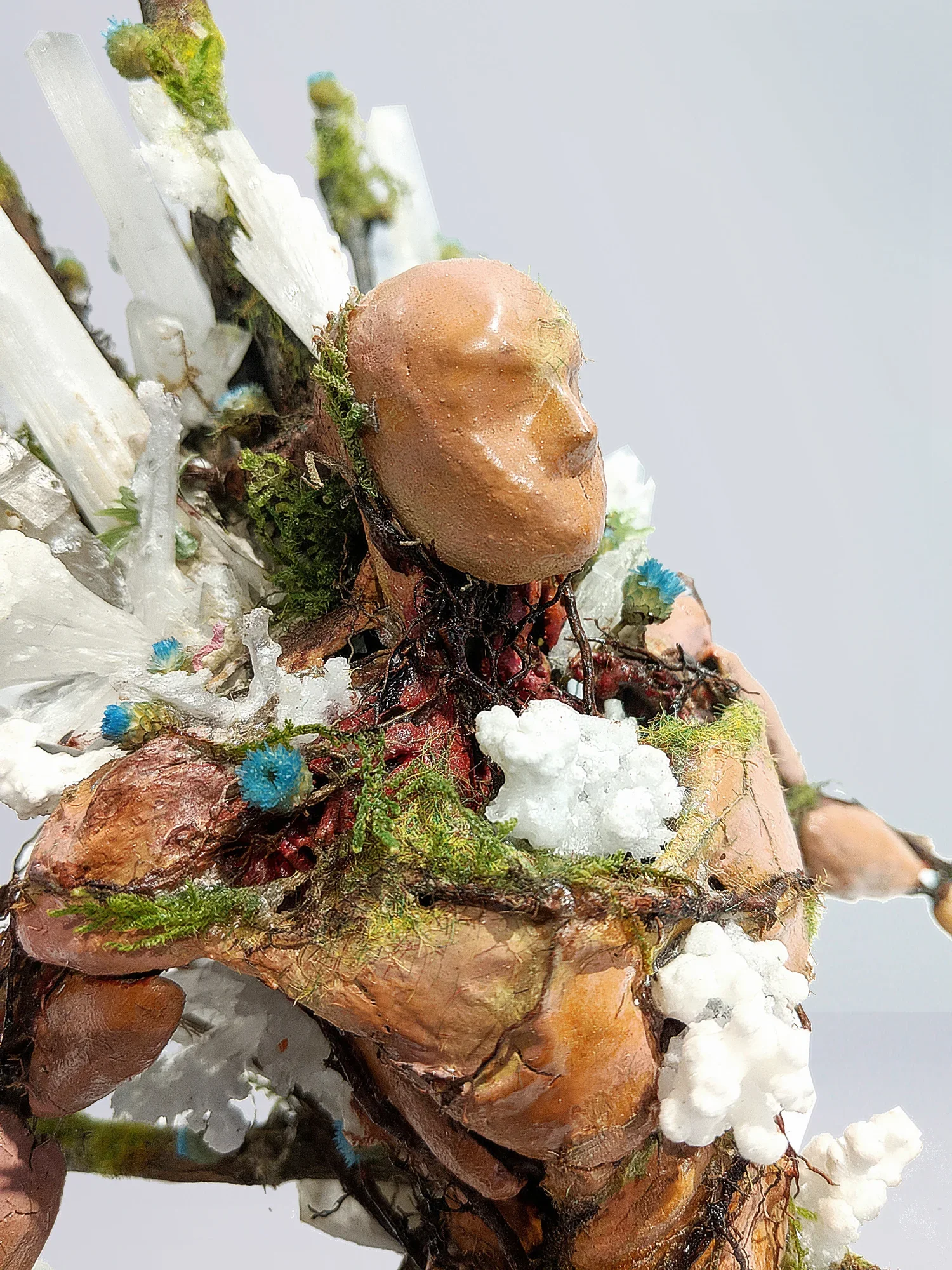
Biophilia
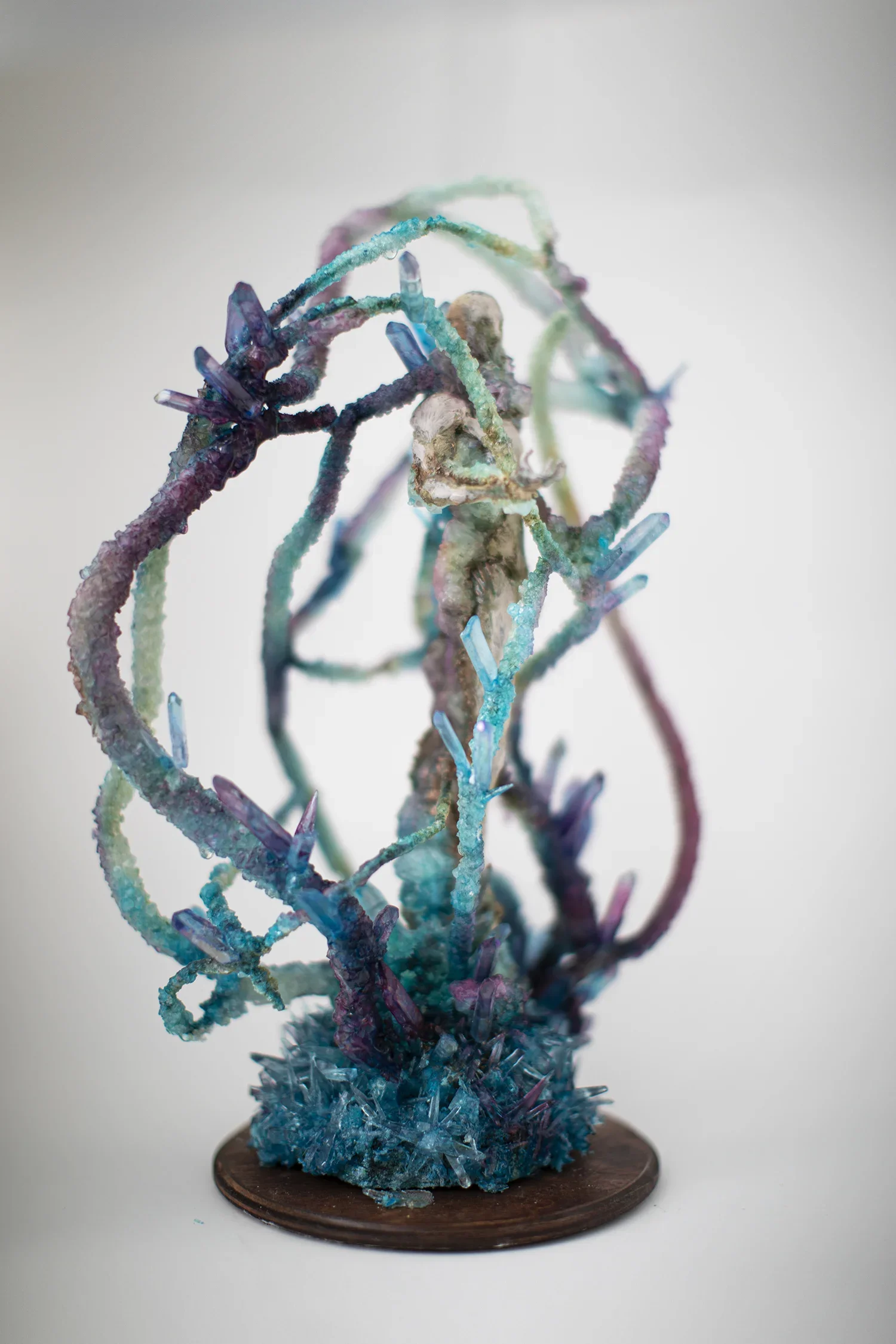
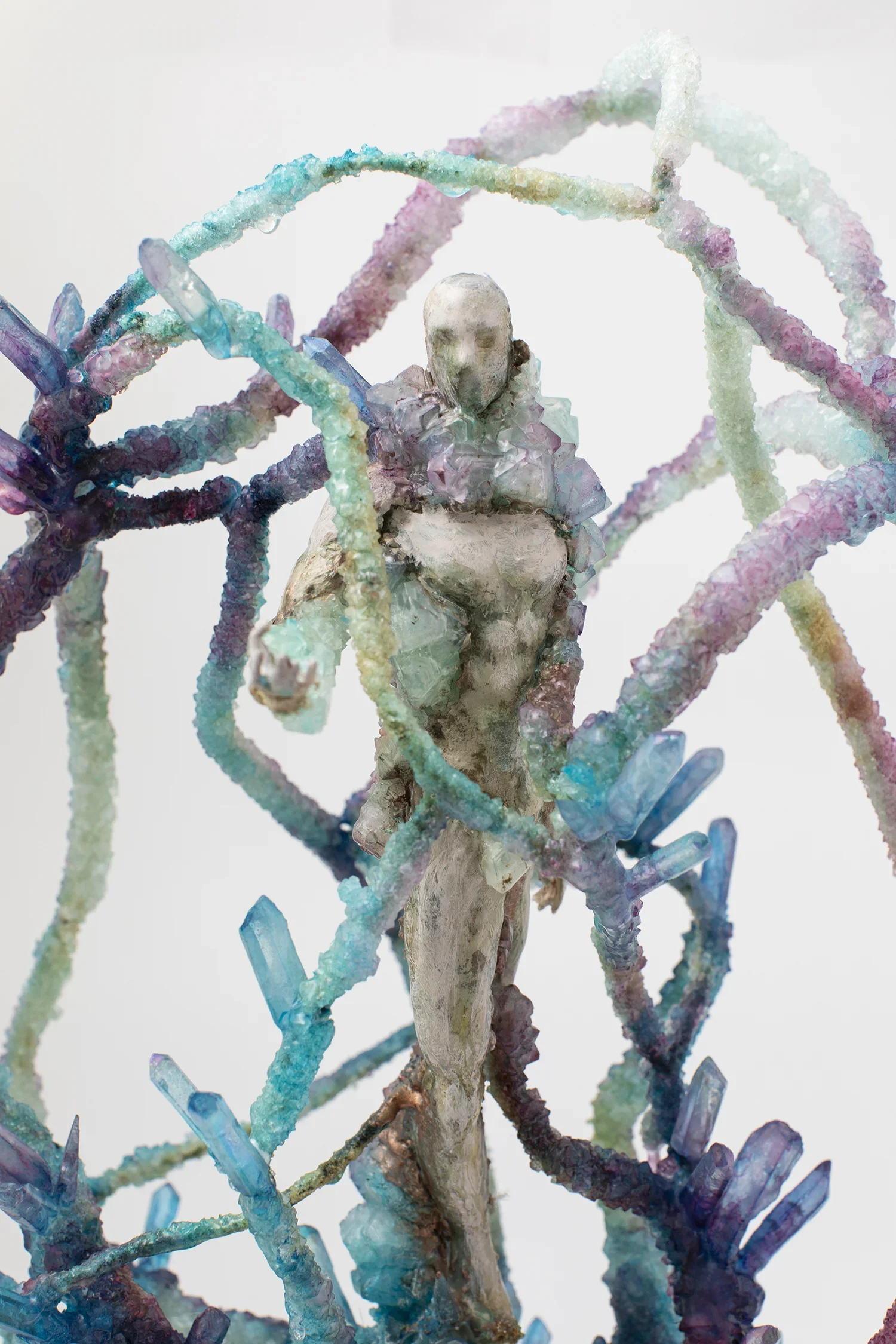
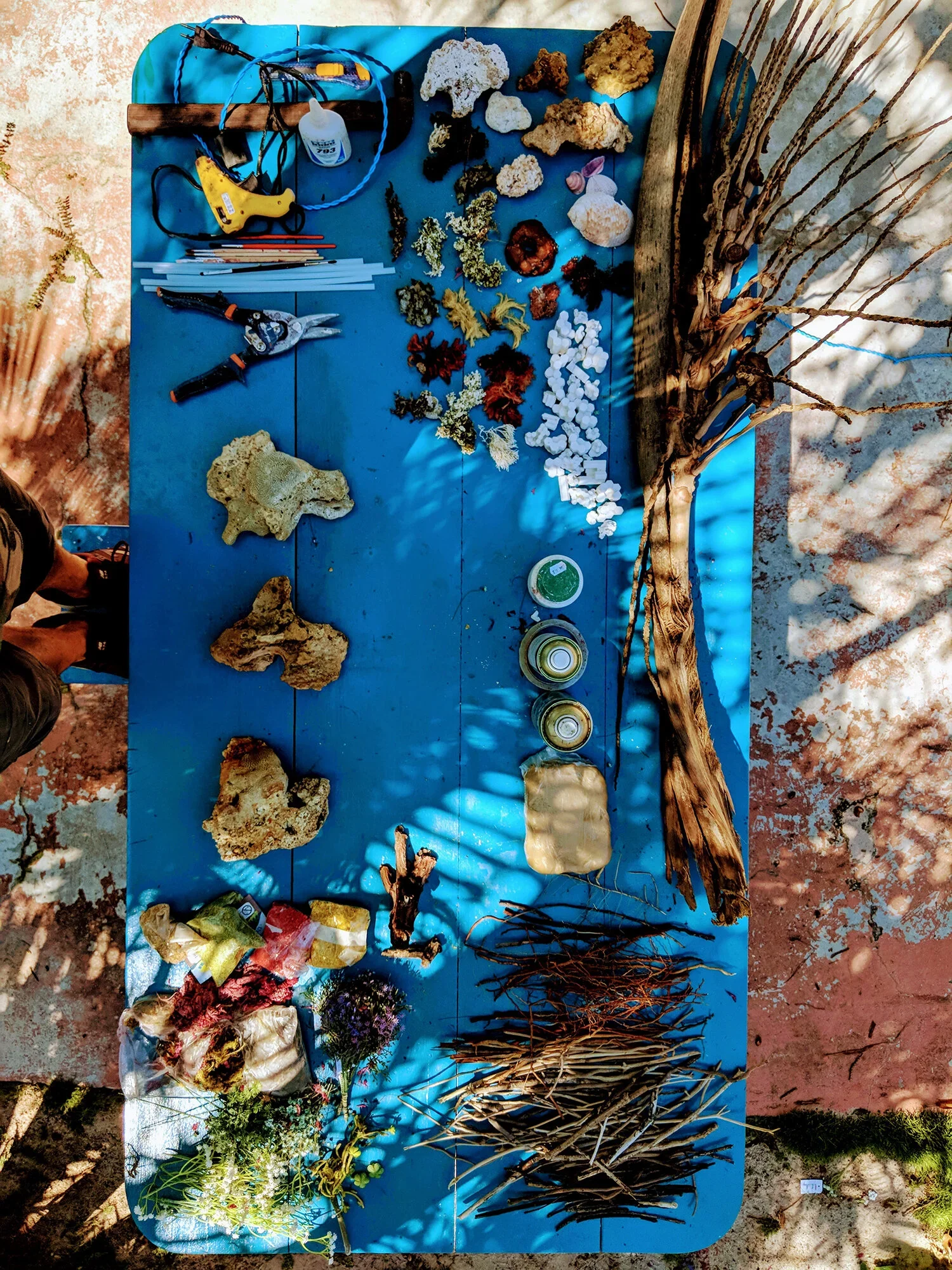
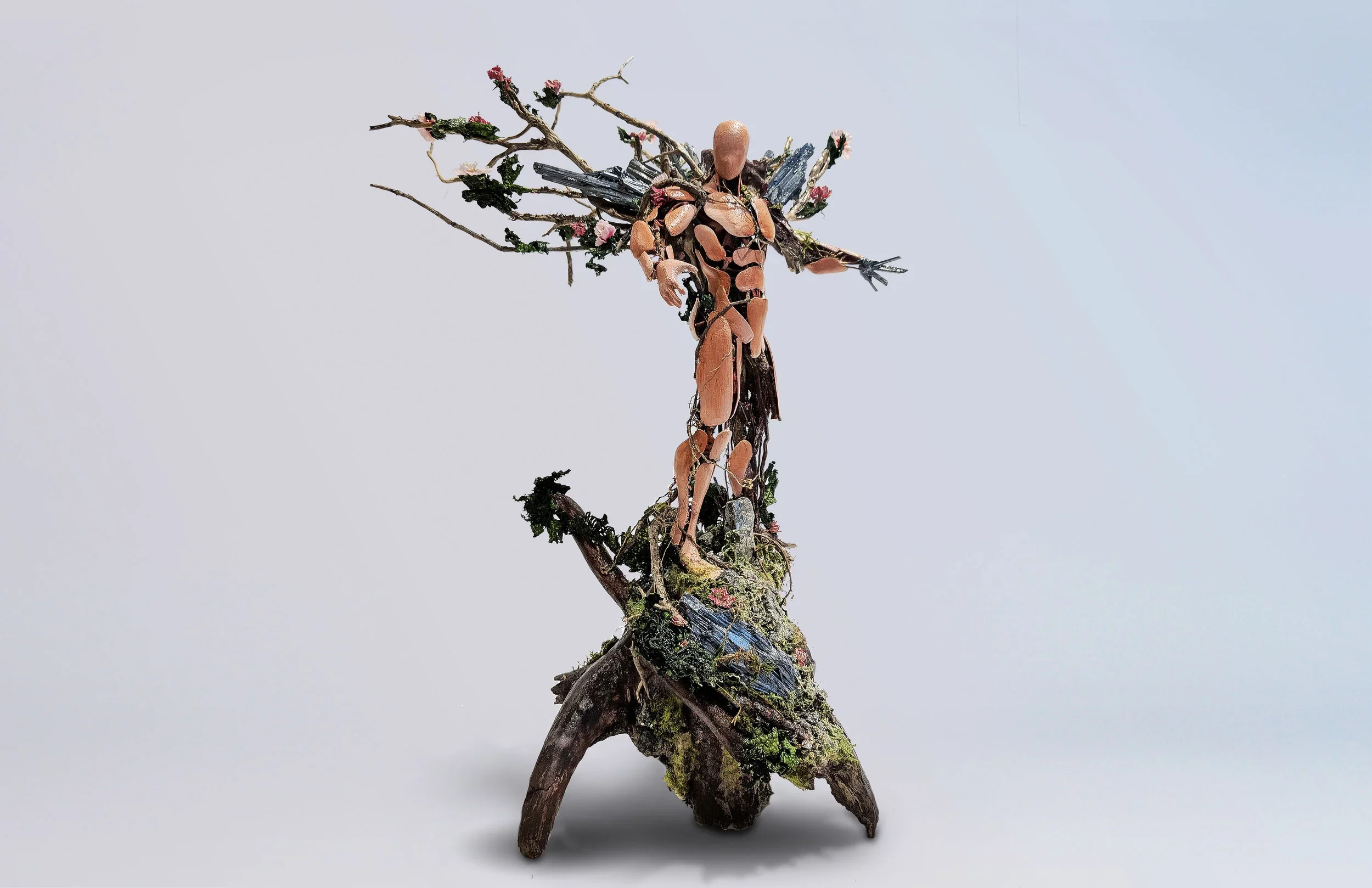
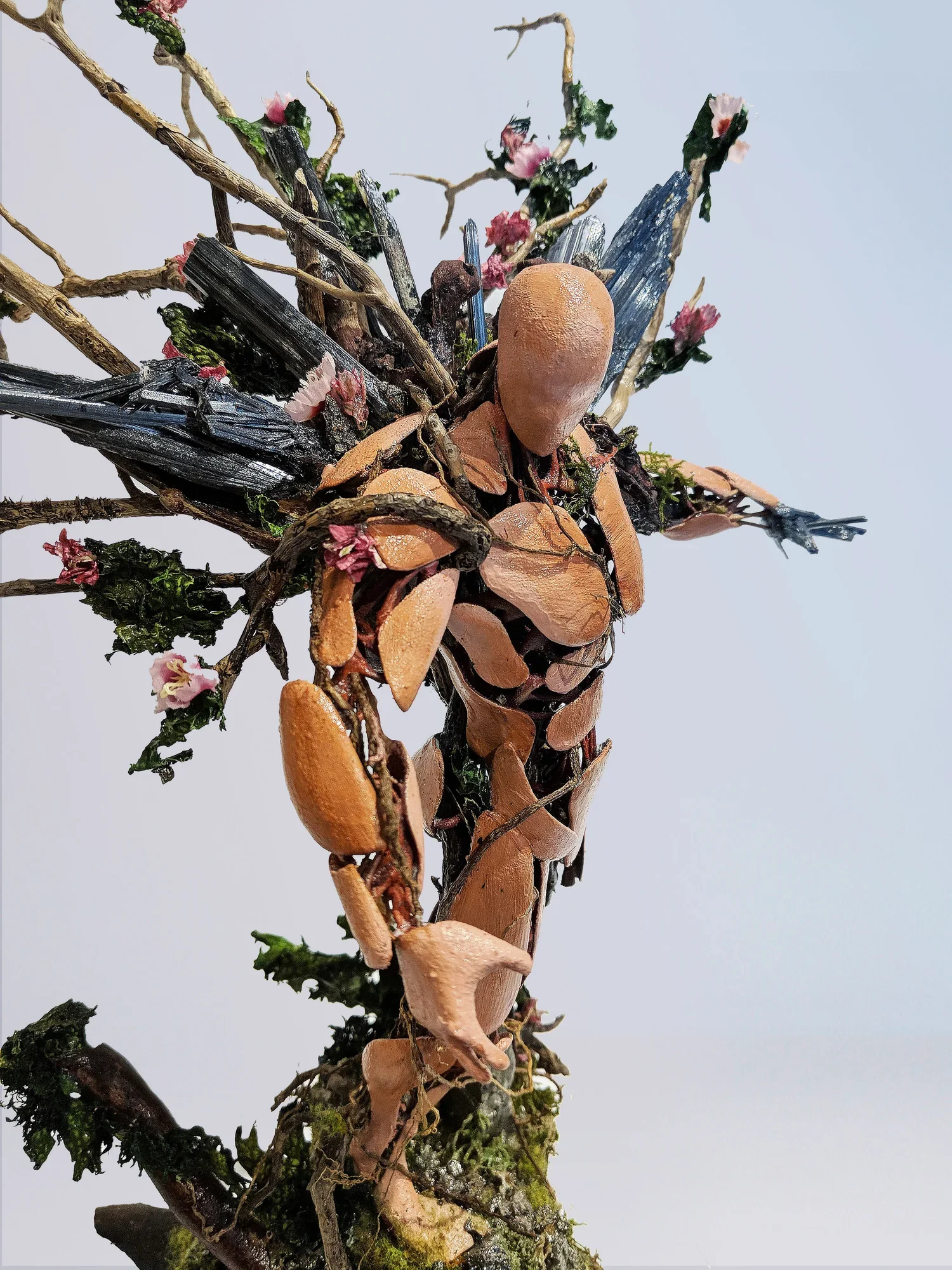
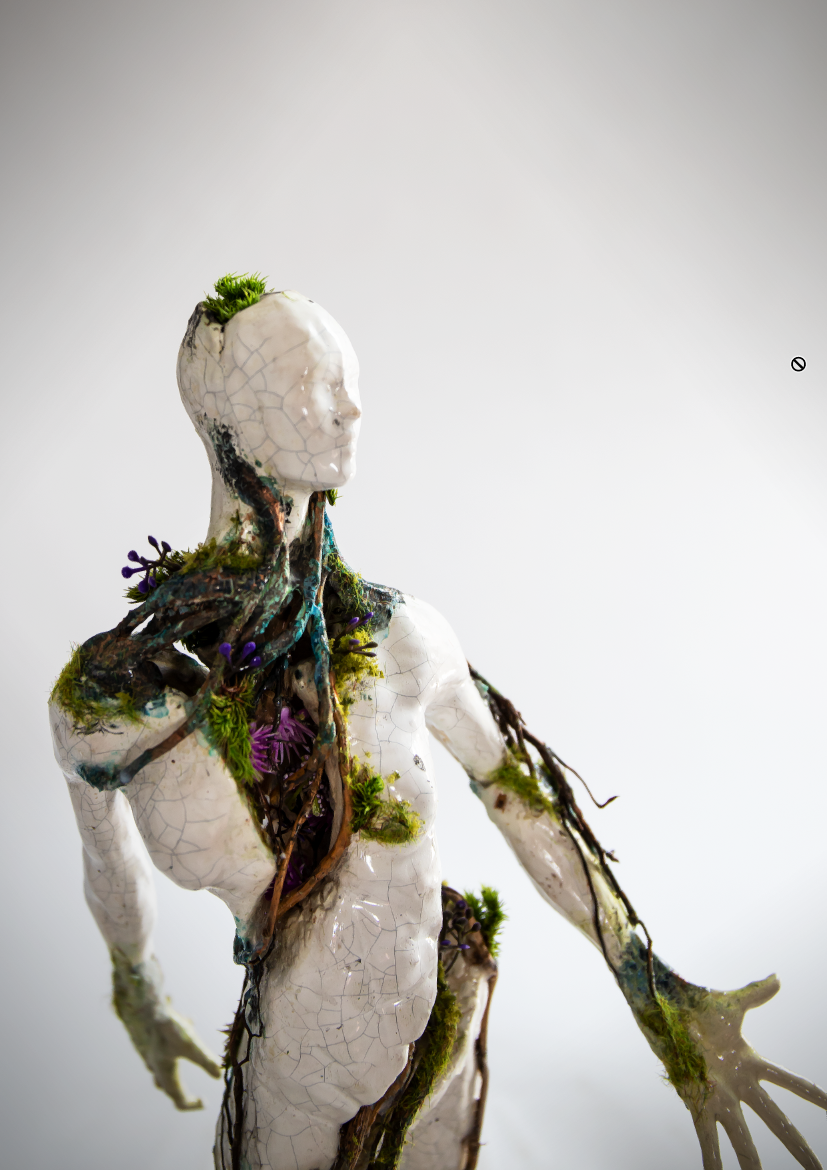
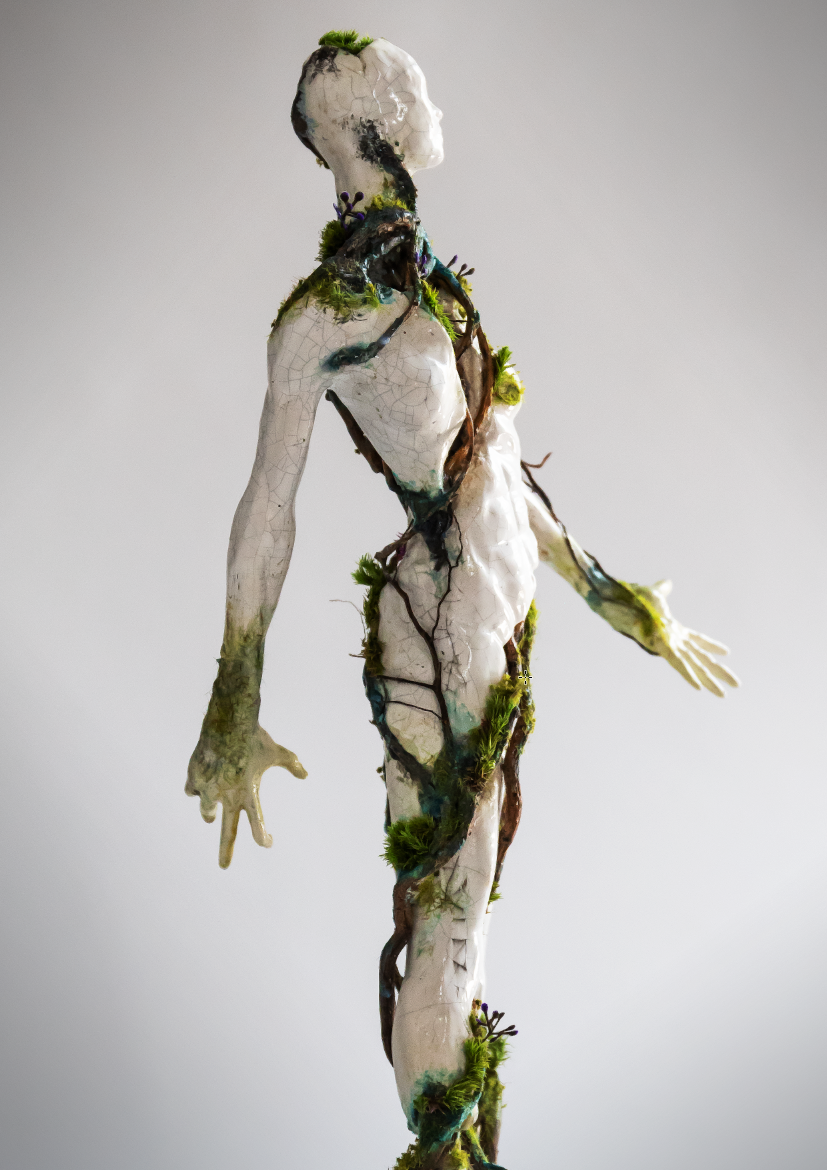
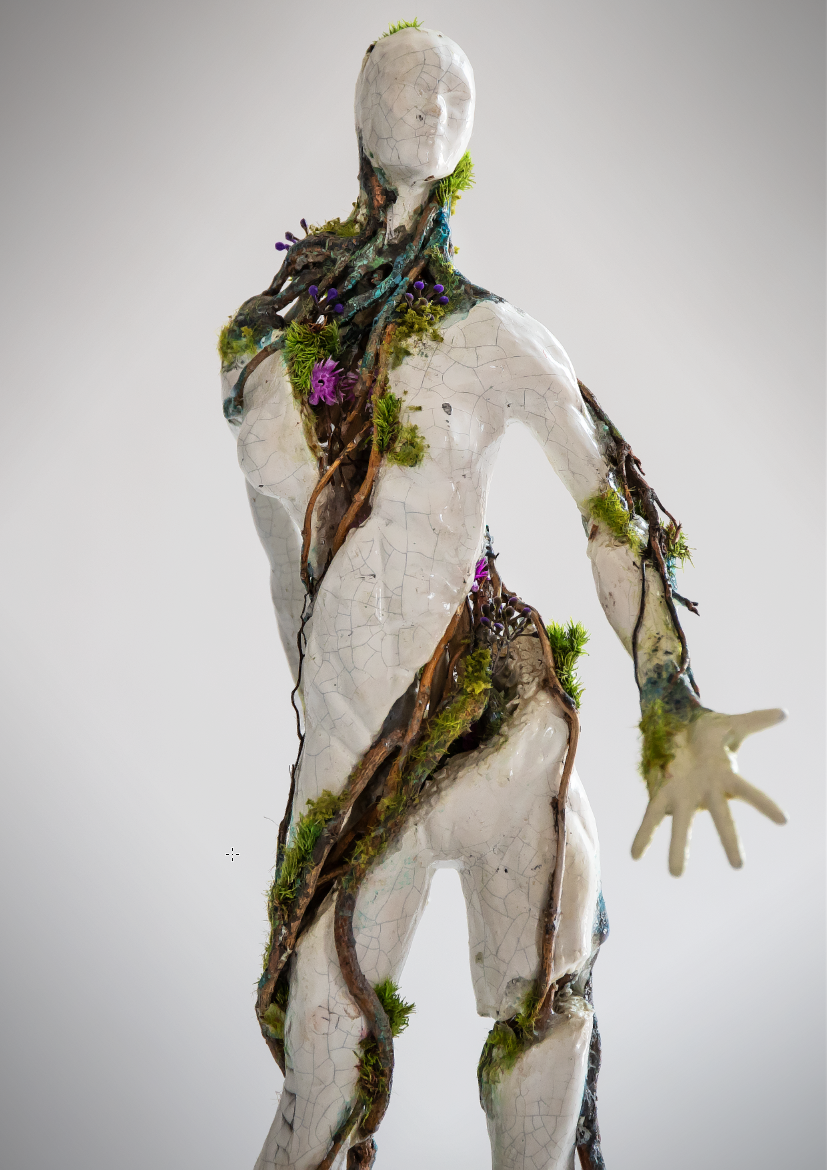
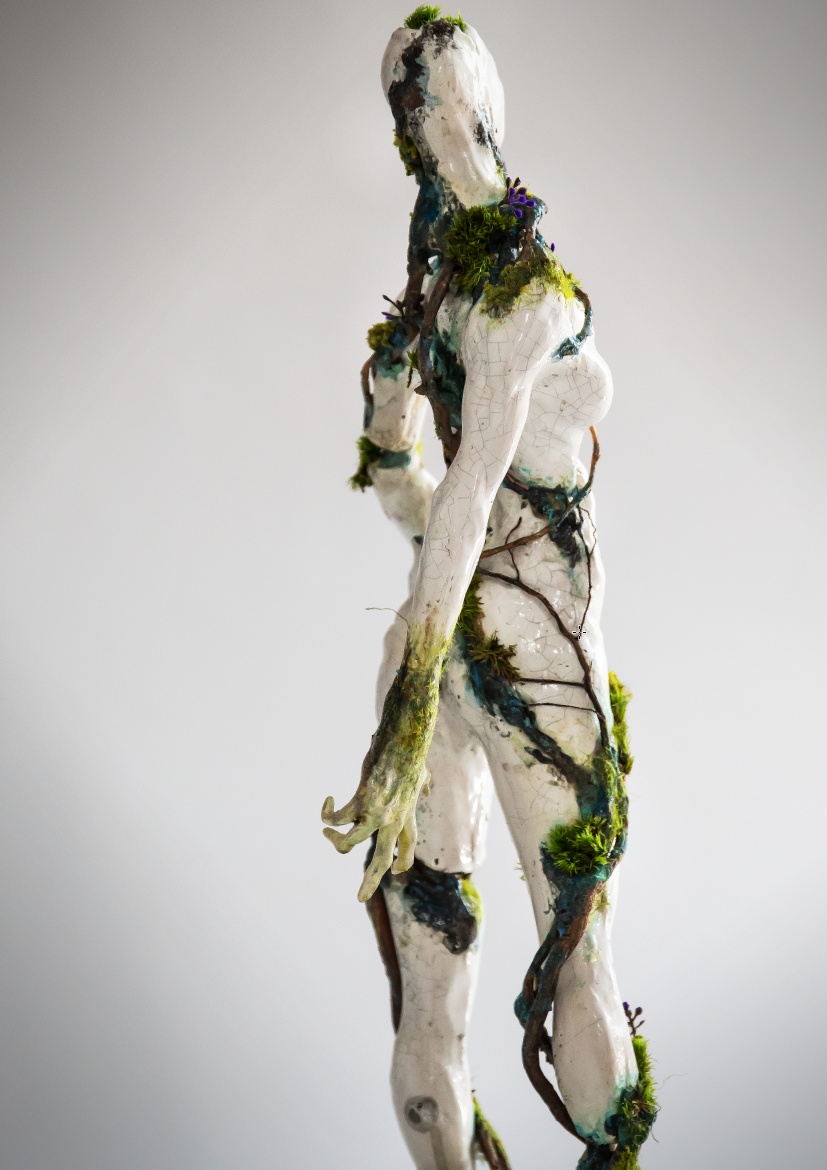
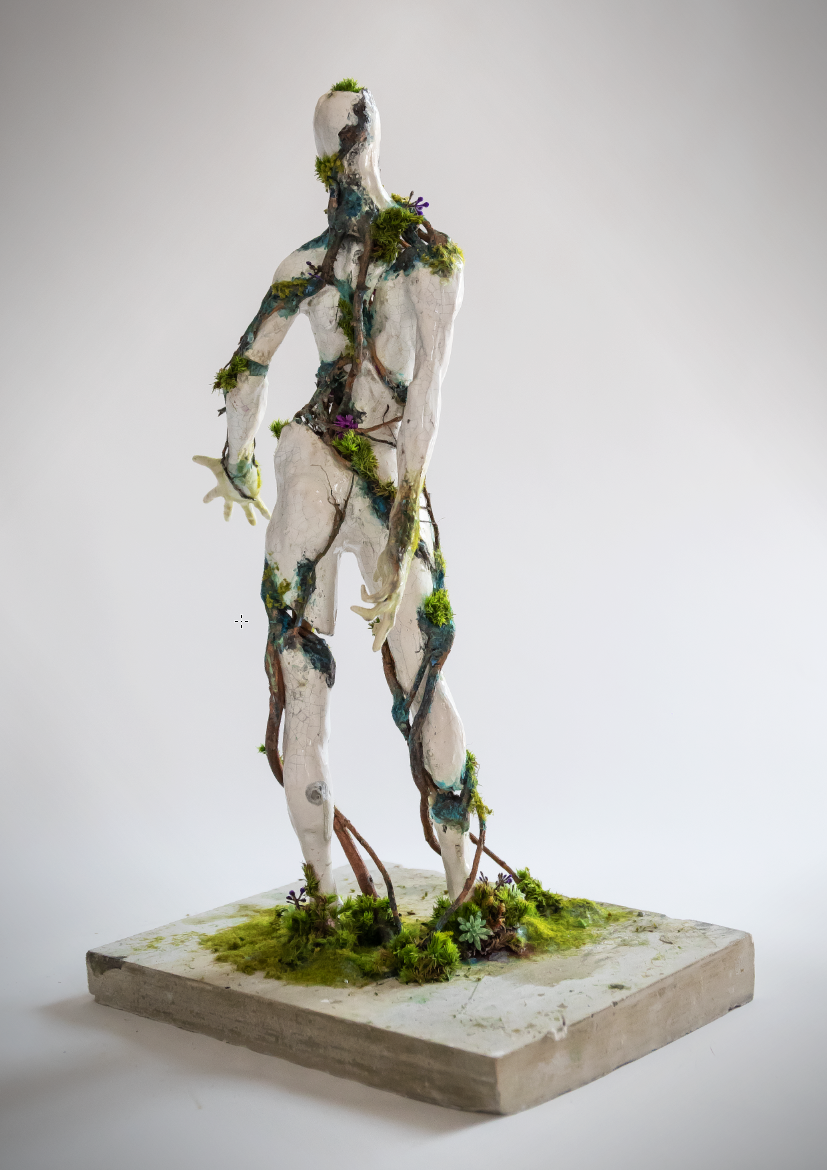
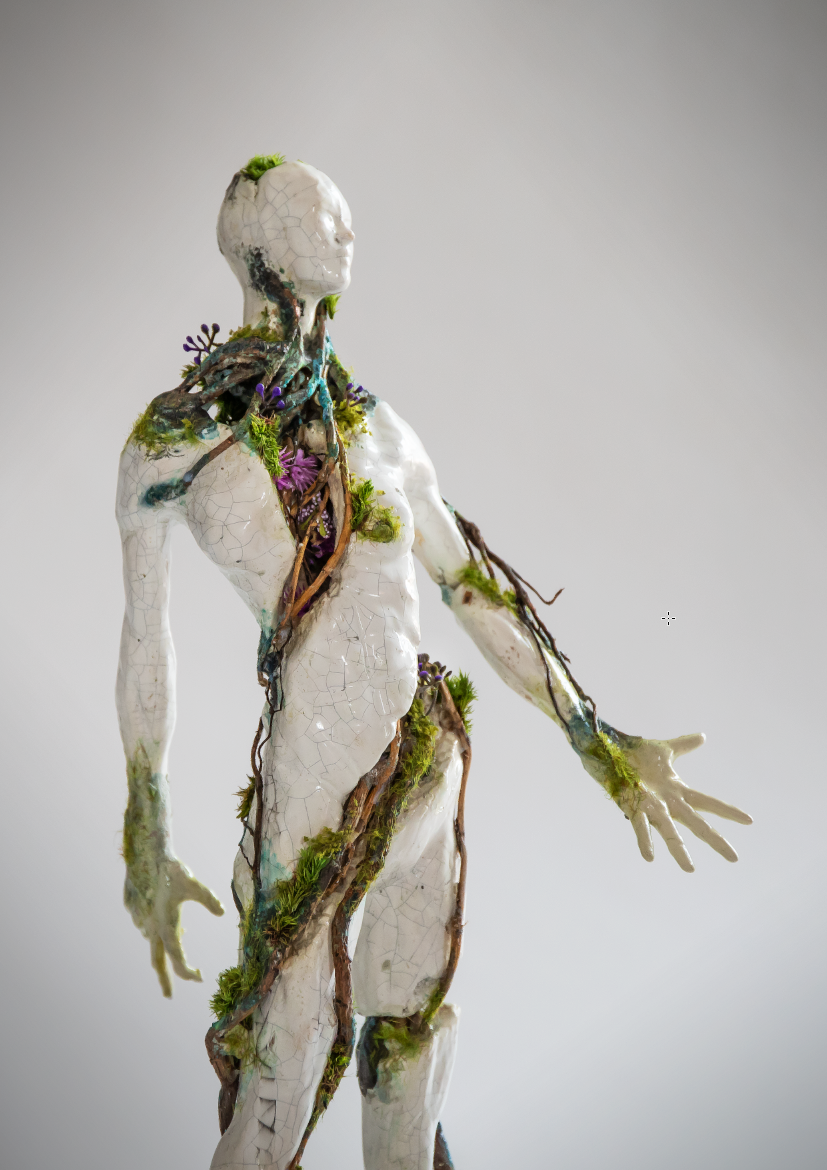
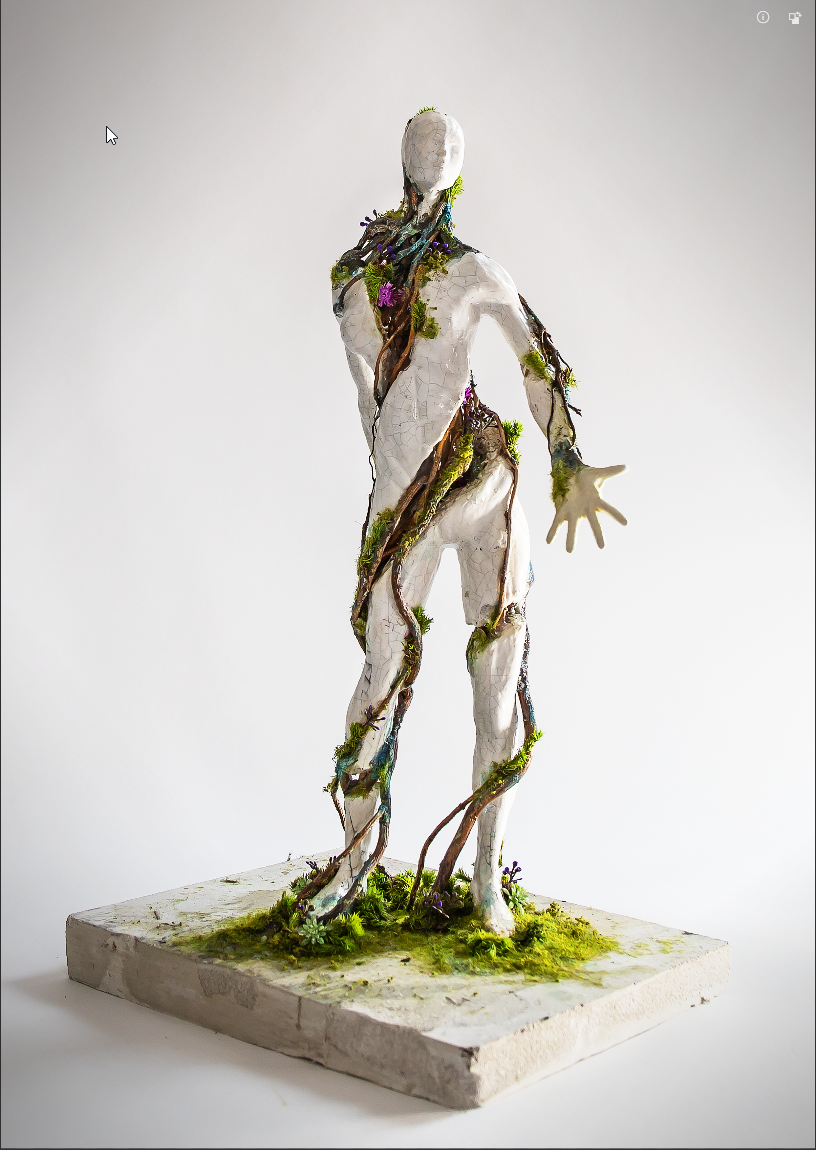
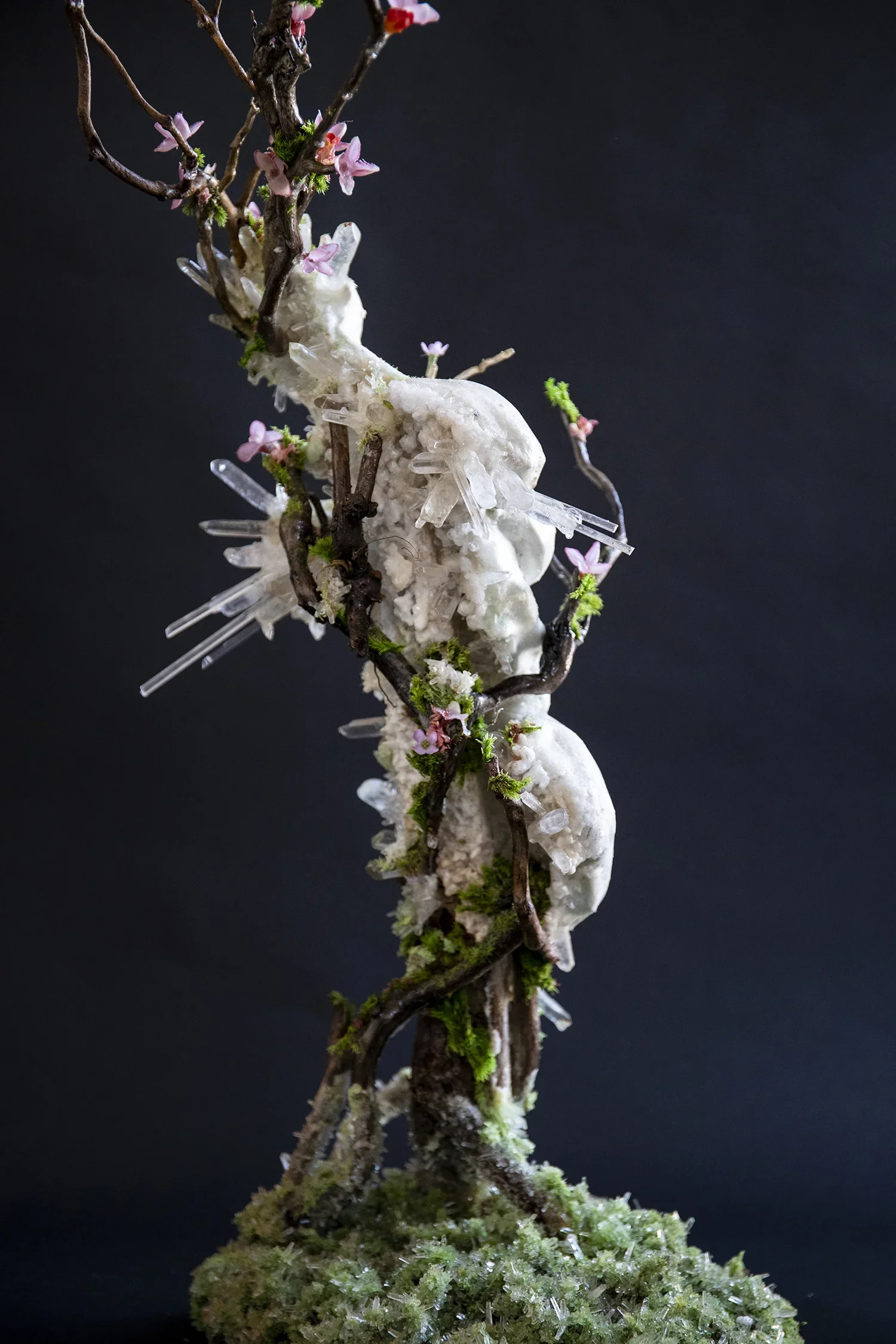
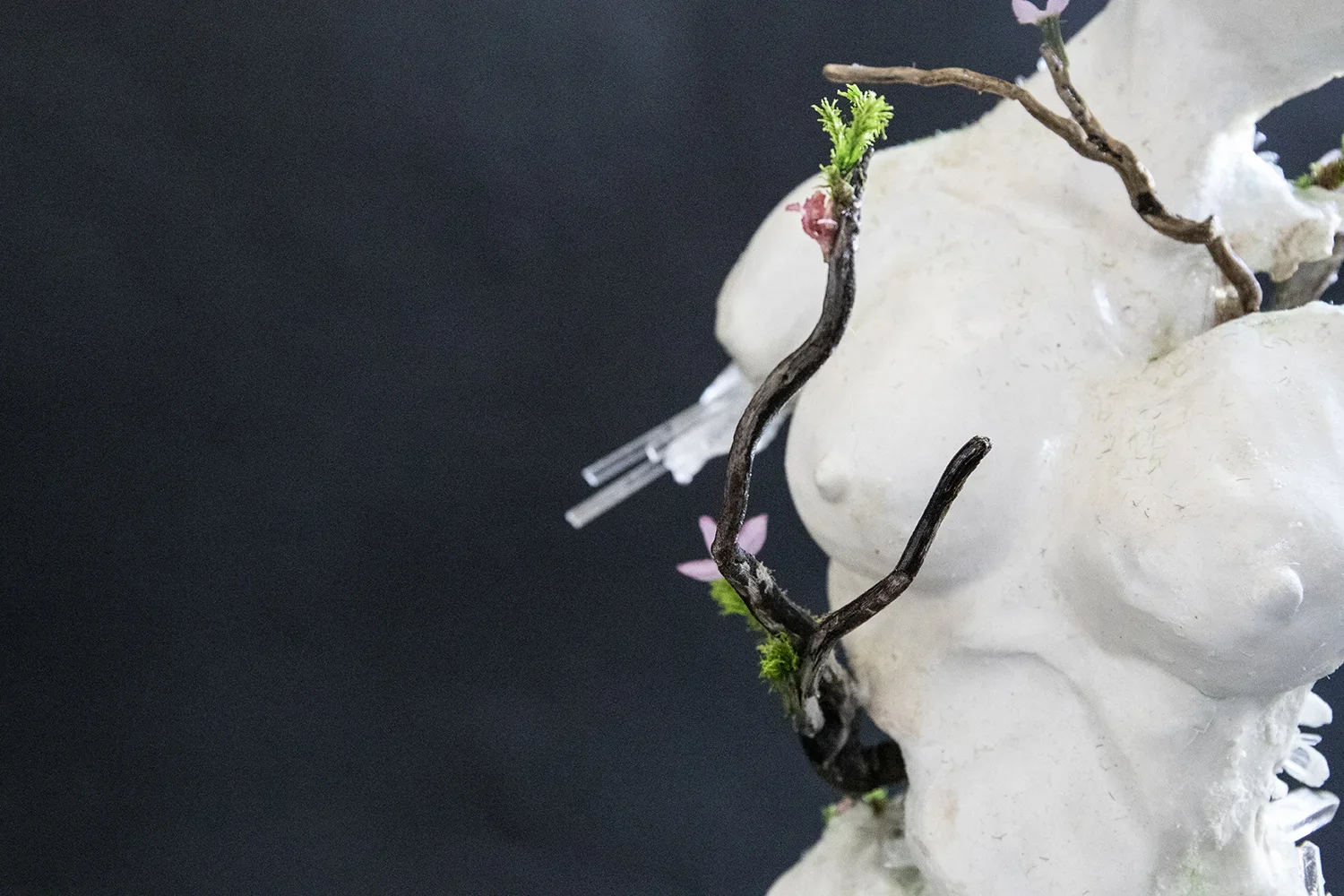
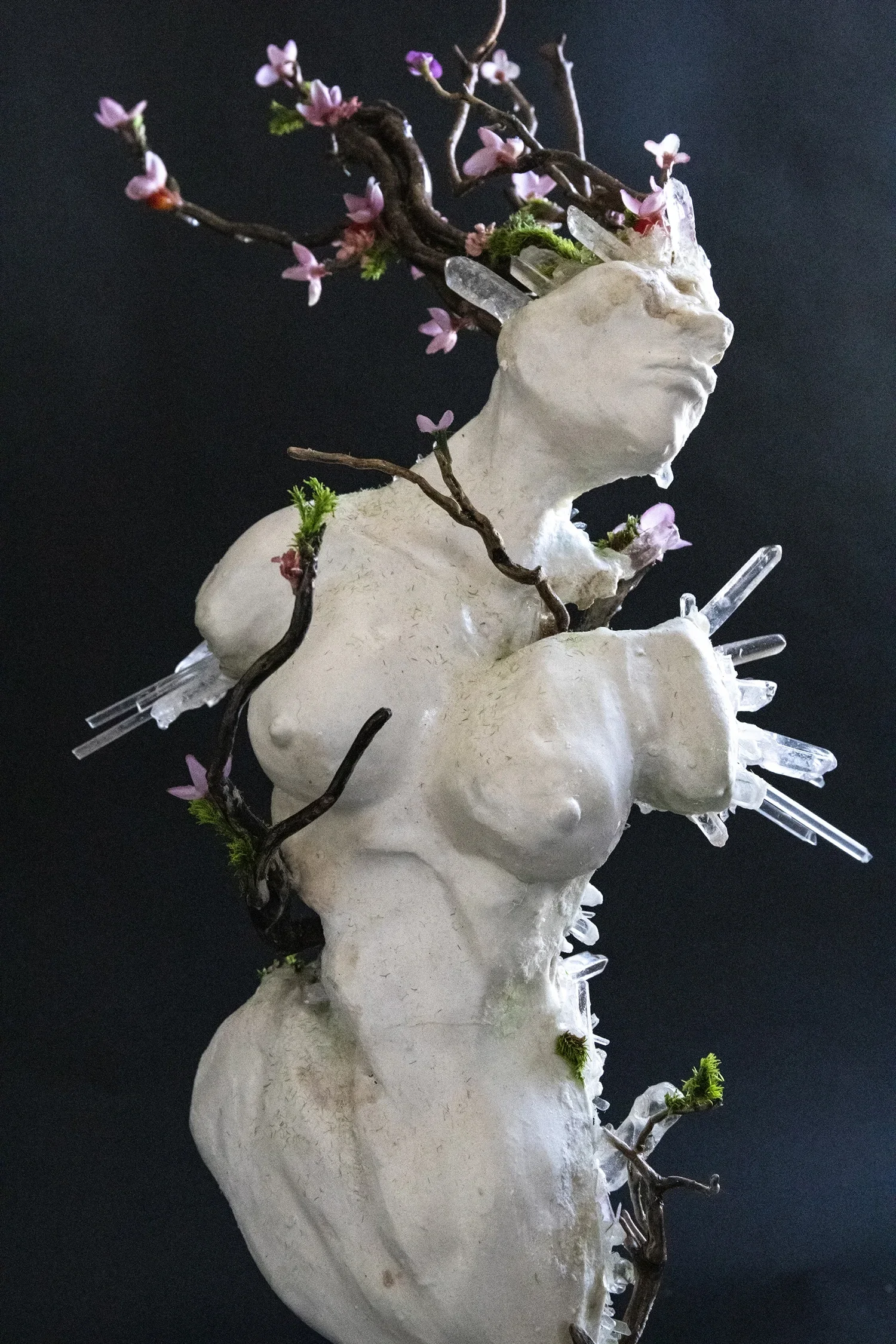
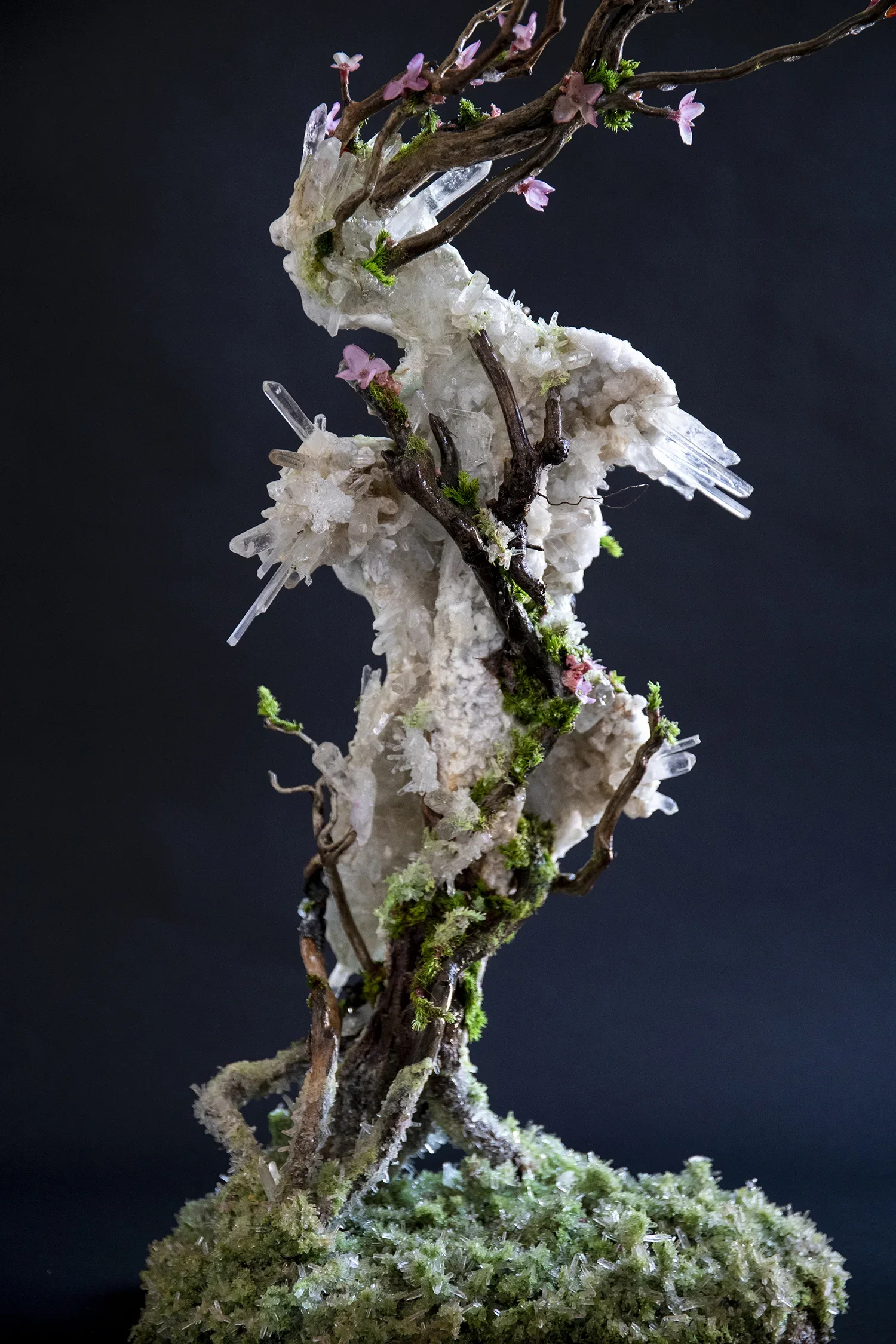
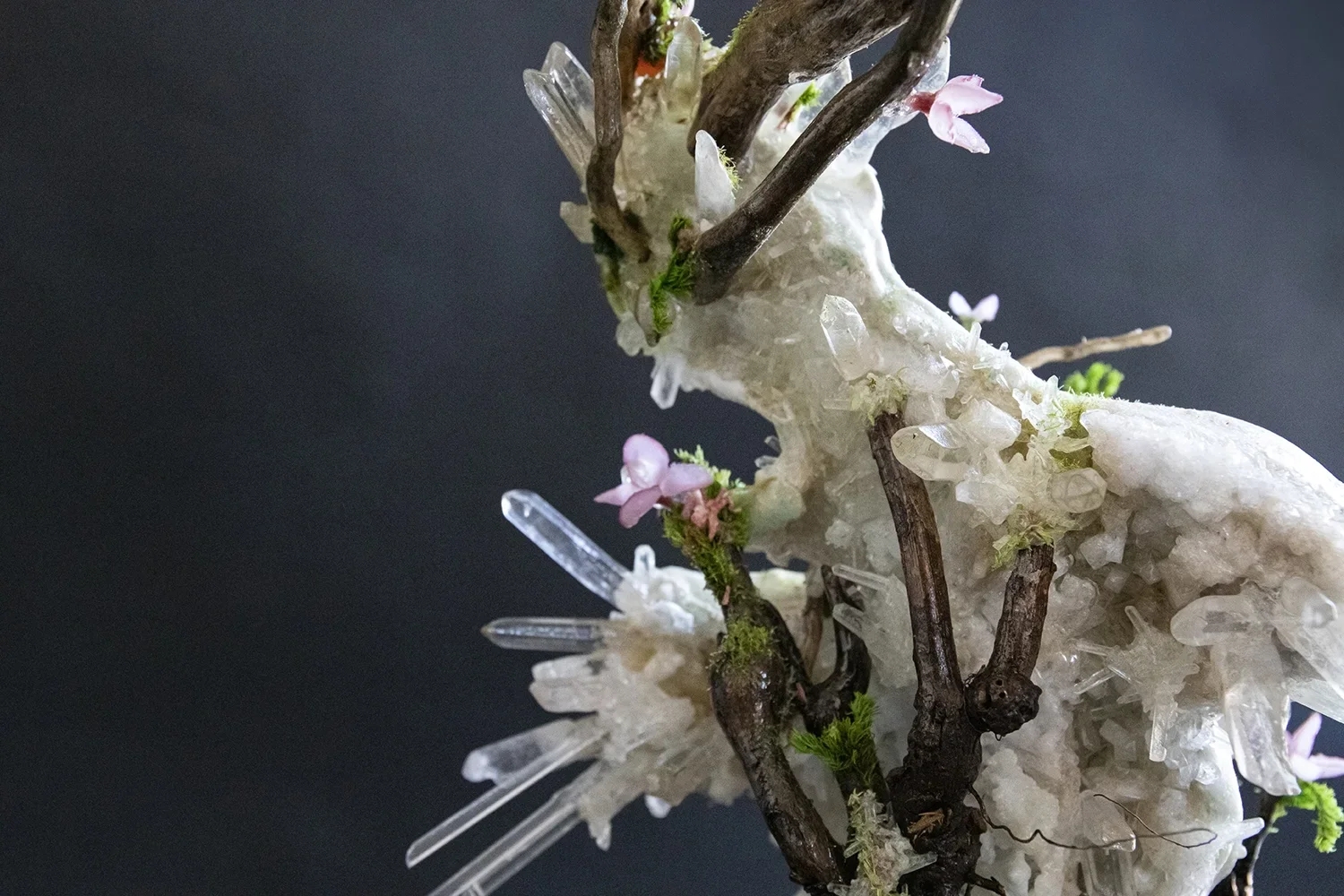
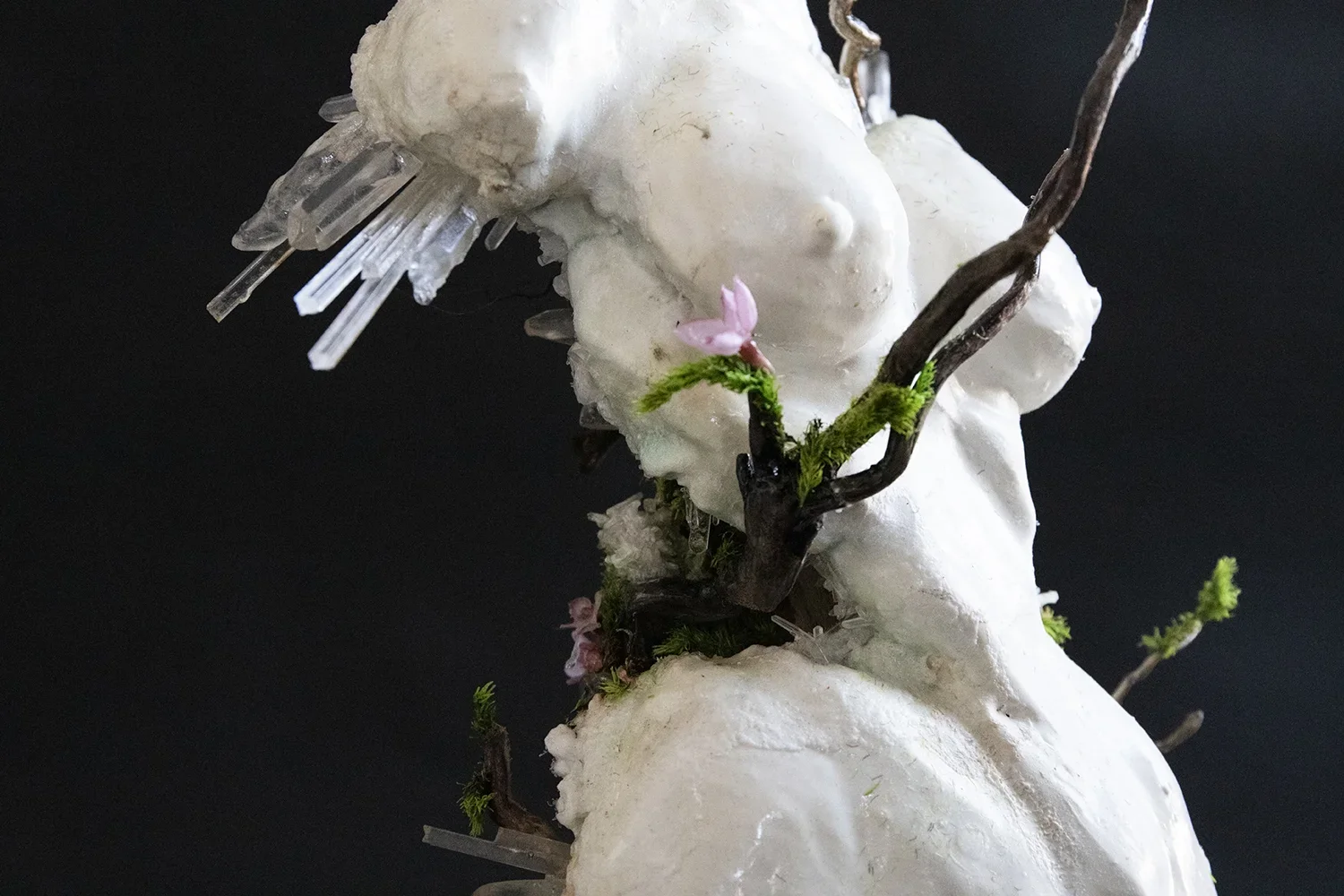
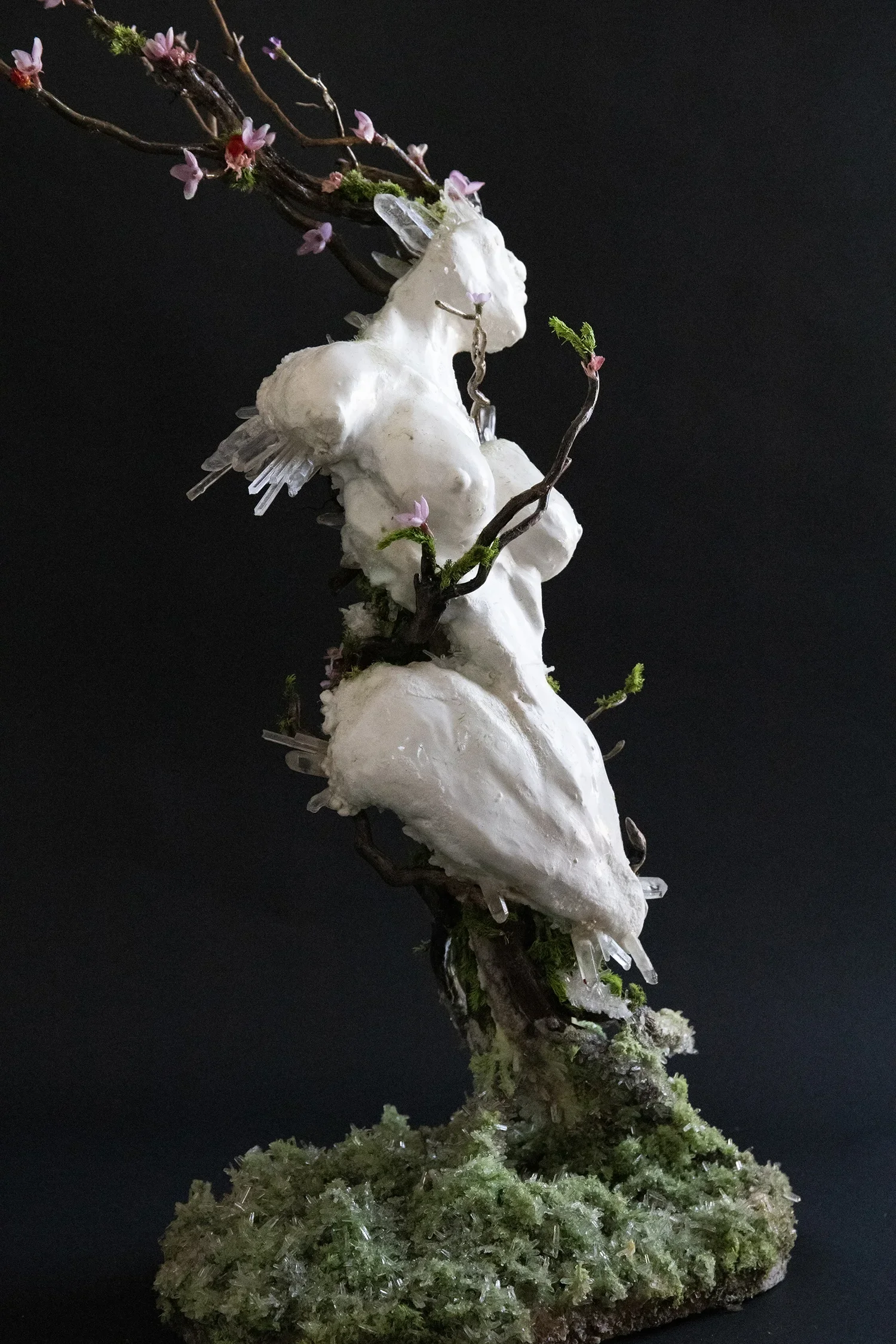
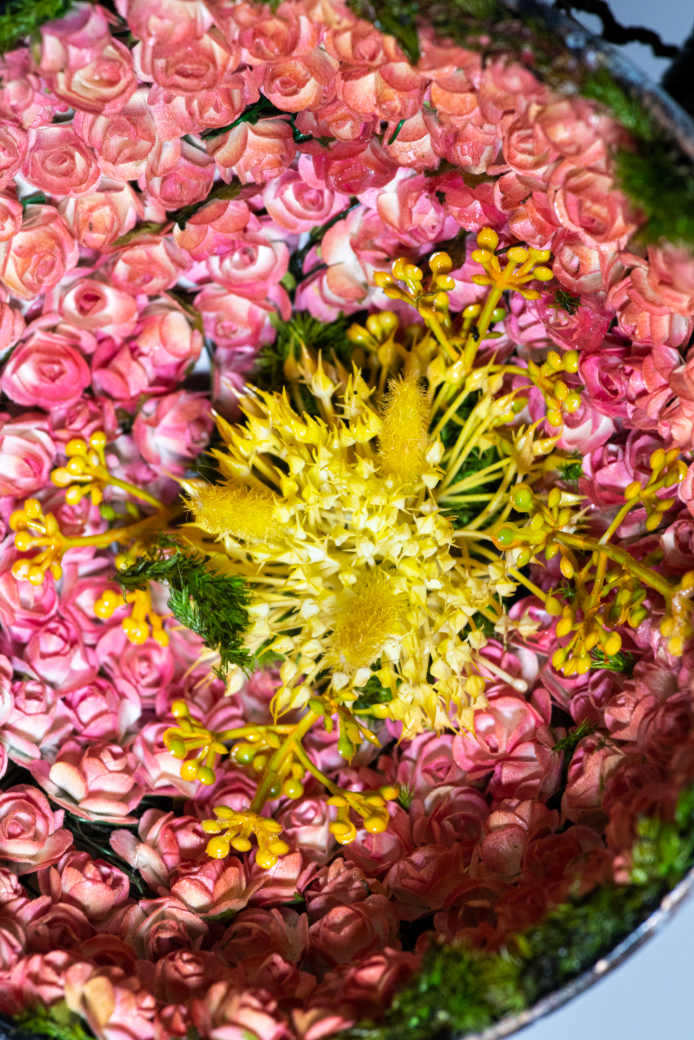
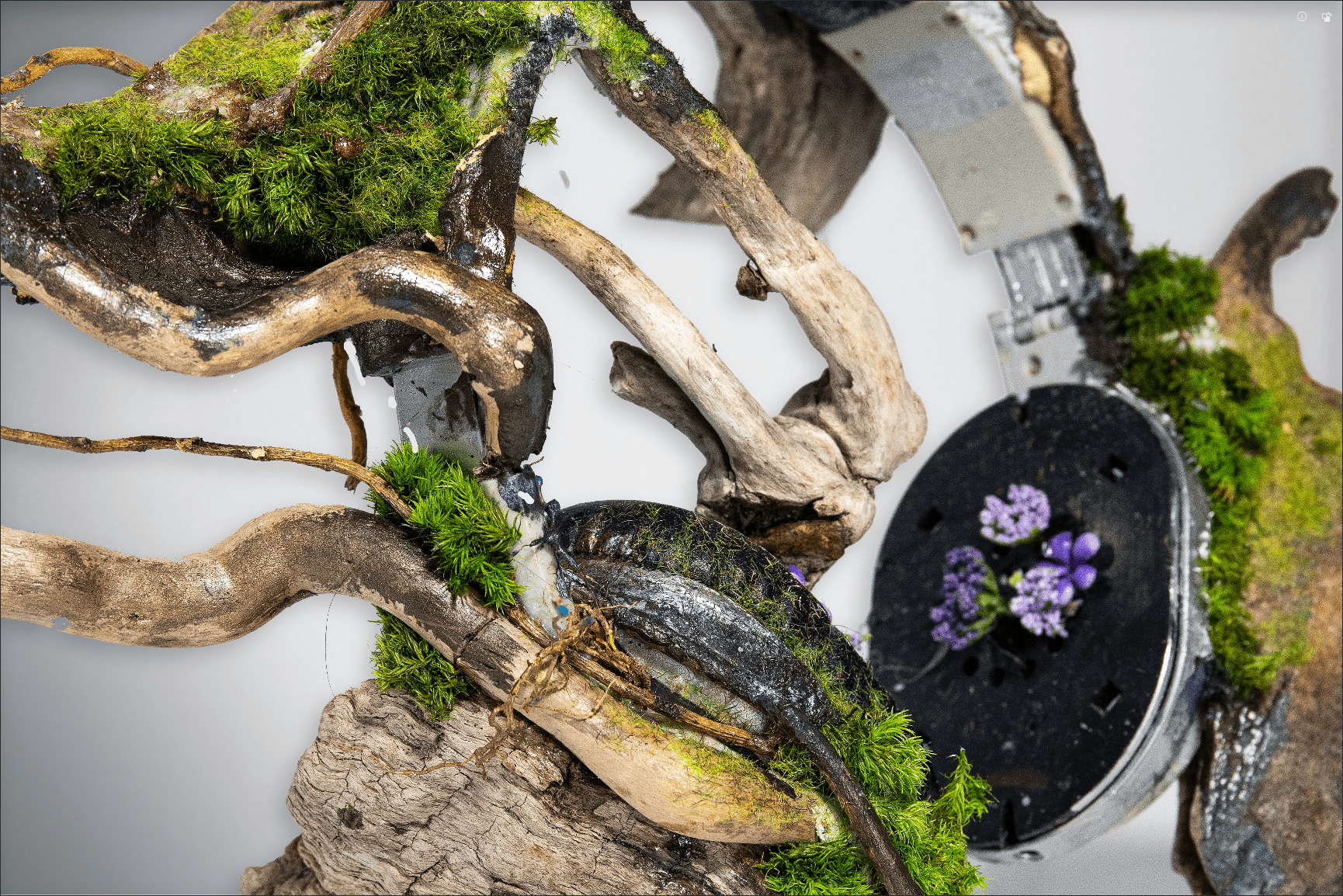
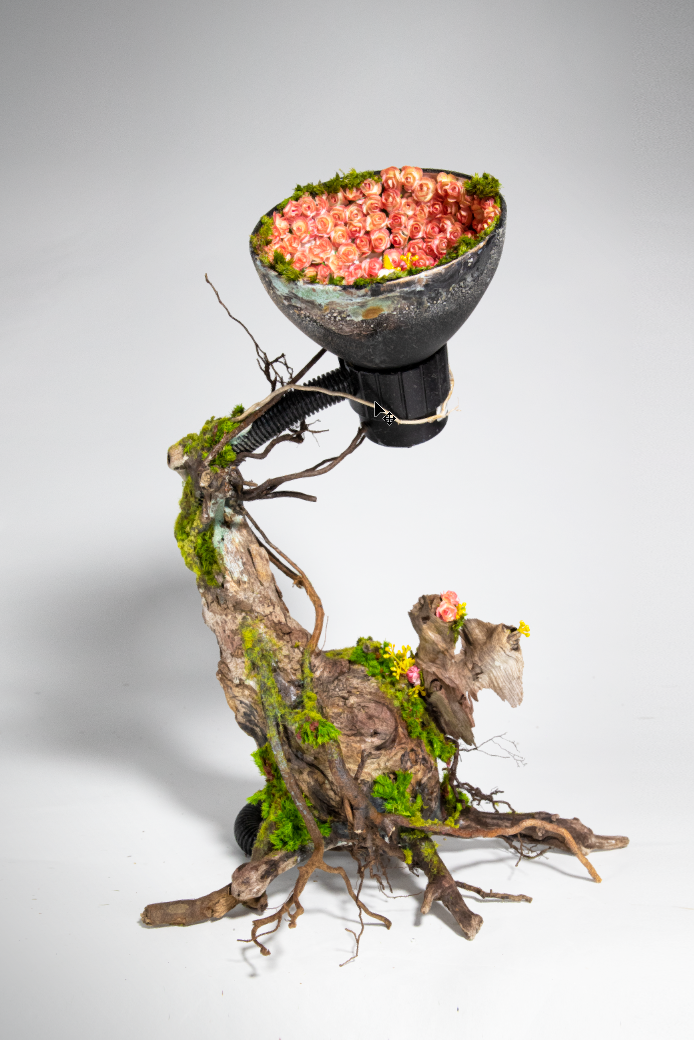
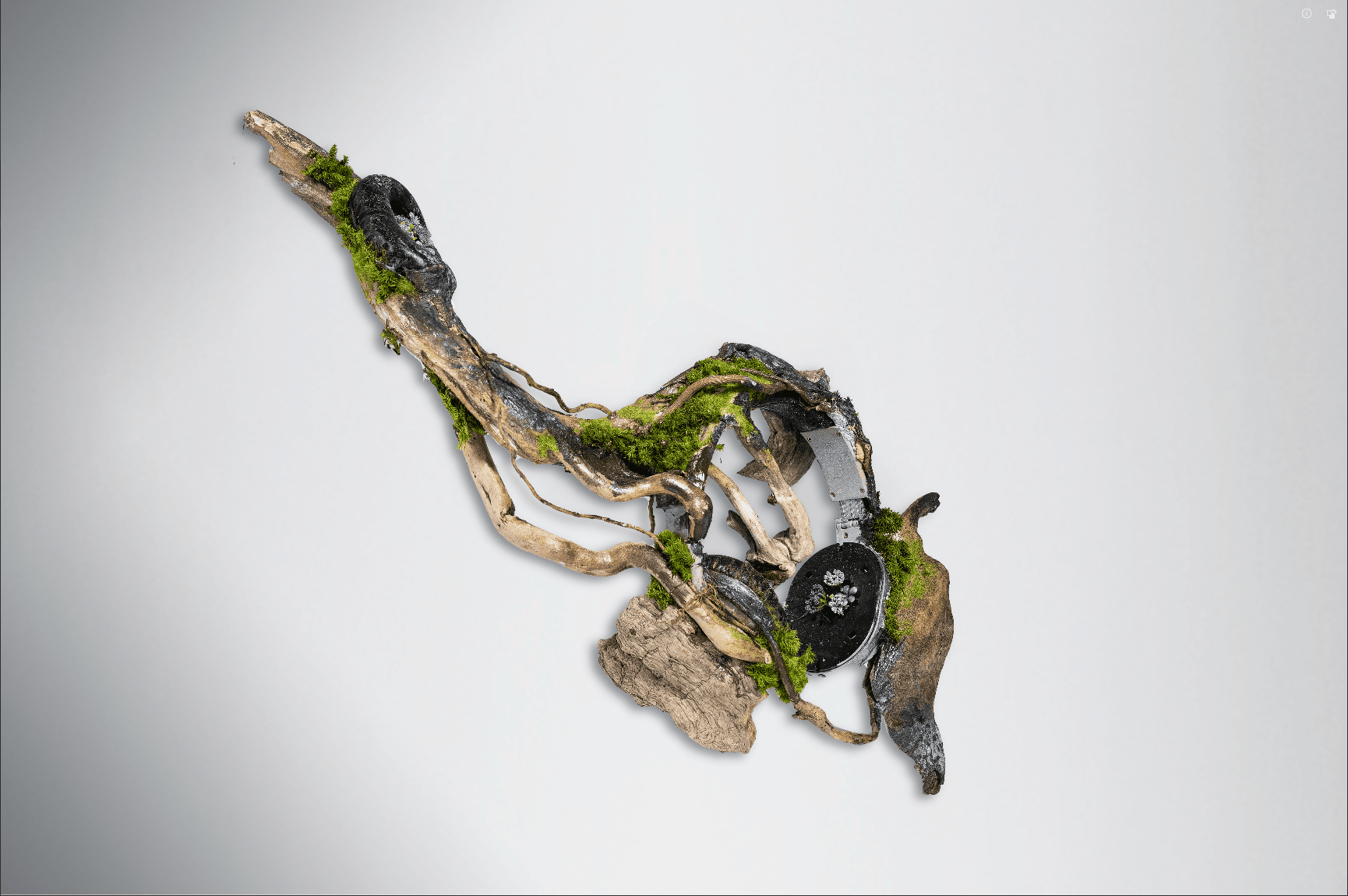
Ceramics, PLA, plaster, glaze, 3D-printed plastic, found organic material, branches, driftwood, preserved moss, preserved flowers, silk/fake flowers, feathers, raw minerals, quartz, monoammonium phosphate crystals, acrylic rods, cement, patina, oil paint, acrylic paint, hobby kits, glue
Garret Kane, 2015–2020
Mixed media sculptures
Various sizes, approx. 7"–26"
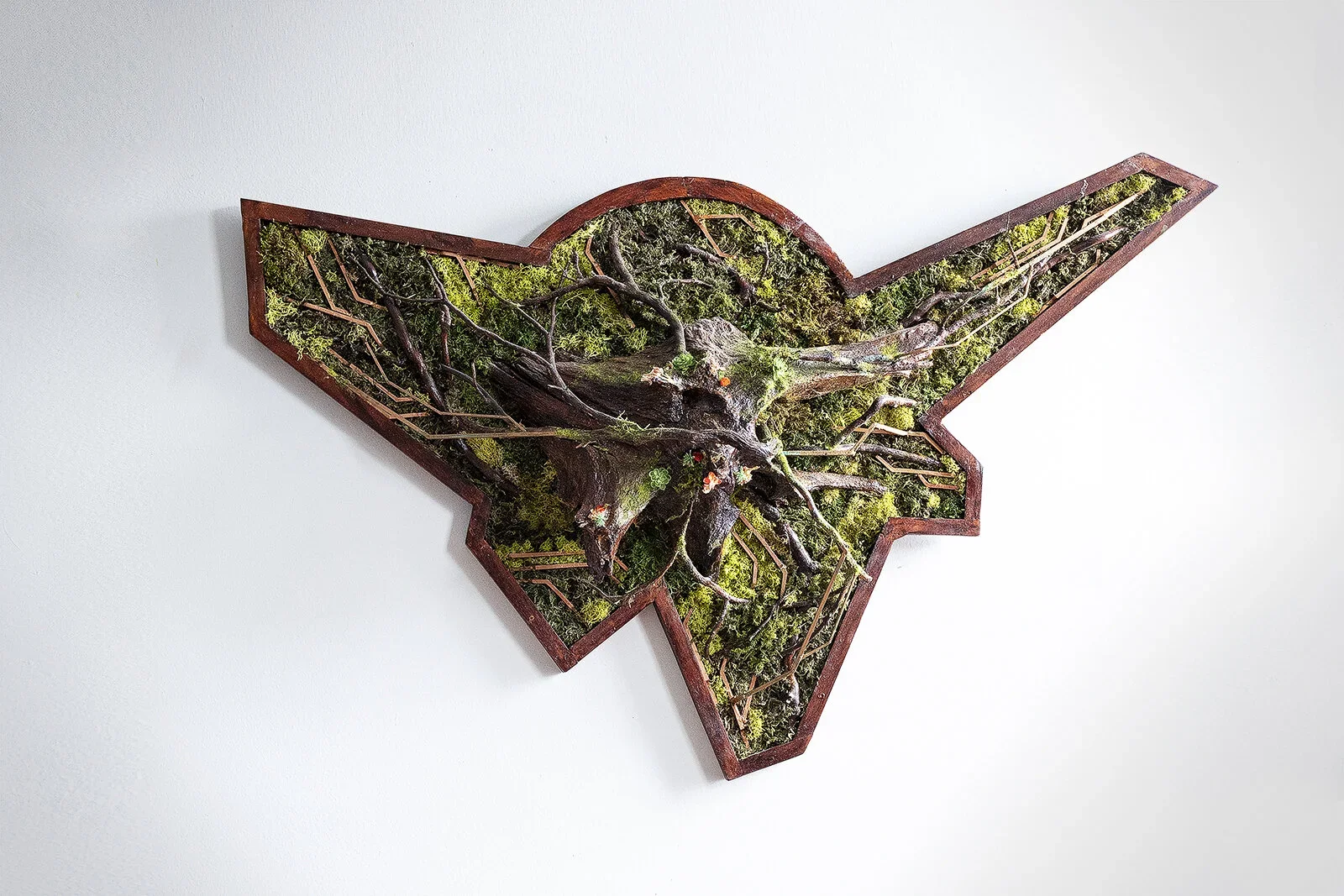
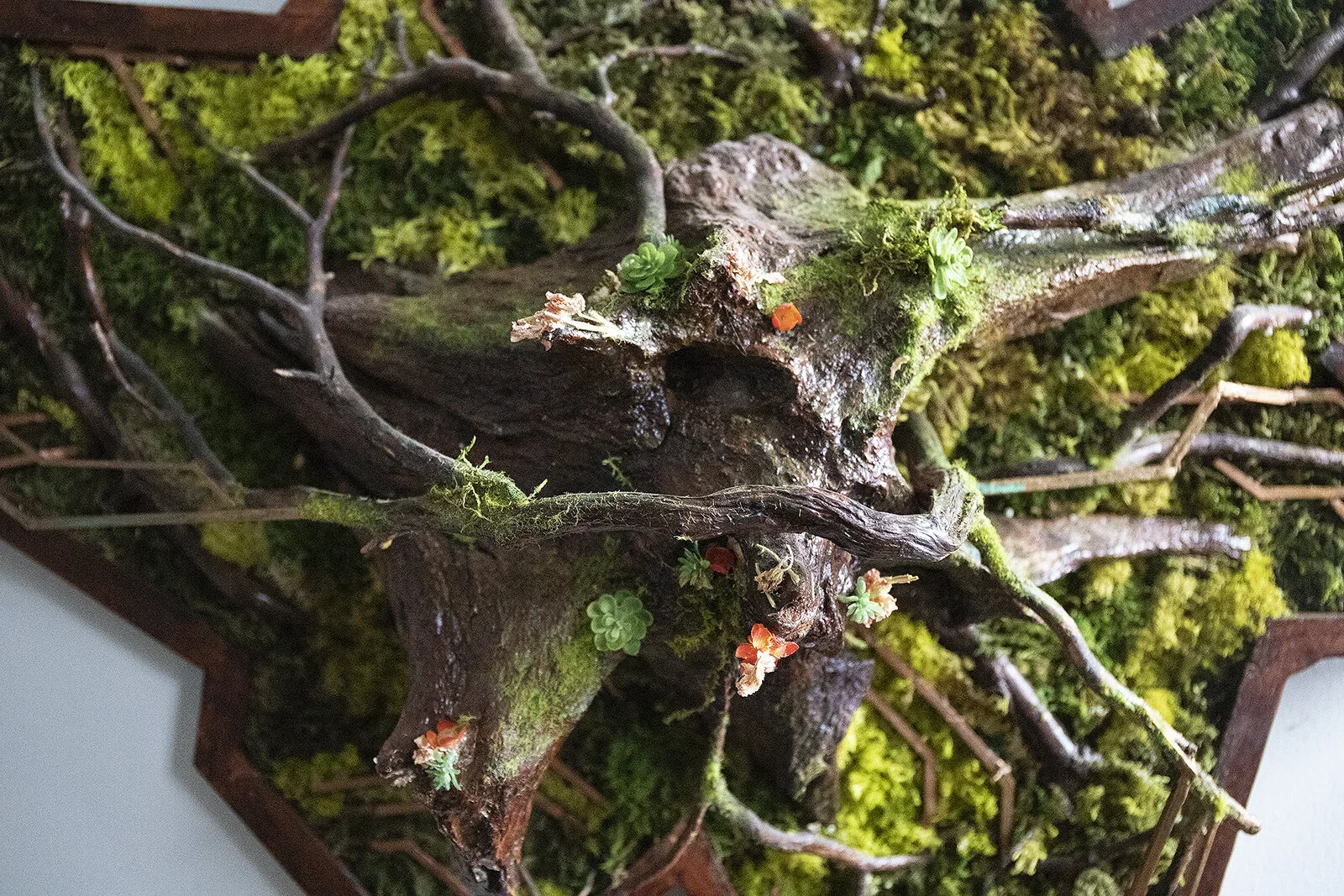
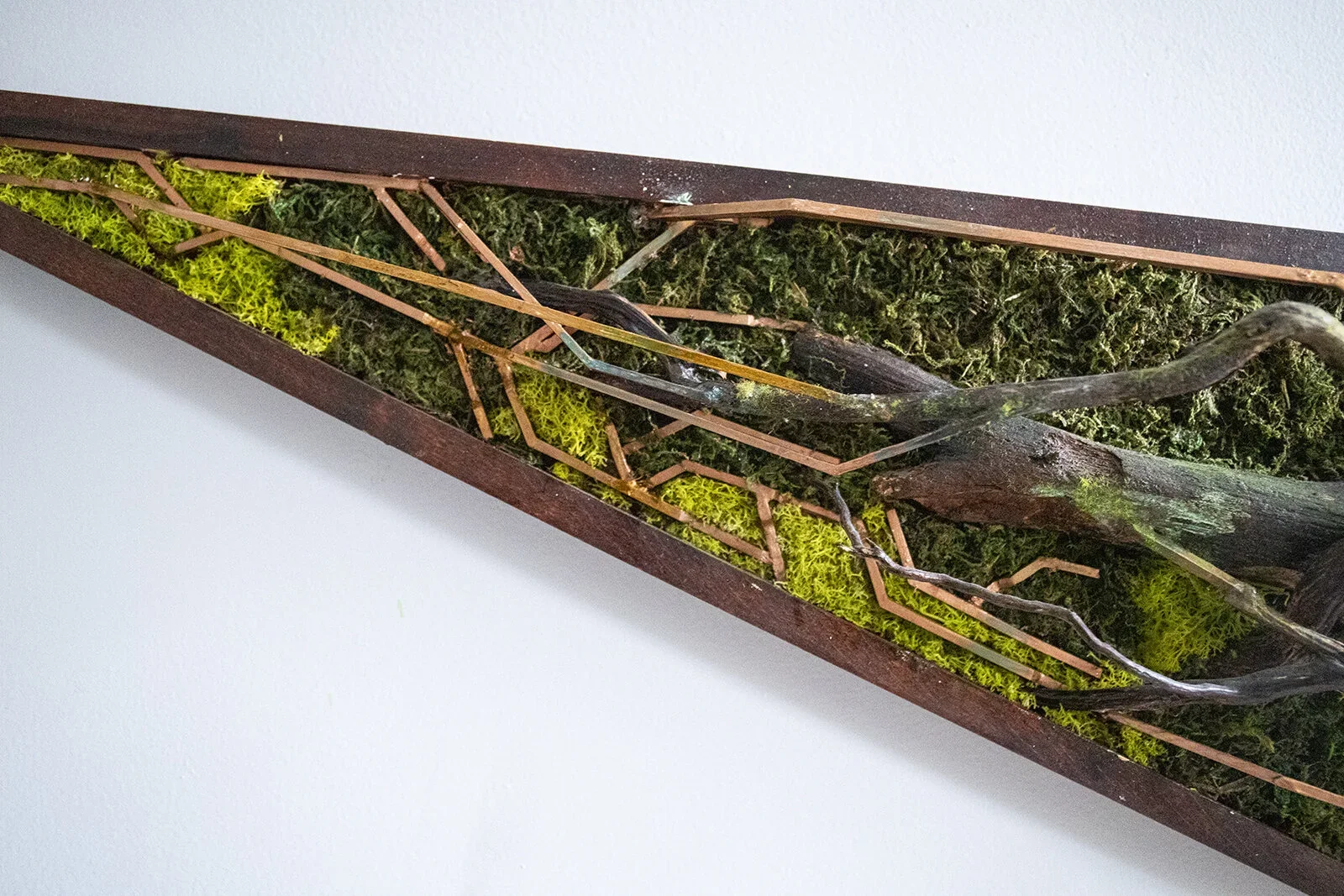
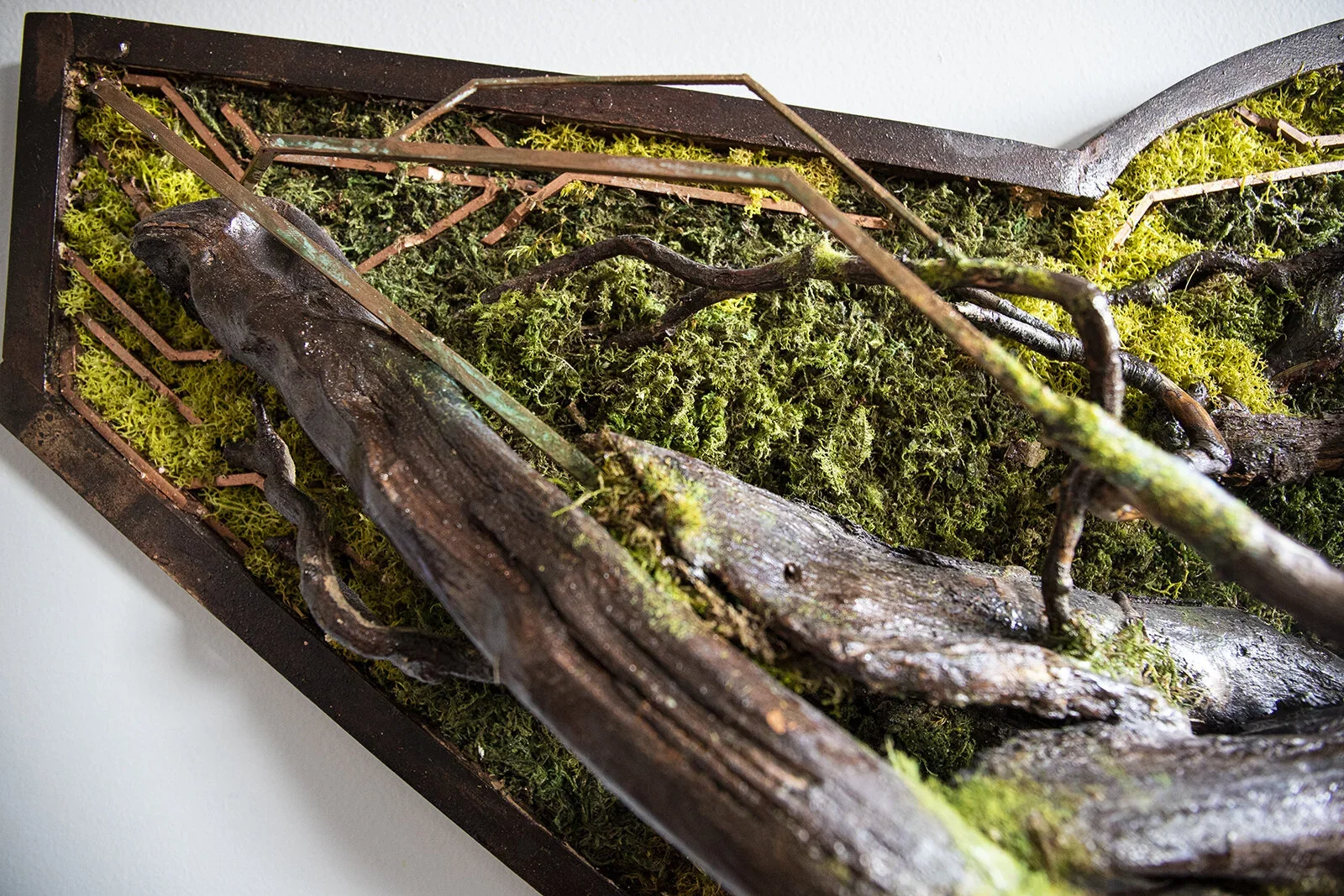
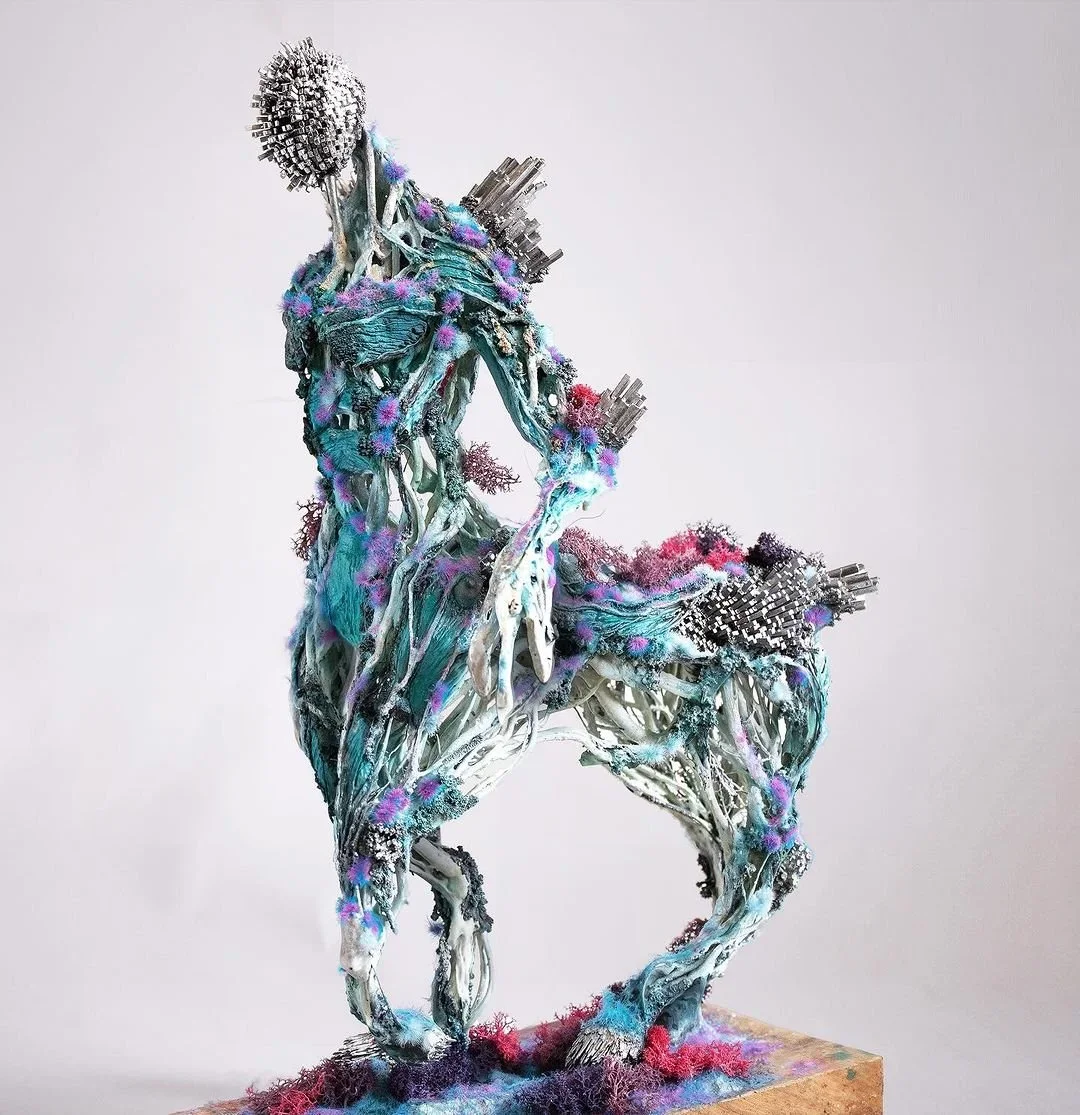
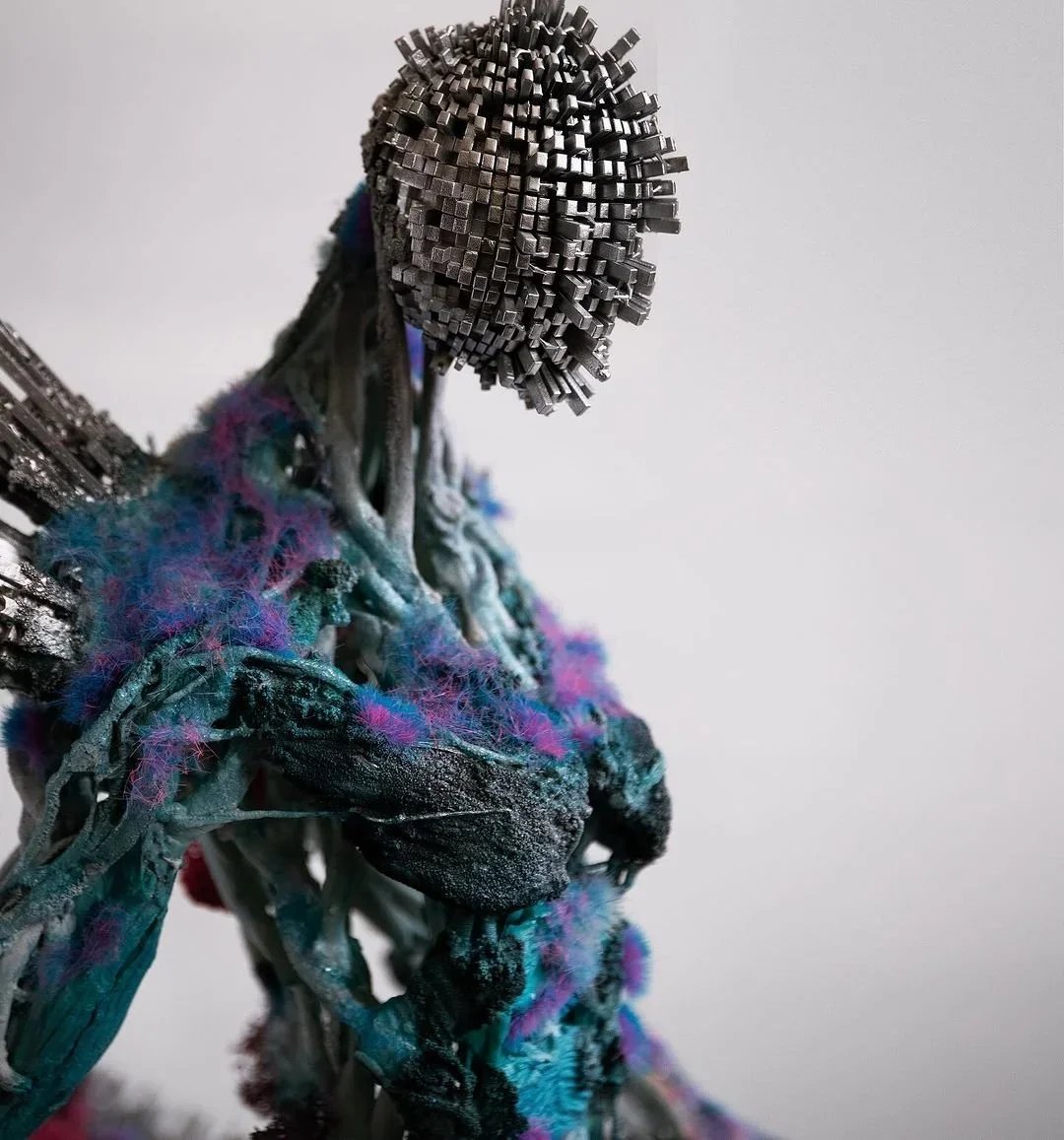
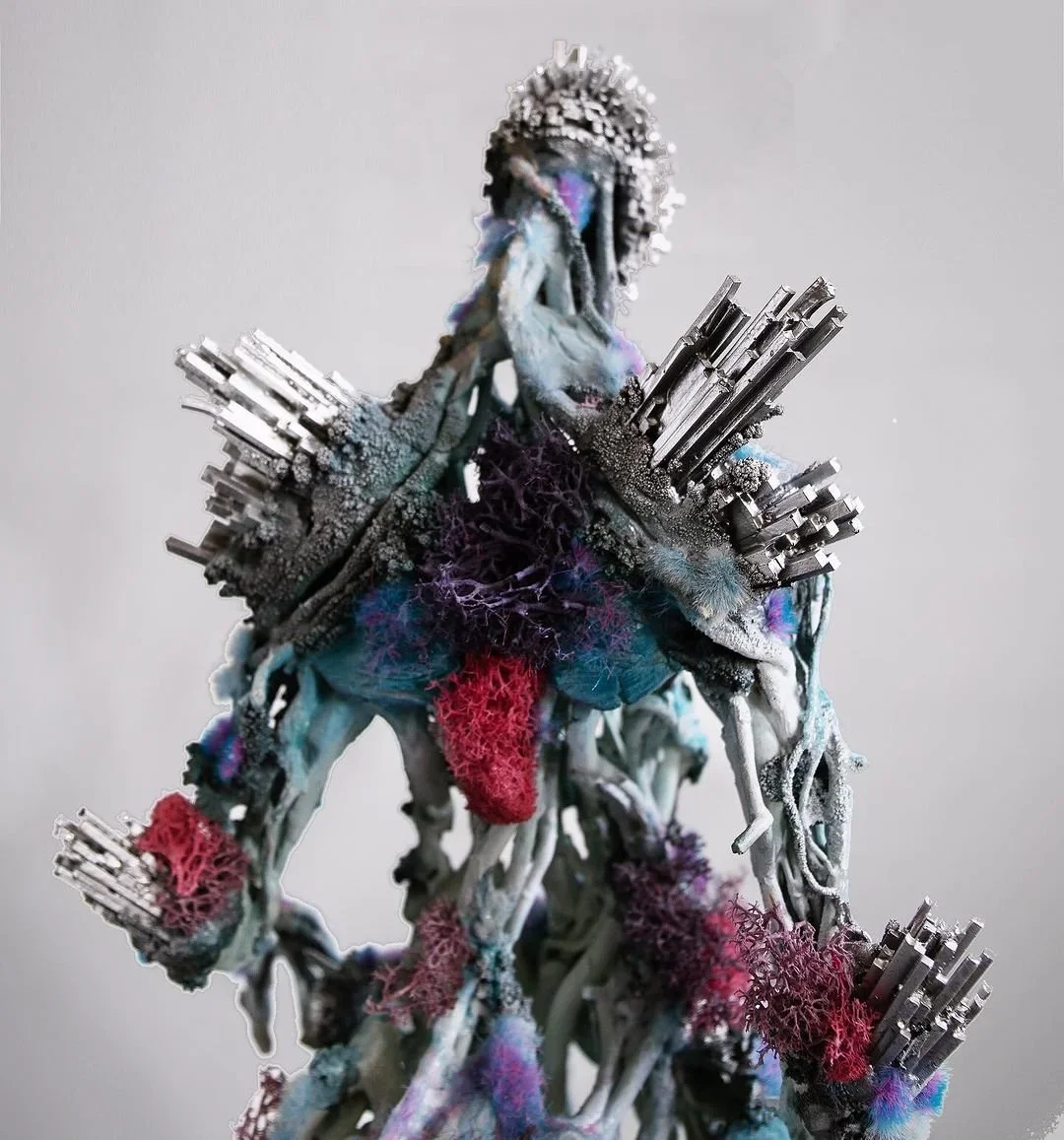
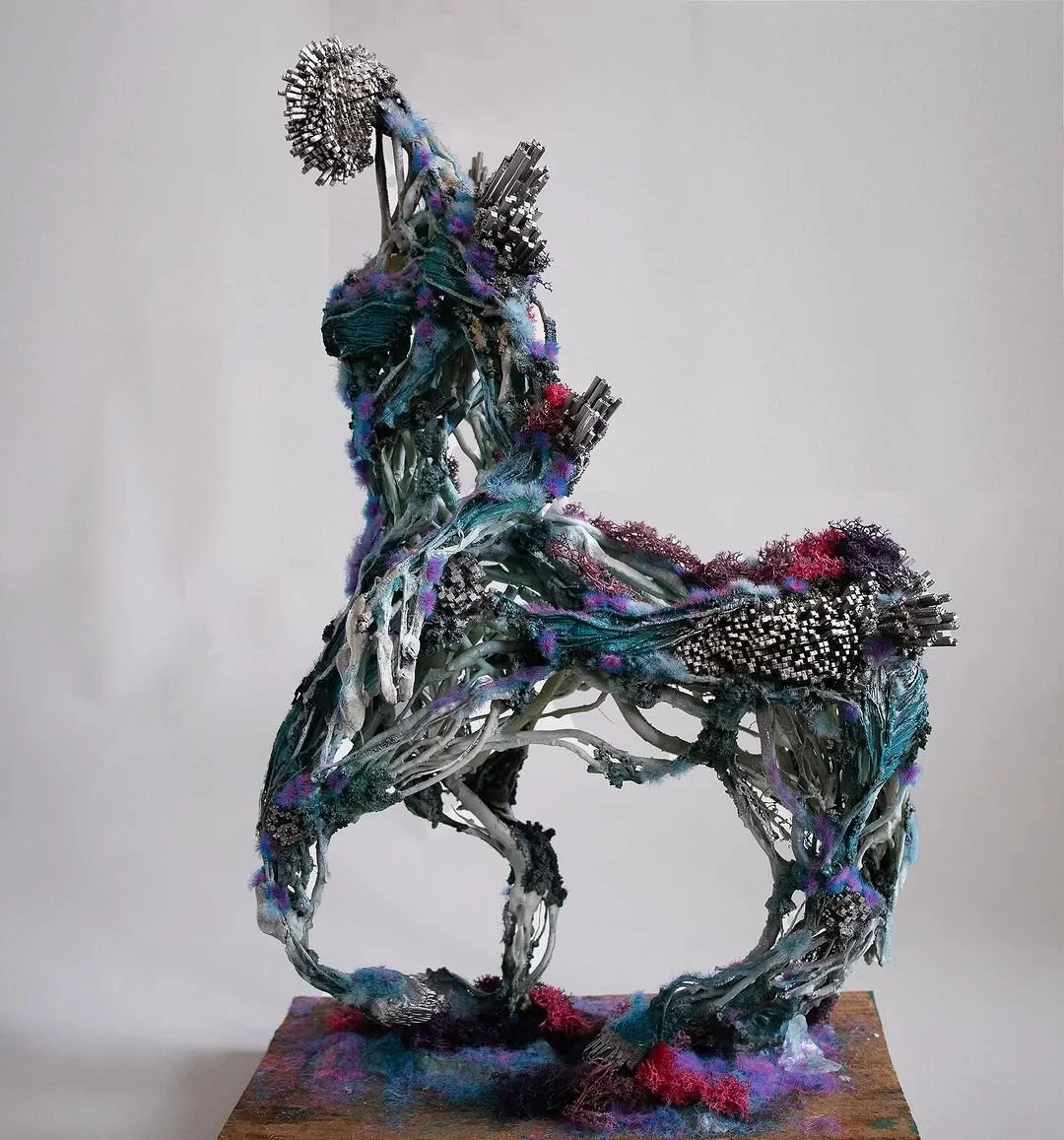
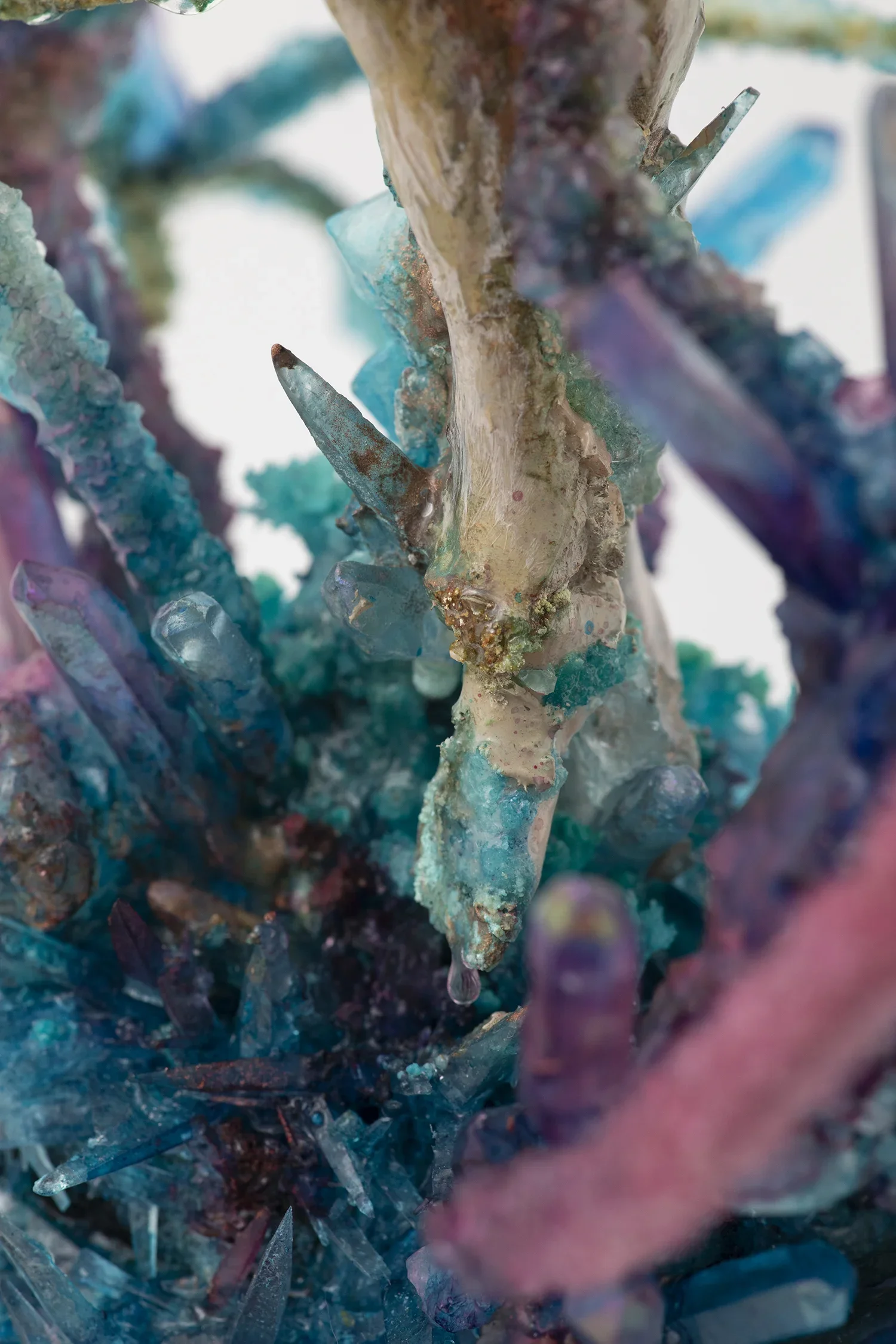
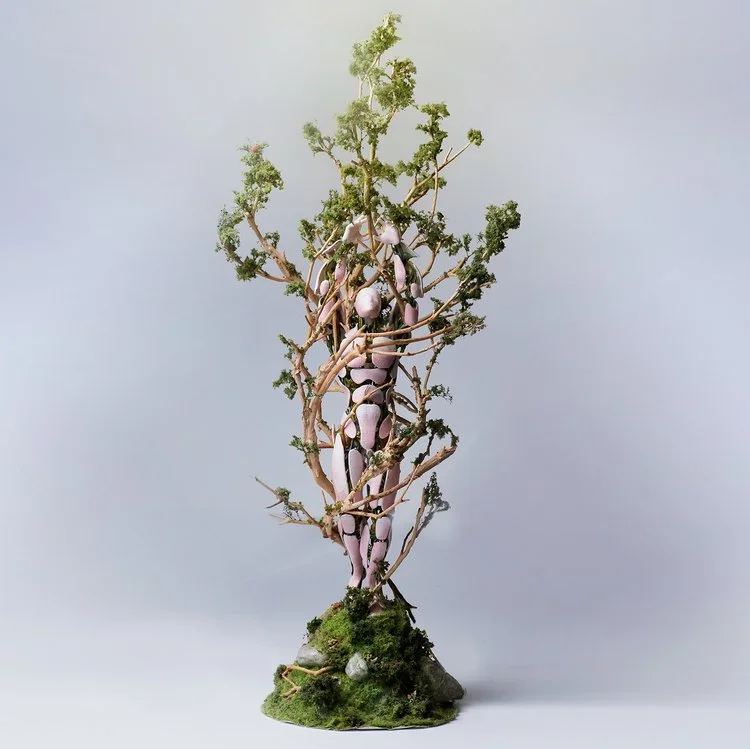
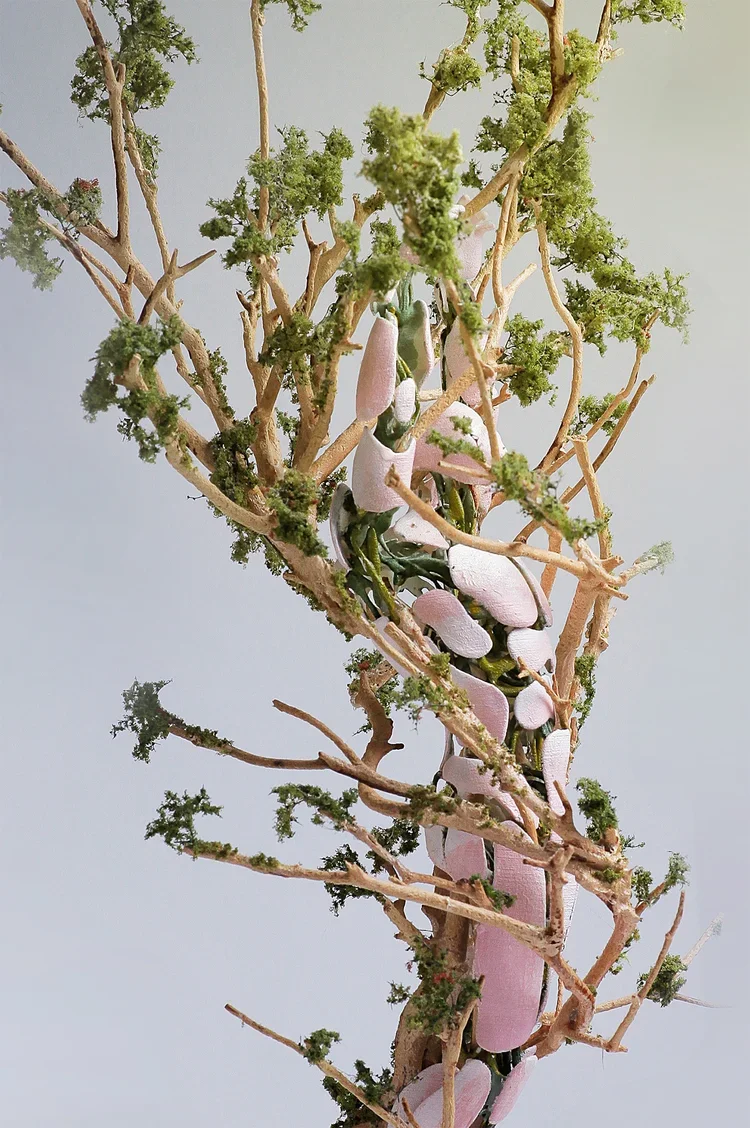
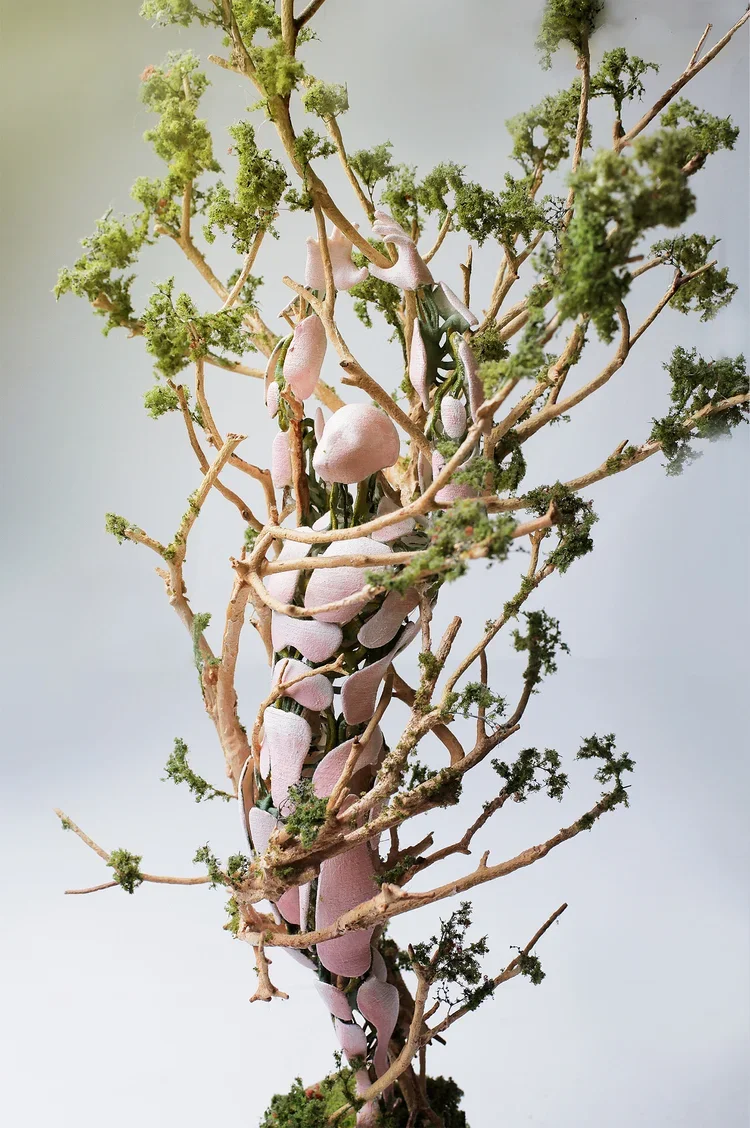
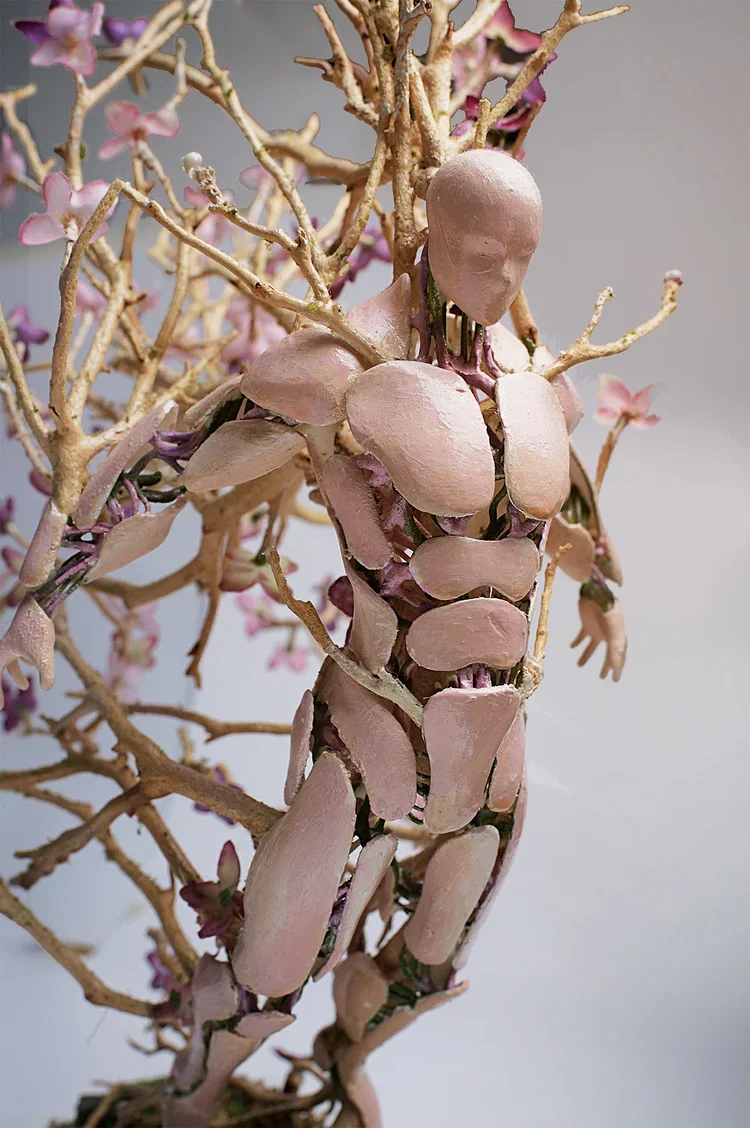
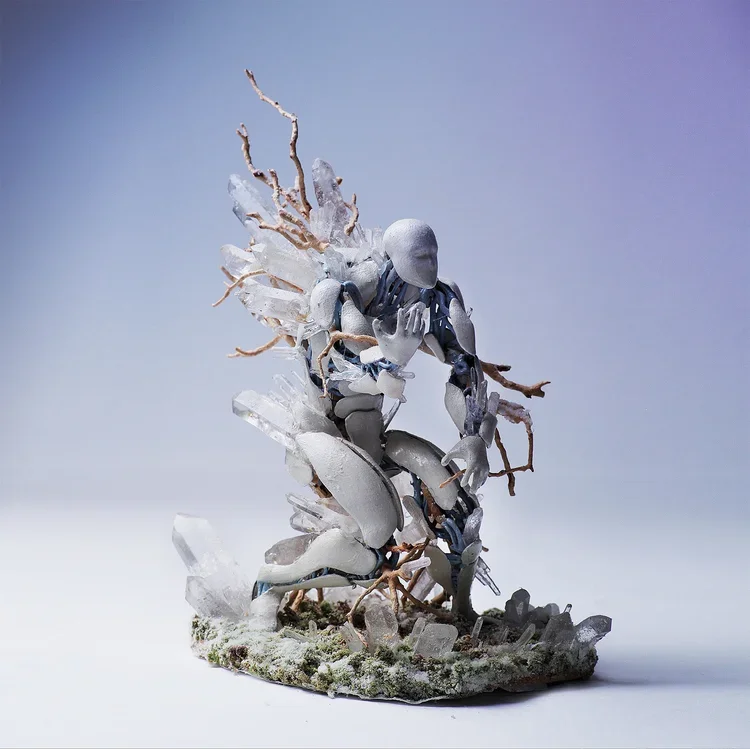
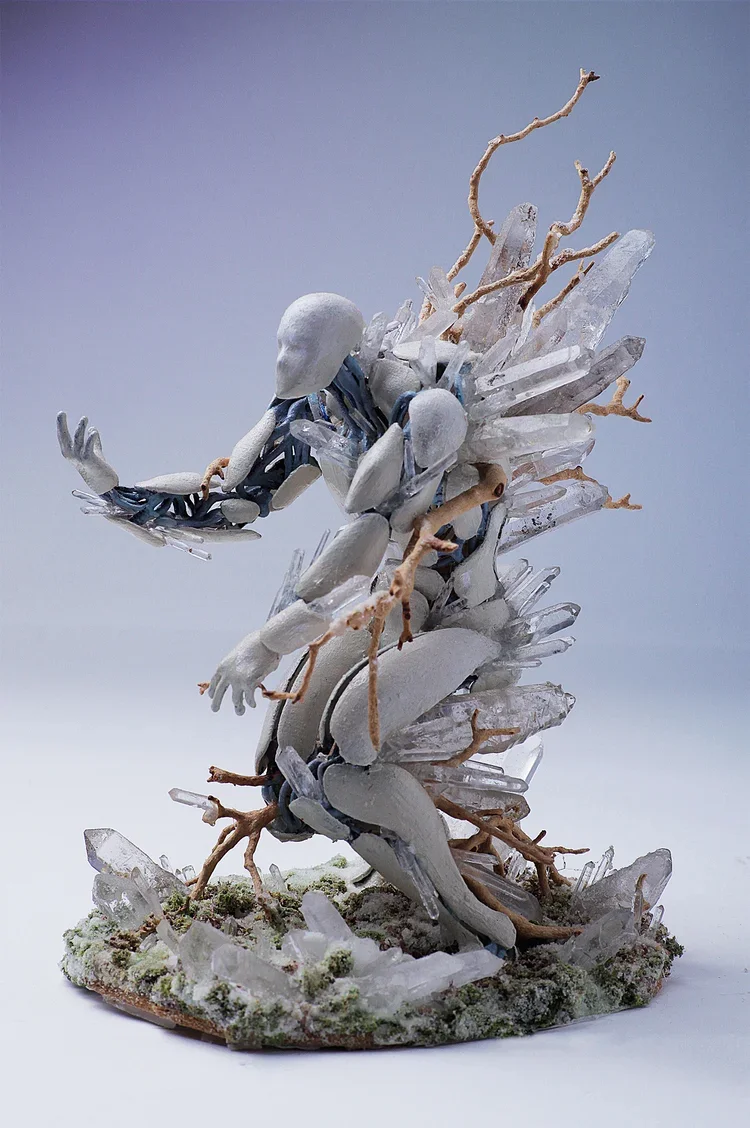
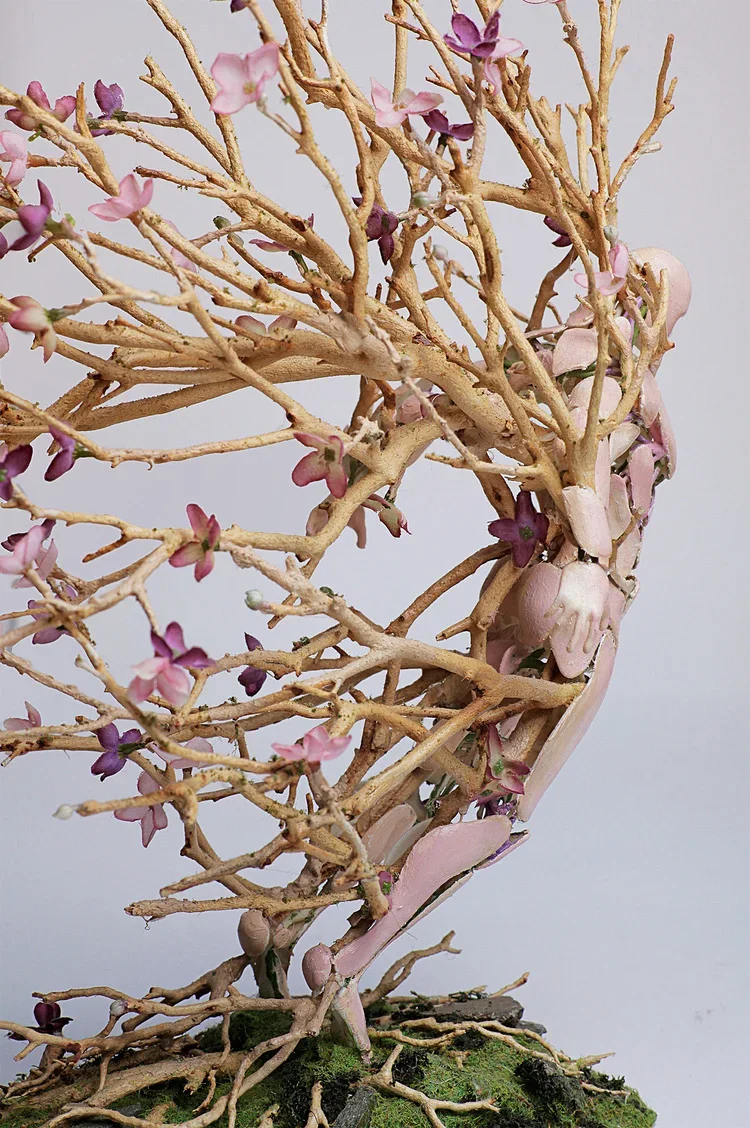
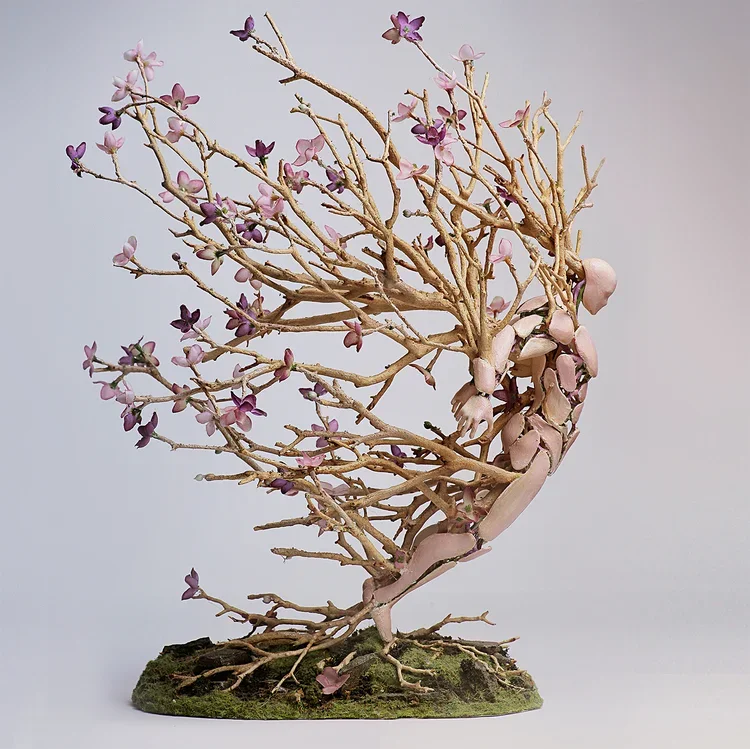
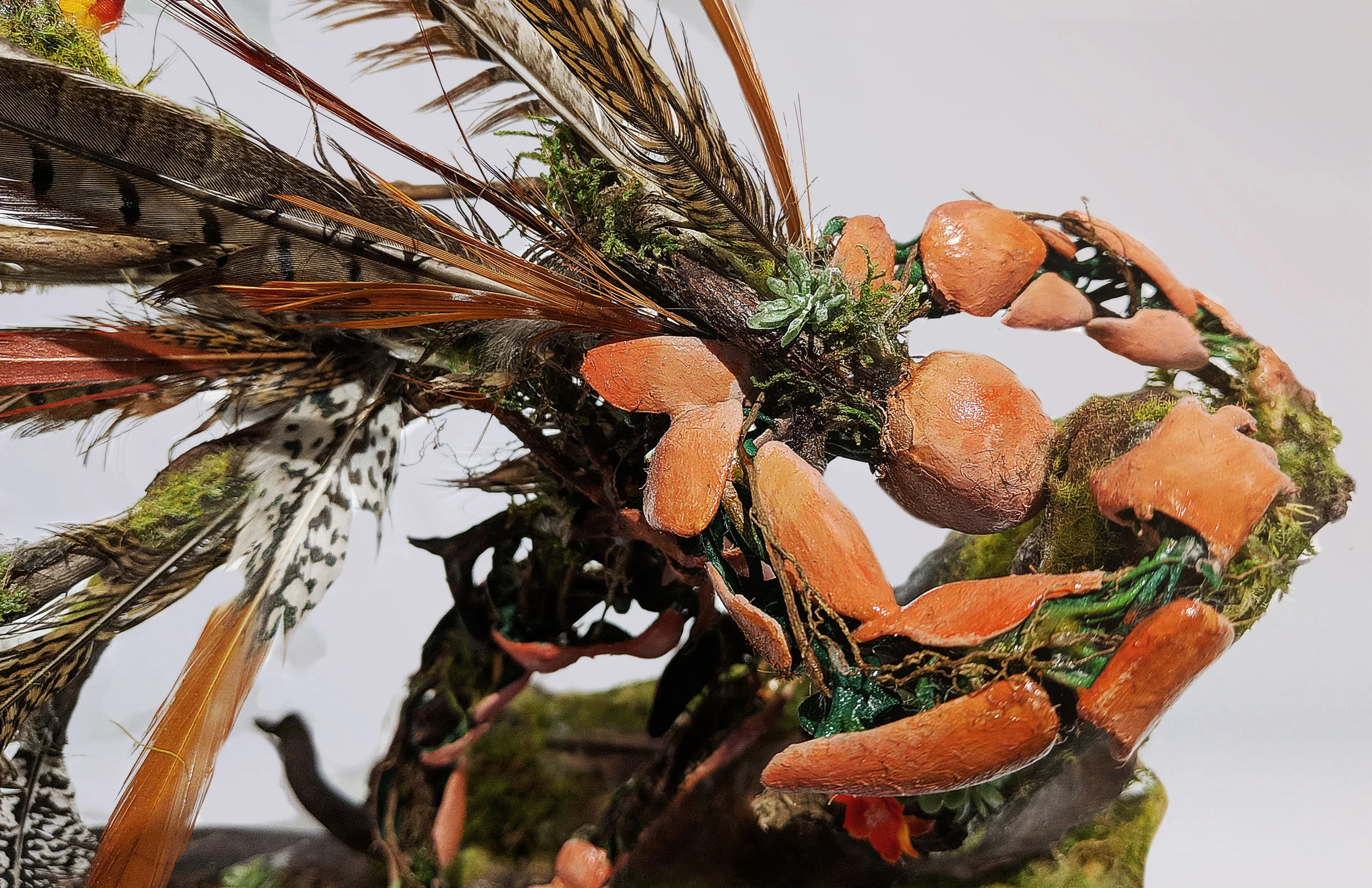
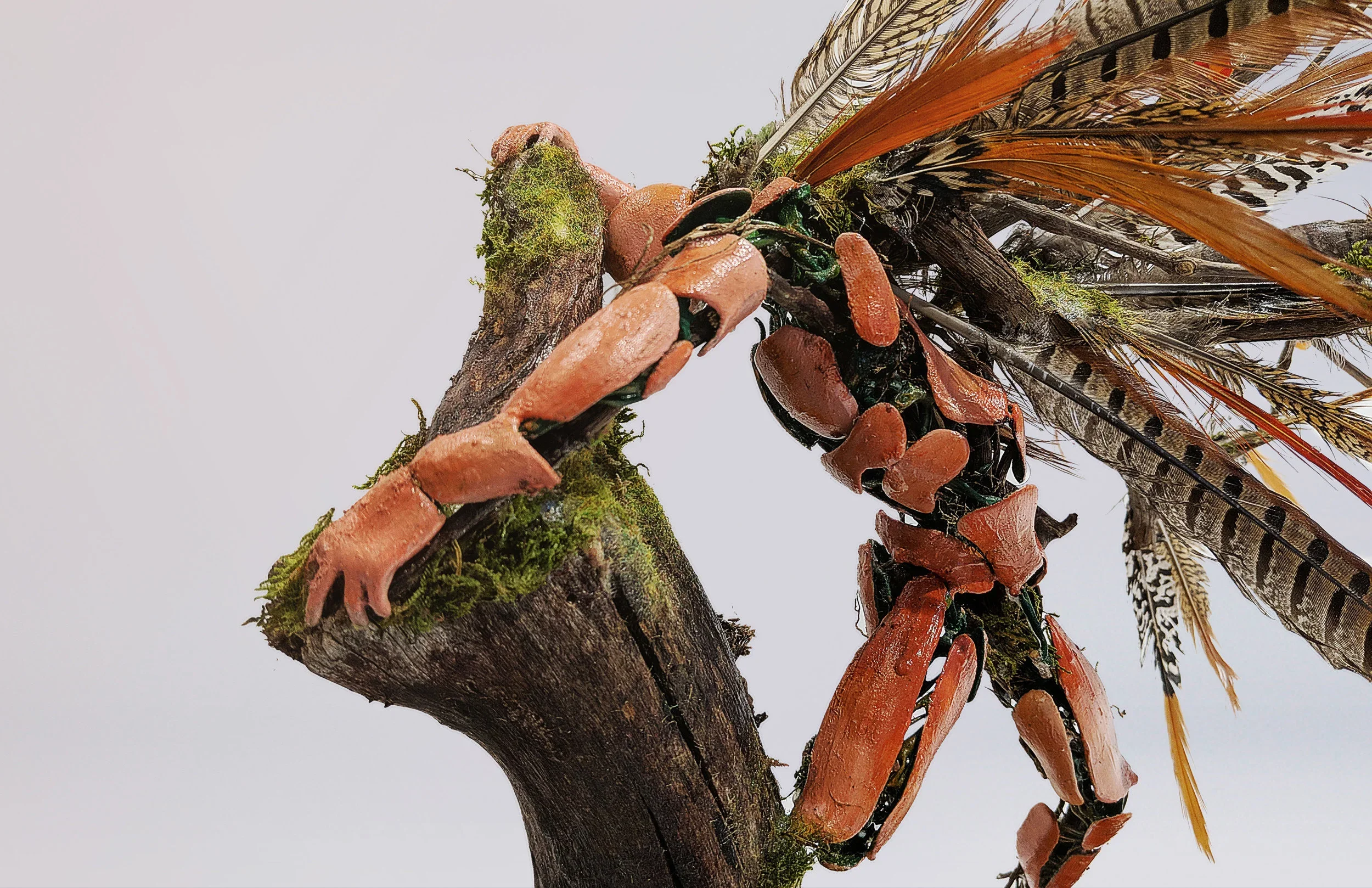
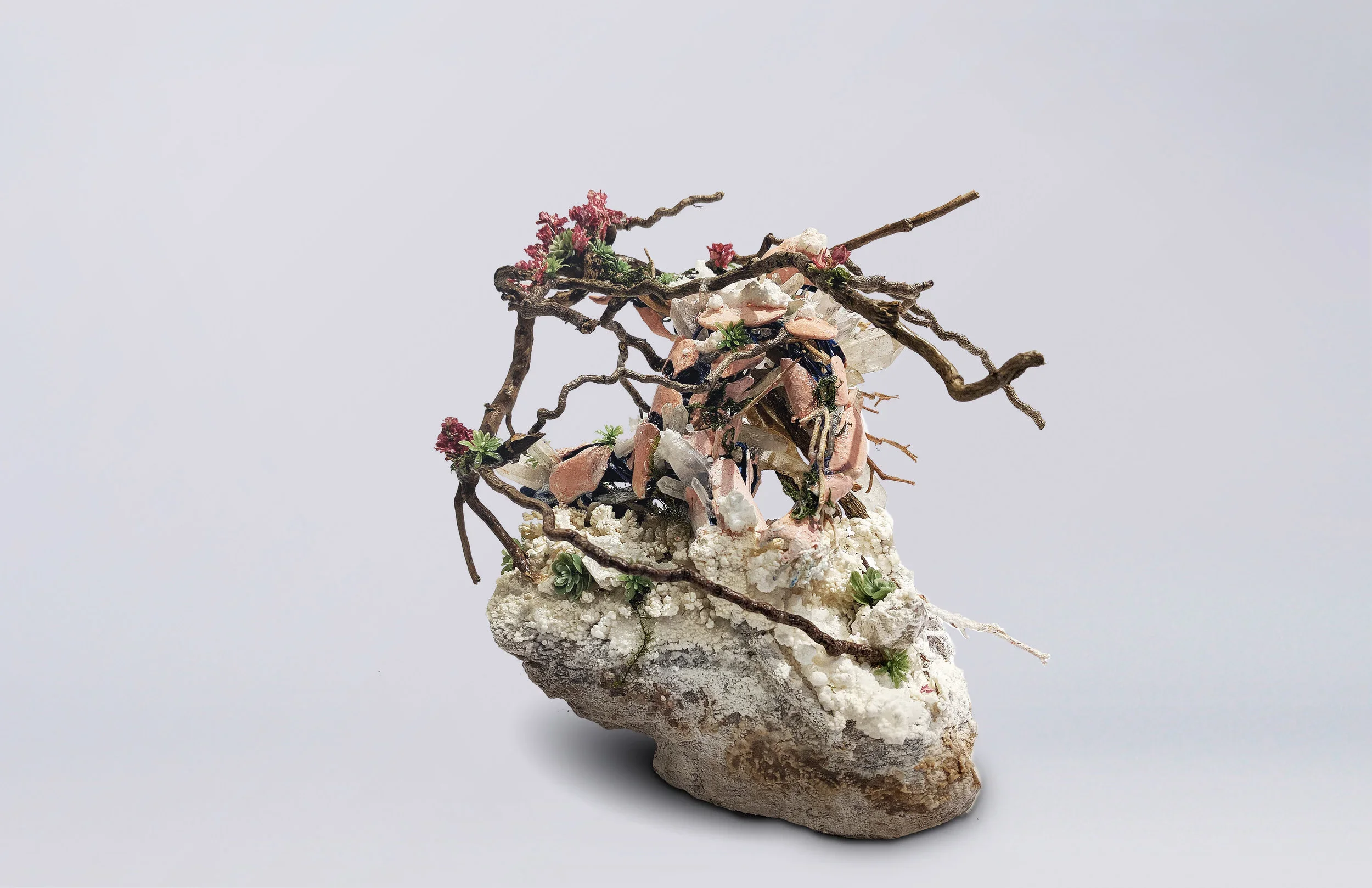
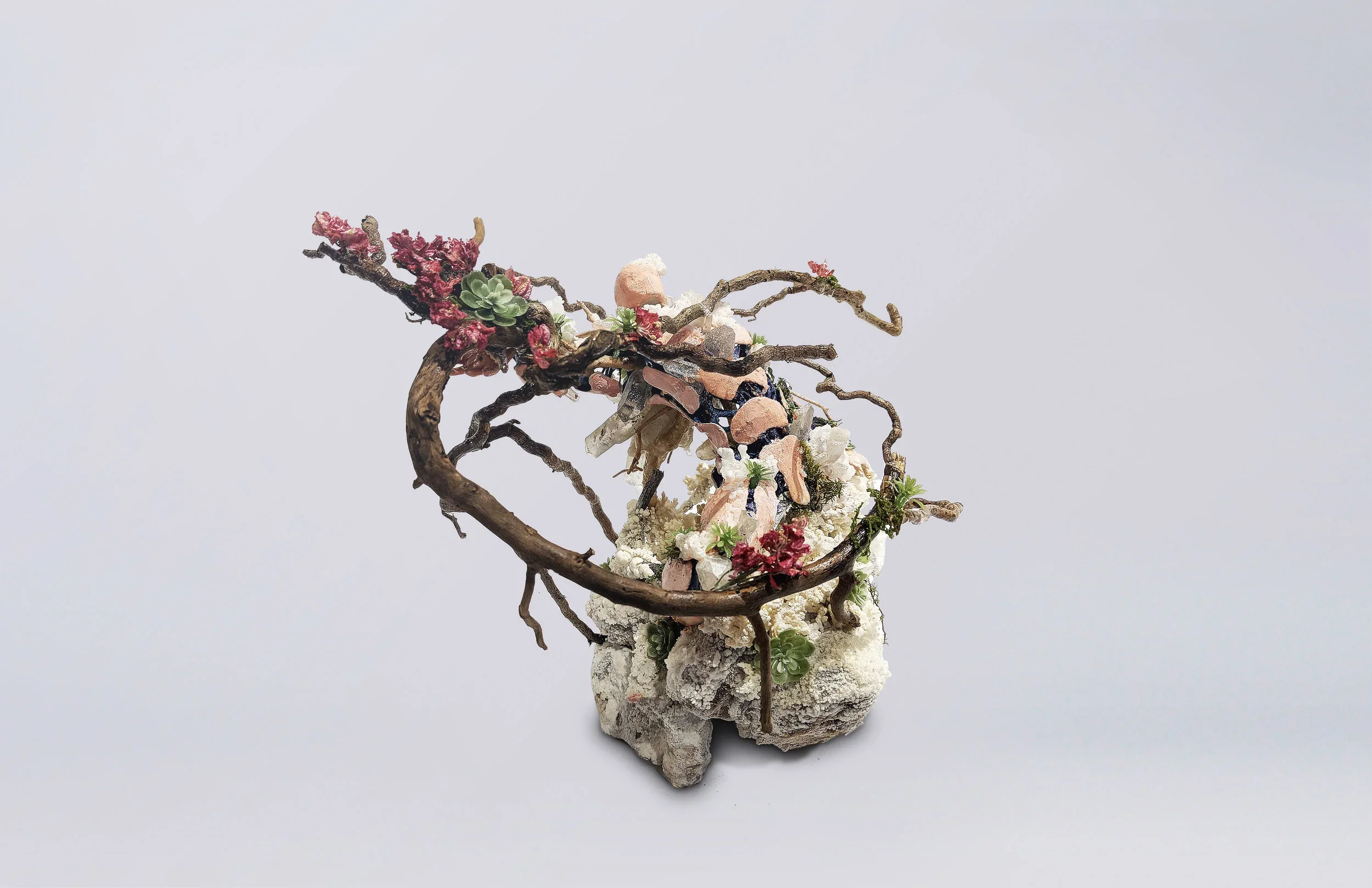
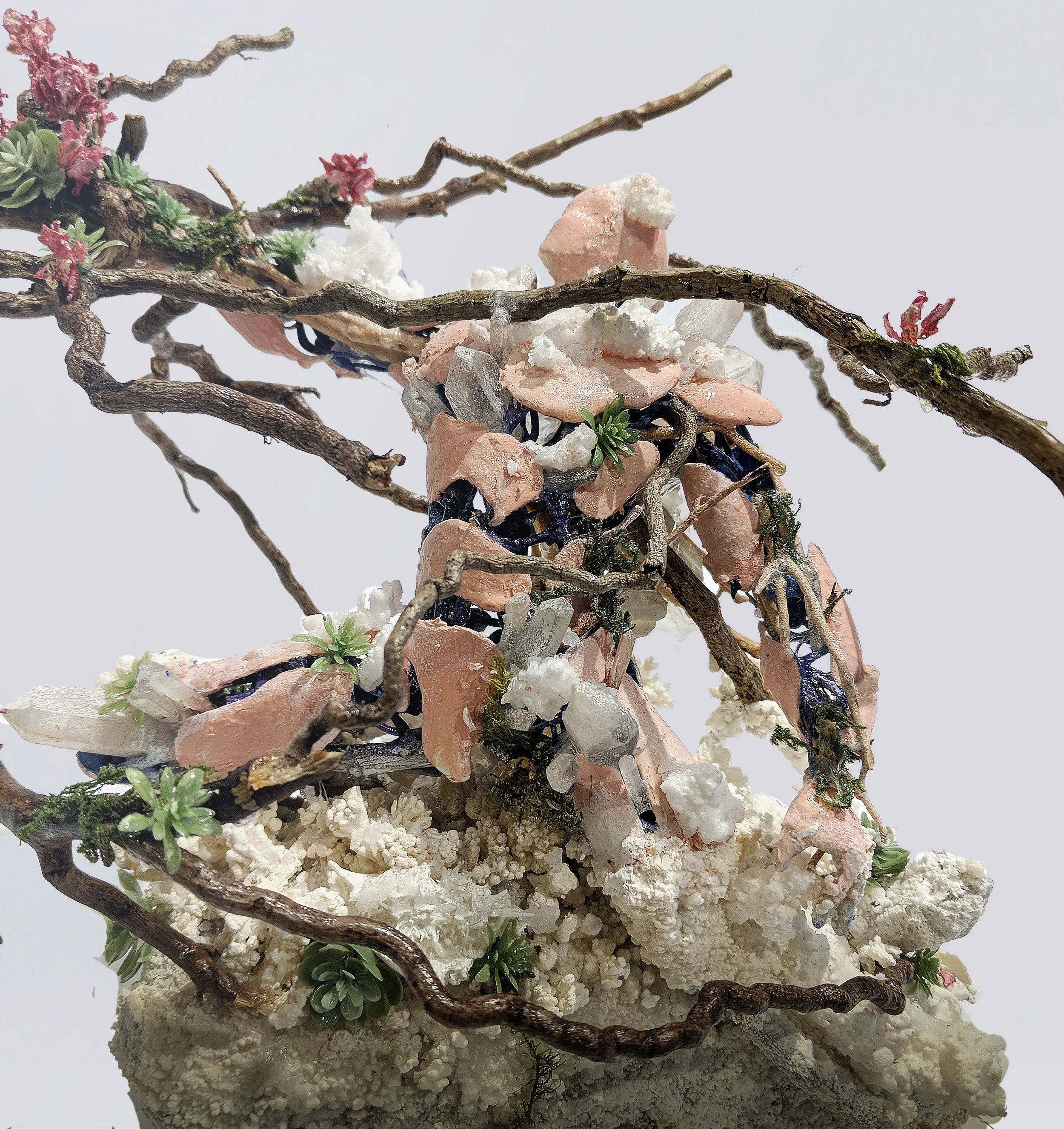
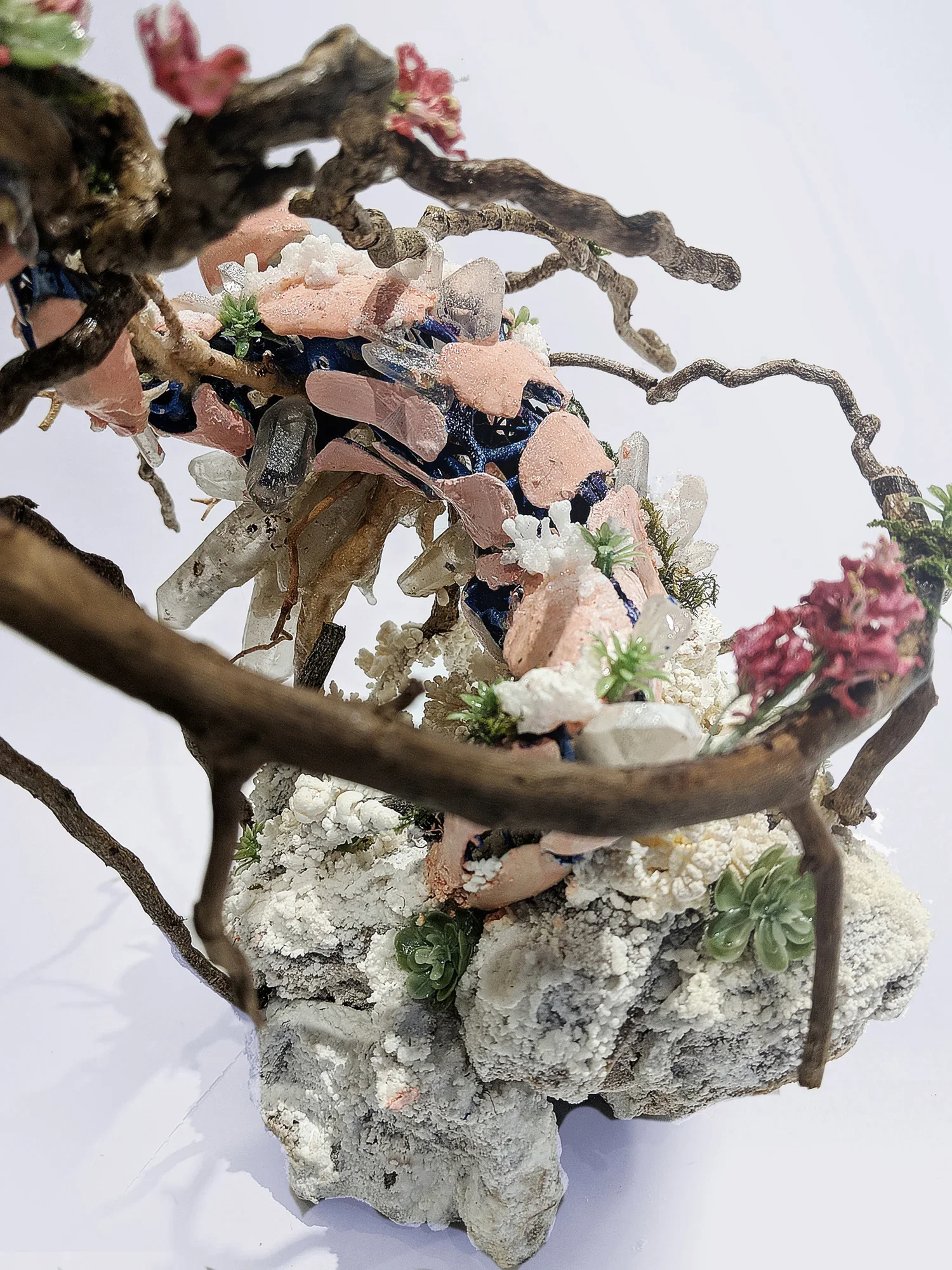
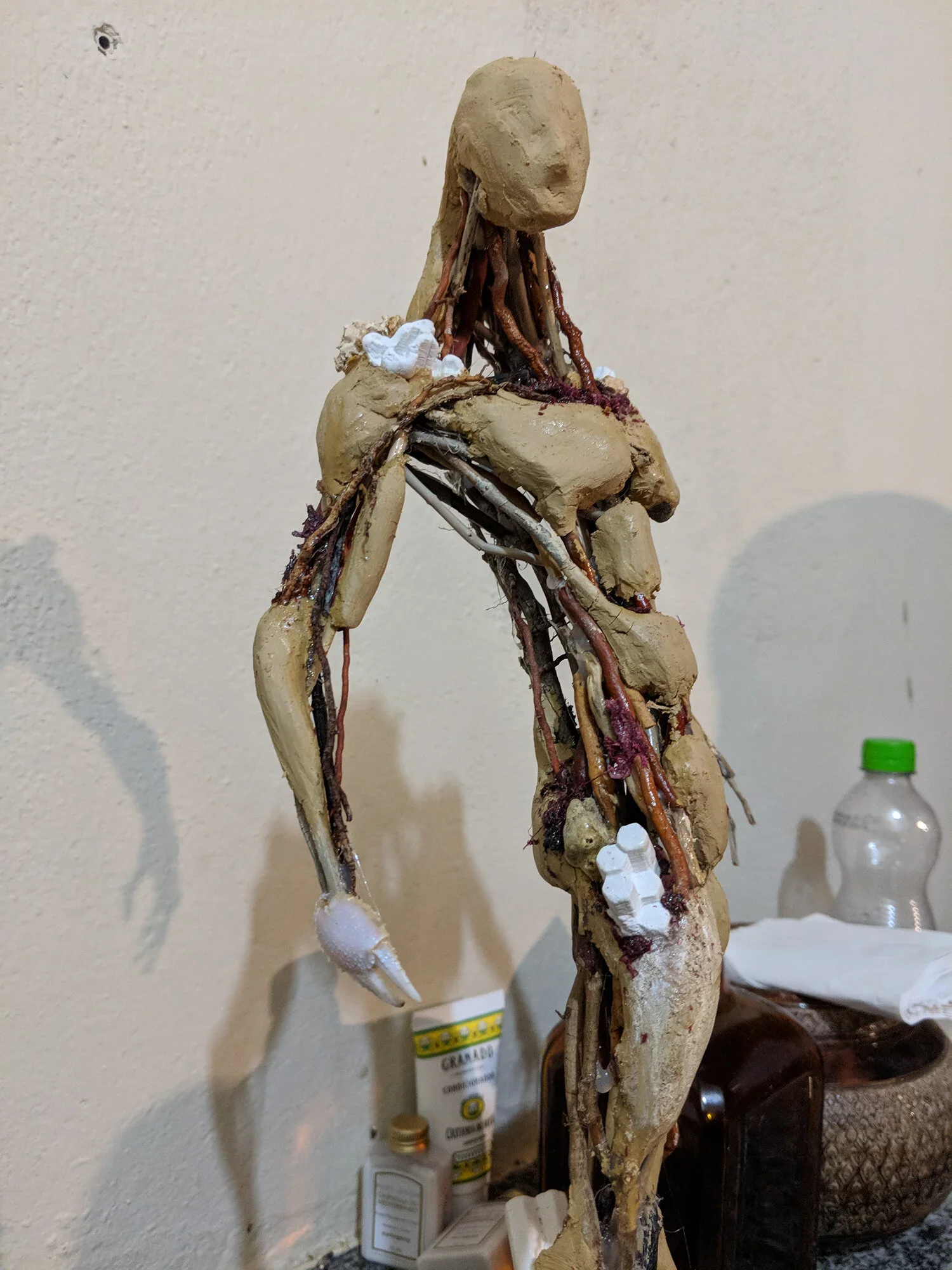
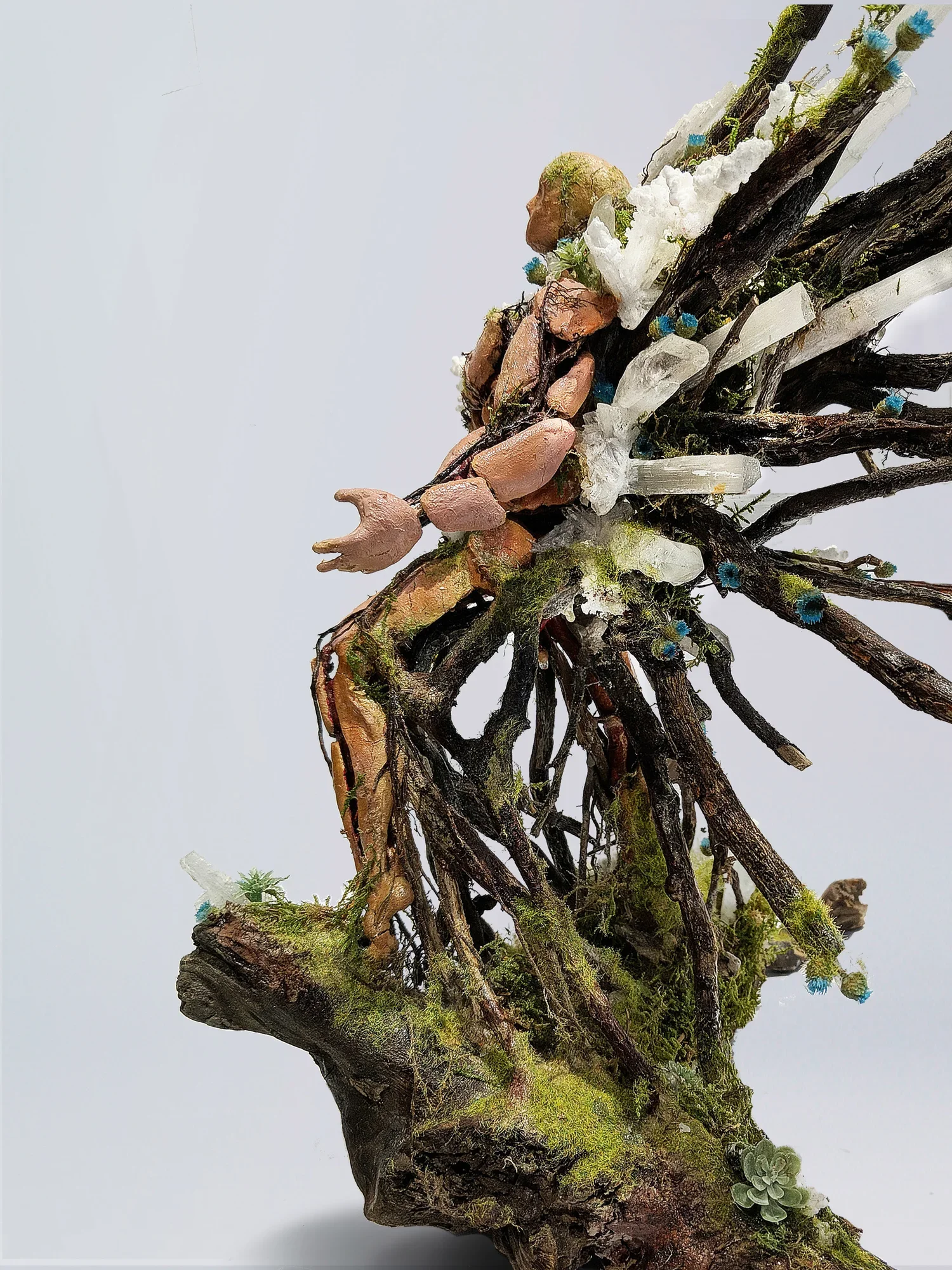
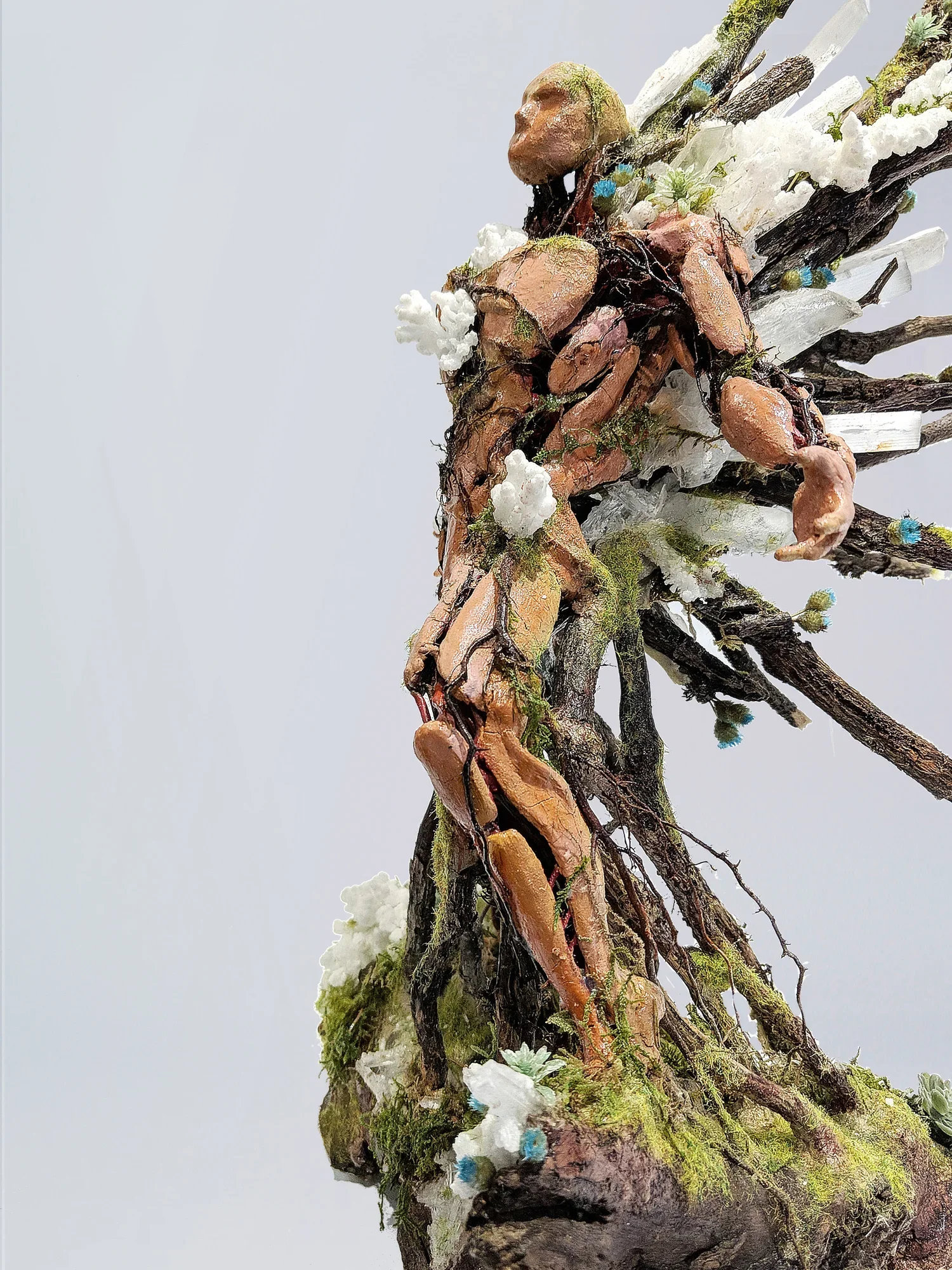
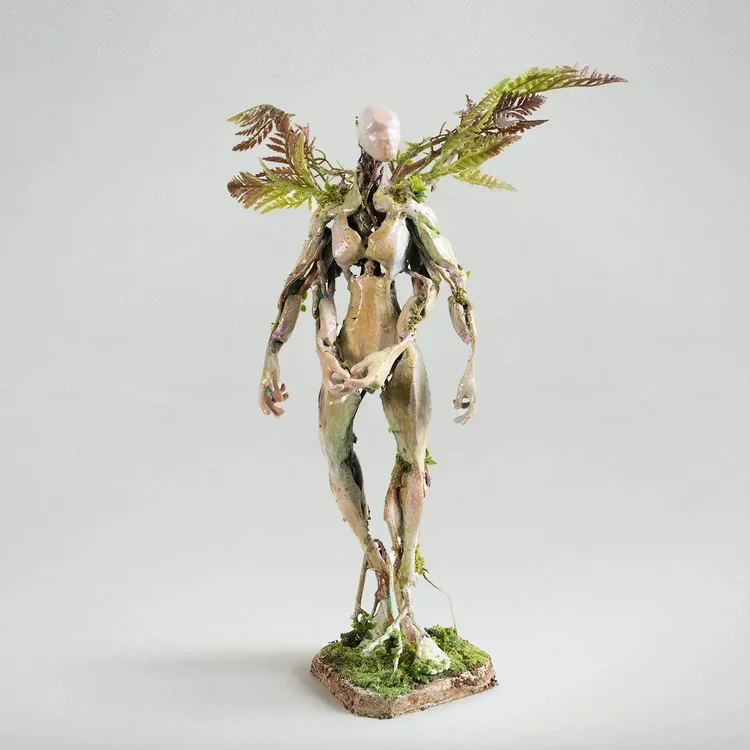
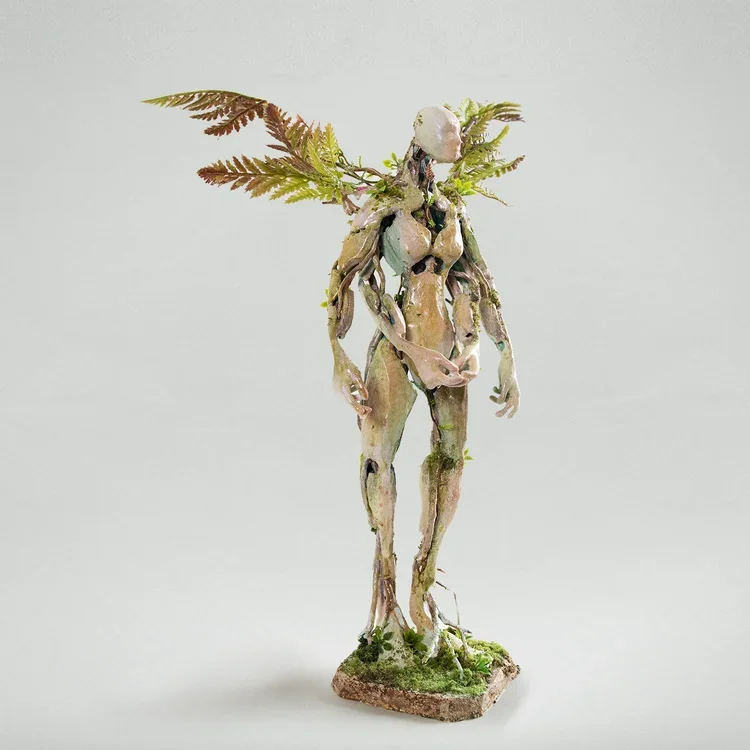
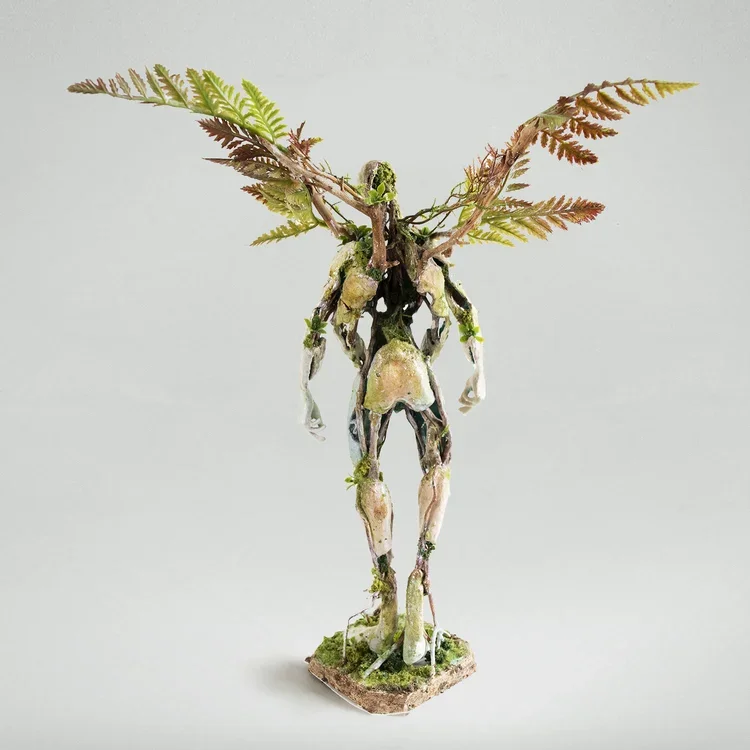
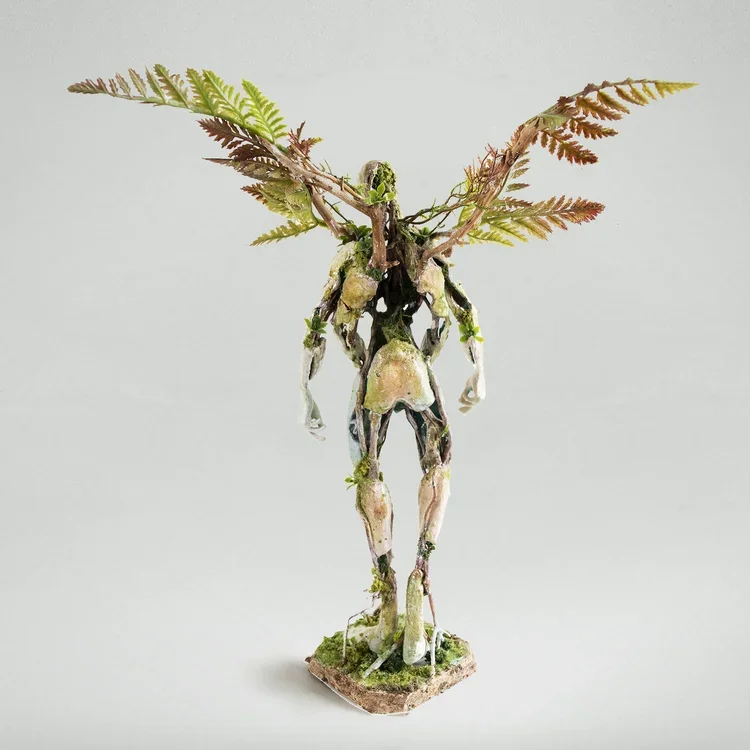
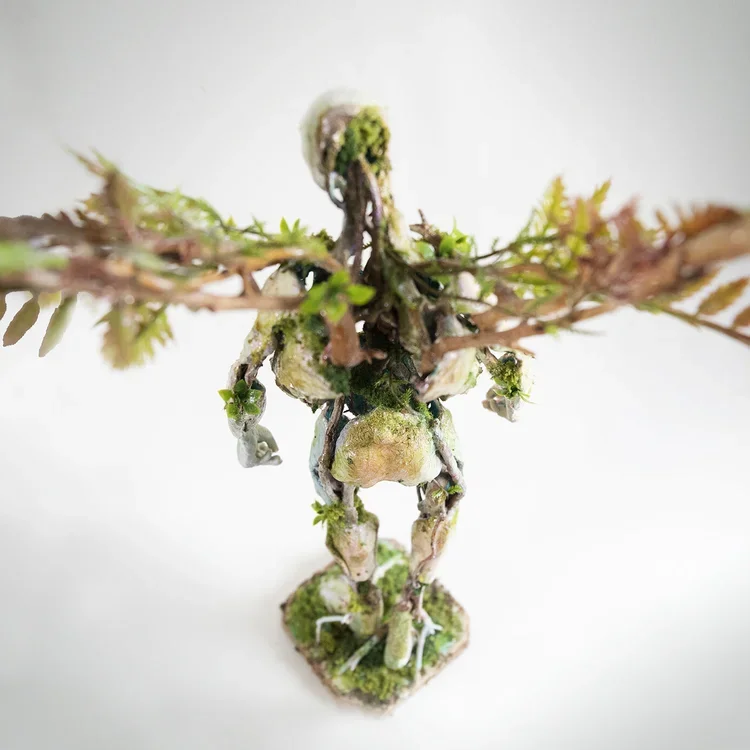
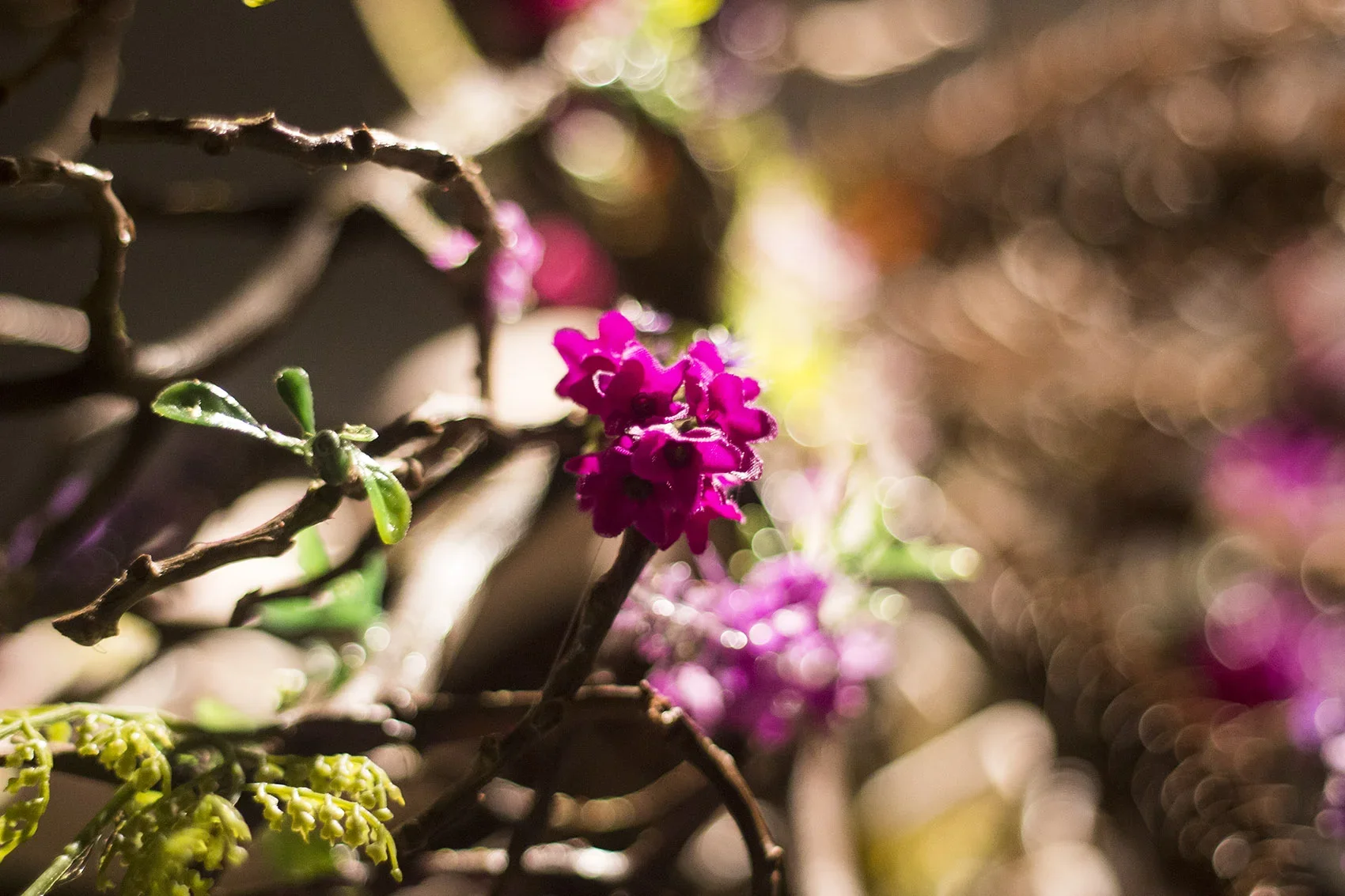
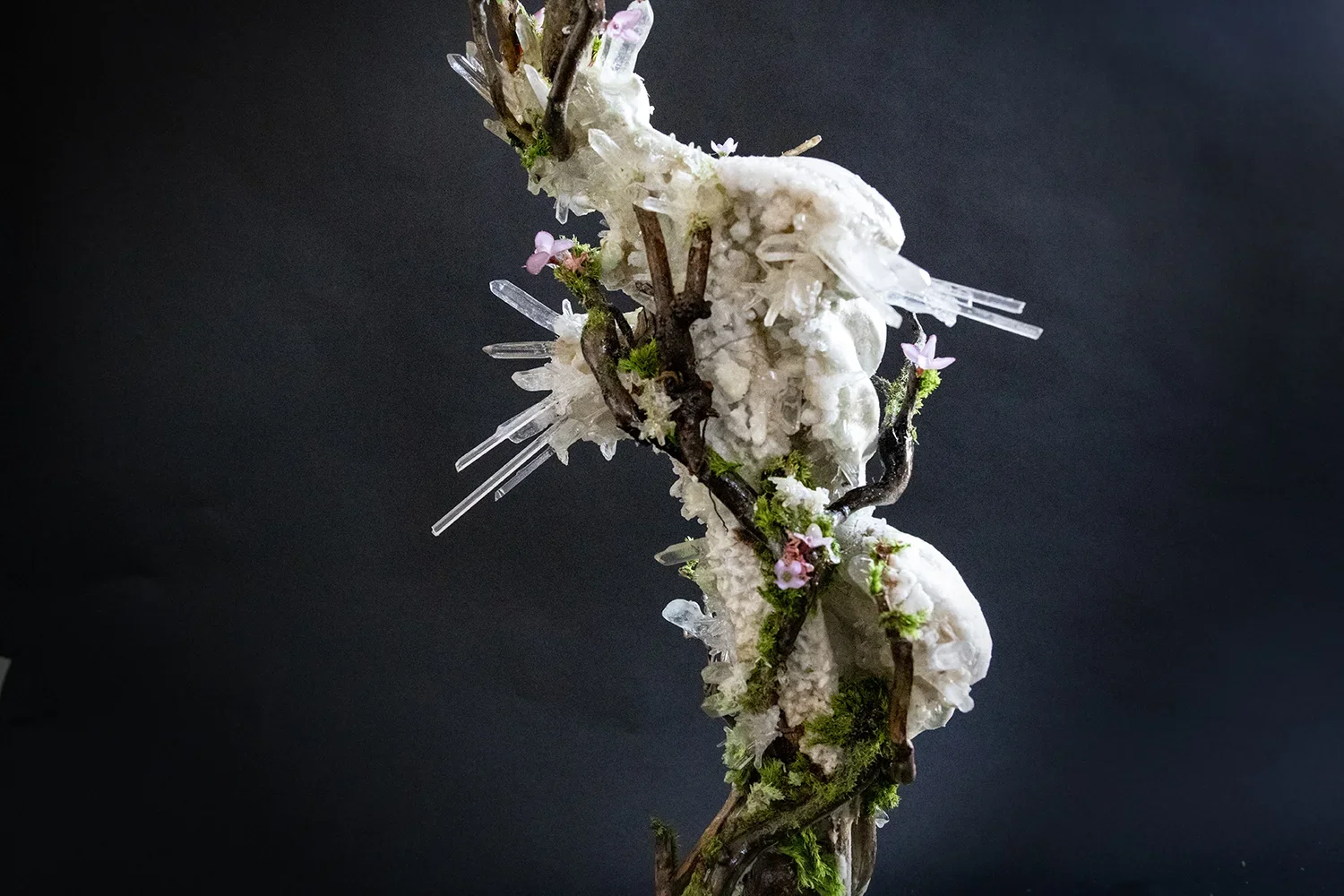
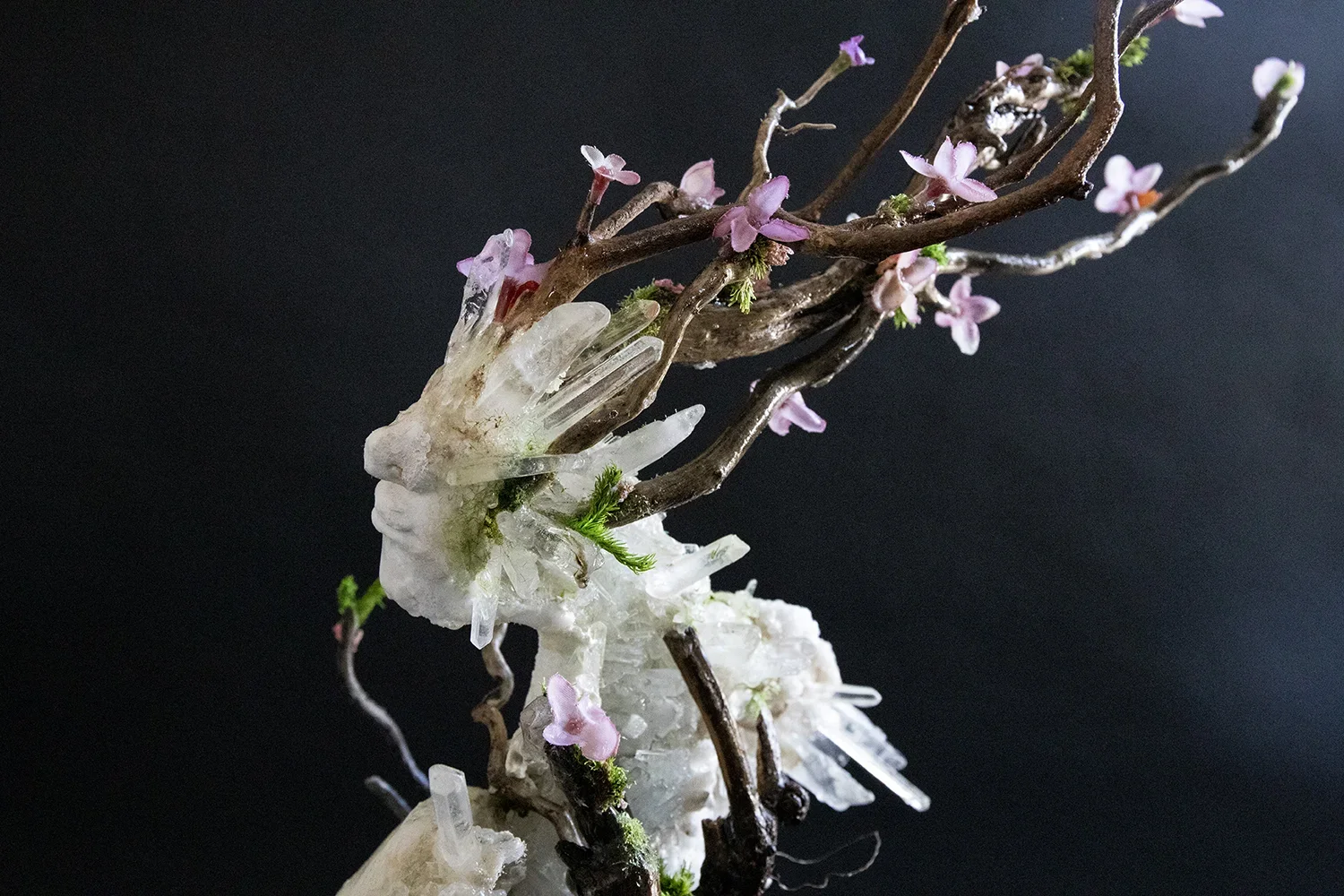
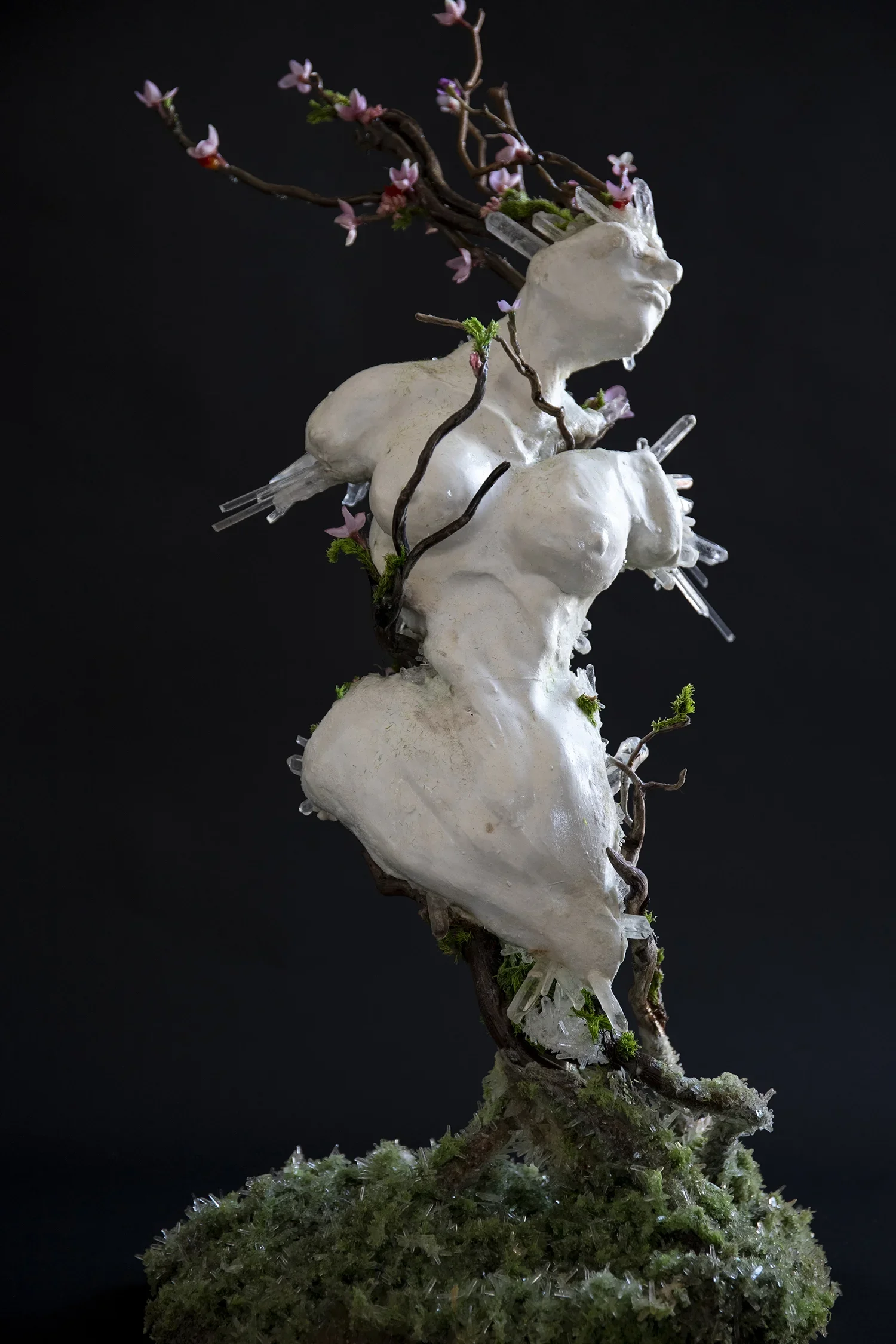
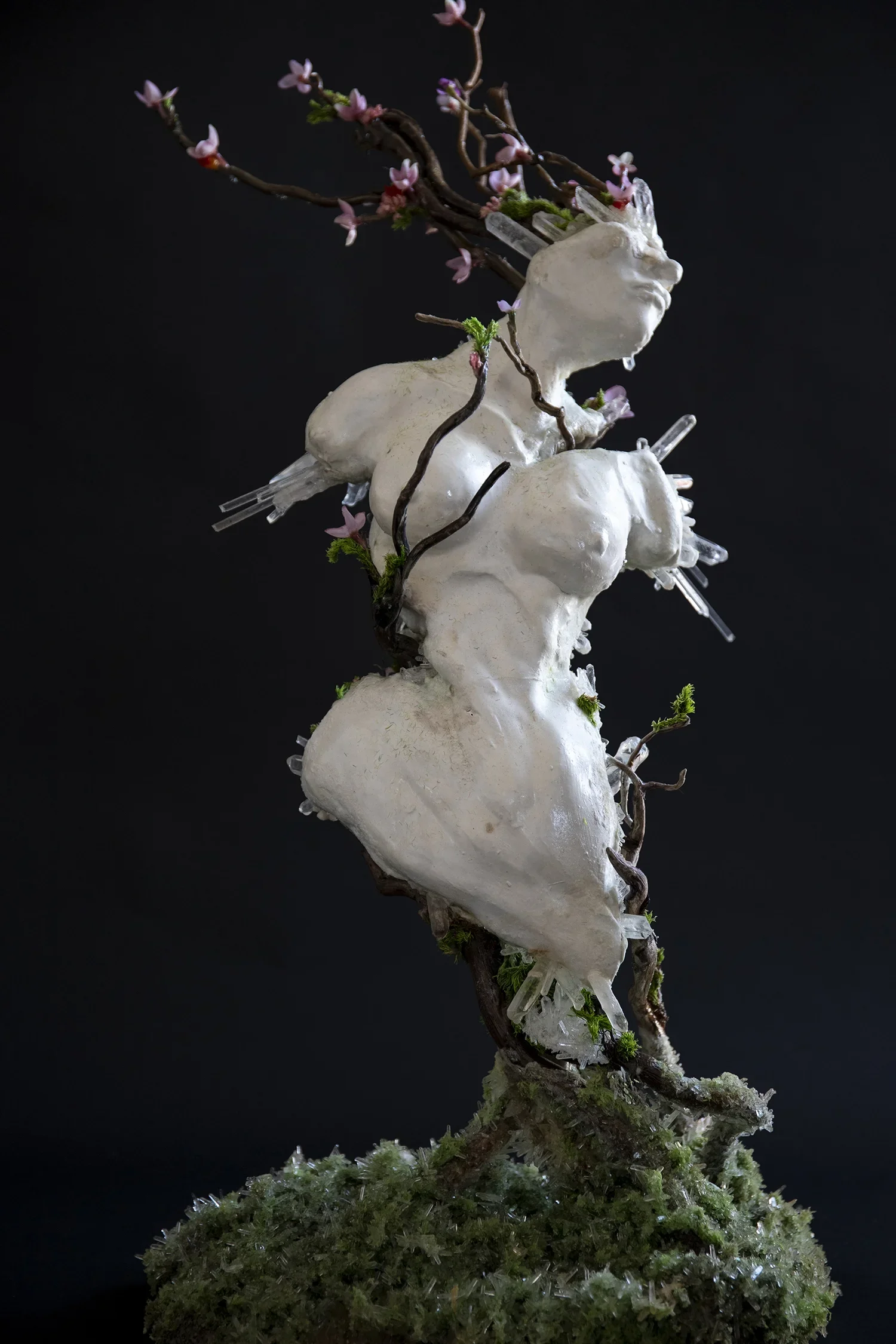
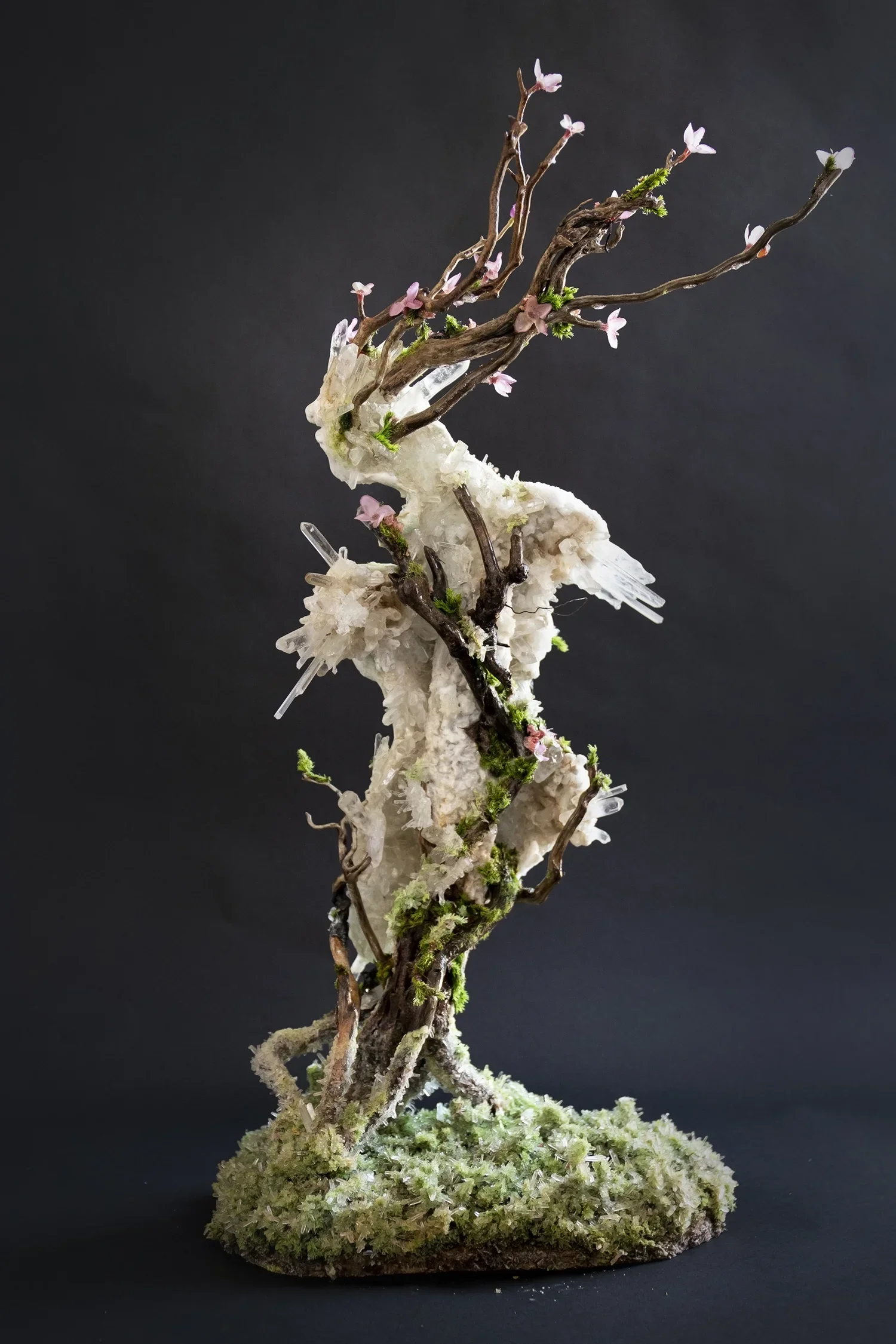
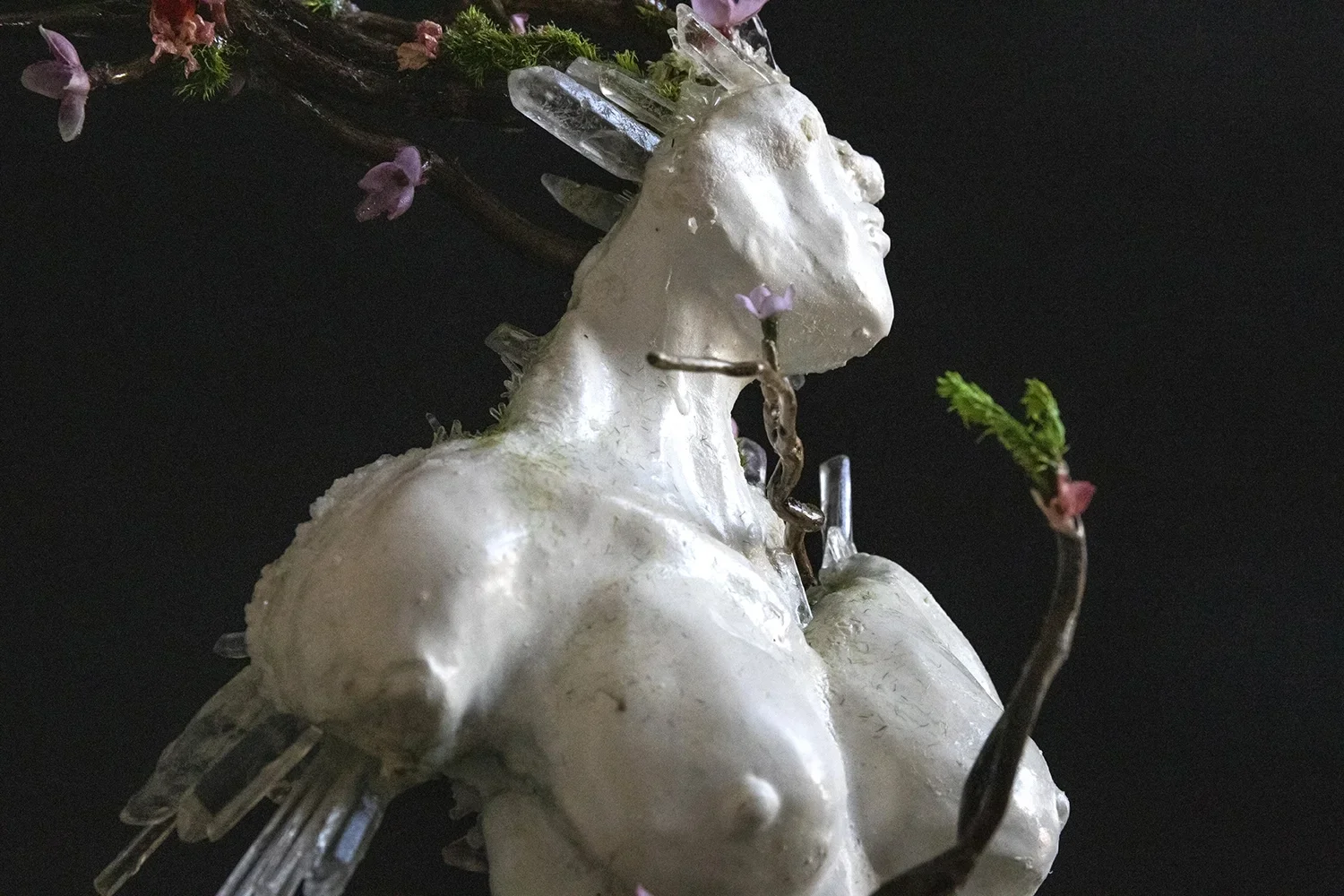
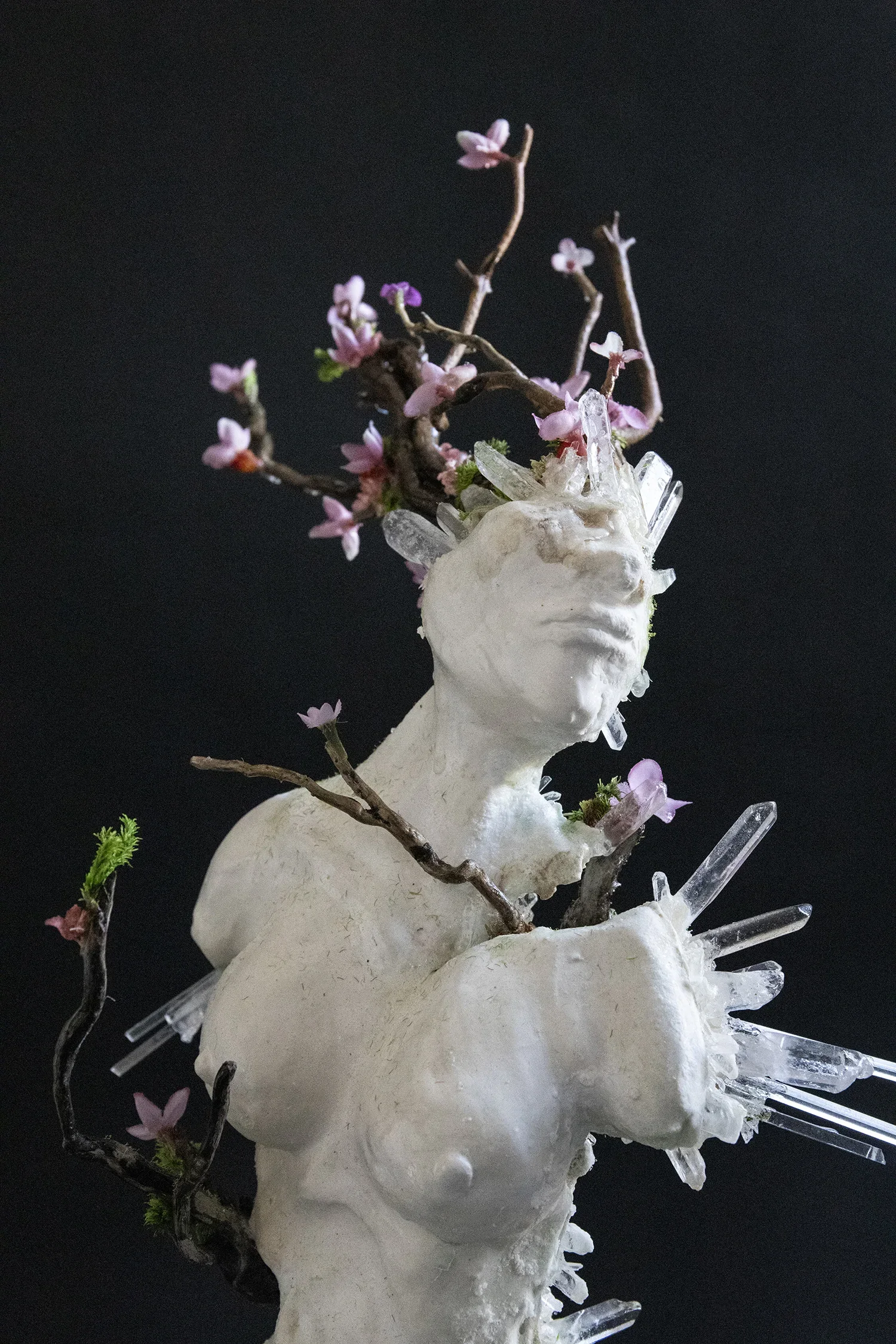
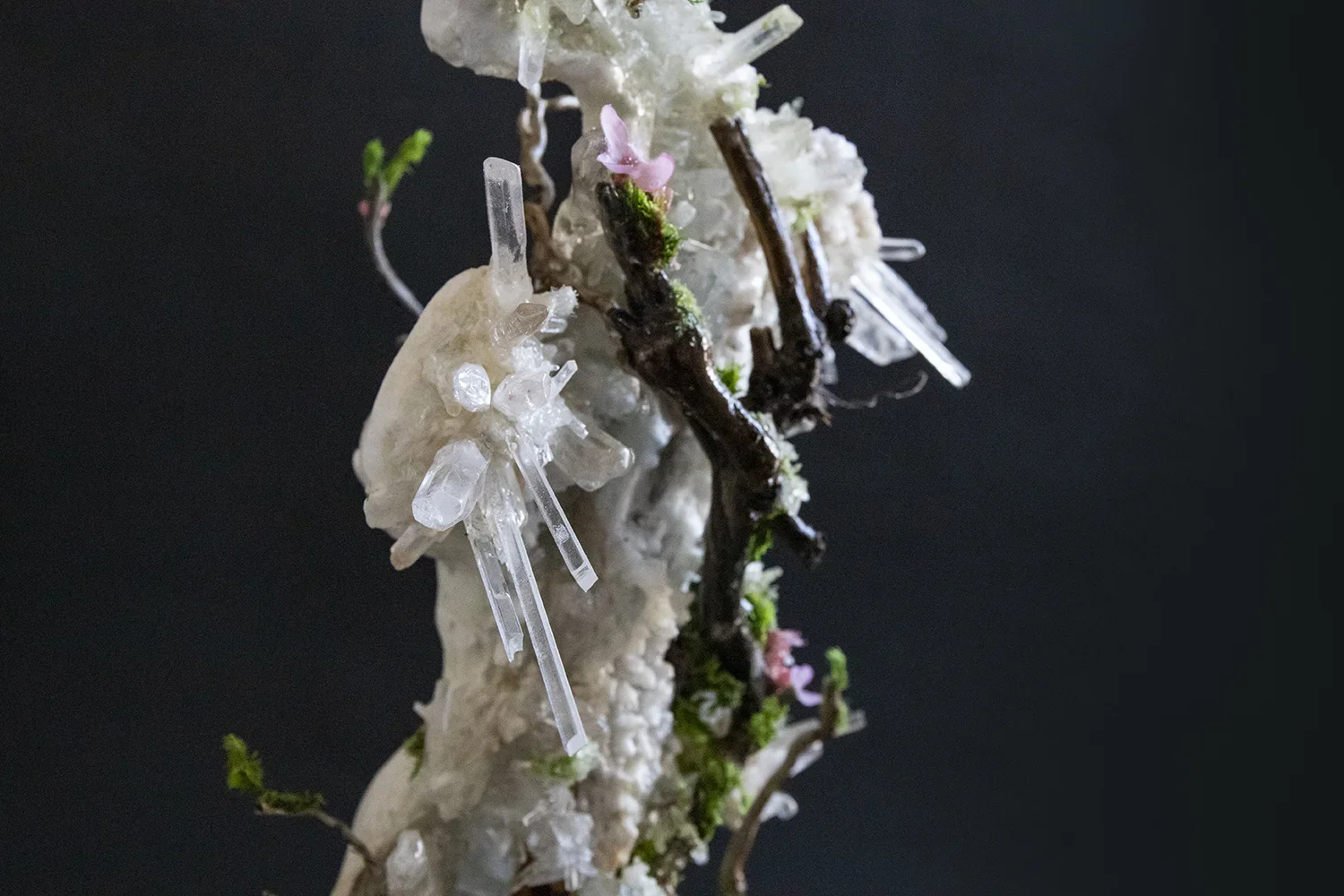
This body of figurative work explores the human desire to return to nature while being transformed by technology, myth, and synthetic materials. The sculptures combine organic matter, crystals, ceramic forms, 3D-printed parts, flowers, moss, branches, minerals, and found objects into hybrid beings that feel part human, part relic, part organism, and part machine.
Across works like Seraphoids, Biophilia, Autopocatastasis, and Reconstitution, the figure is constantly forming, fragmenting, repairing, or mutating. Some pieces suggest pseudo-angelic beings with the power to restore a damaged world; others imagine a future nature rebuilt by artificial intelligence, biological matter, and human debris. Together, the works sit between rebirth and collapse — a mythology of bodies becoming landscapes, technology becoming nature, and damaged forms trying to become whole again.
Chlorosapiens
Wood, plaster, aluminum foil, cement, glue, stains, branches, roots, mud, and found living moss
Garret Kane, 2018
Mixed media installation
Six life-size figures, approx. 84" × 48" × 60" each
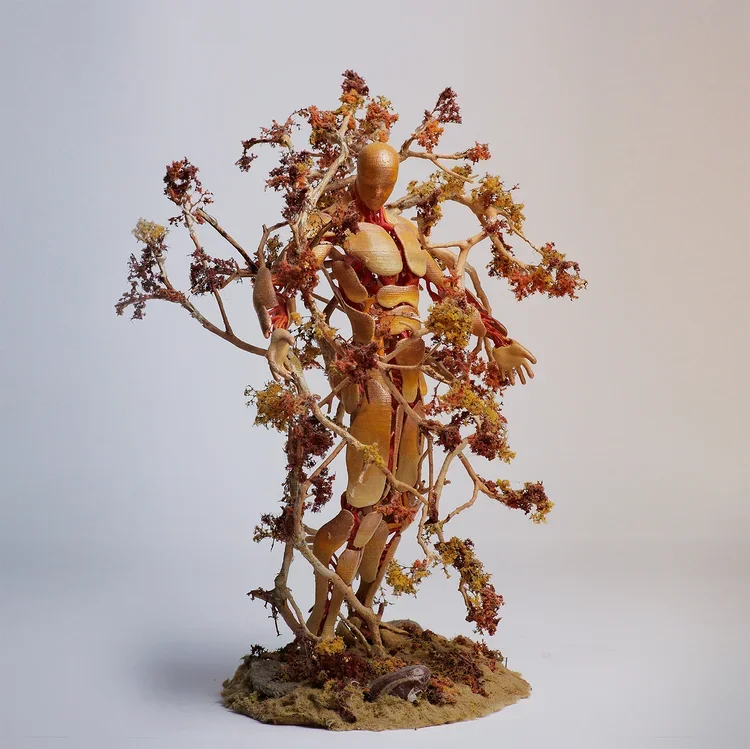
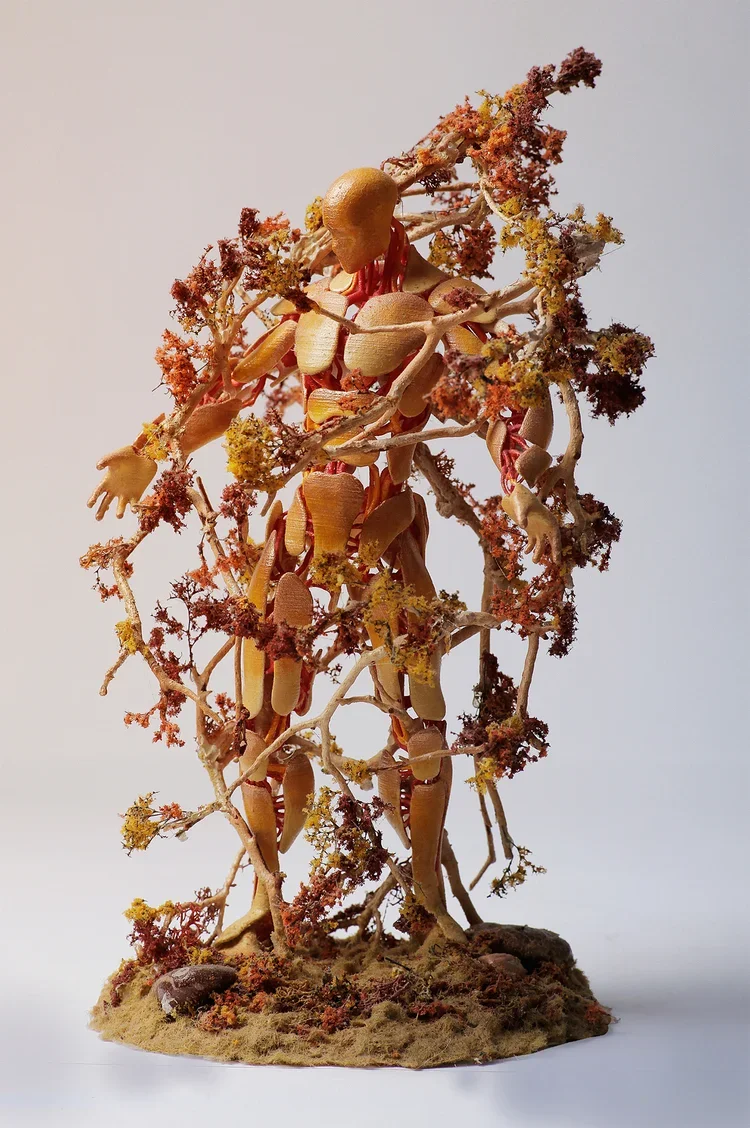
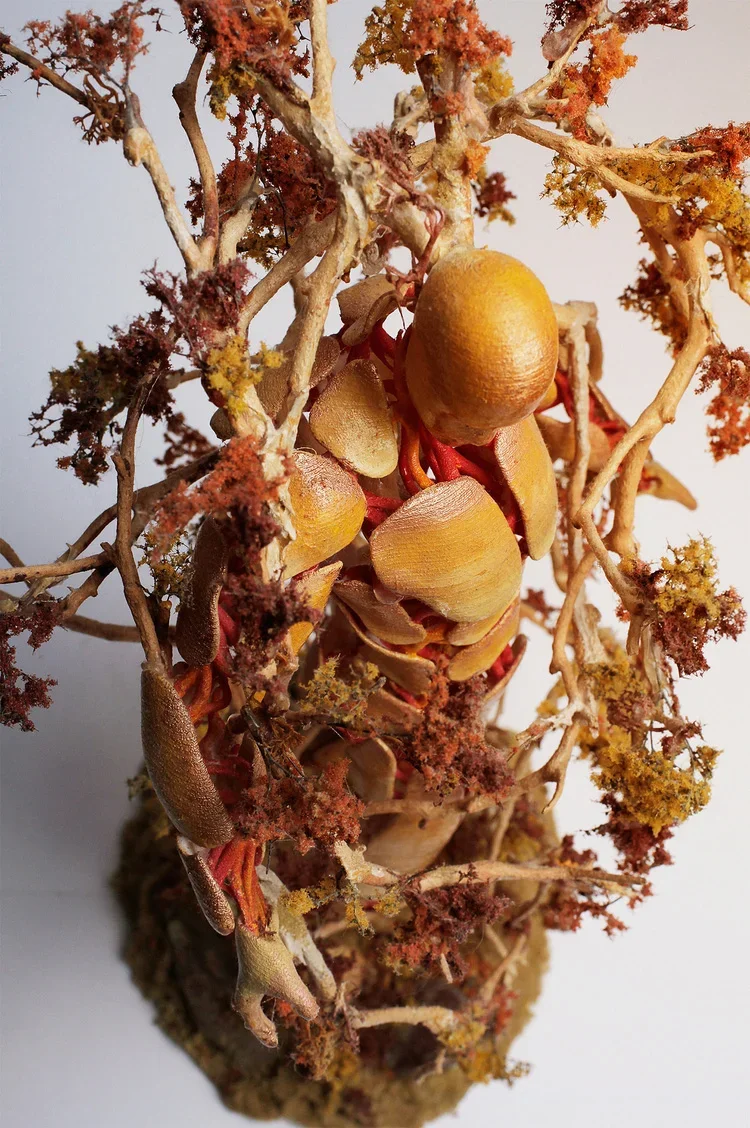
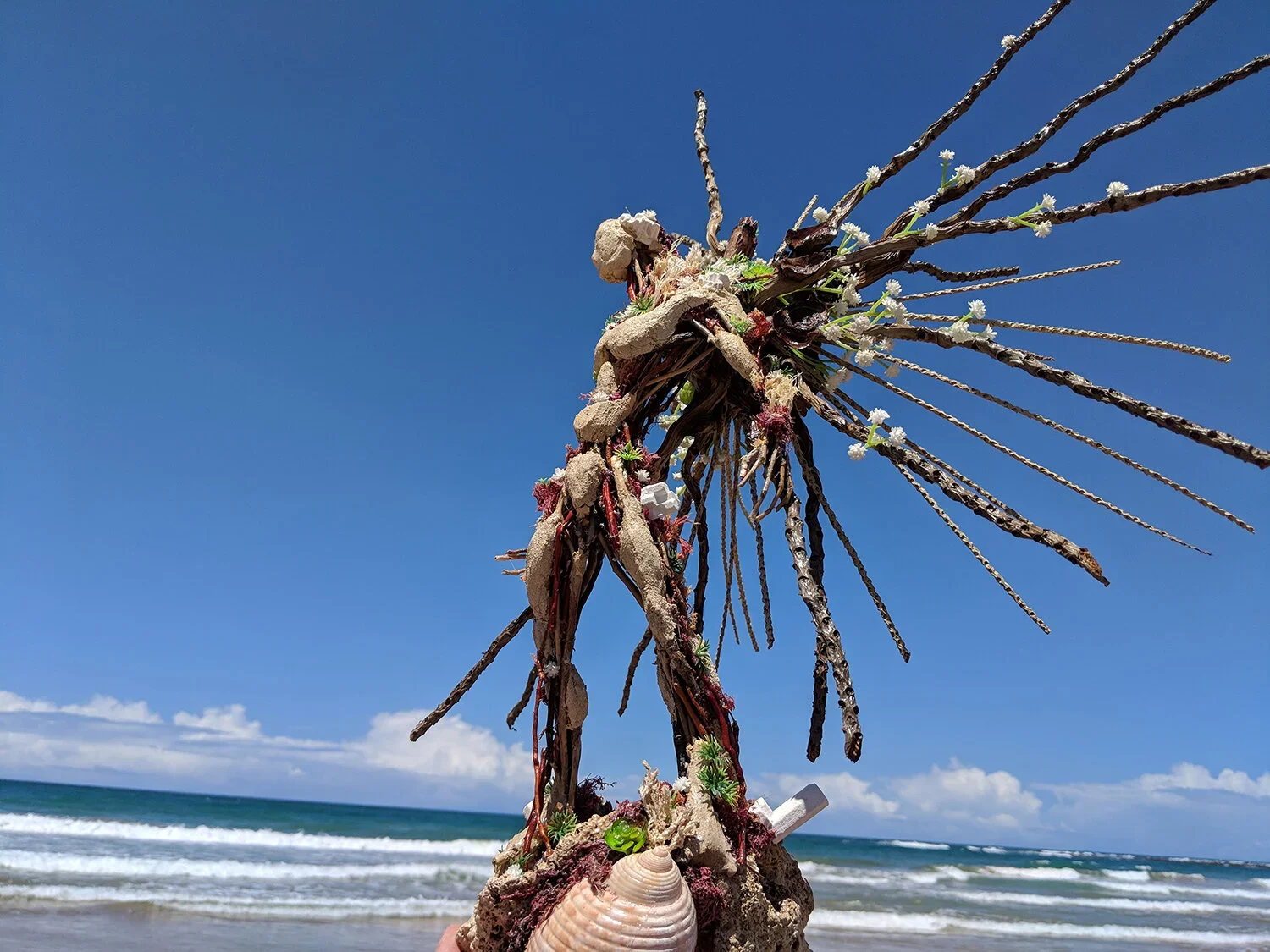
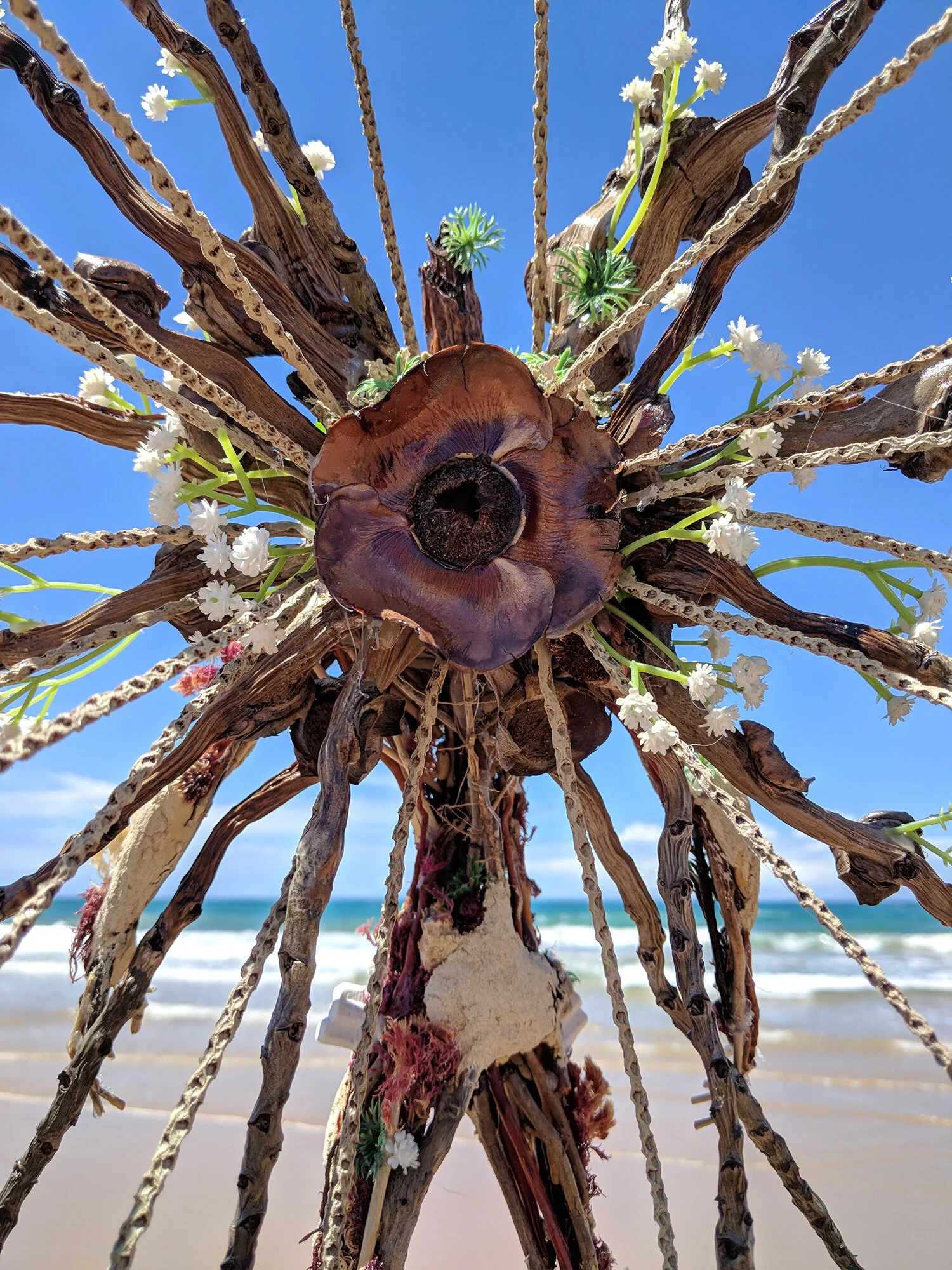
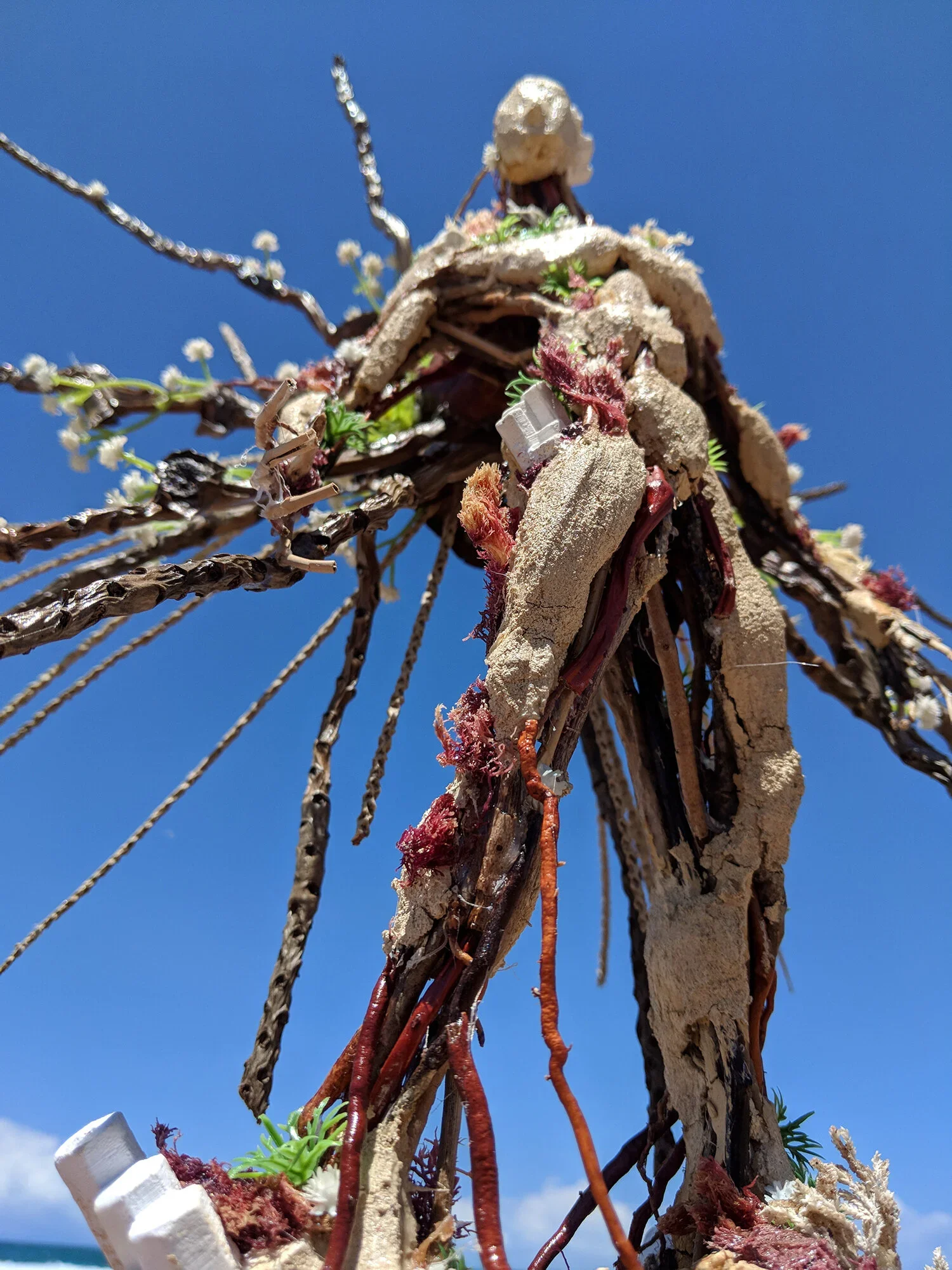
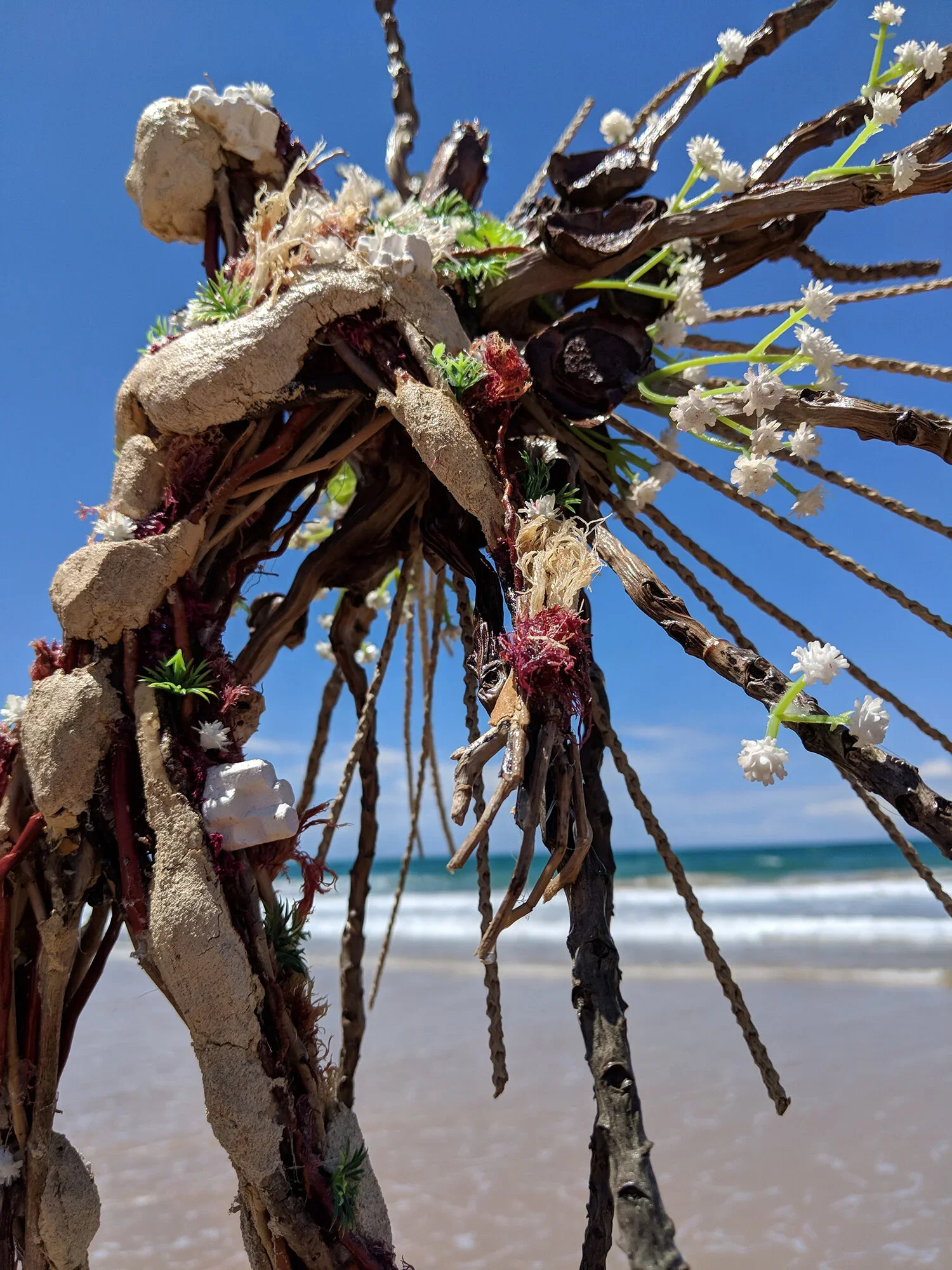
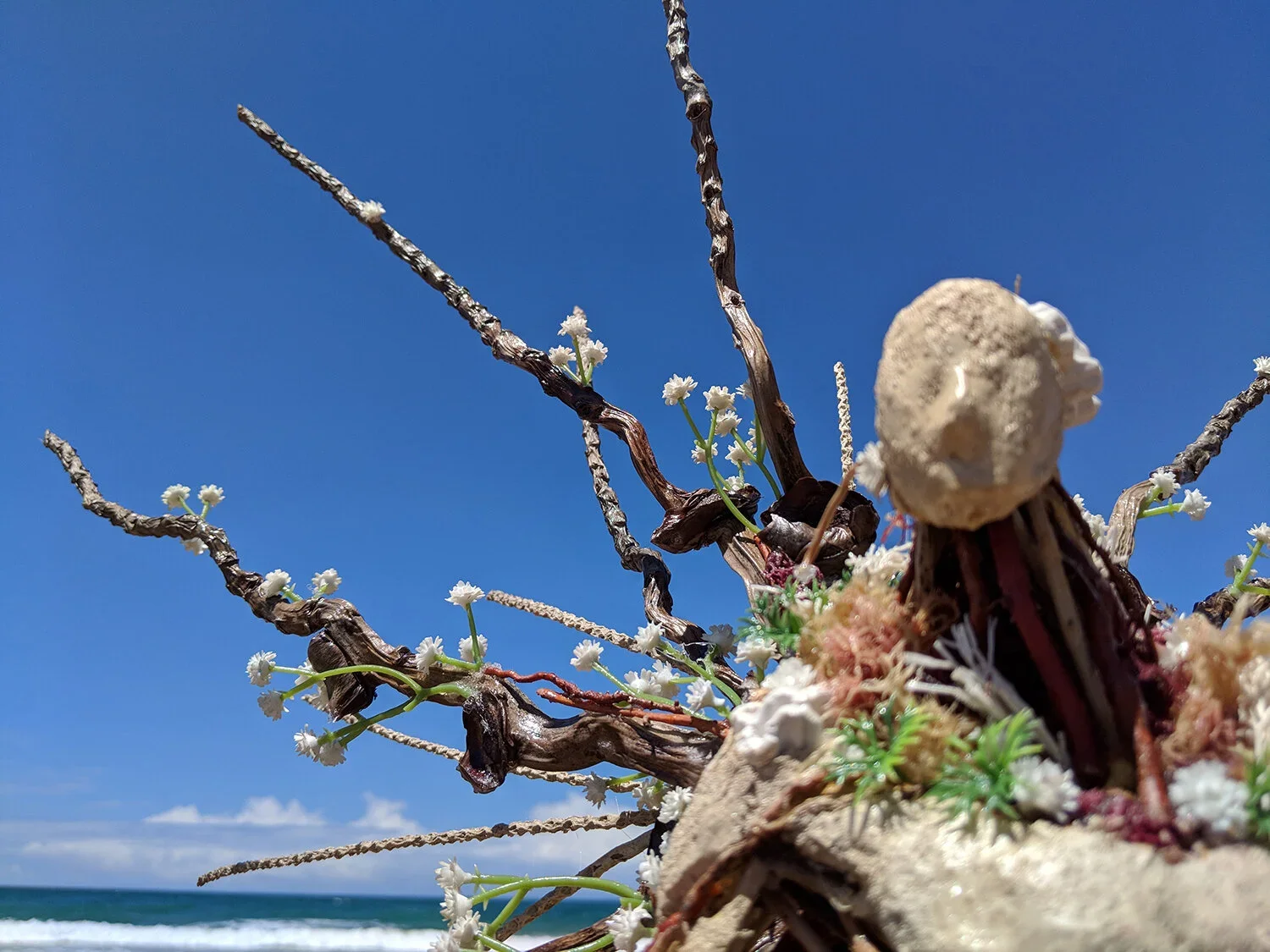
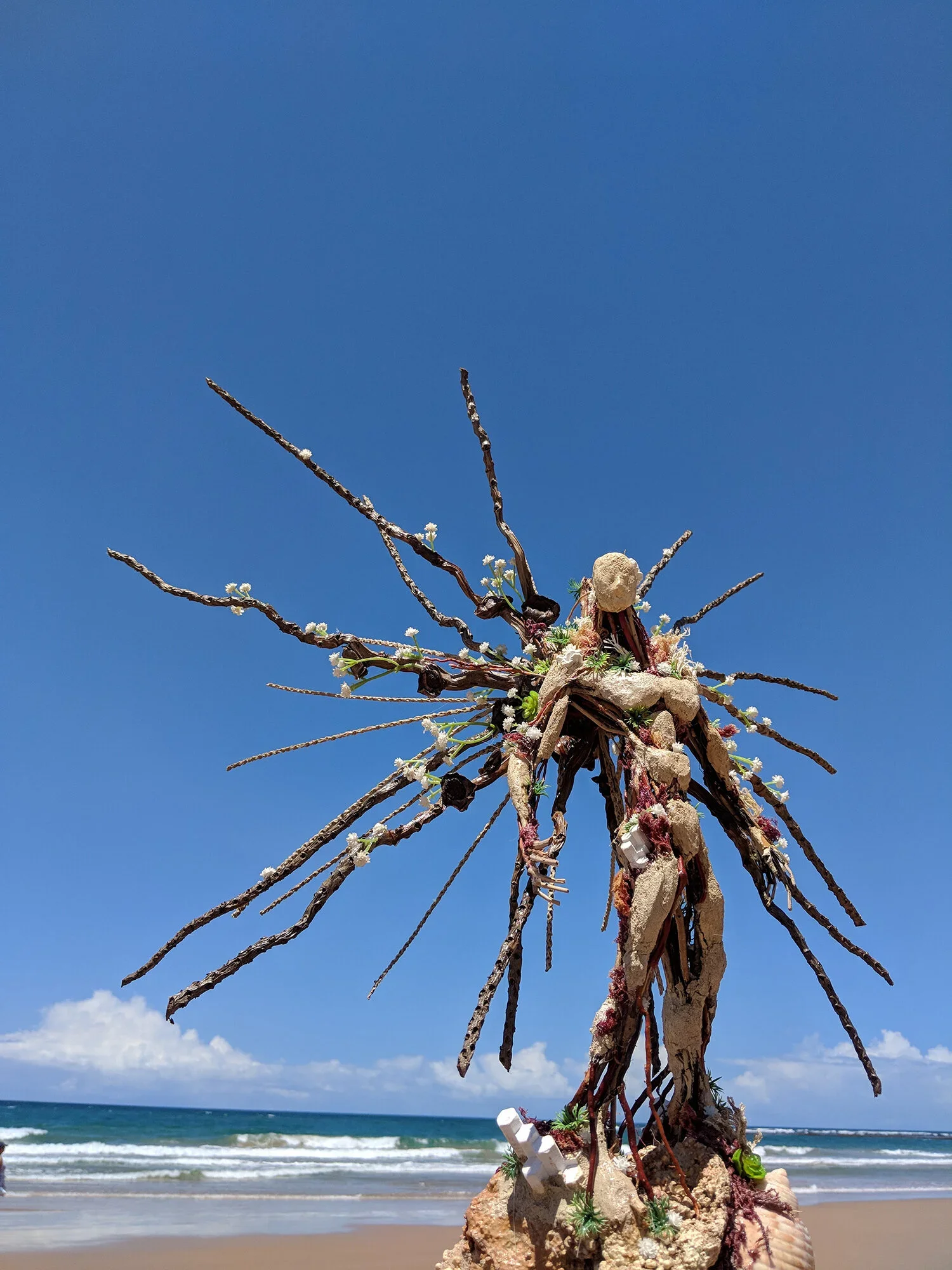
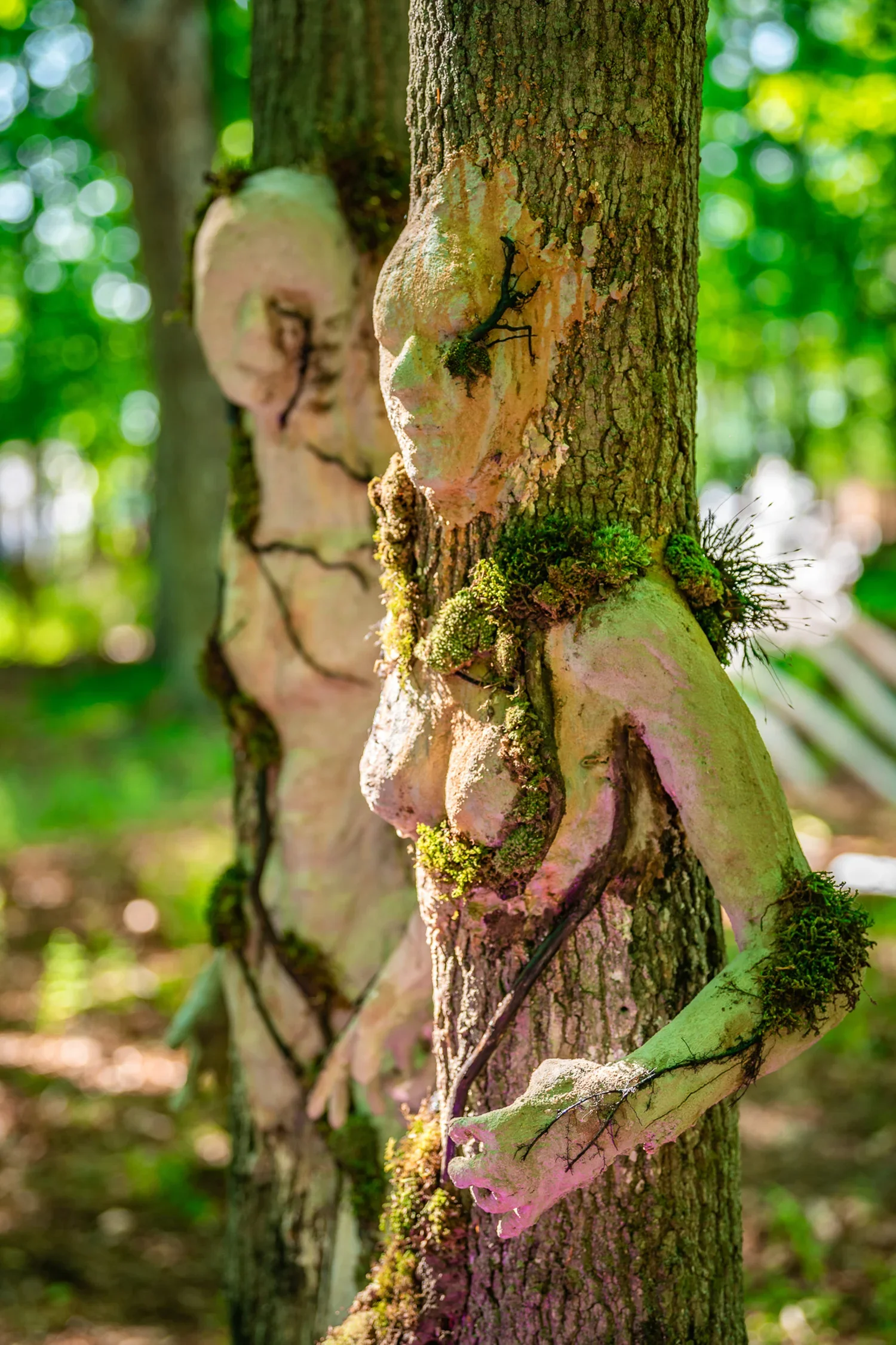
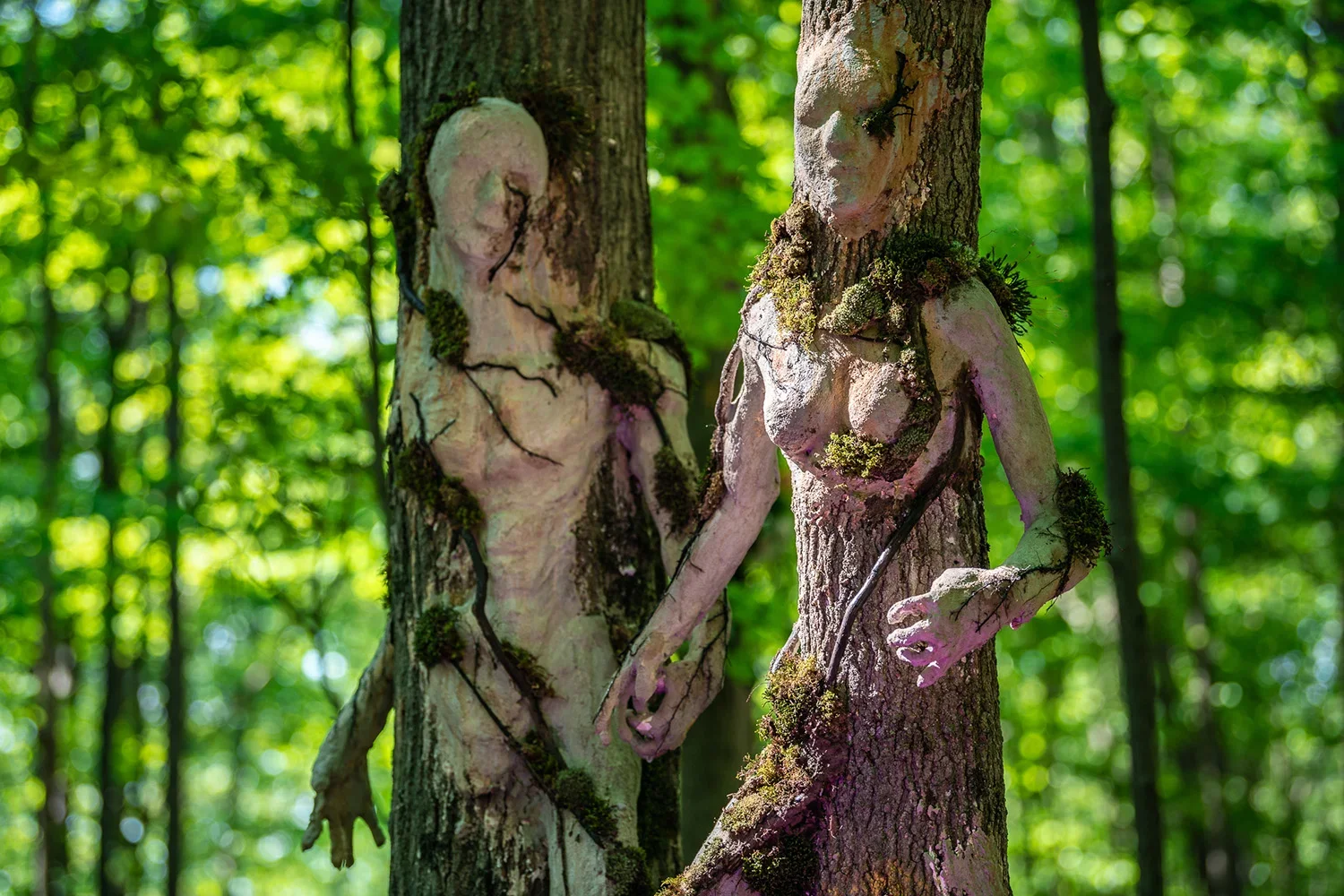
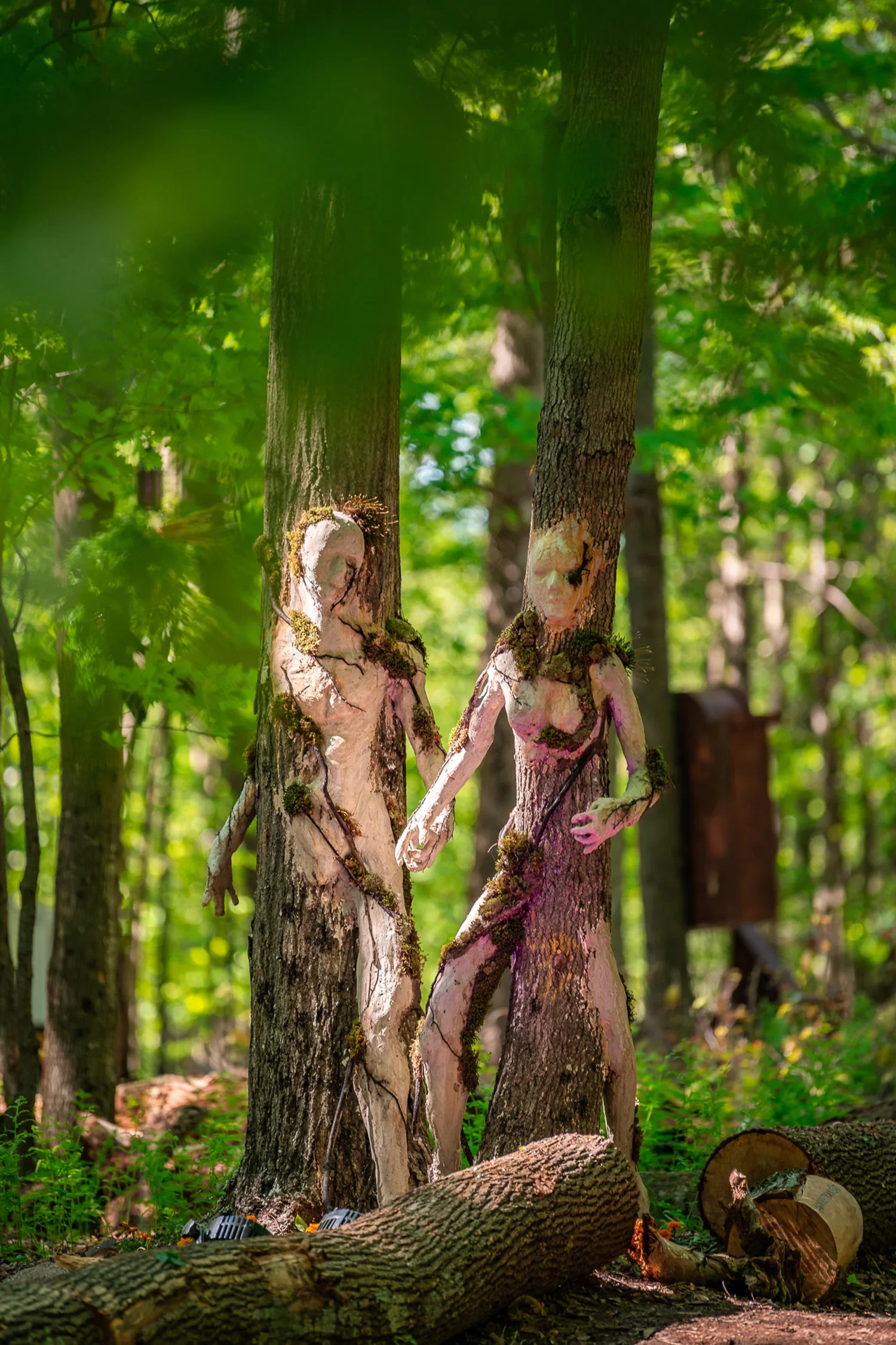
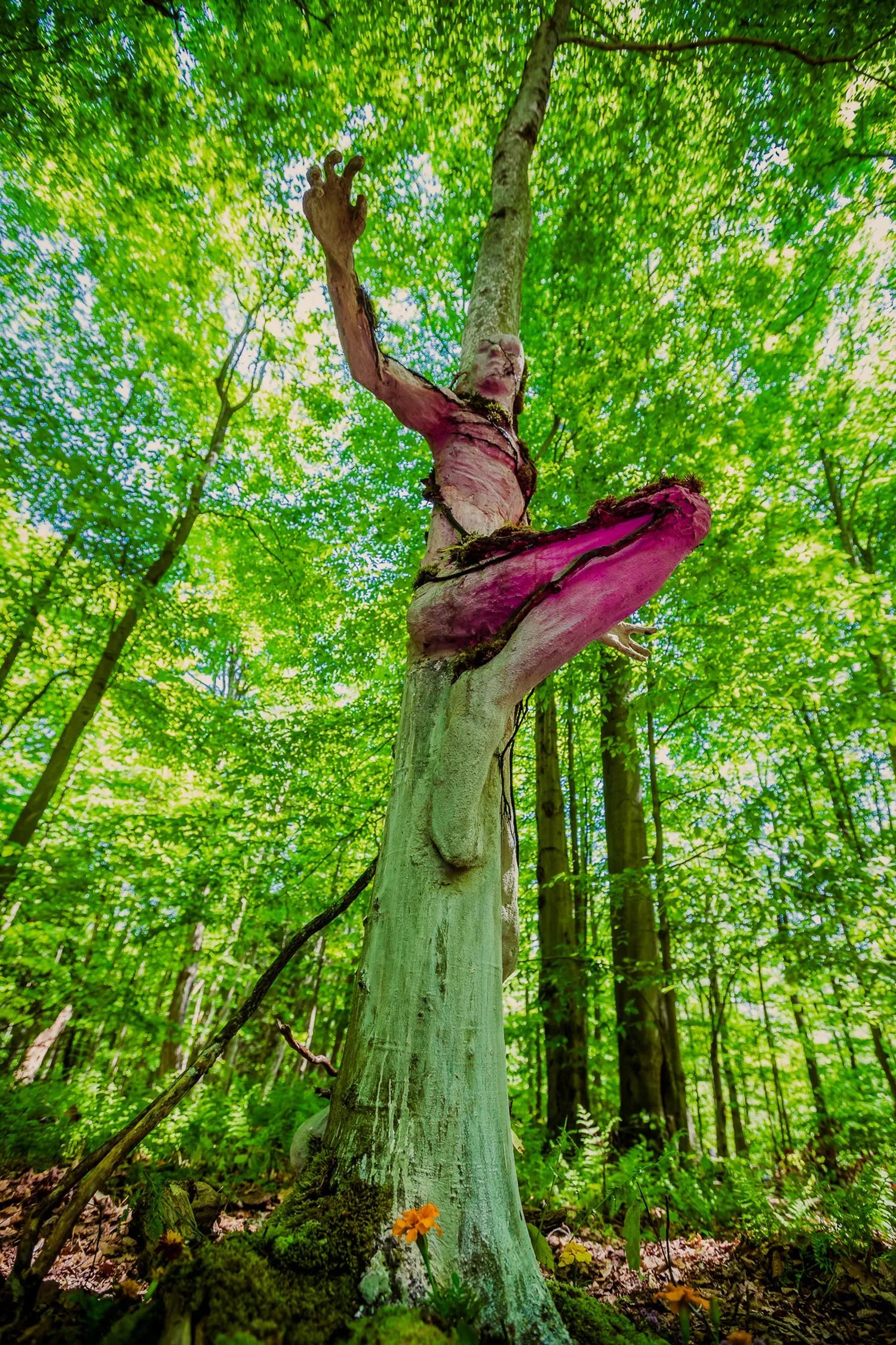
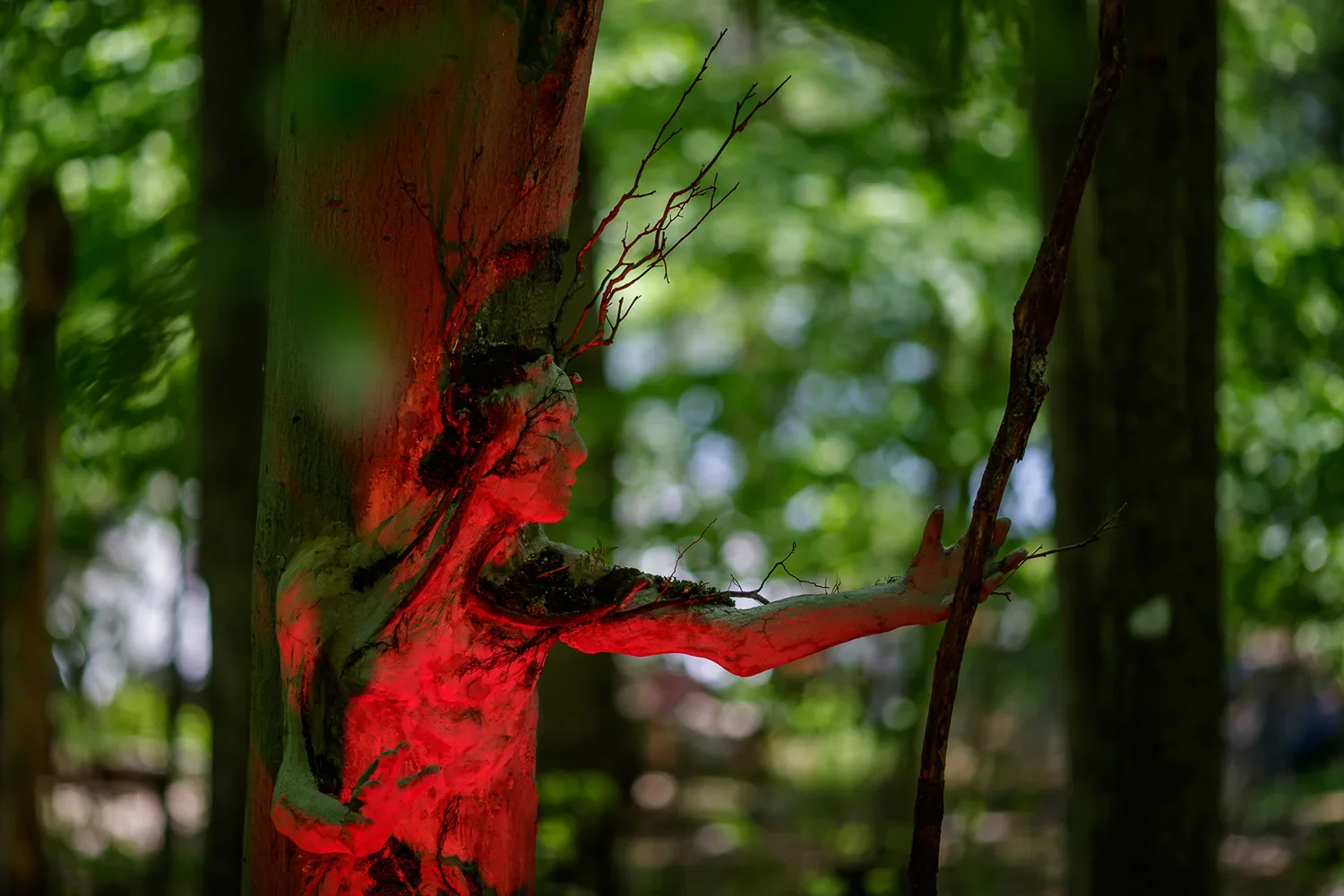
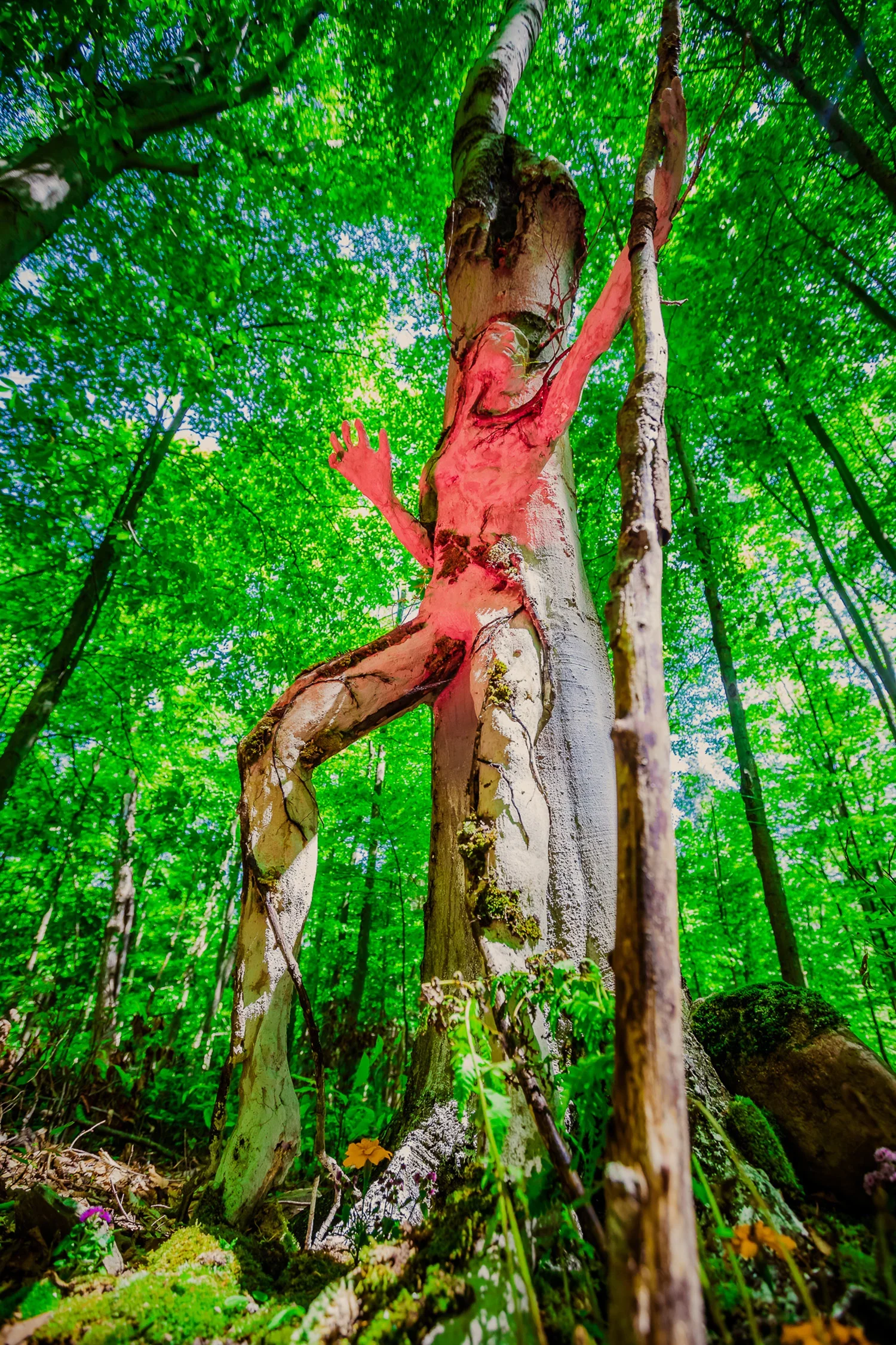
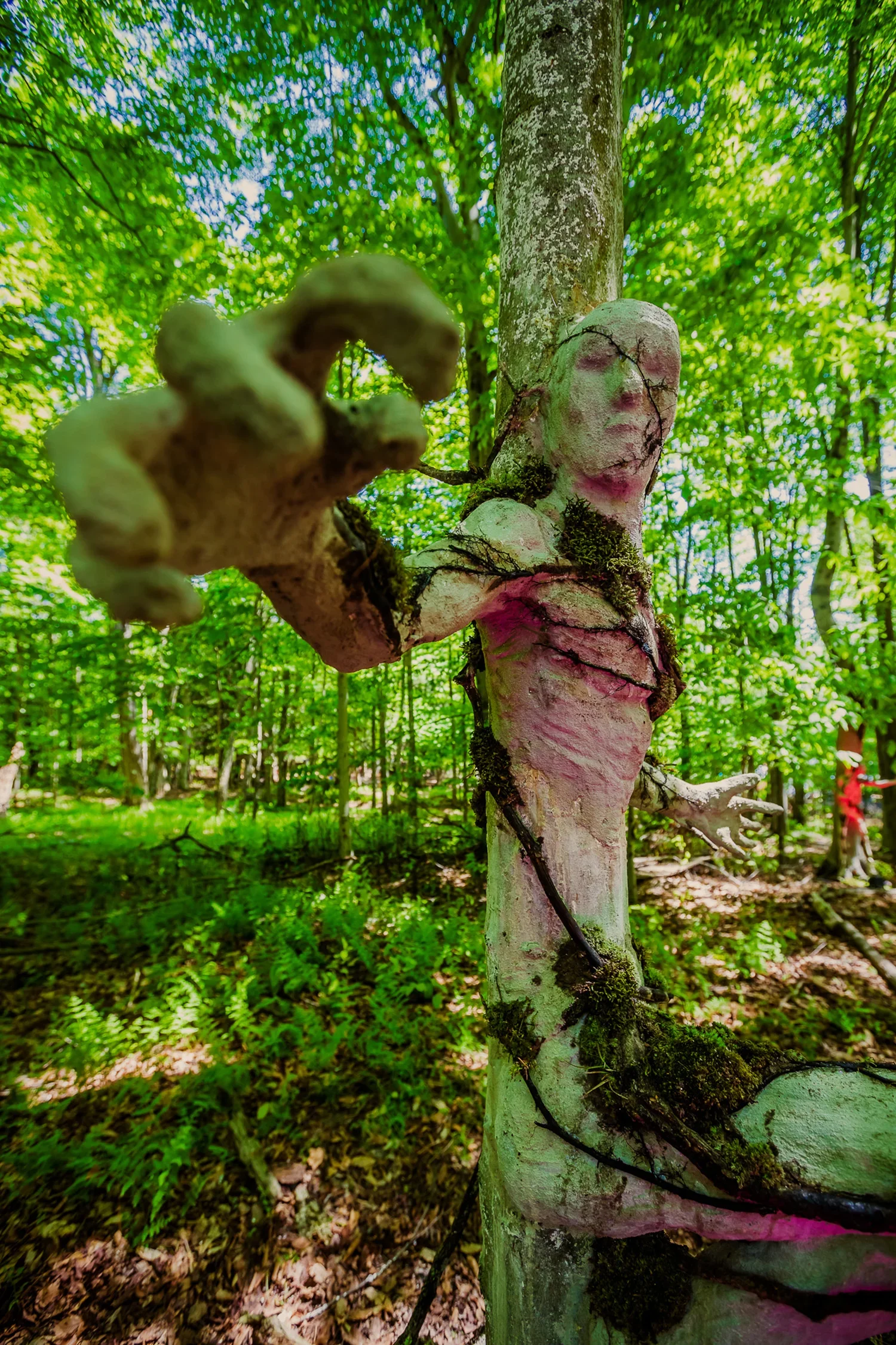
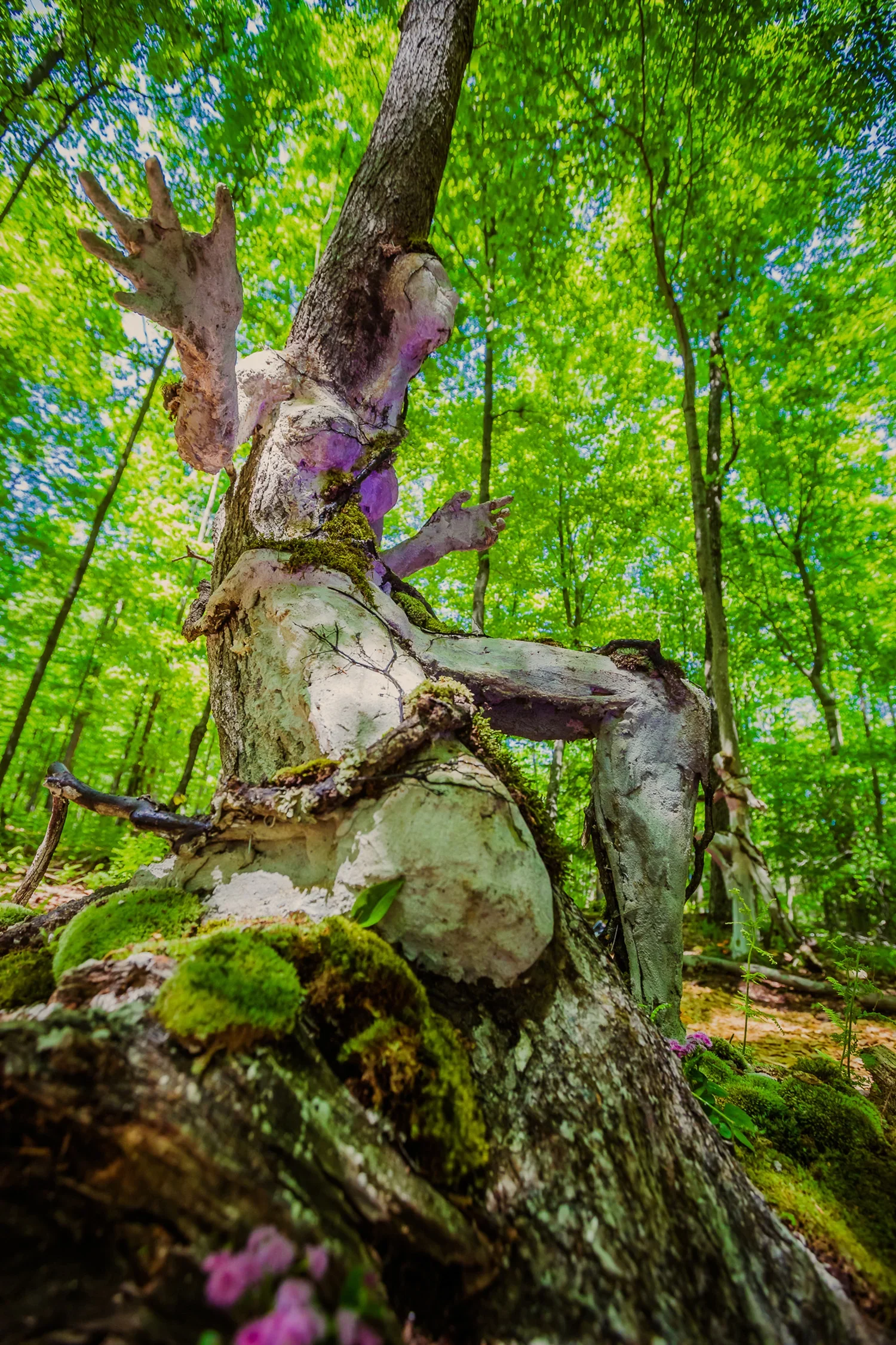
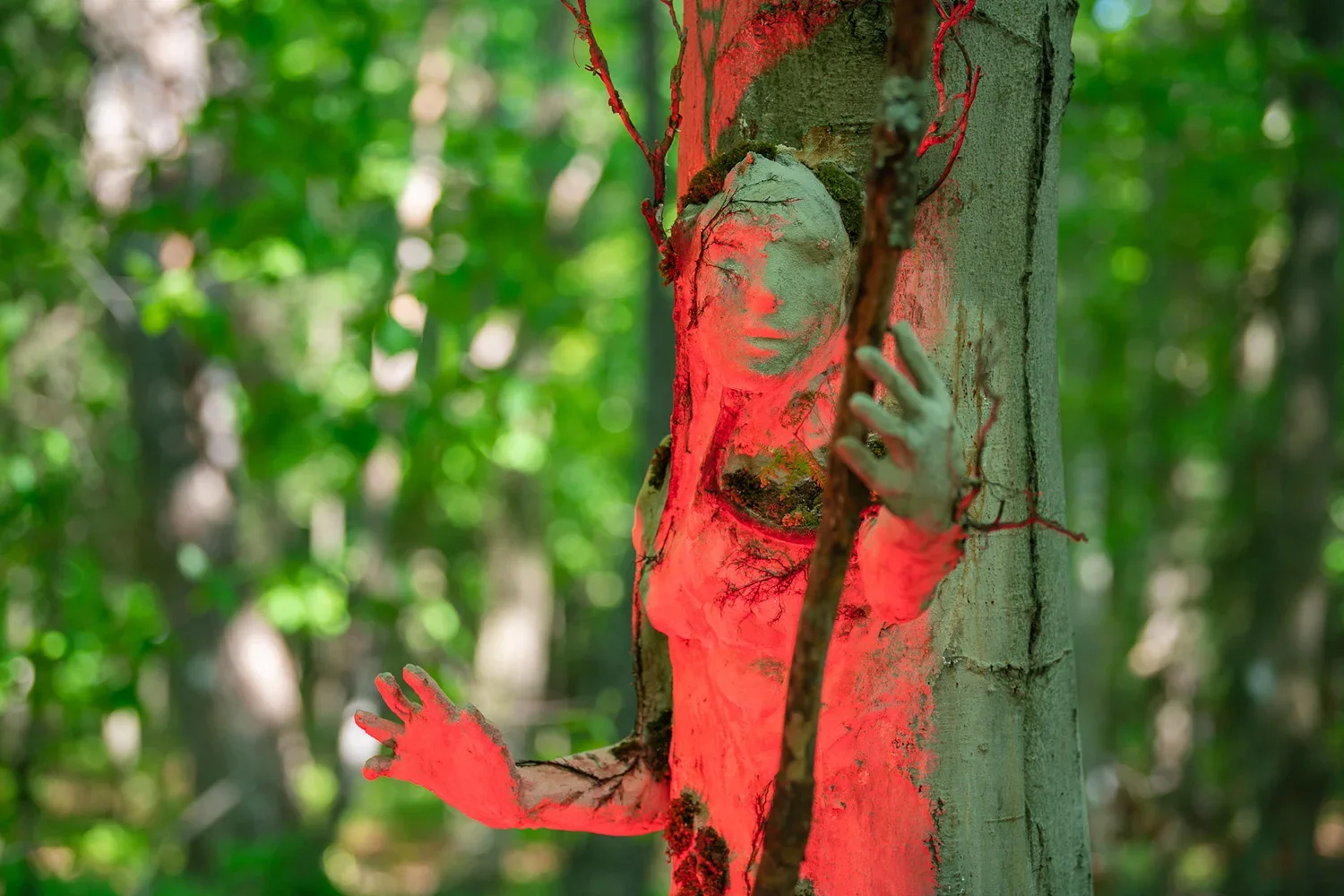
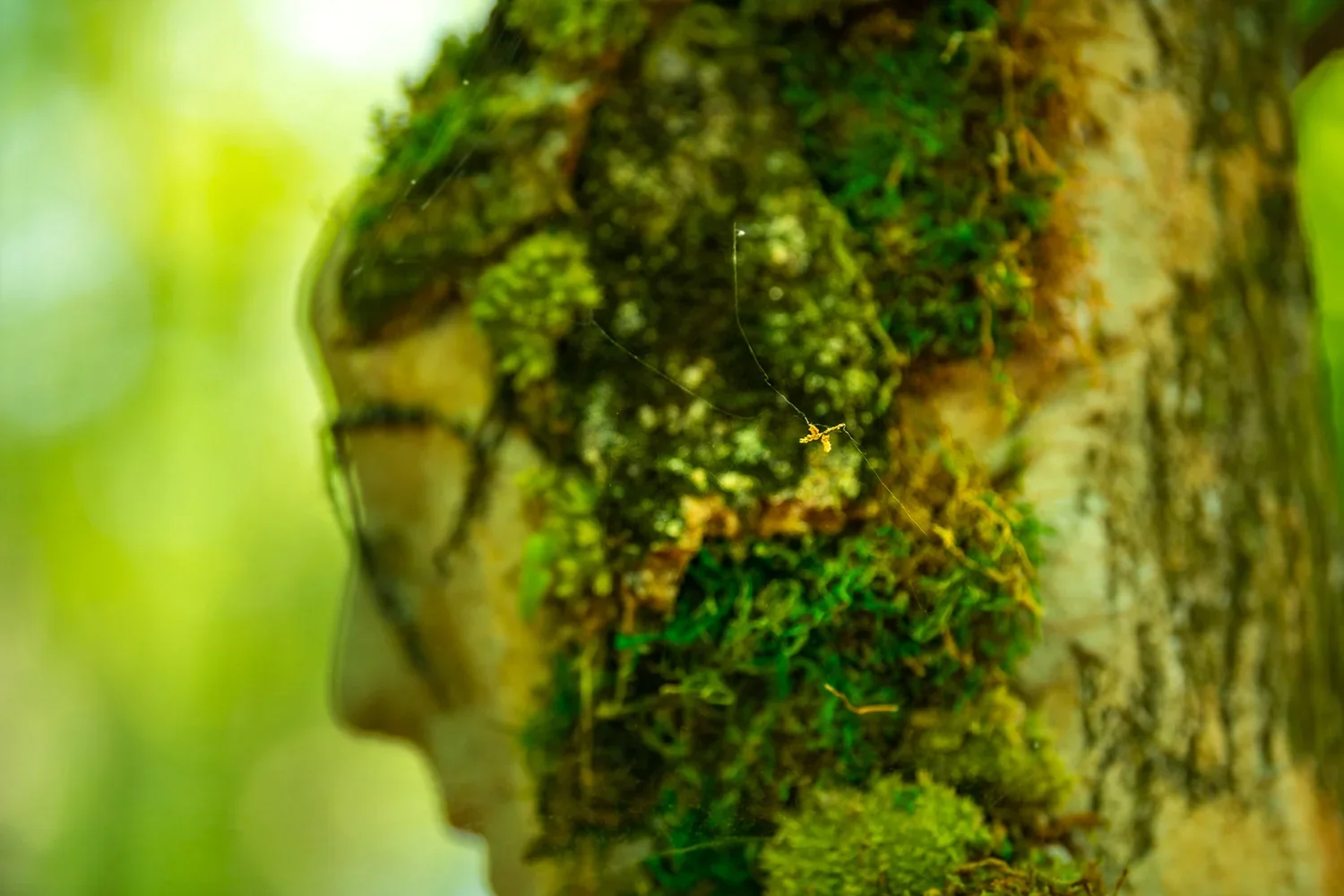
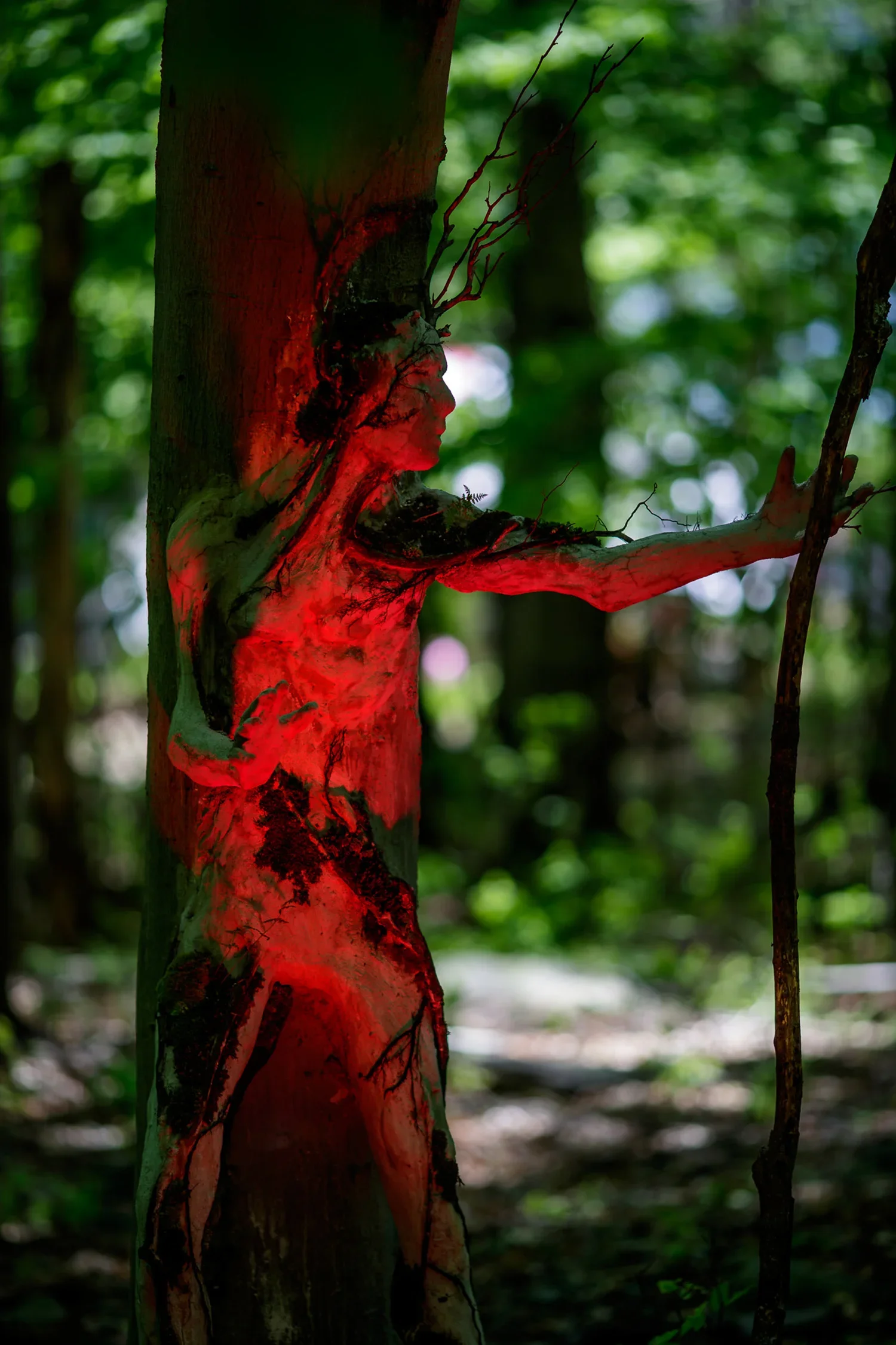
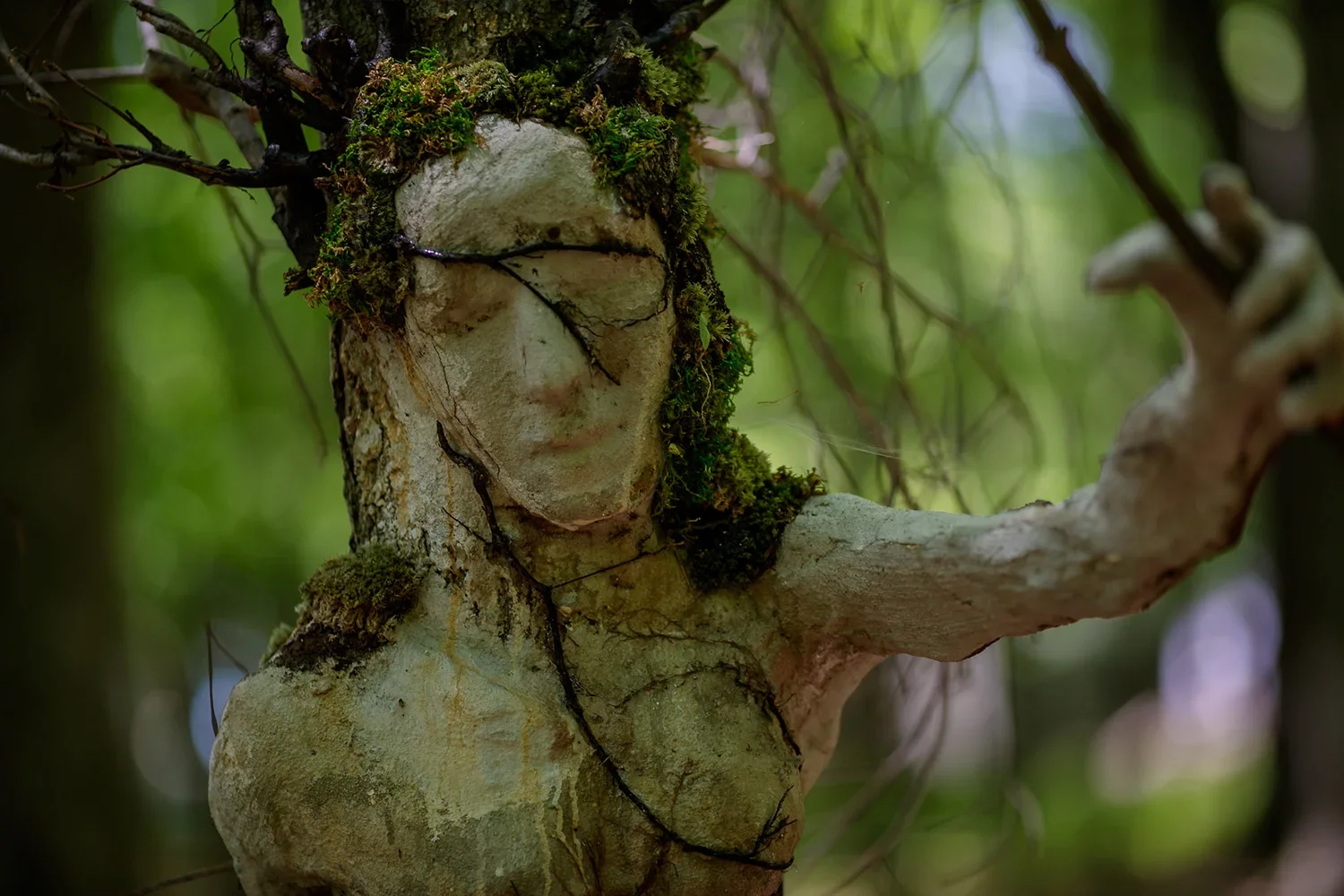
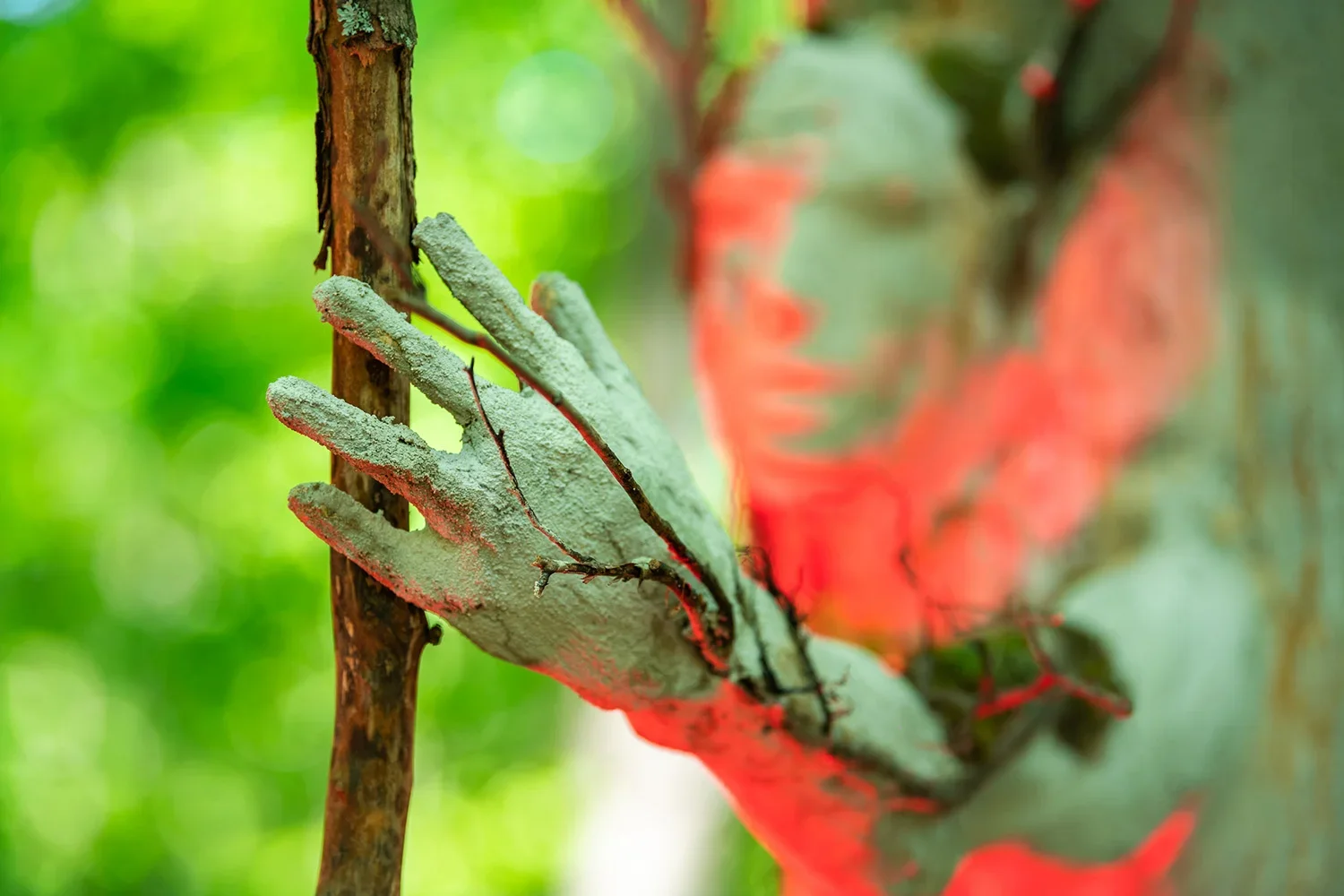
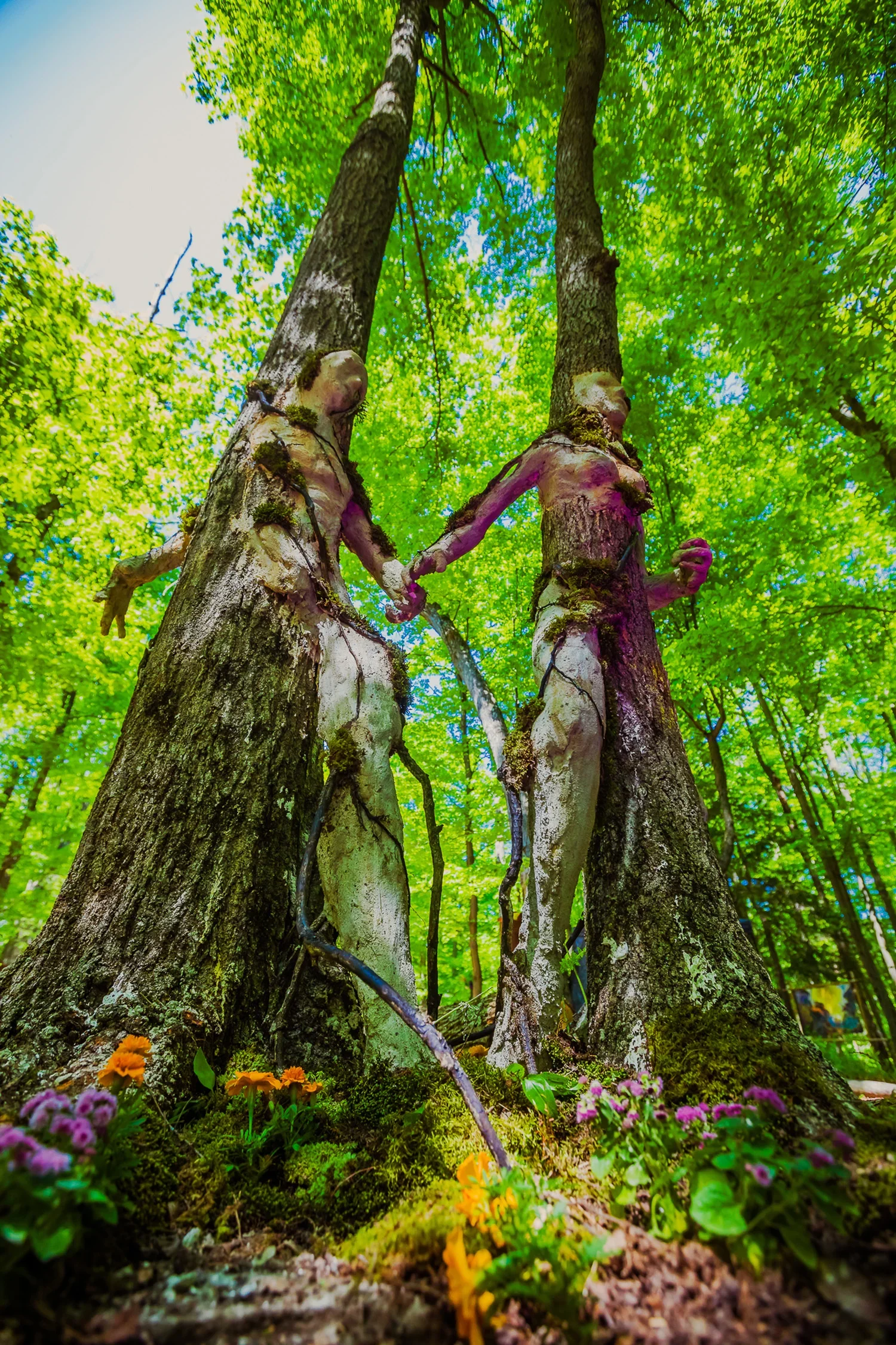
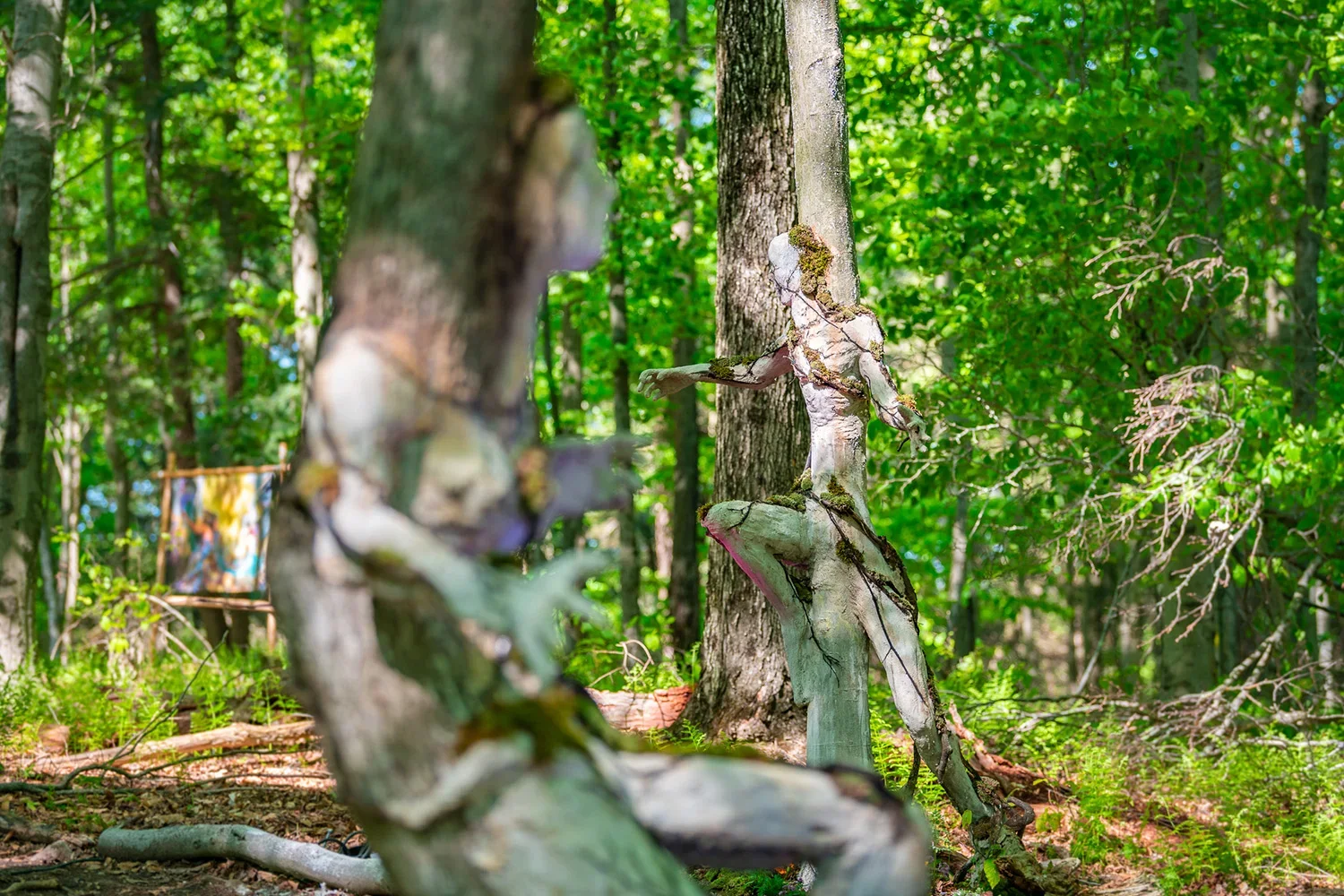
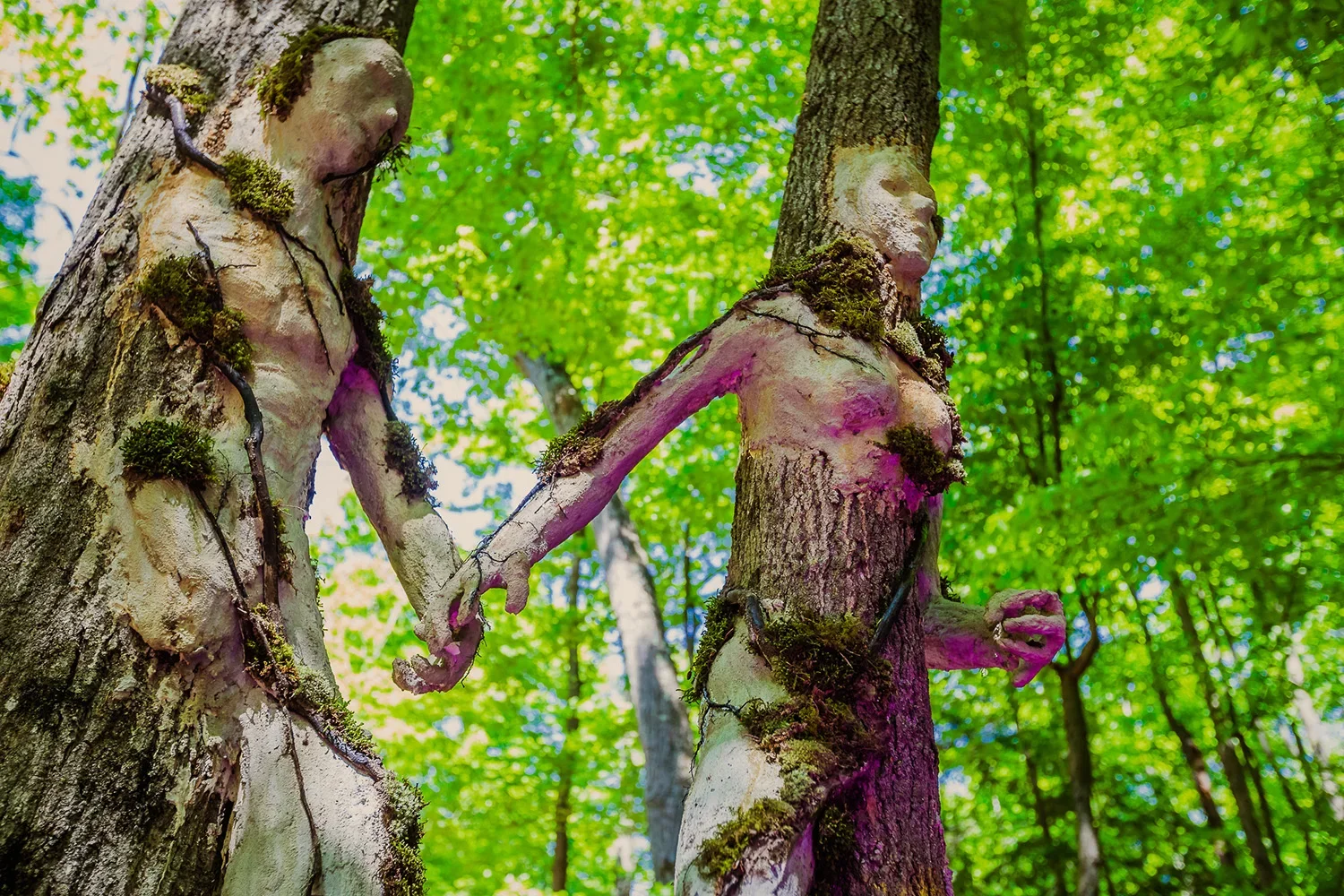
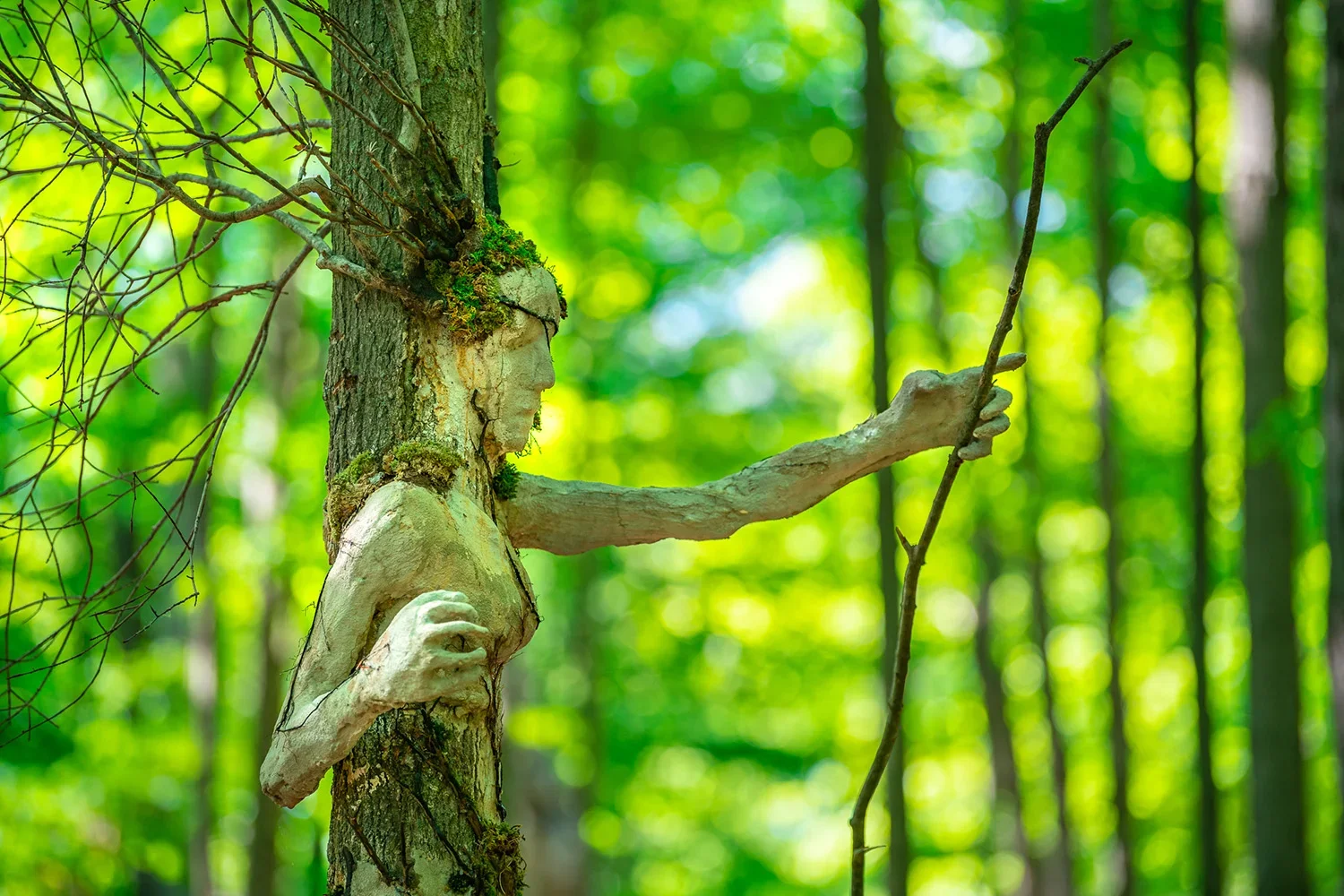
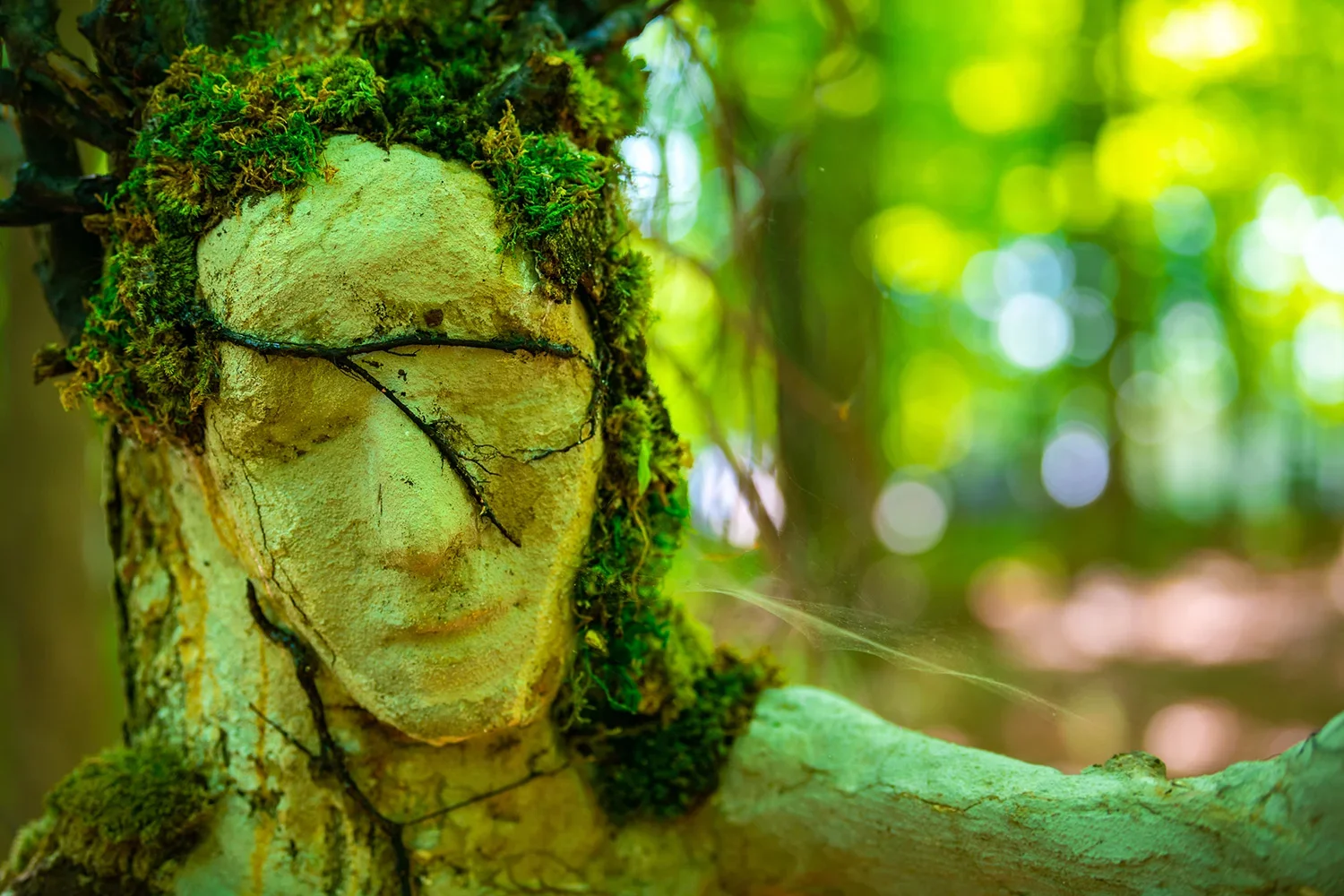
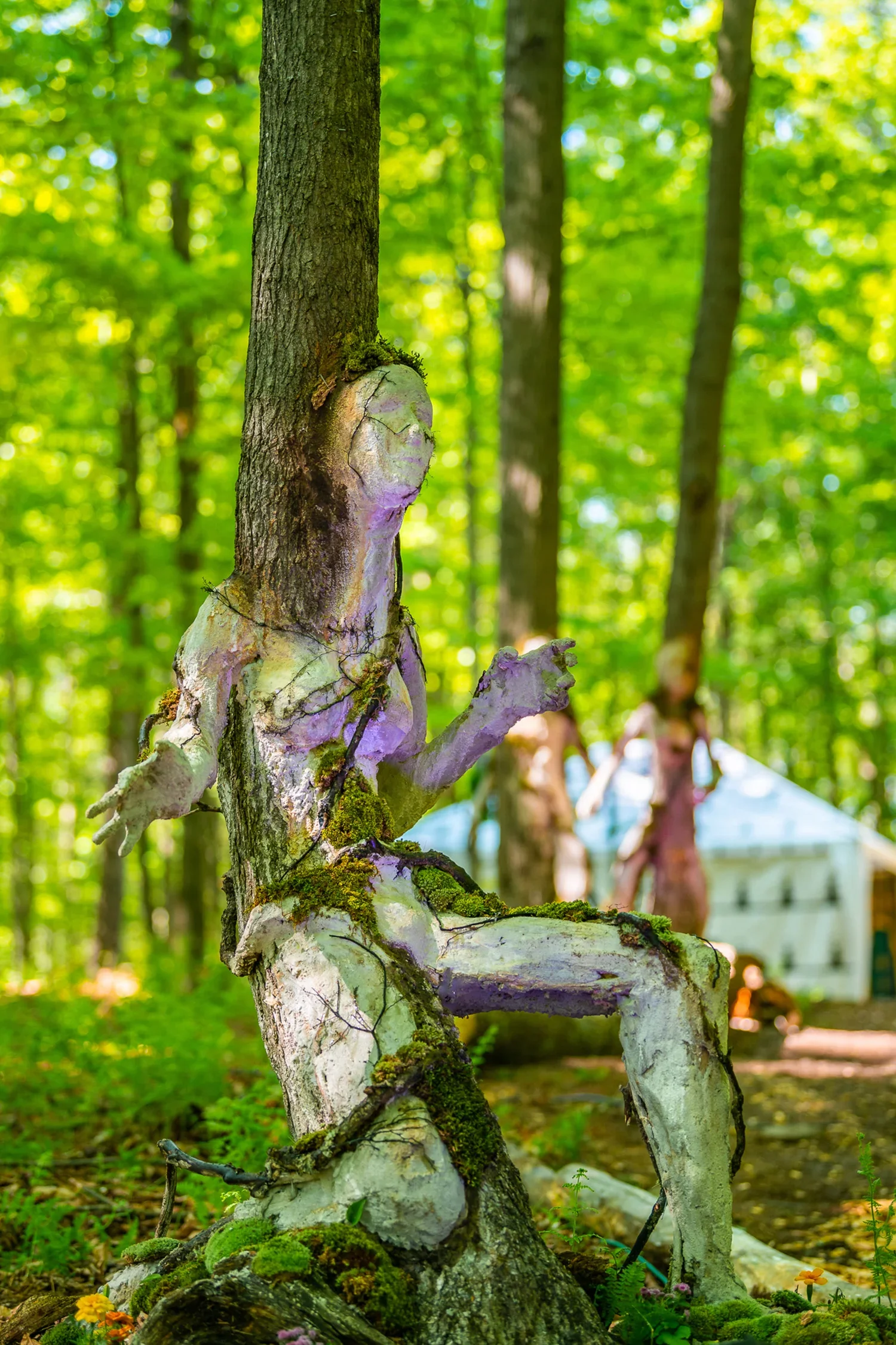
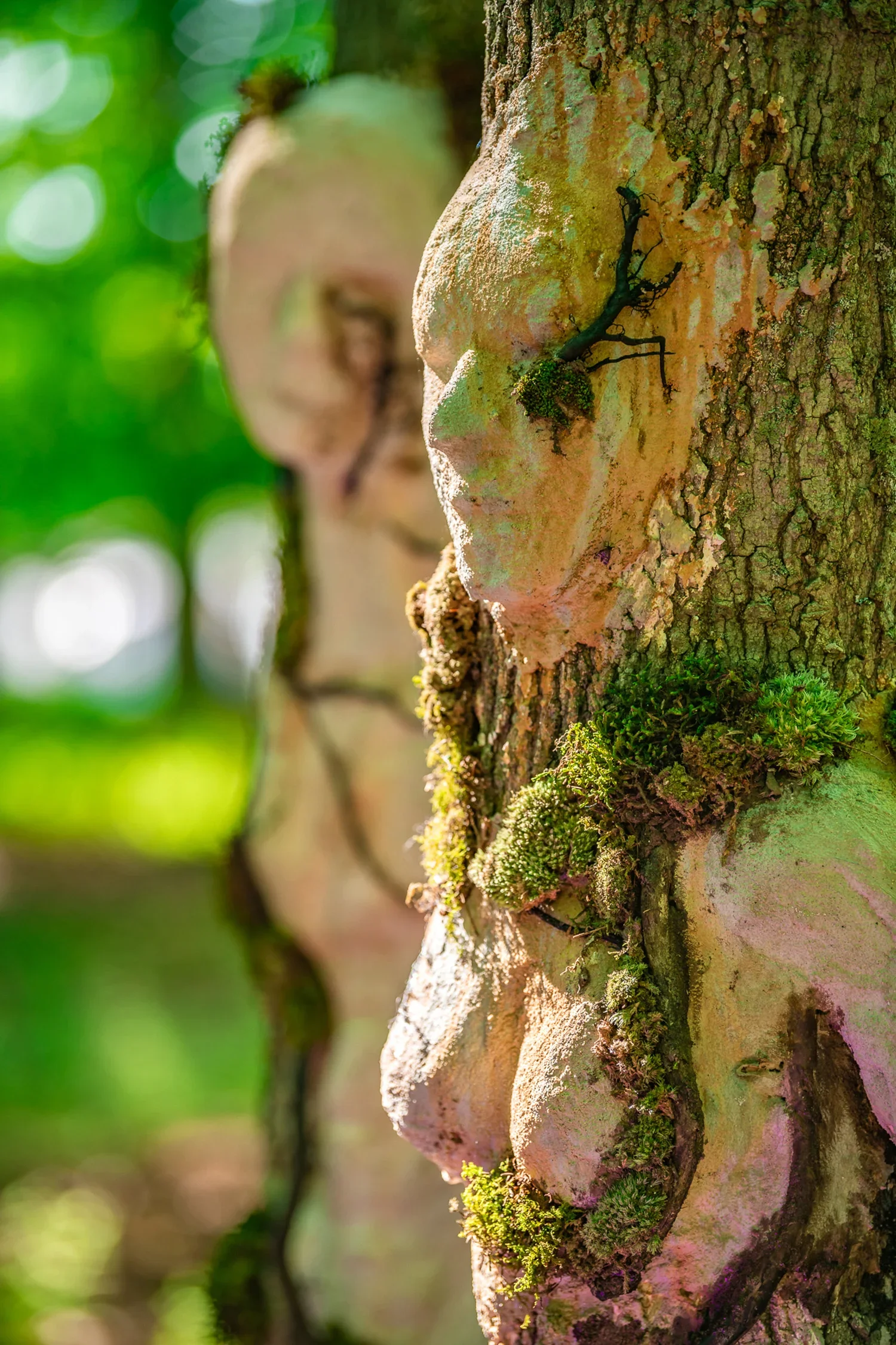
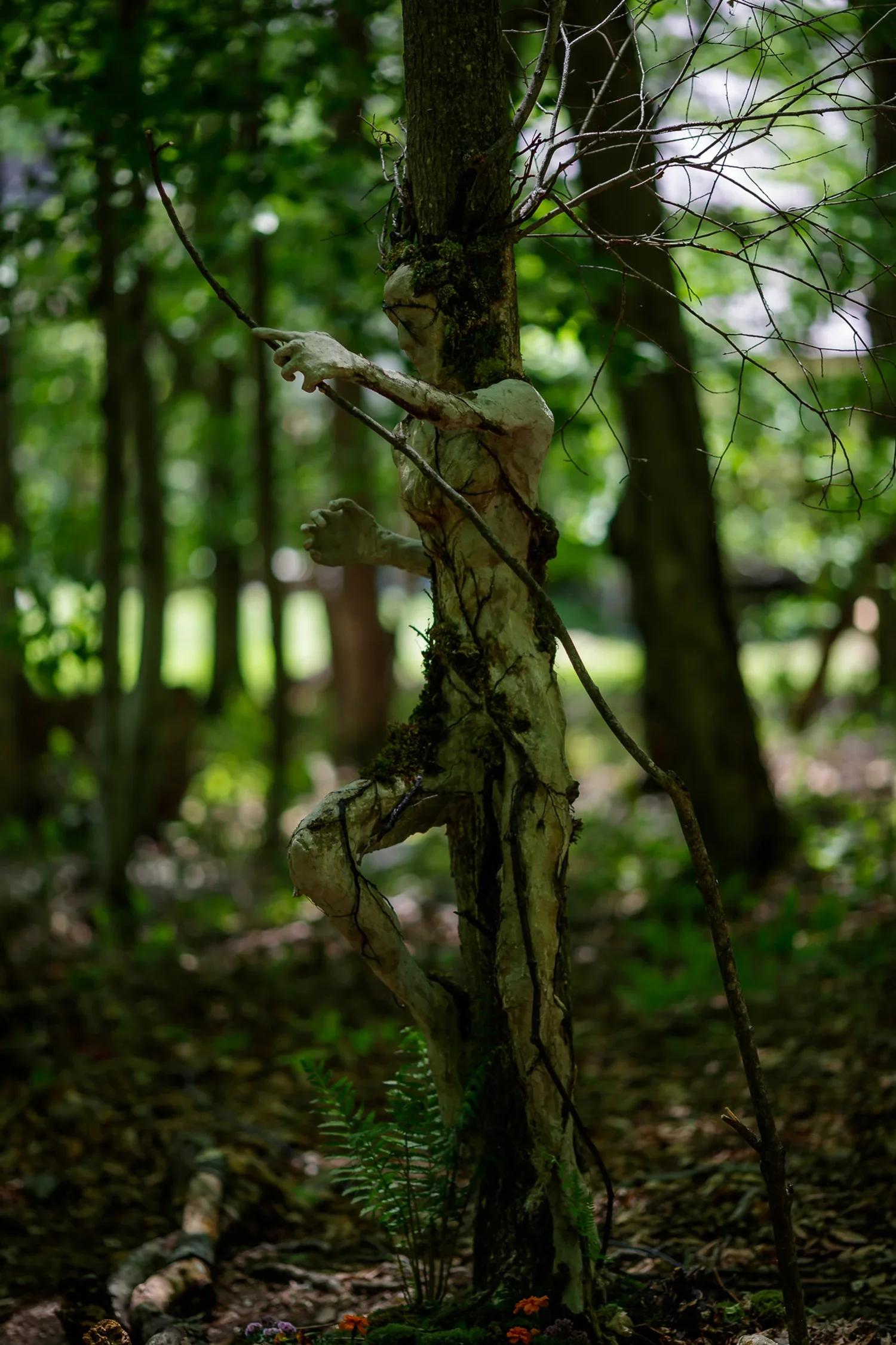
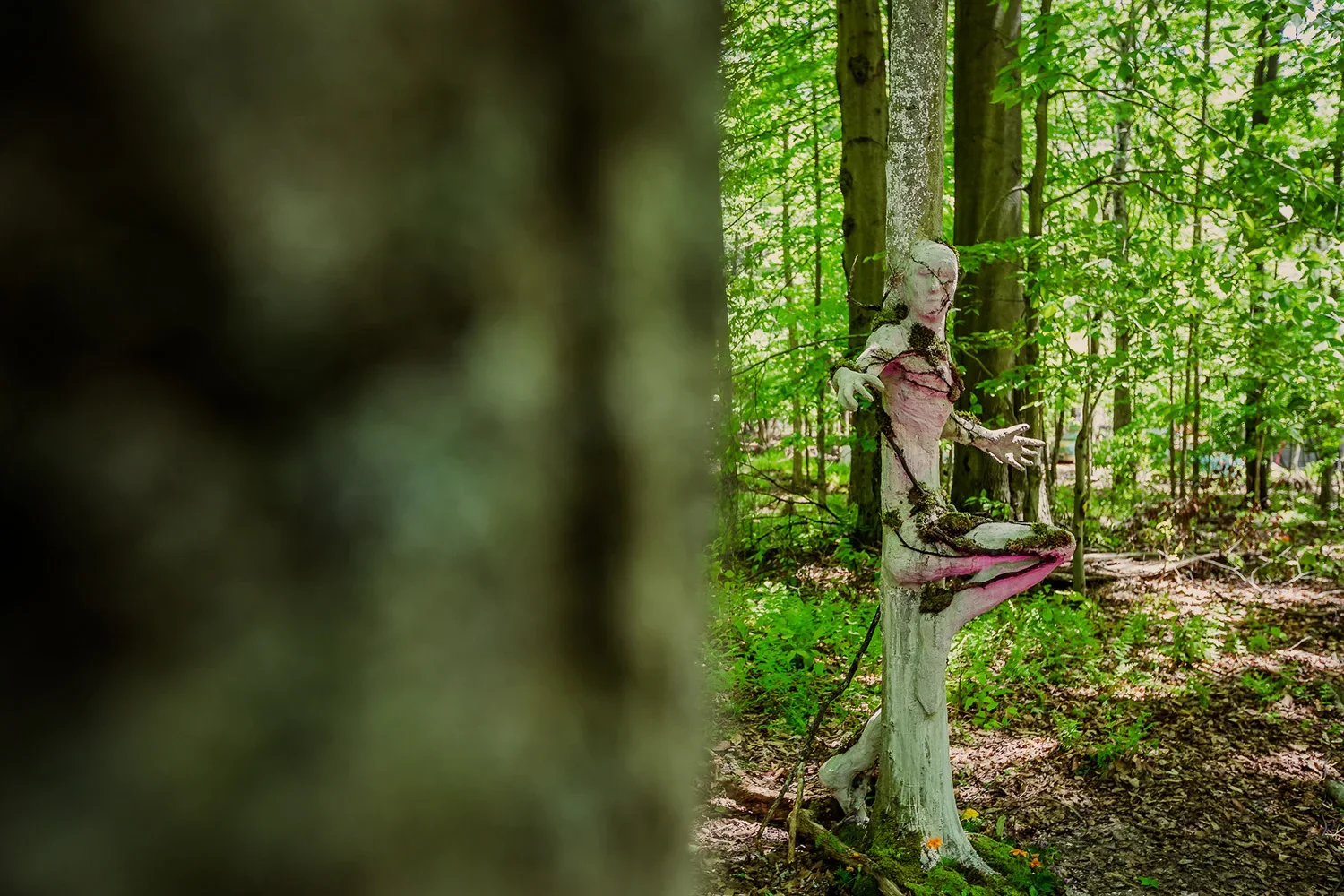
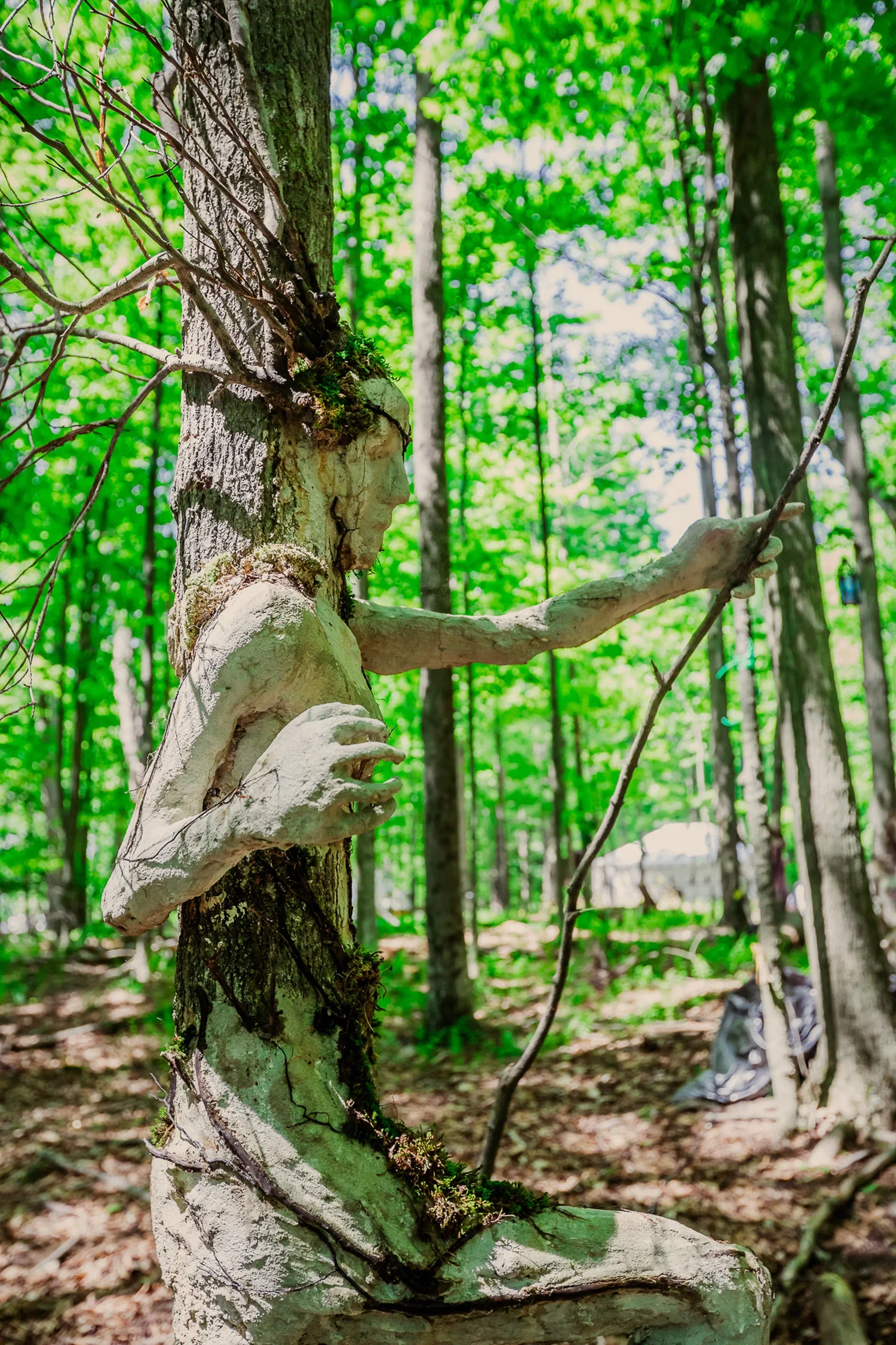
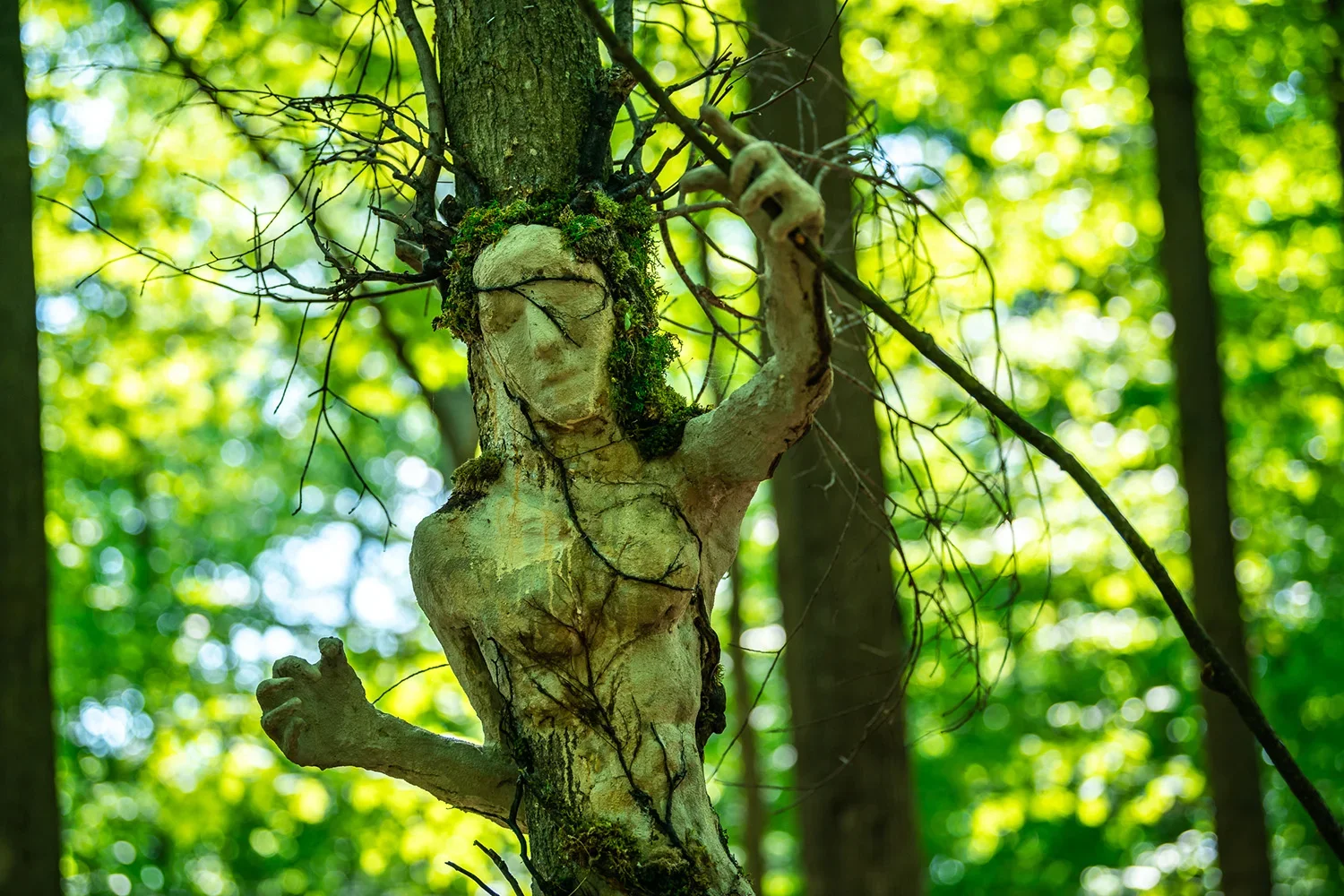
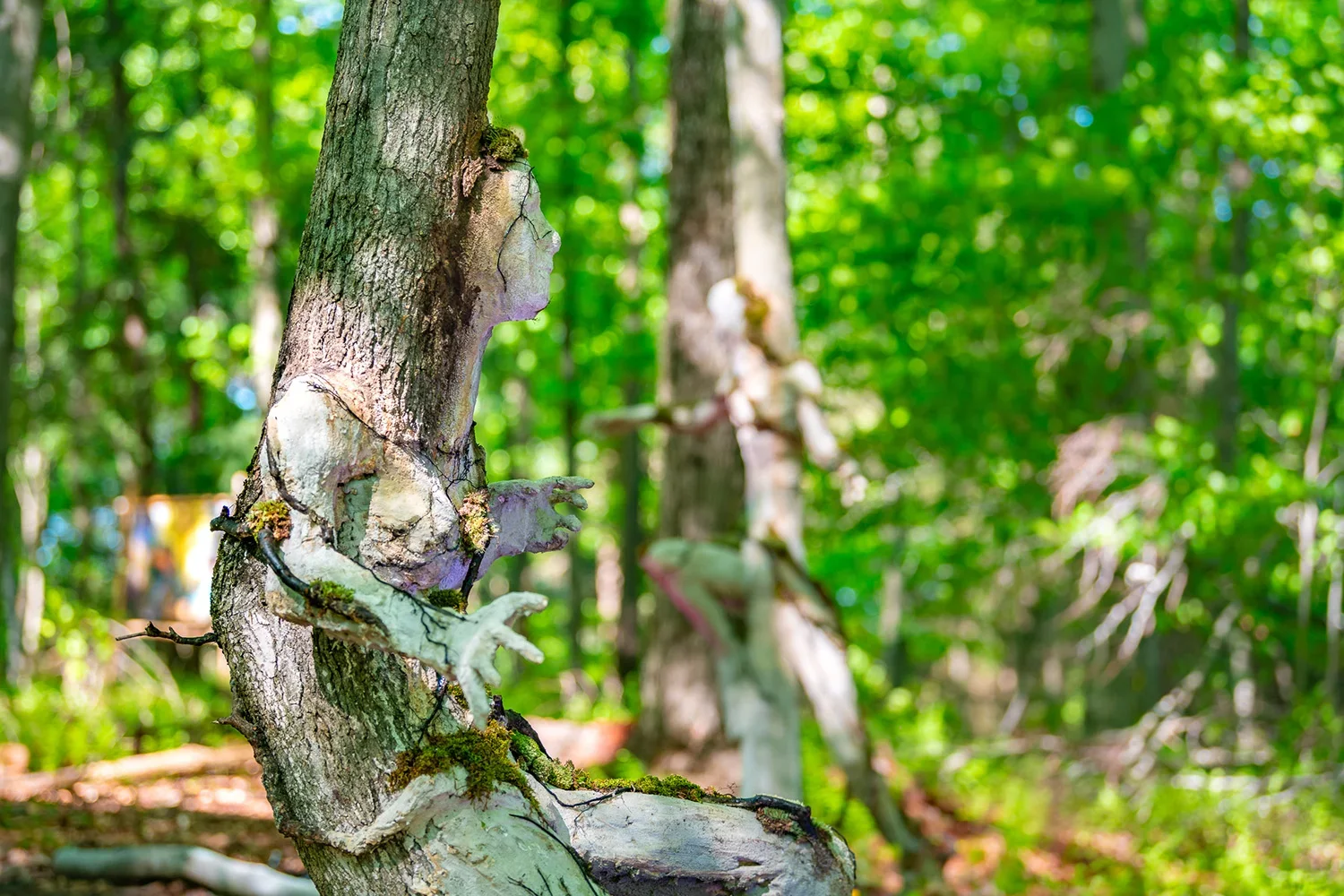
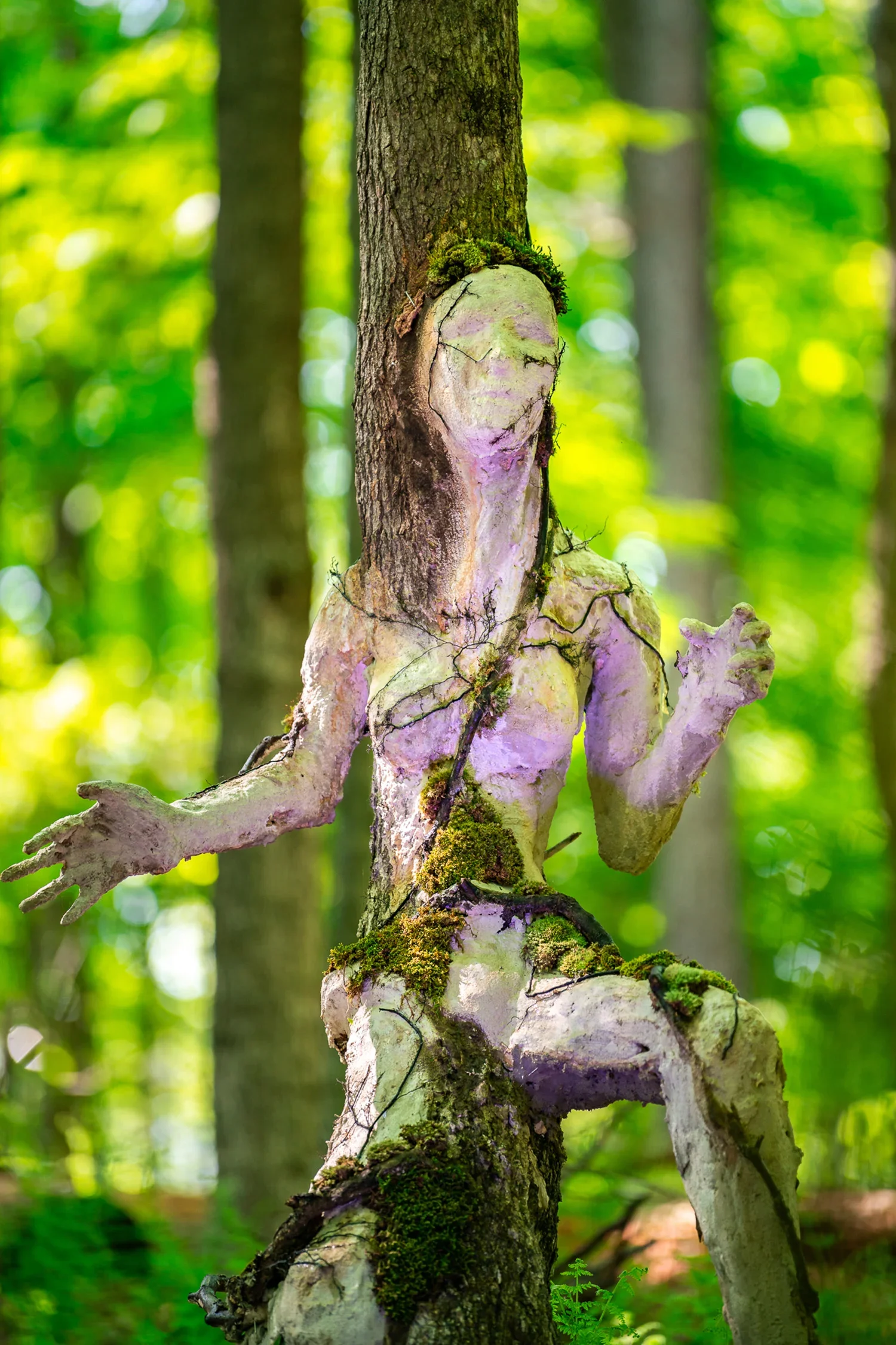
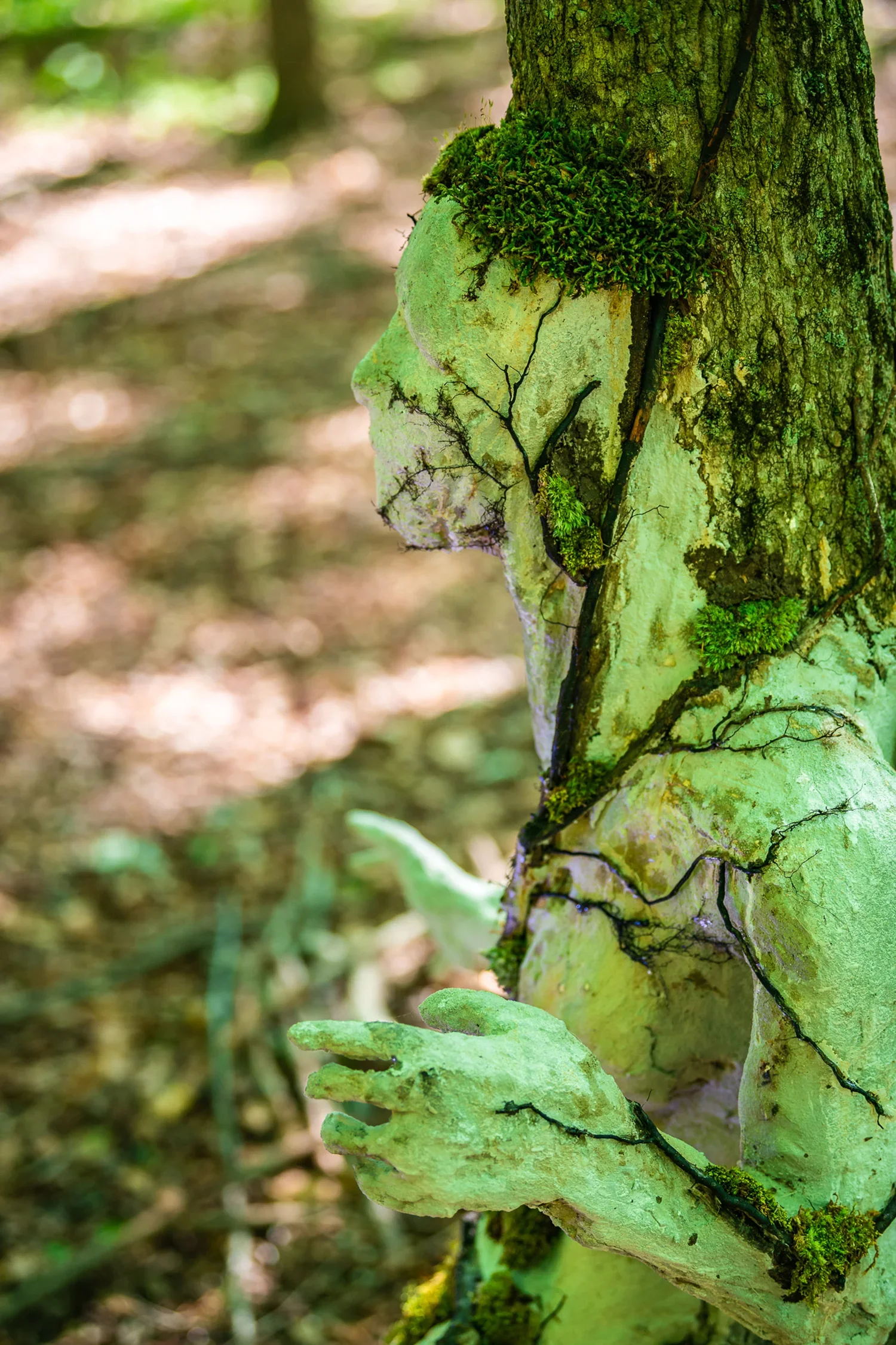
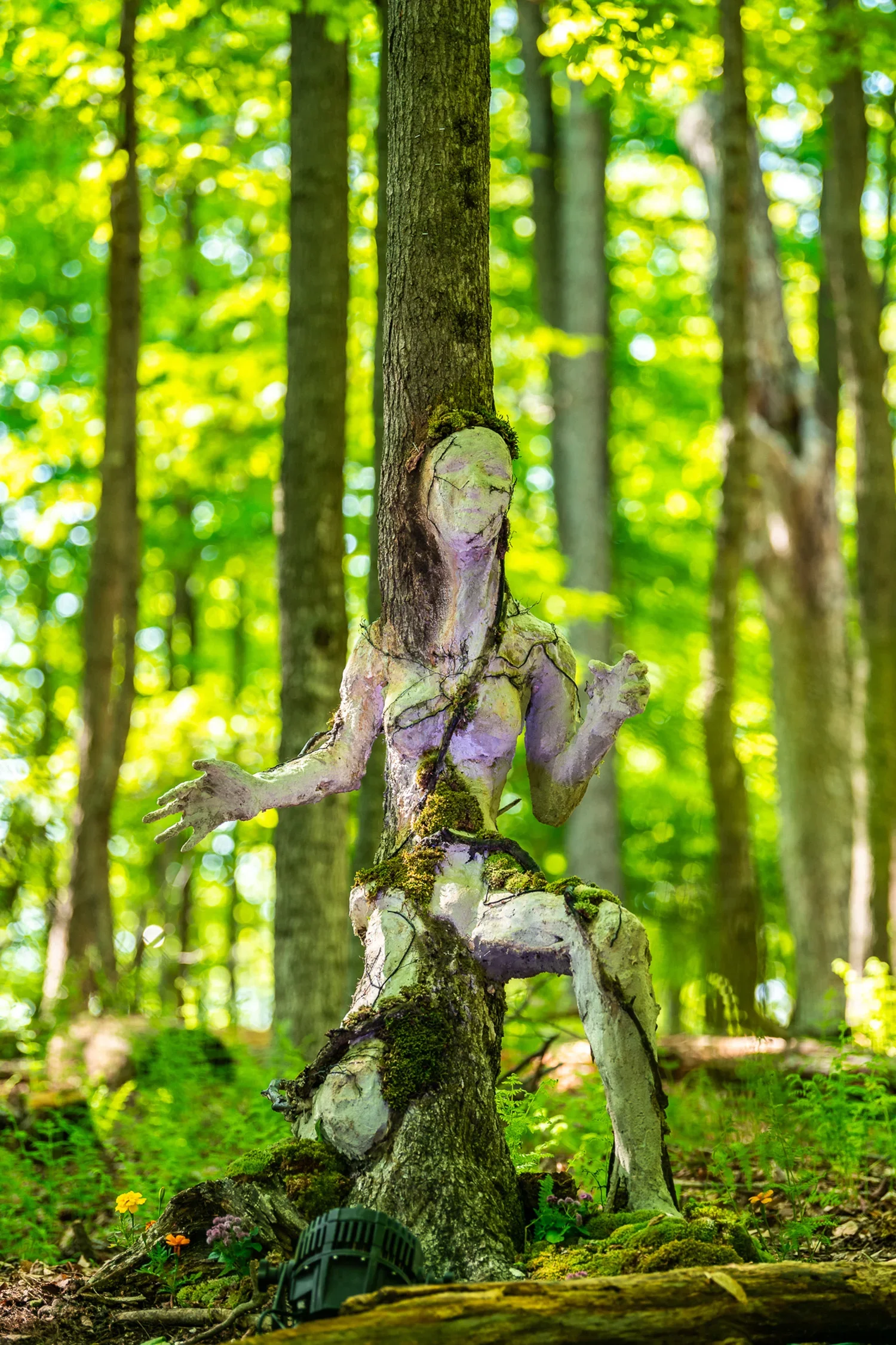
Chlorosapiens is a group of life-size figures permanently installed into the trees along a pathway at Lakewood Elements festival in Pennsylvania.
The work imagines a group of beings frozen in time and transmuted into trees during a cataclysmic event, like ecological Pompeii figures caught between human body, forest, and fossil. Built from cement, wood, roots, branches, mud, moss, and other organic material, the figures appear to be both emerging from and disappearing into the landscape.
The installation continues the larger theme of nature and humanity merging under pressure: bodies becoming trees, trauma becoming growth, and the forest absorbing the human form.
NeoGrowths
Found organic material, 3D-printed resin, preserved moss, photogrammetry, structured-light scanning, CGI, and animation
Garret Kane, 2020–2022
Mixed media sculptures / digital video
Various sizes
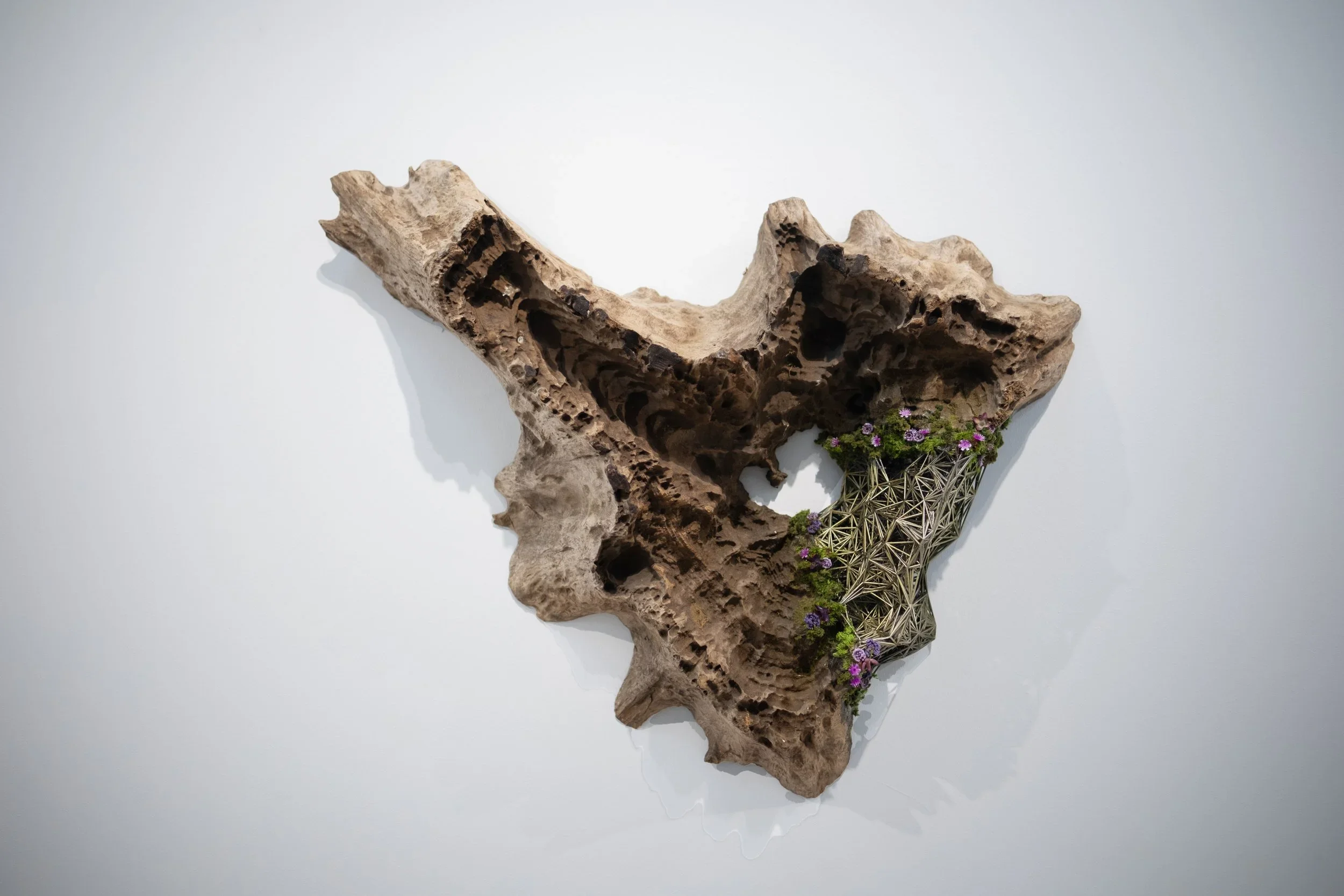
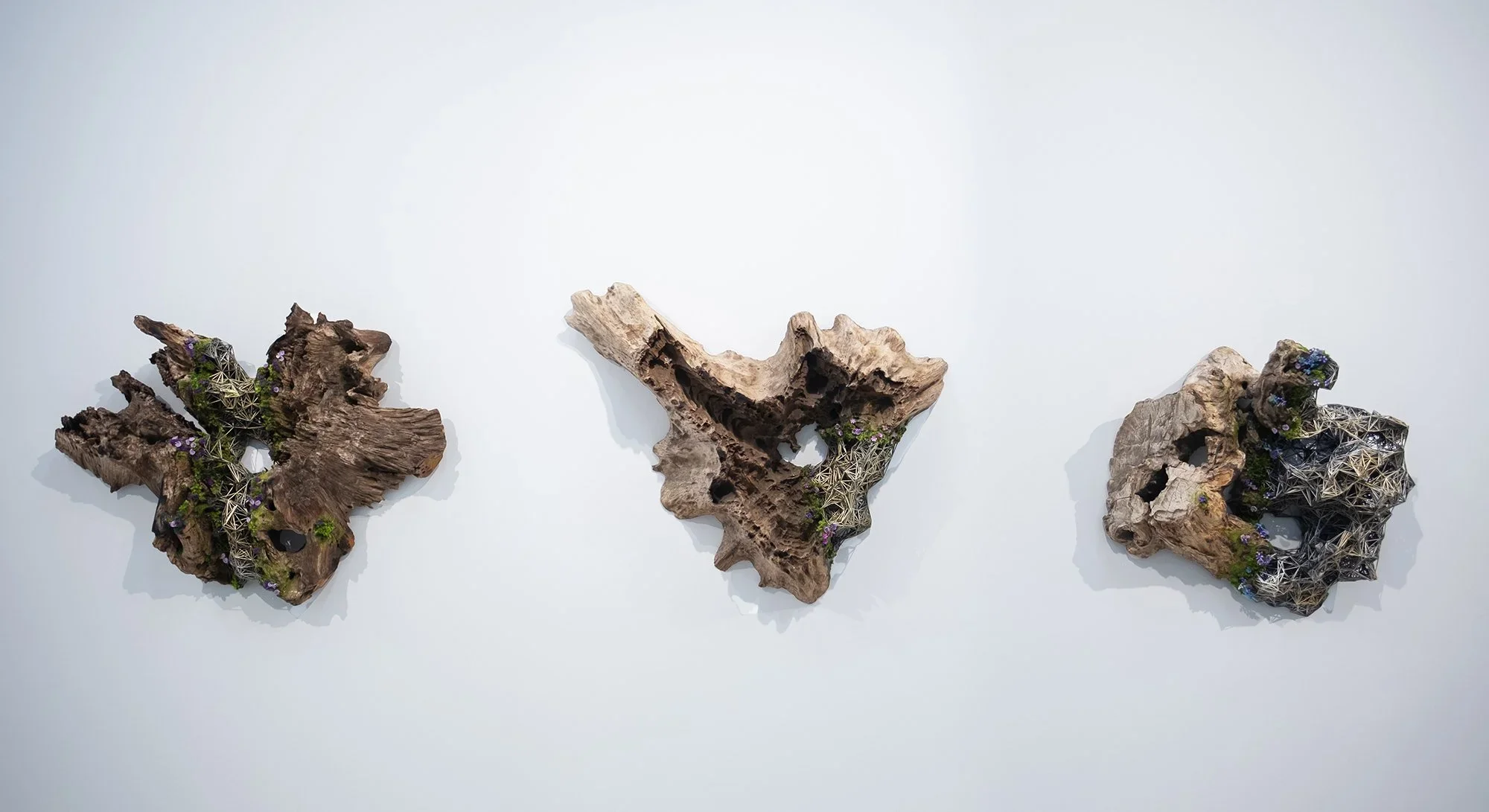
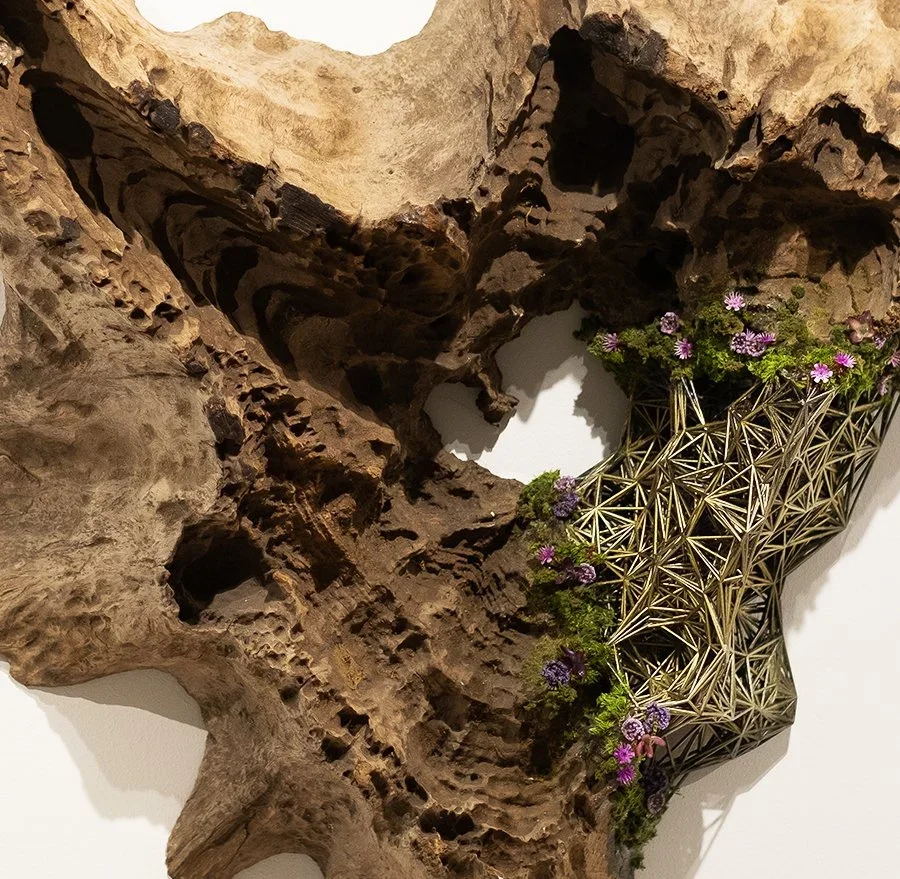
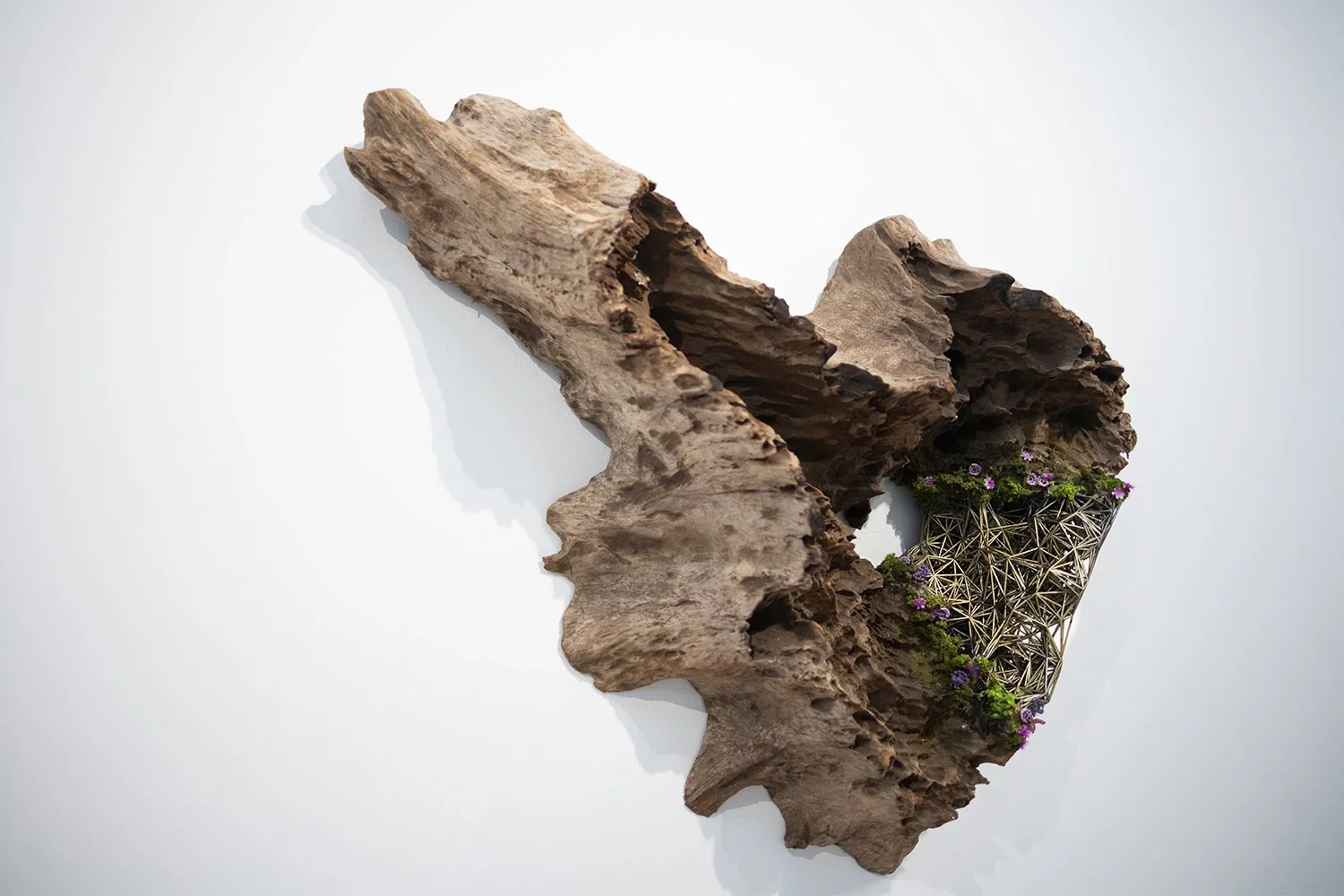
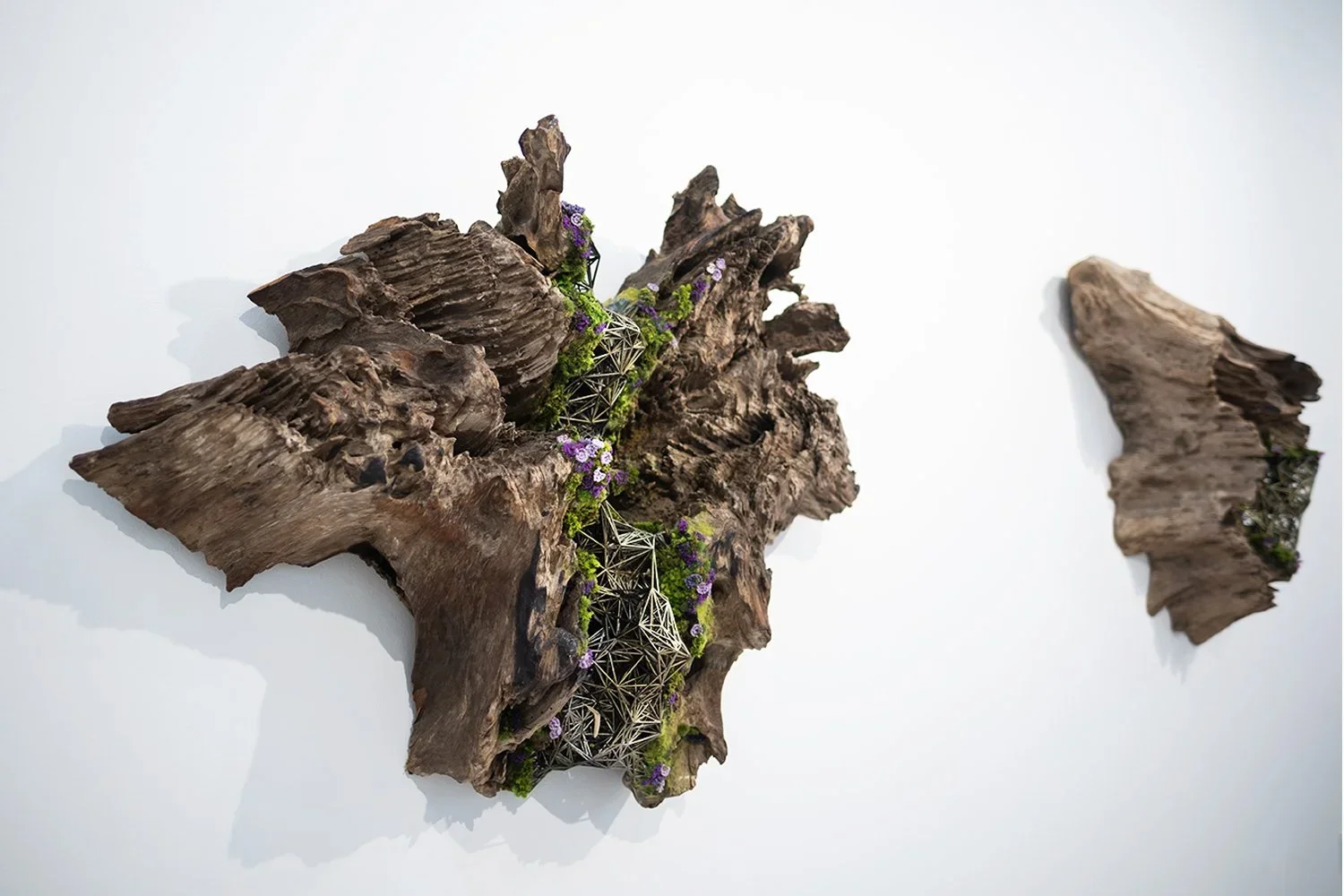
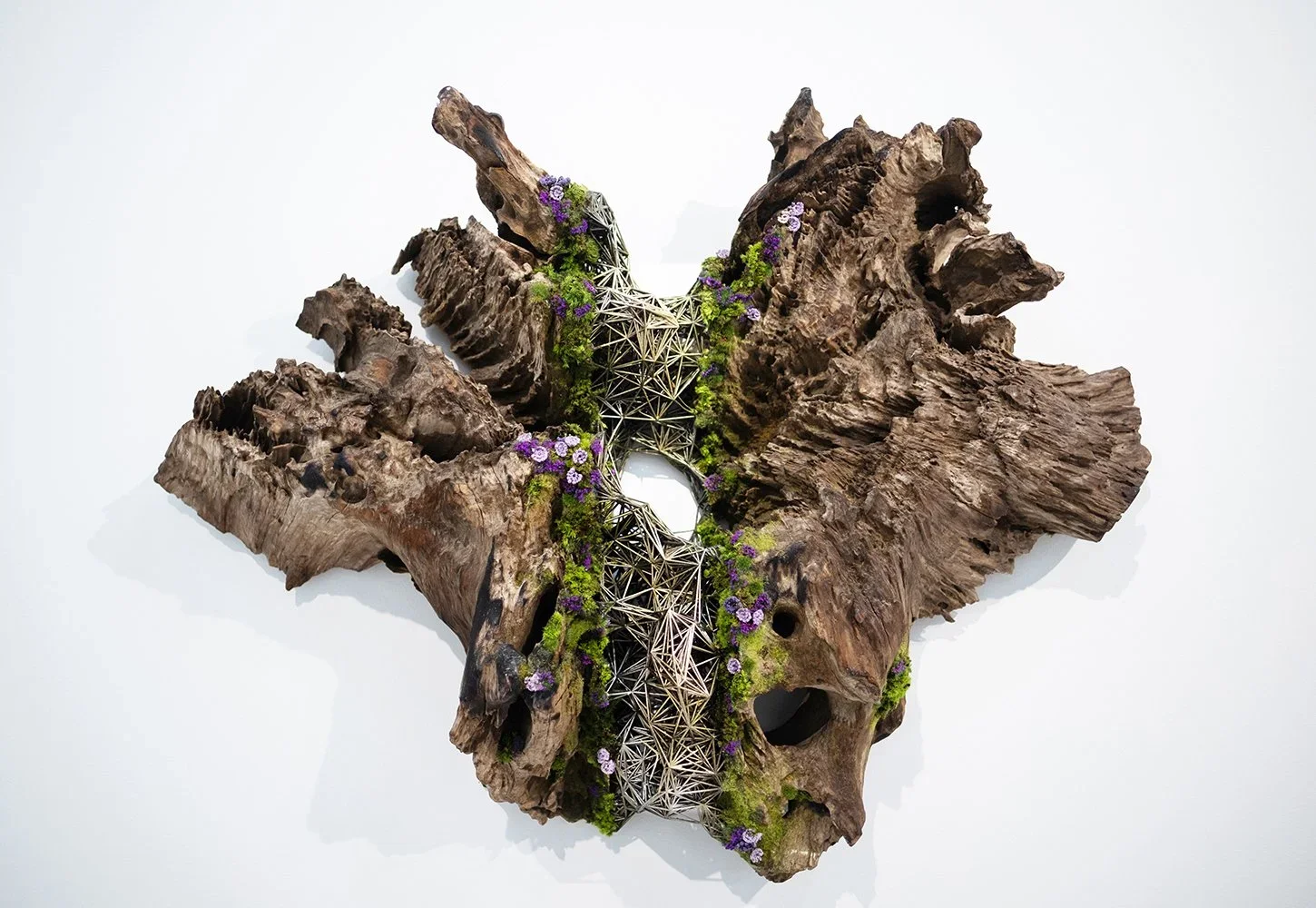
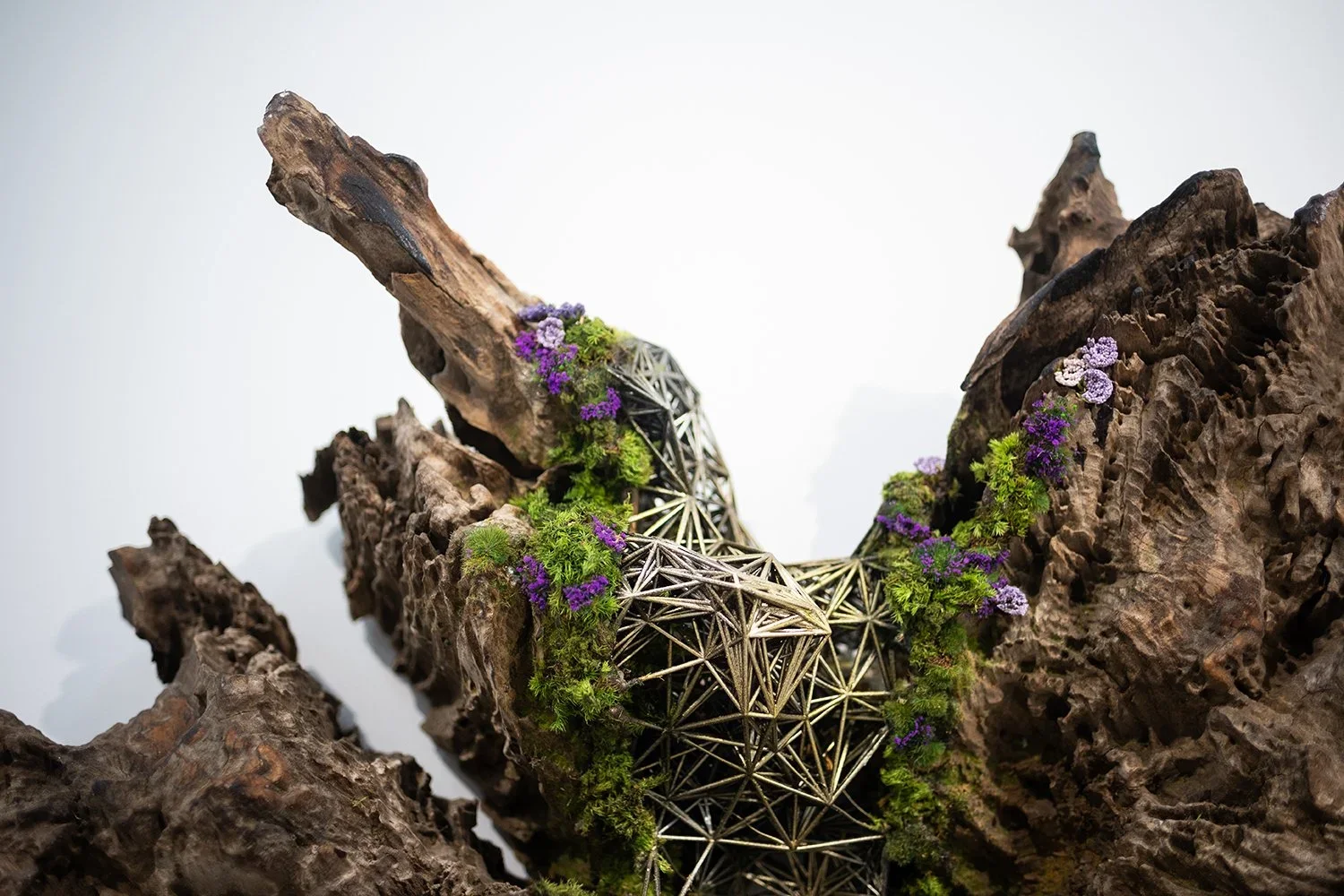
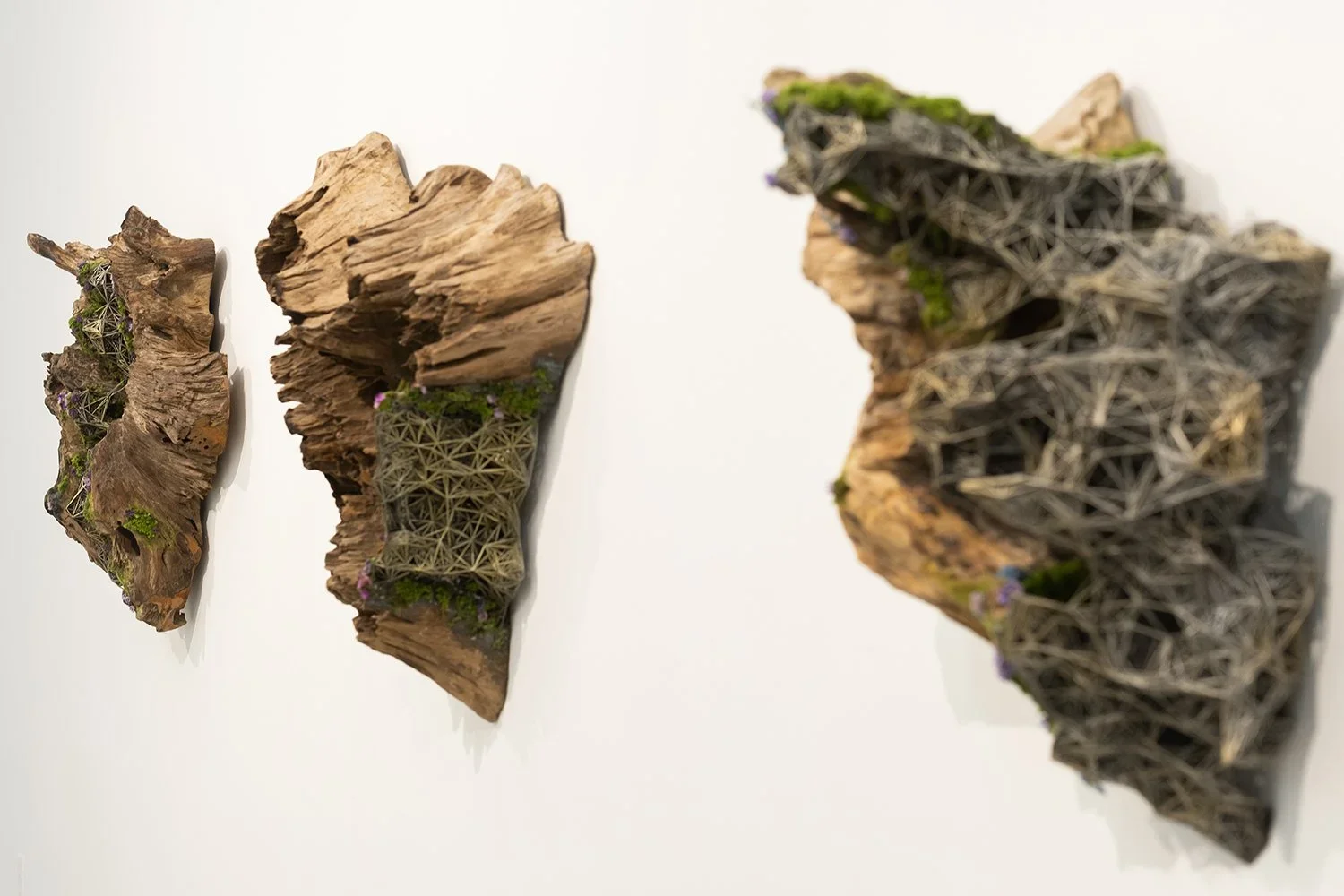
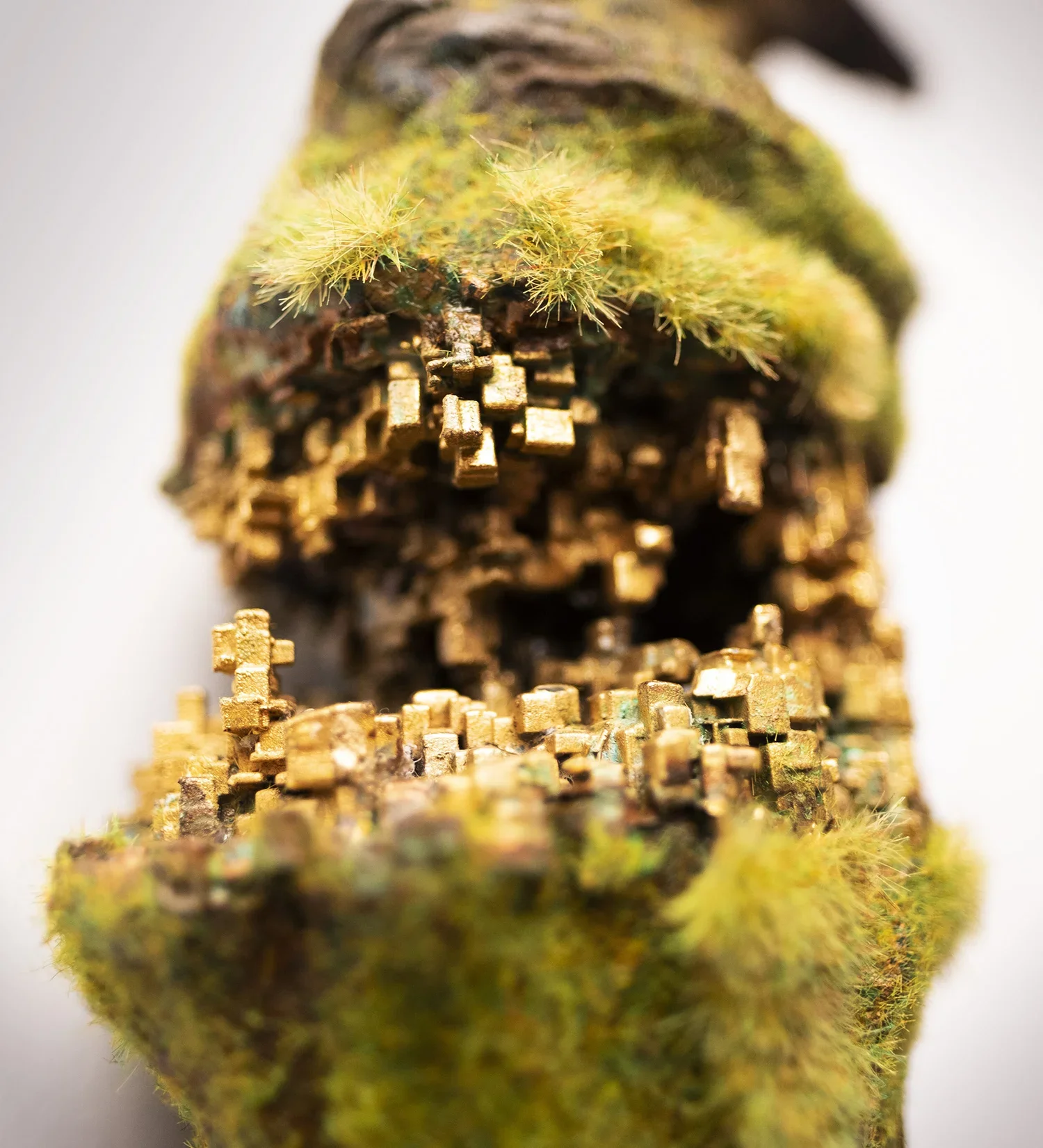
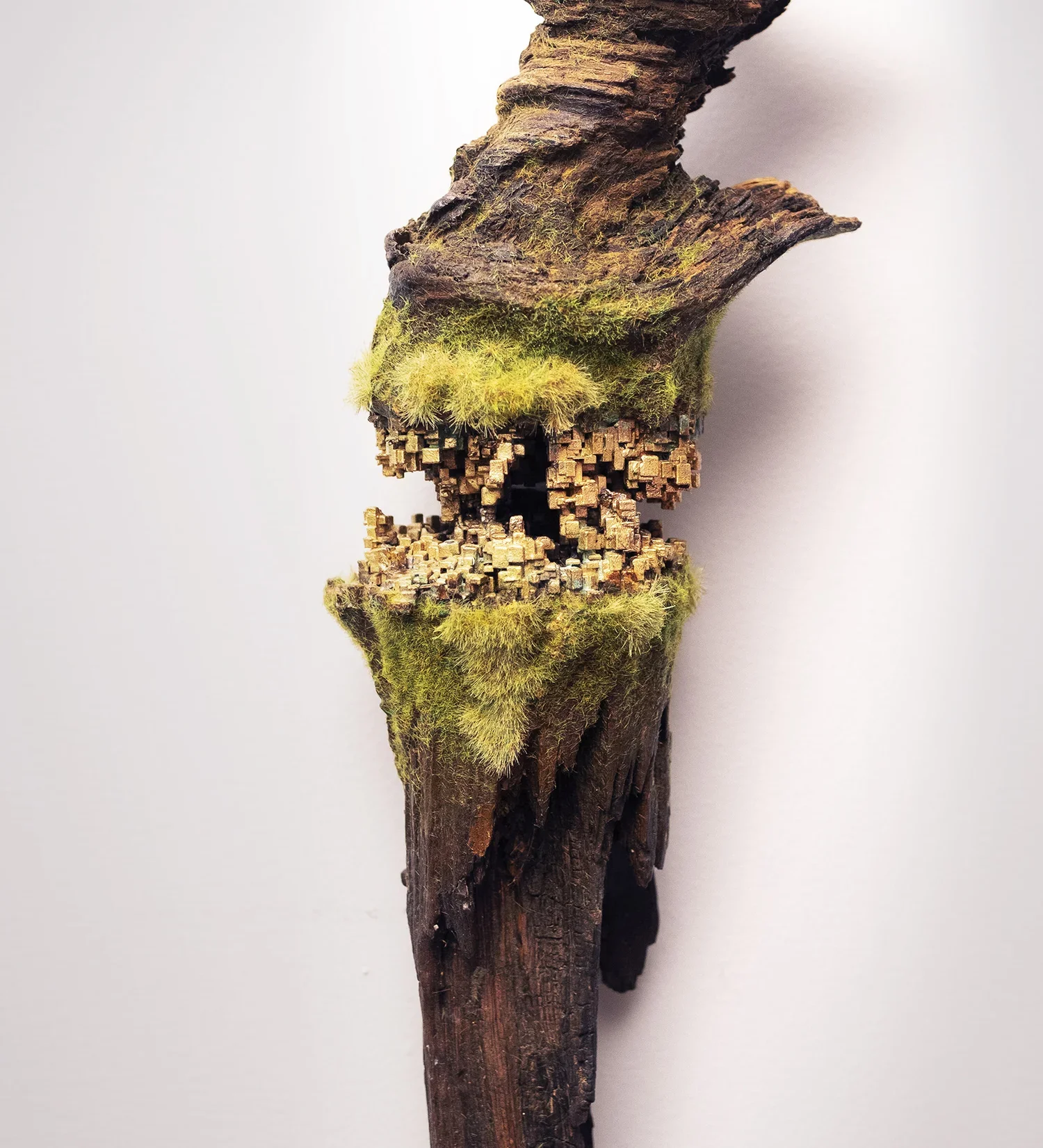
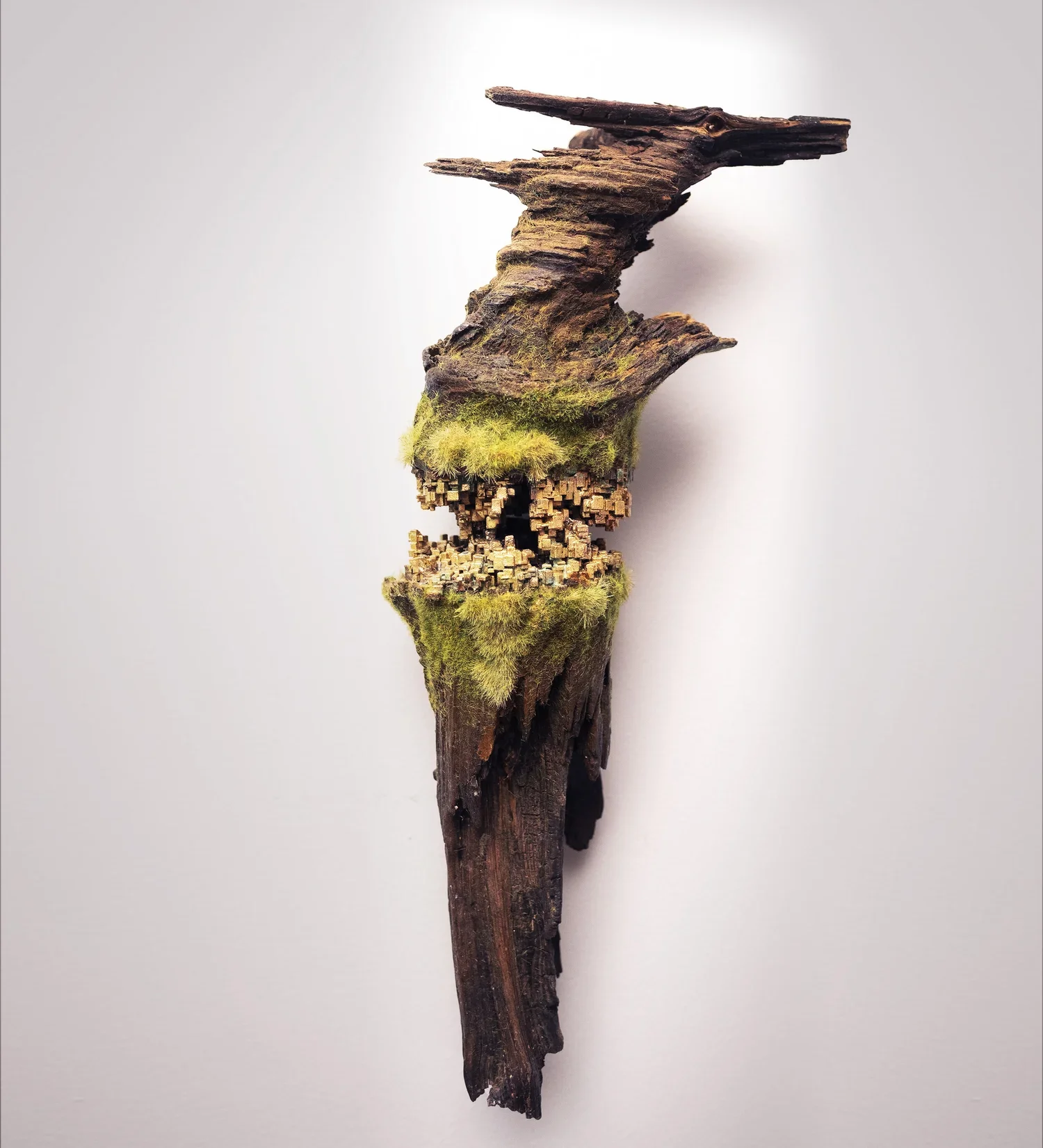
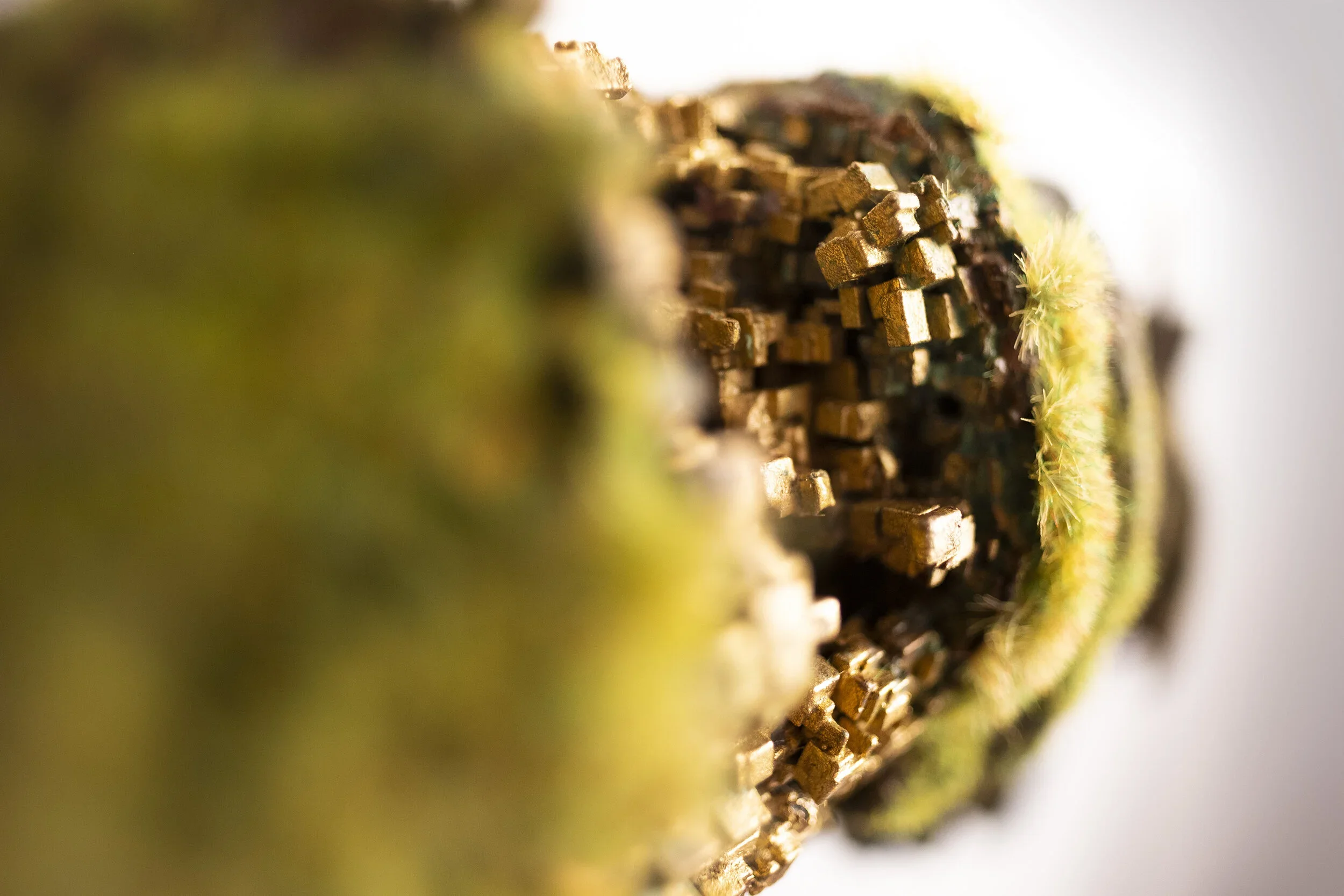
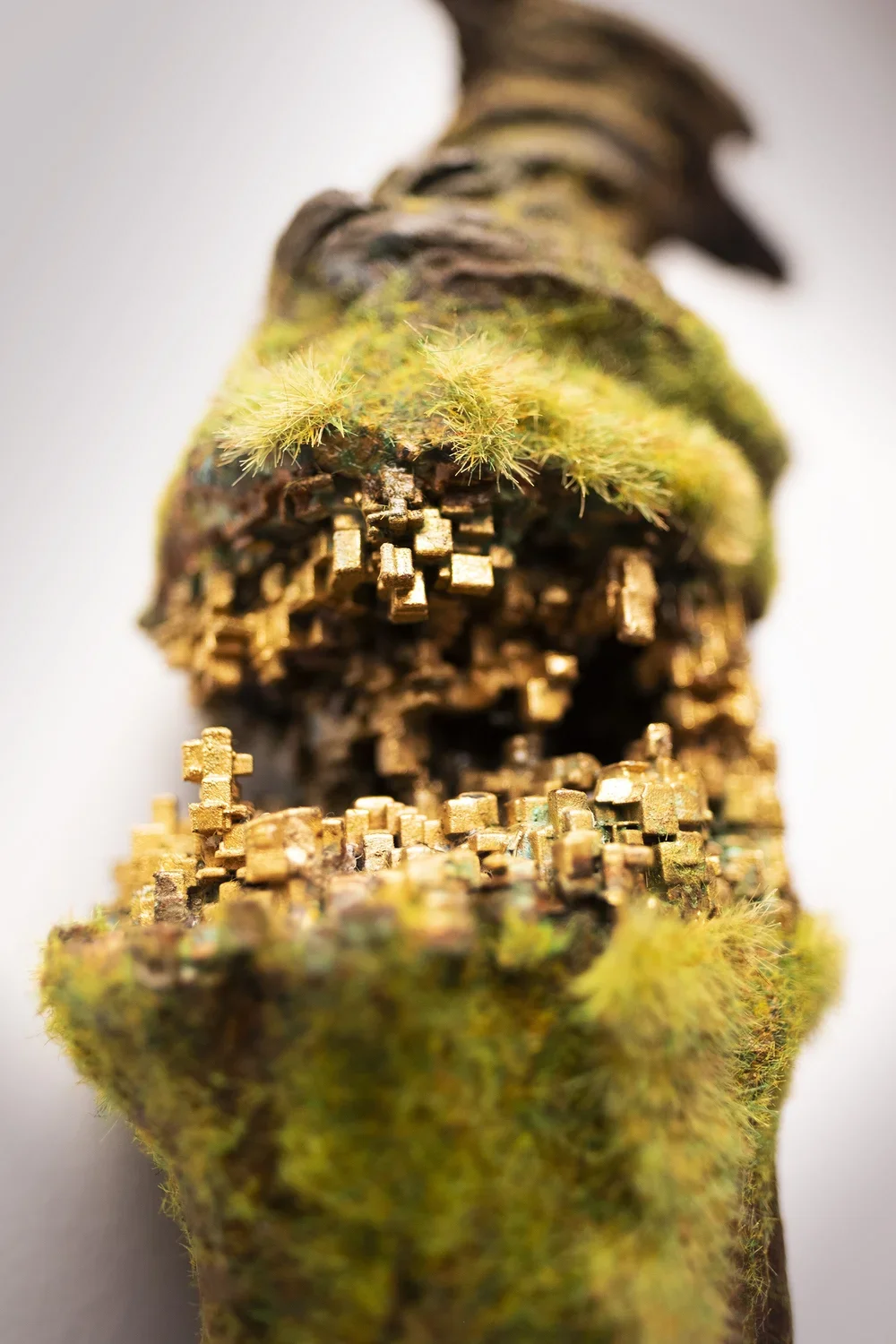
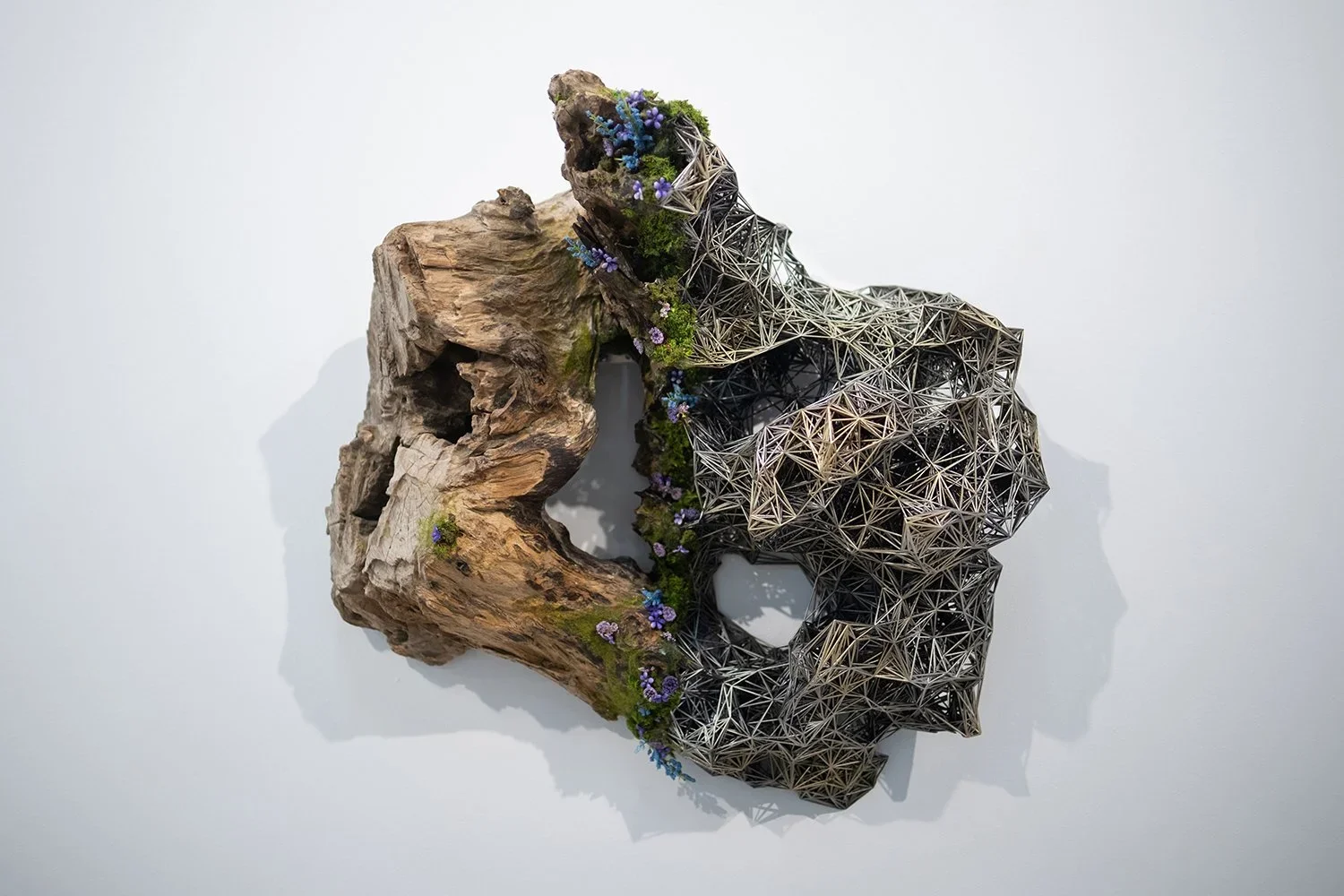
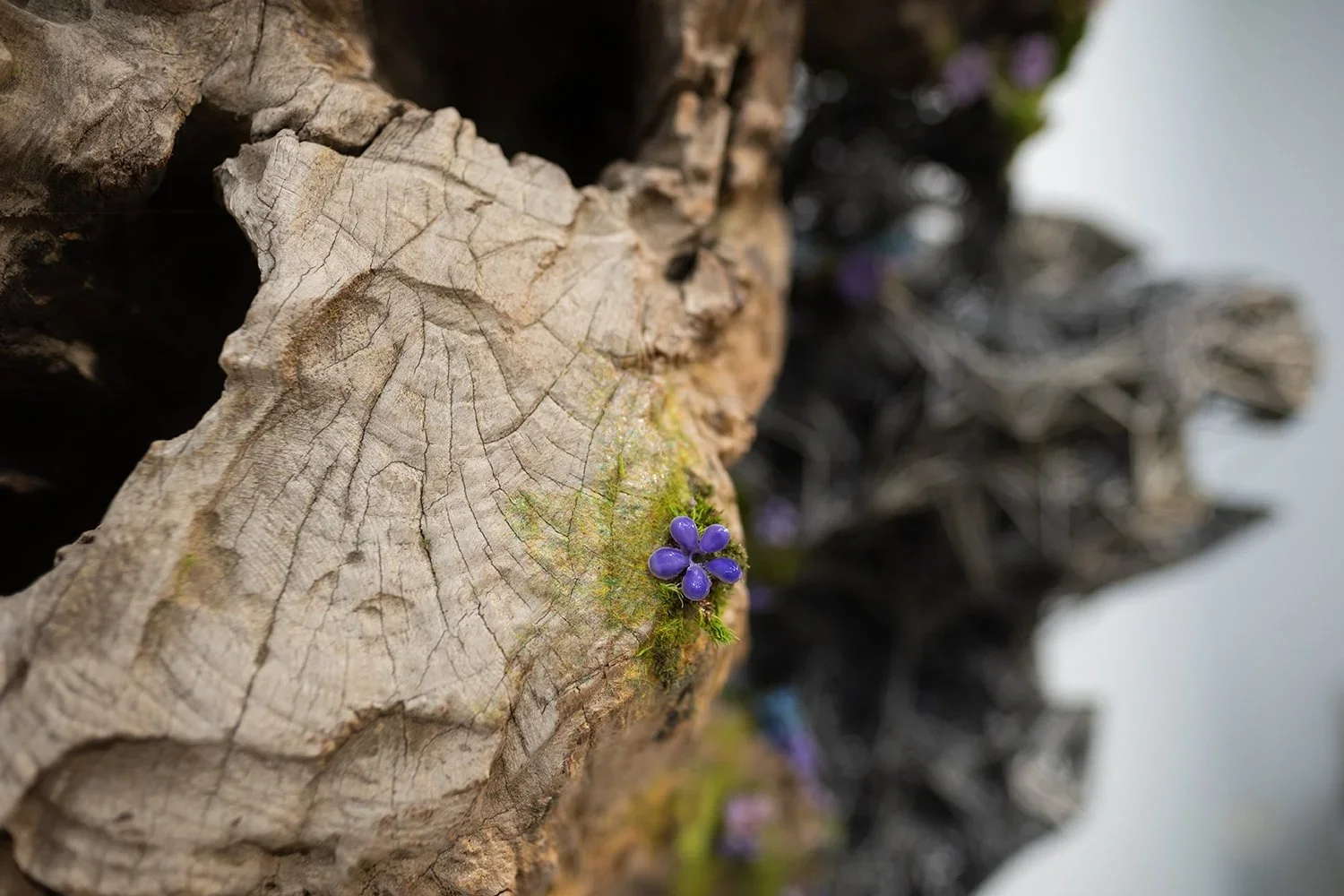
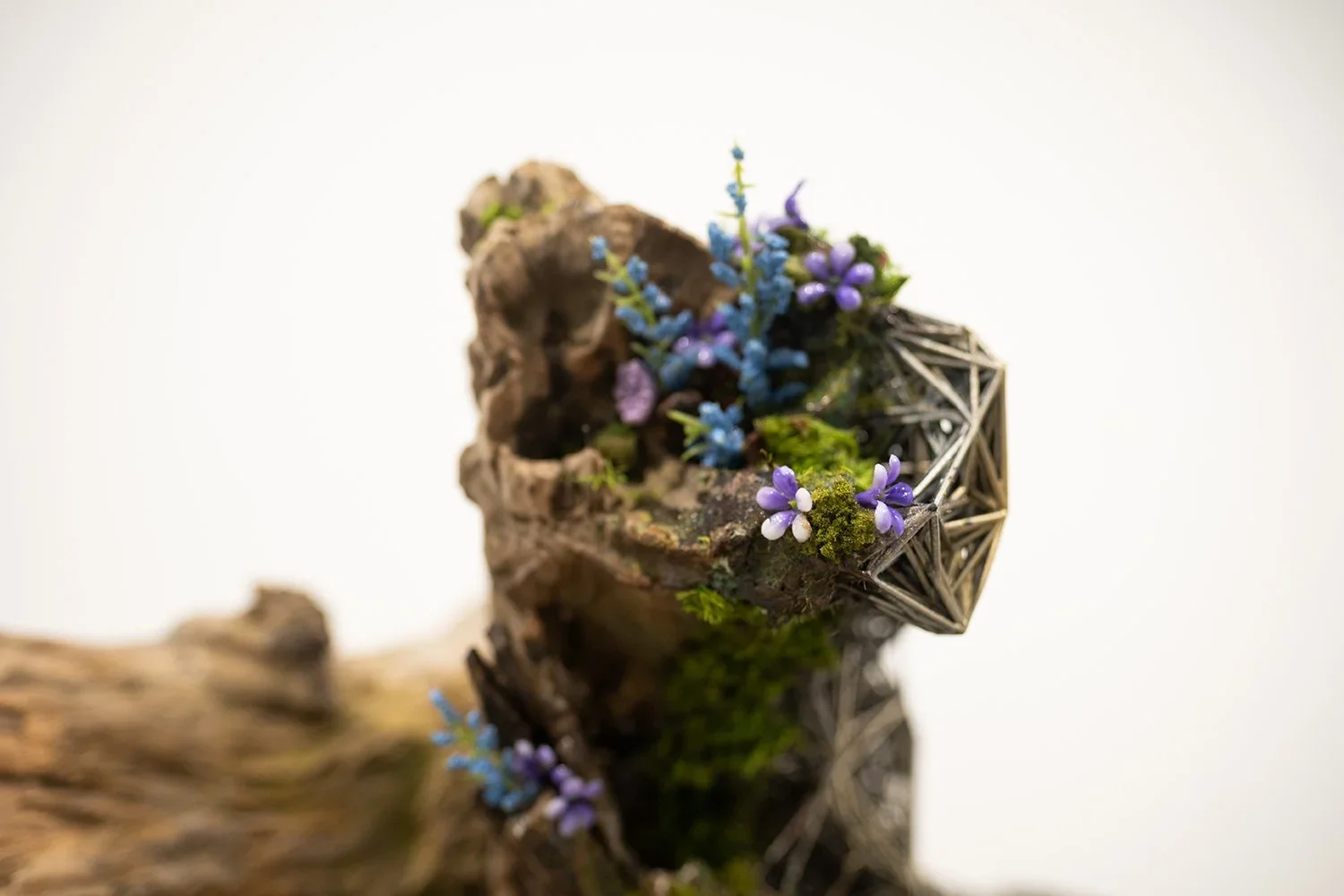
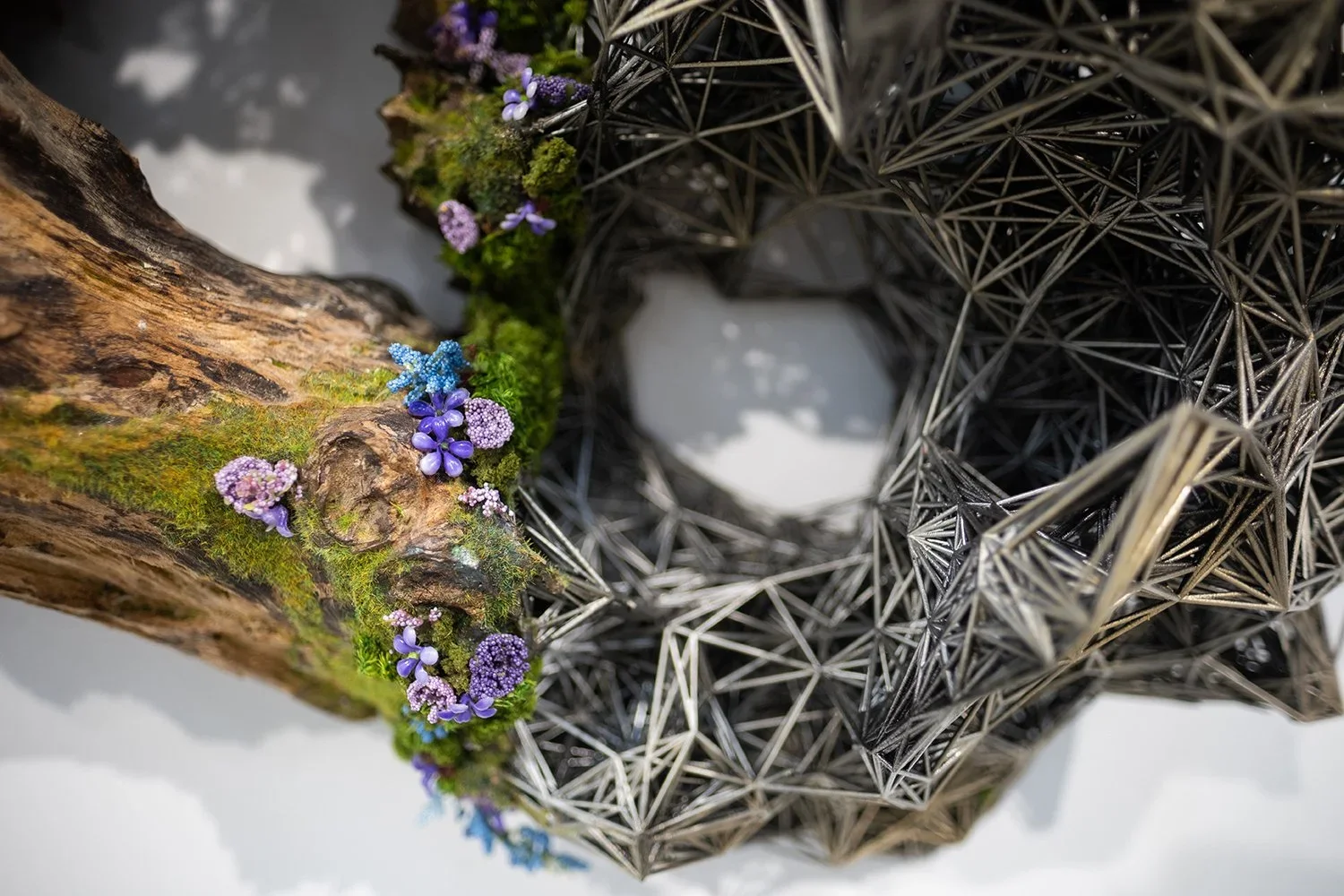
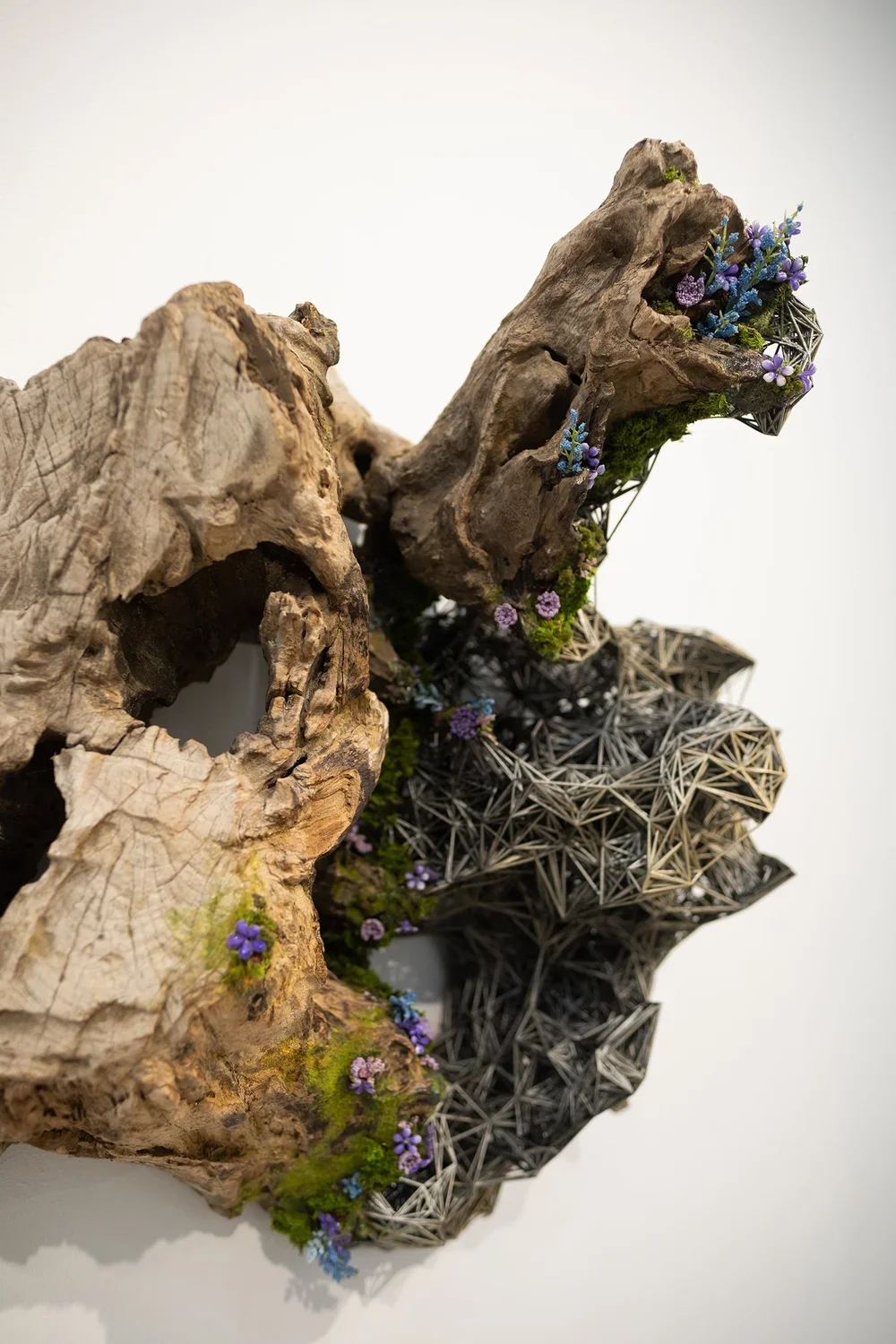
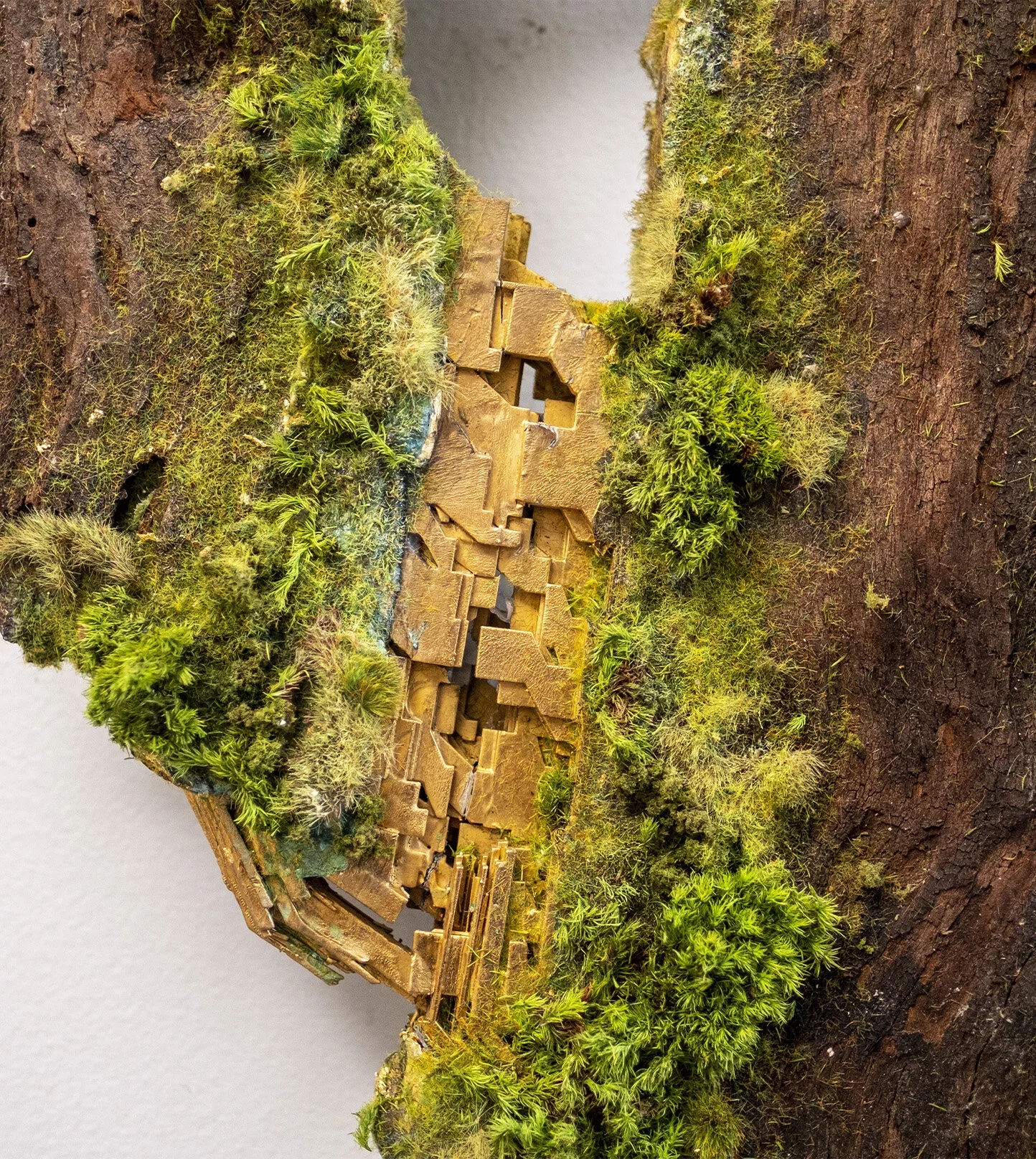
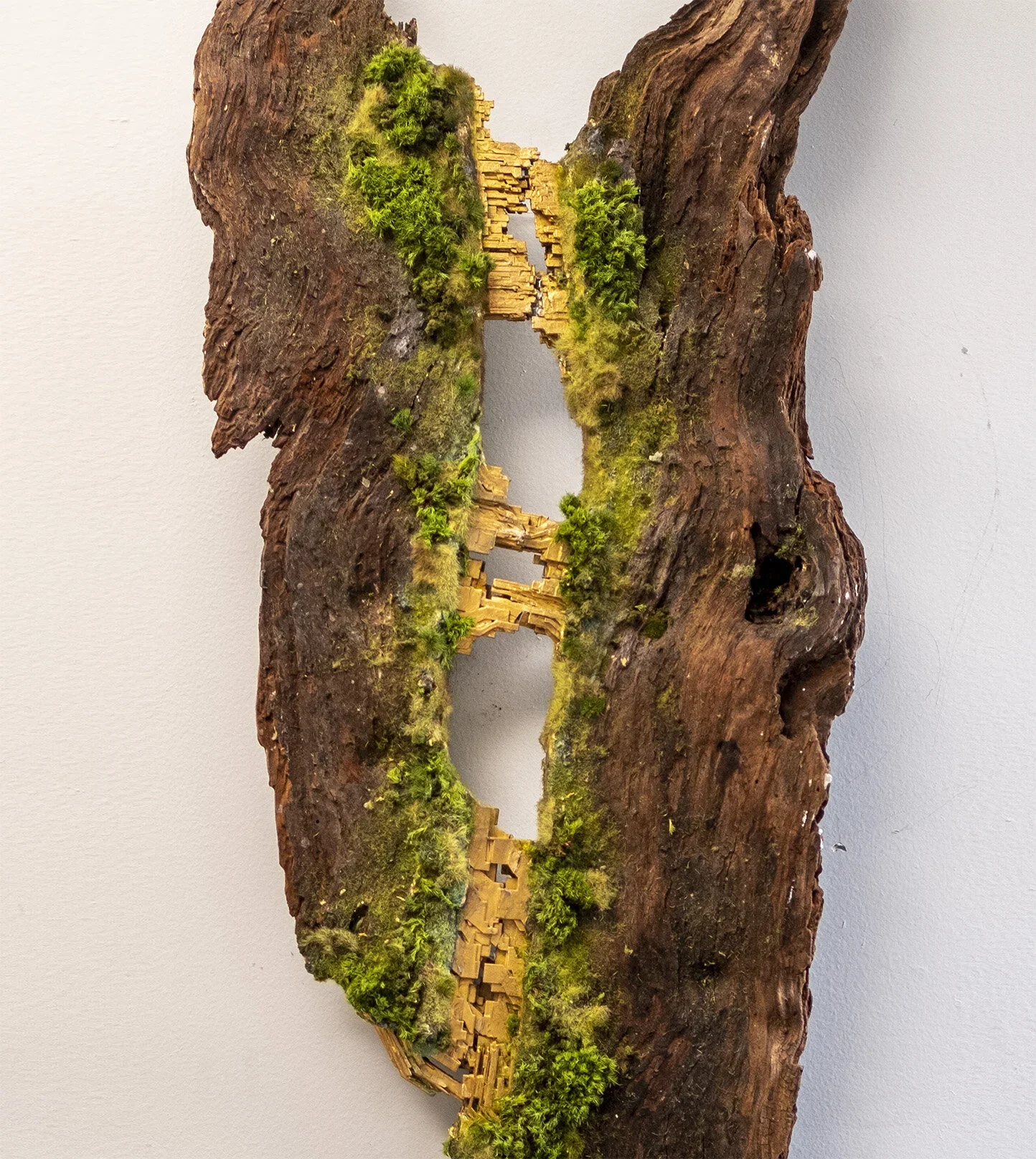
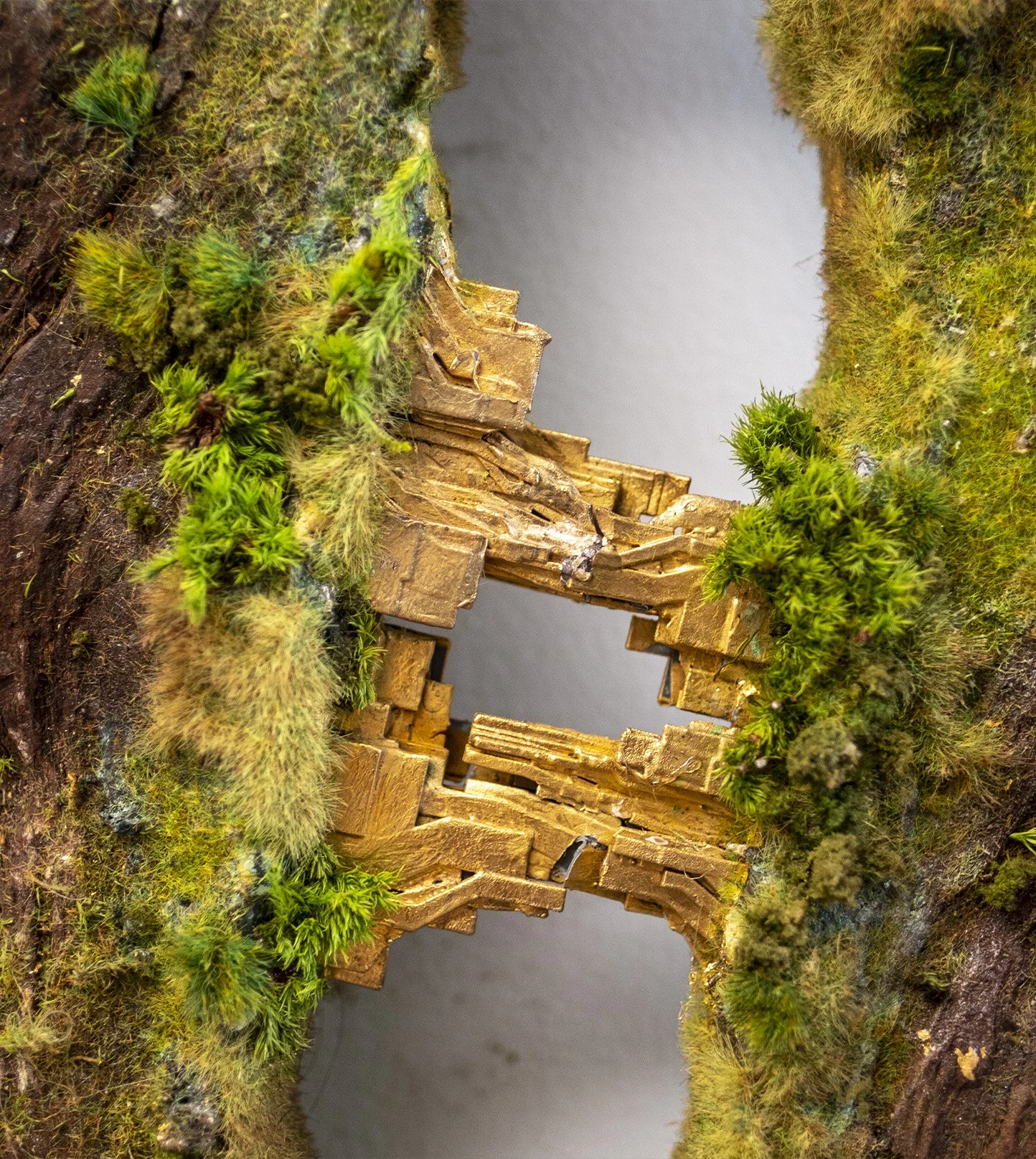
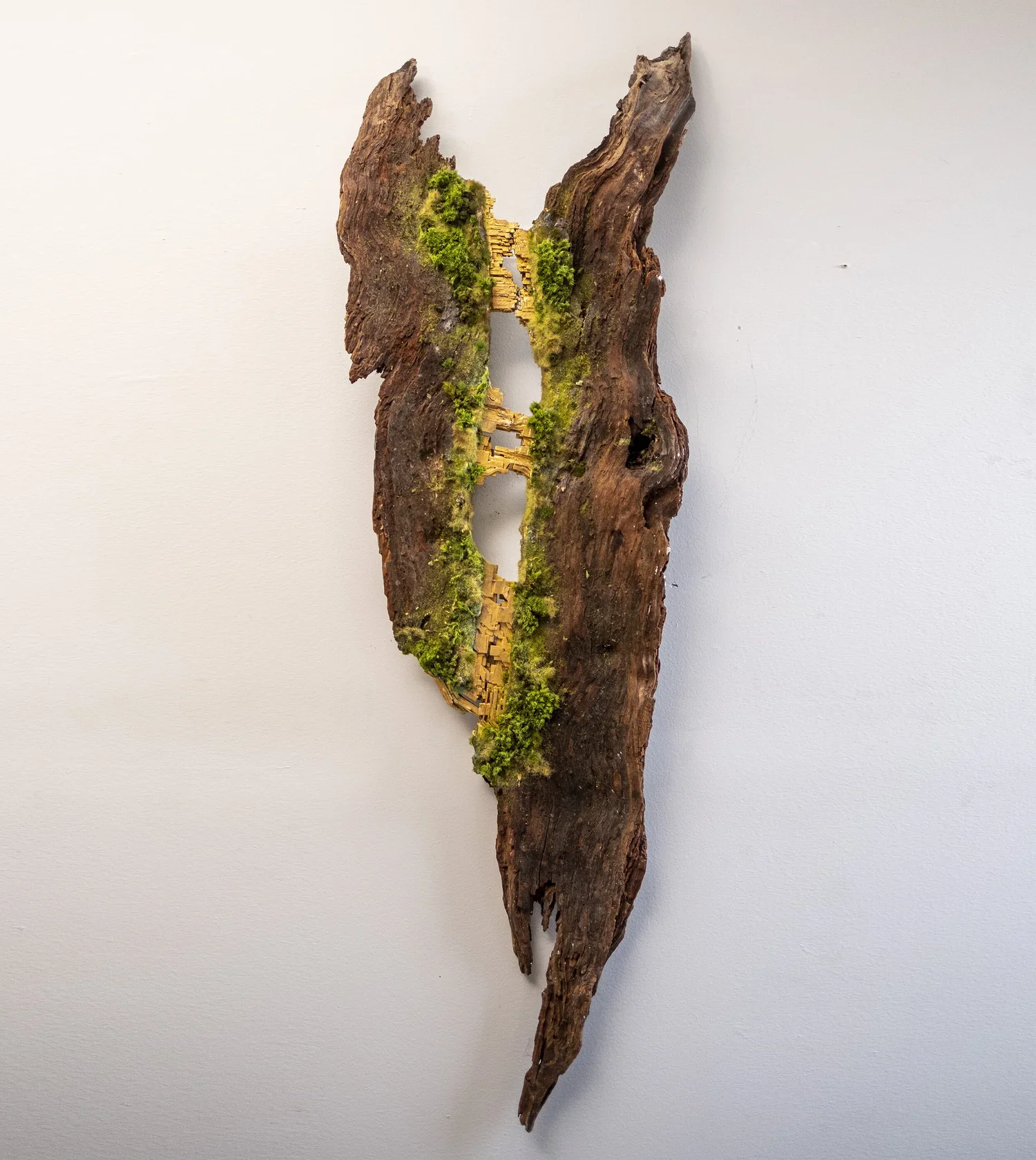
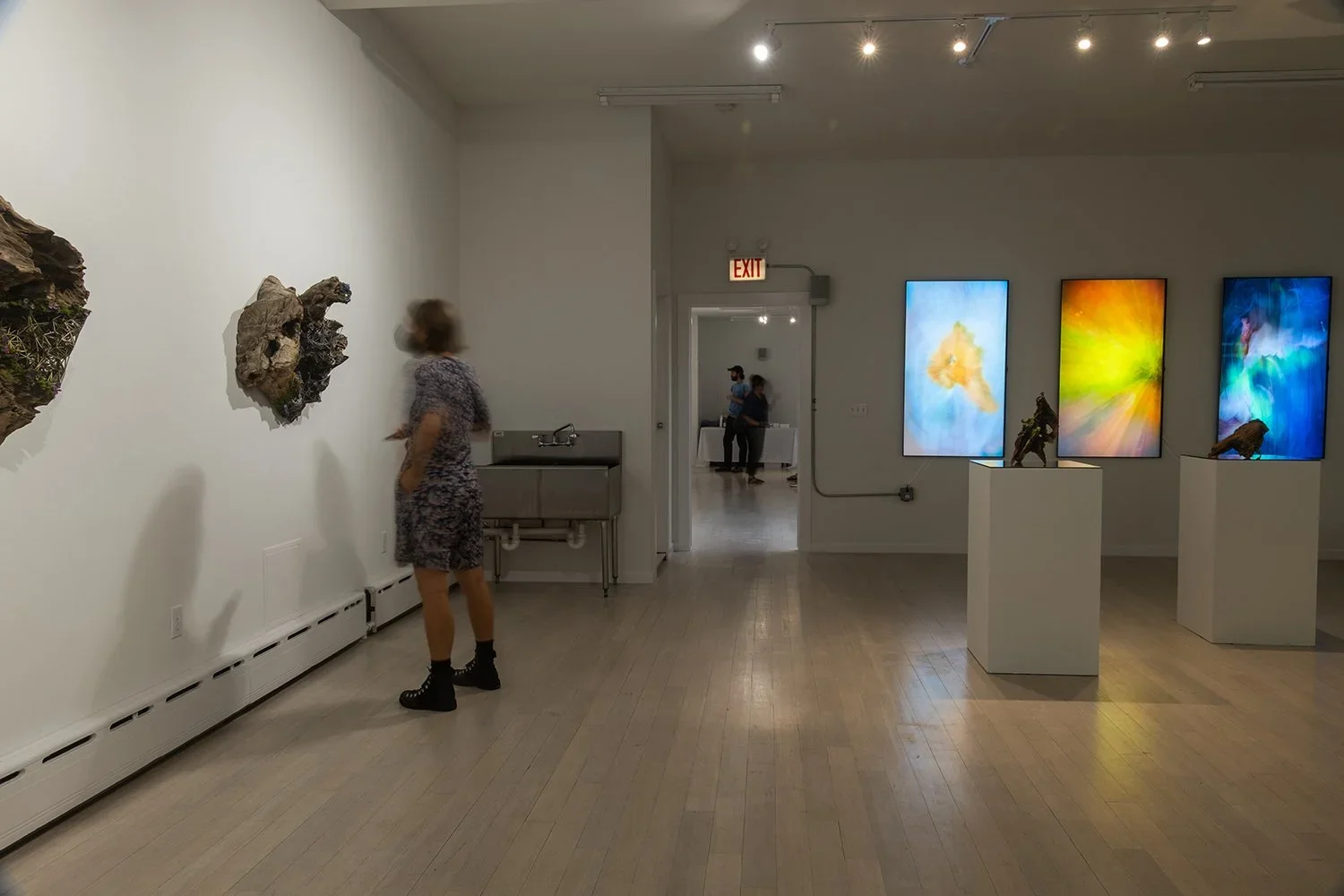
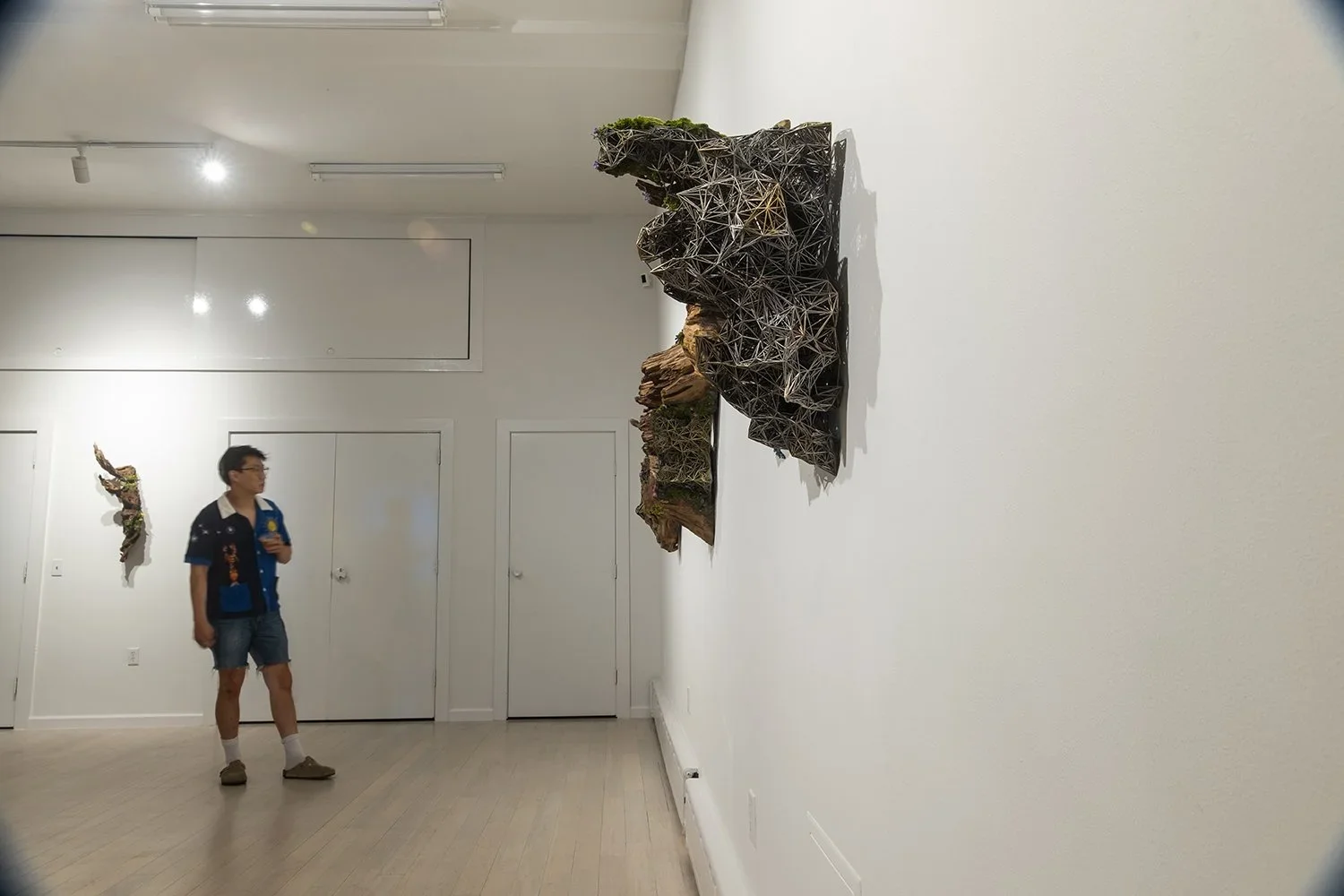
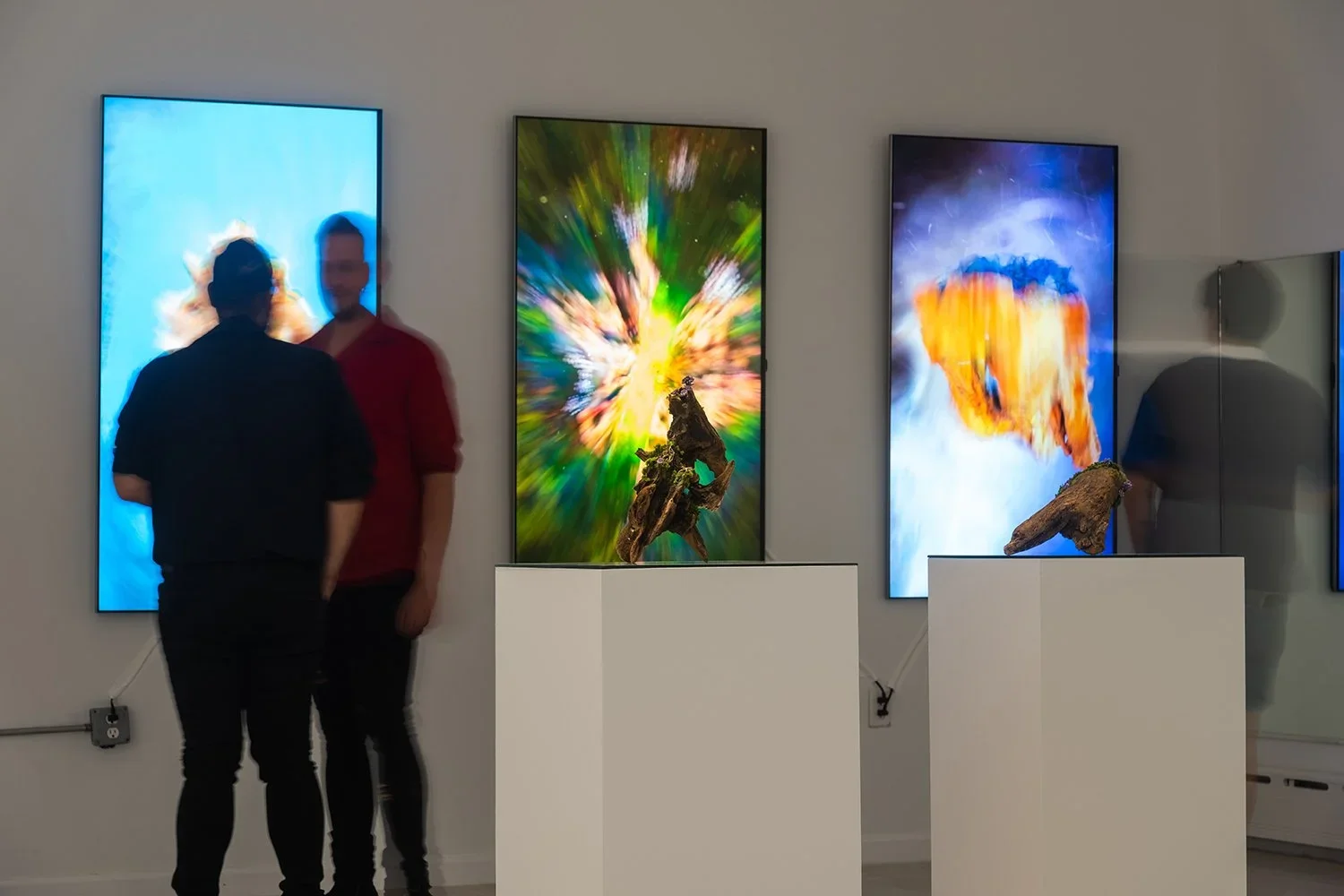
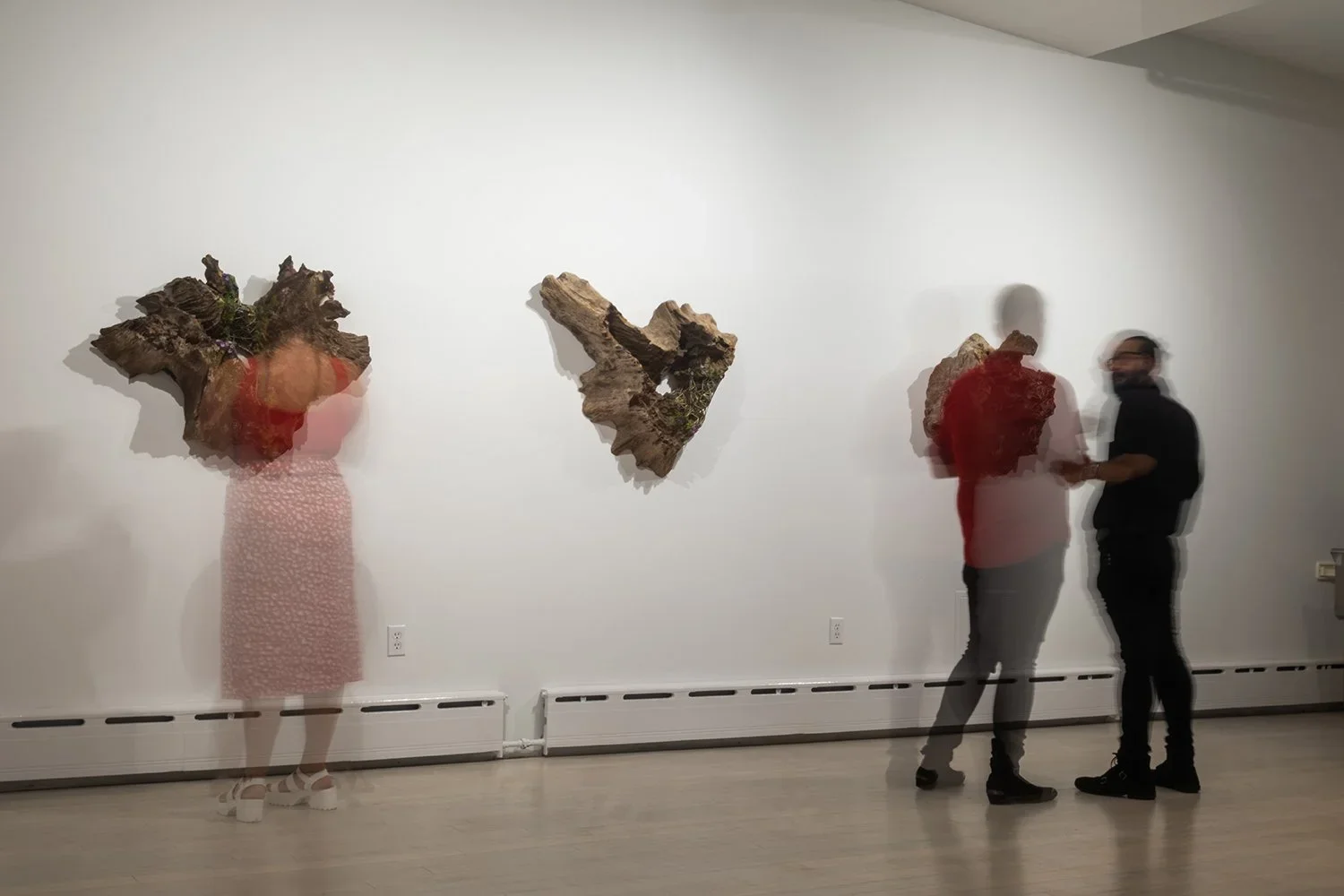
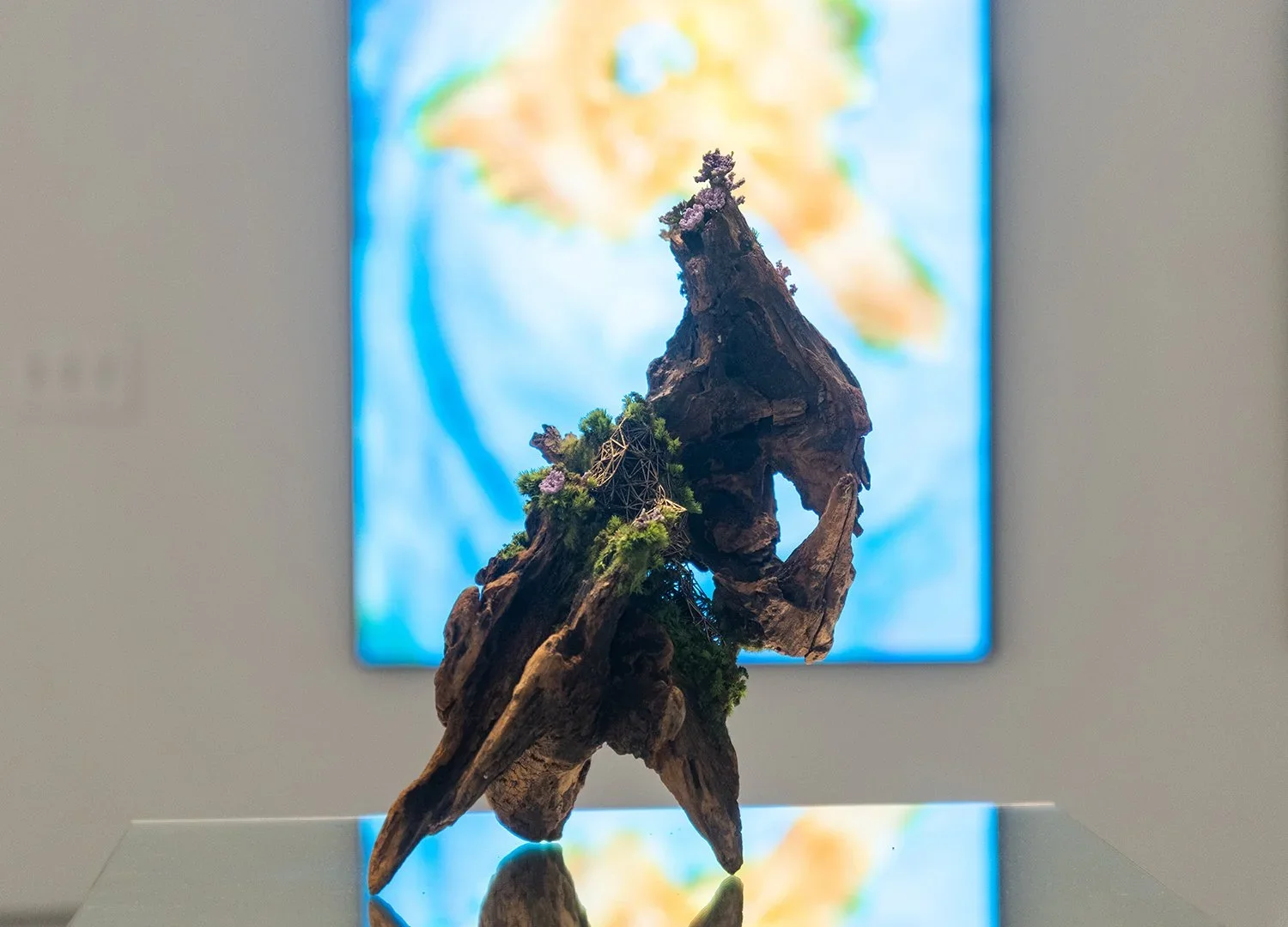
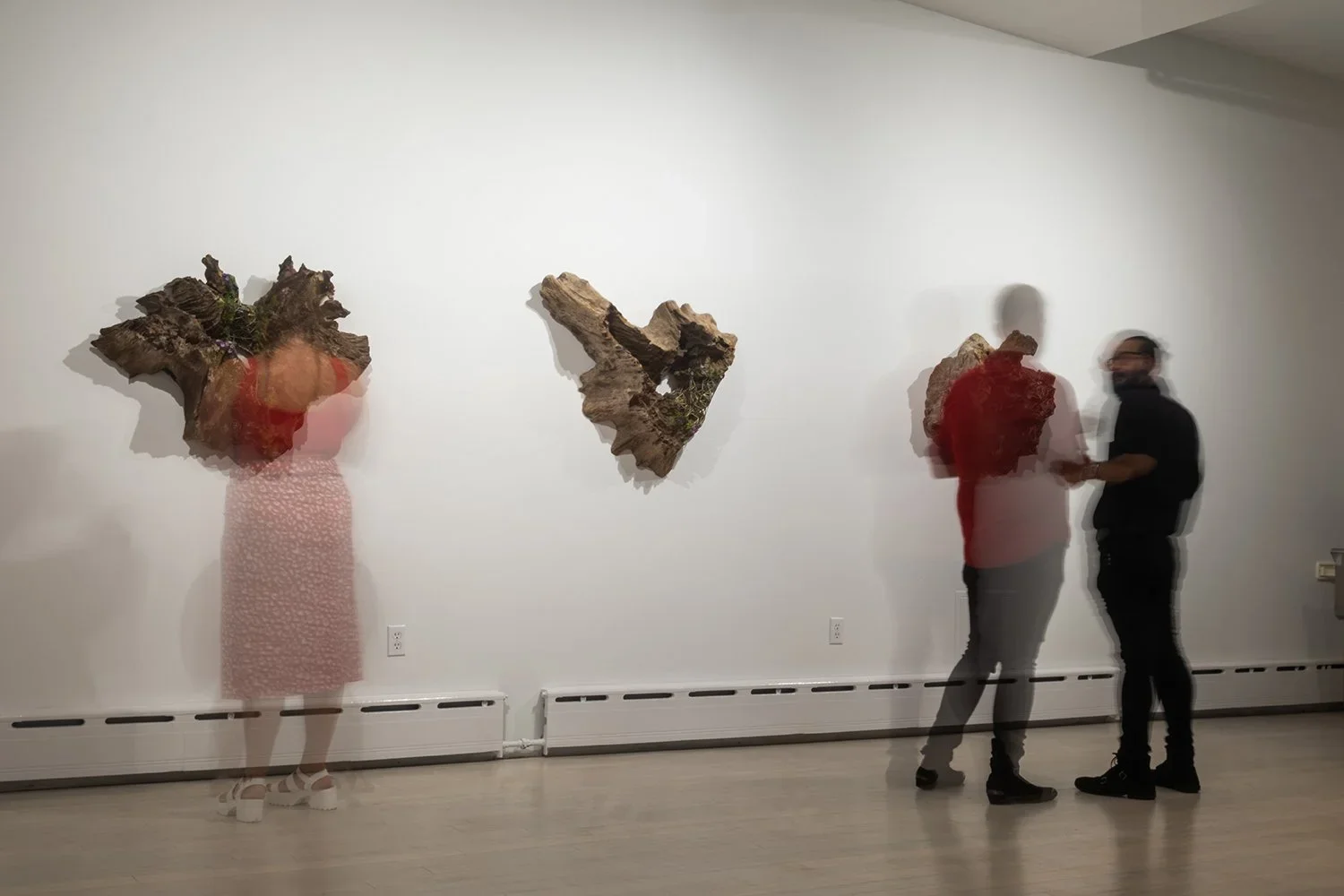
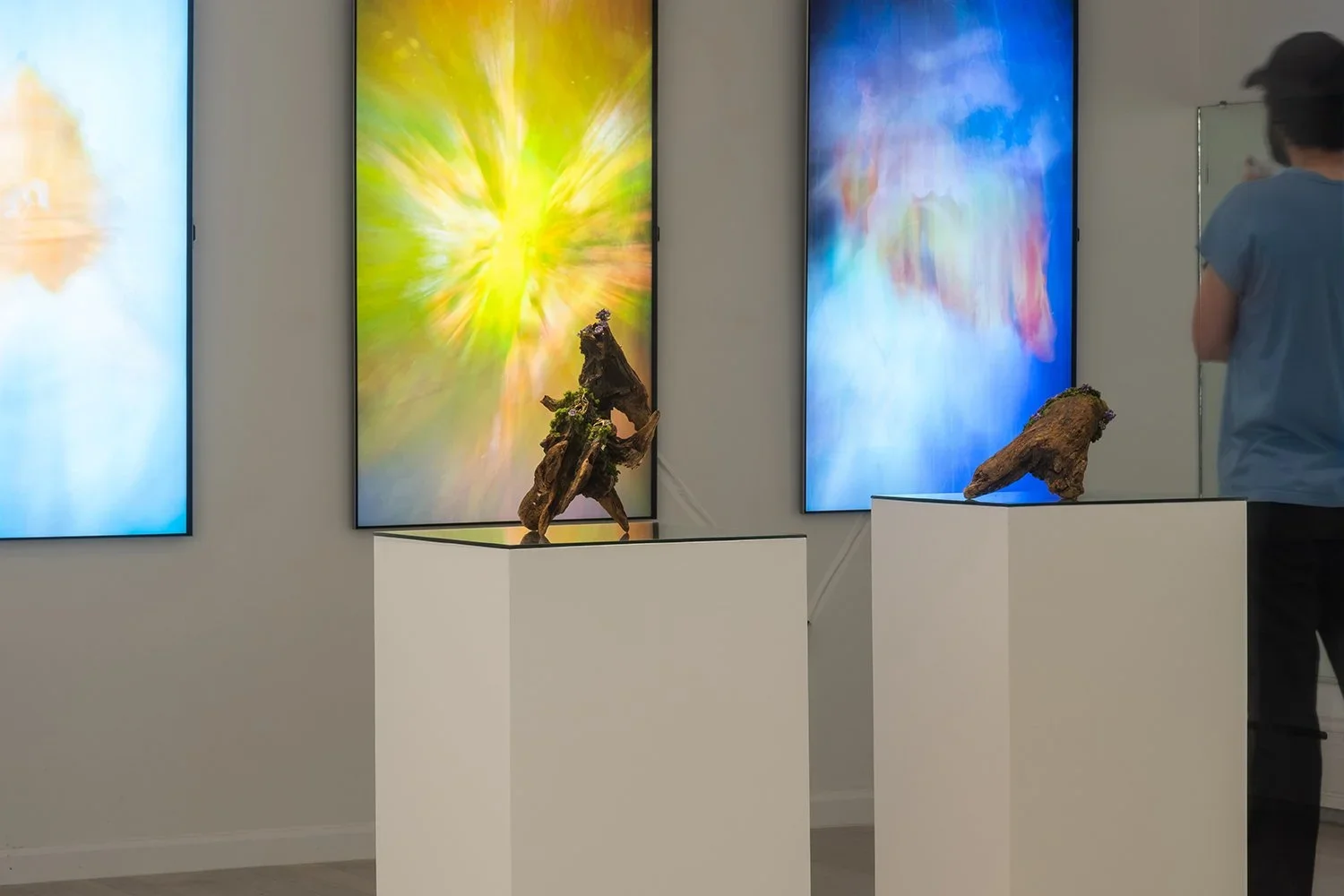
NeoGrowths imagines what plant life might become after humanity has decoded, altered, and rebuilt nature through synthetic biology, artificial intelligence, and nanotechnology.
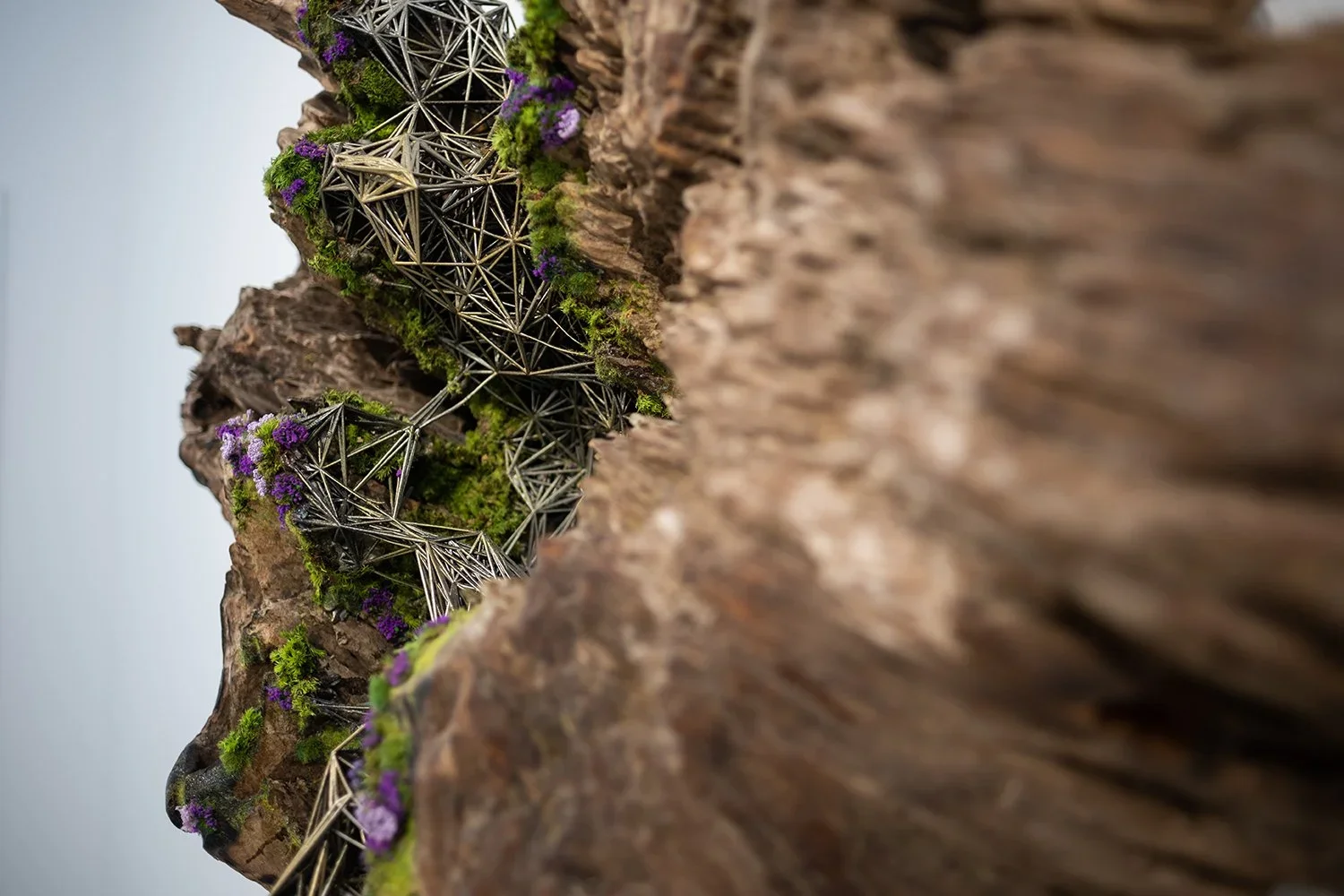
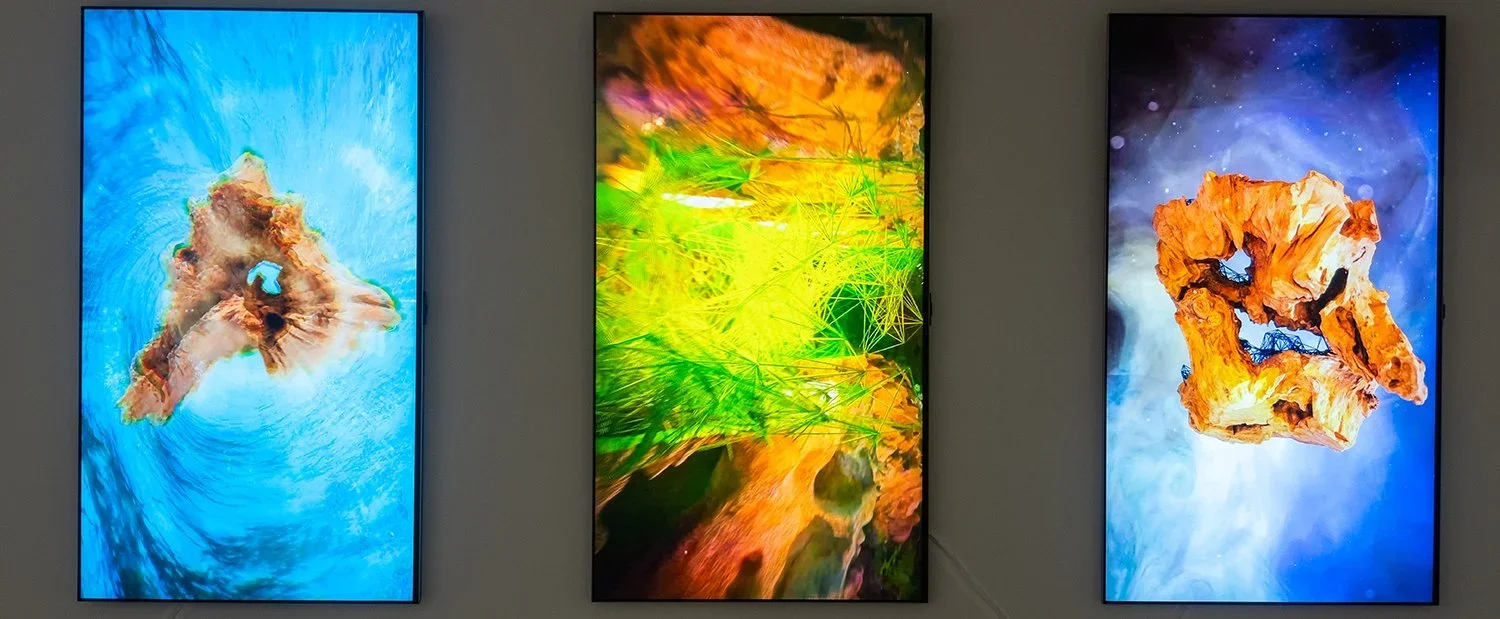
Each work begins with organic material, including wood specimens from Indonesia, the United States, and other regions. The natural forms are 3D scanned using photogrammetry and structured light, then digitally reconstructed and extended with printed resin structures. Within the cracks and negative spaces, nerve-like “plexus” geometries are generated and embedded, suggesting a new synthetic growth system forming inside the original material.
The series exists as both physical sculpture and animation, with CGI sequences revealing the movement and behavior of the hidden resin networks. Together, the works suggest a future flora that is no longer purely natural or artificial, but engineered, intelligent, and alive in a new way.
Neon God
Plastic, copper wire, resin, gold foil, and LED
Garret Kane, 2019
Mixed media sculpture
84" × 48" × 60"
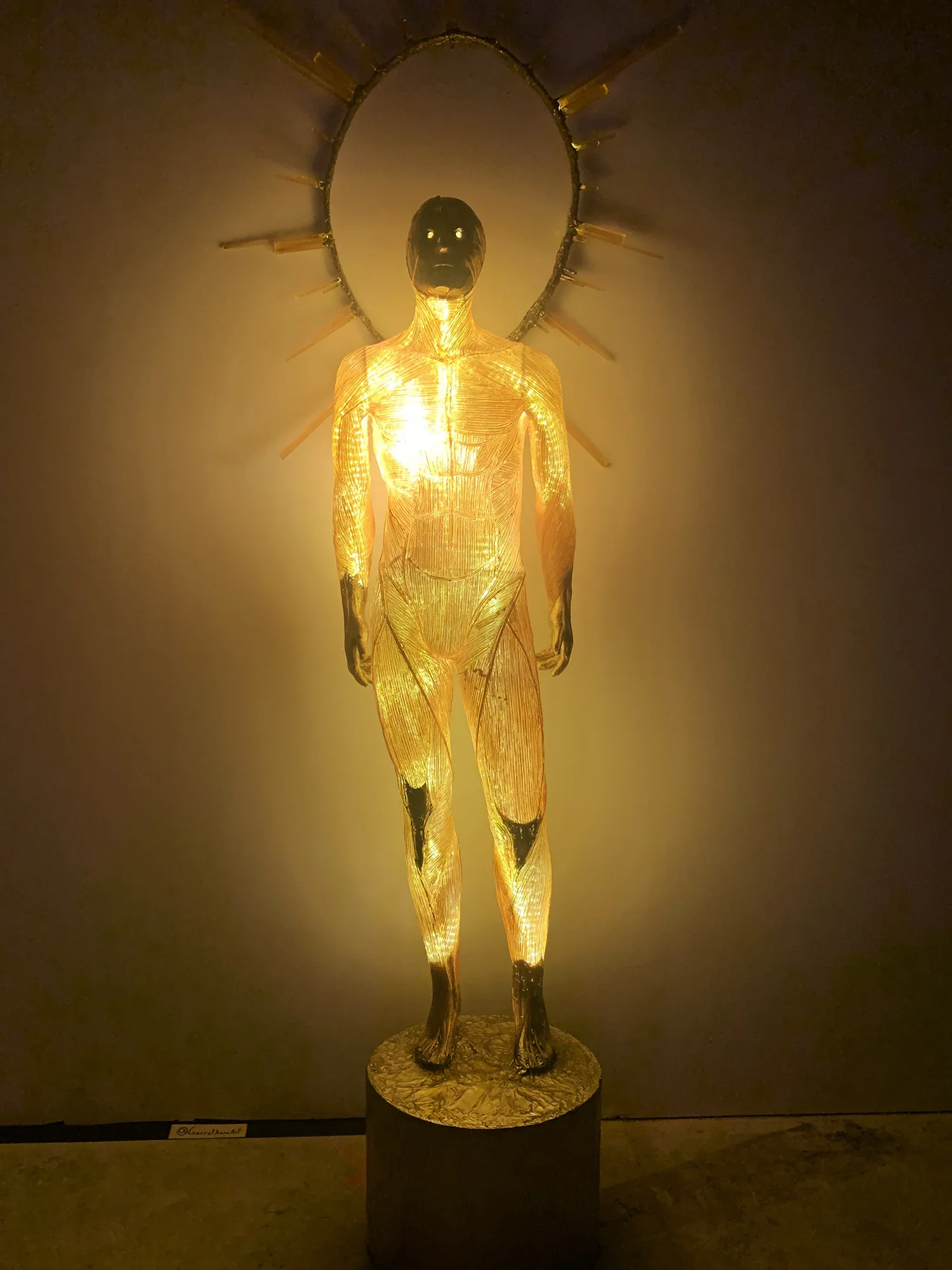
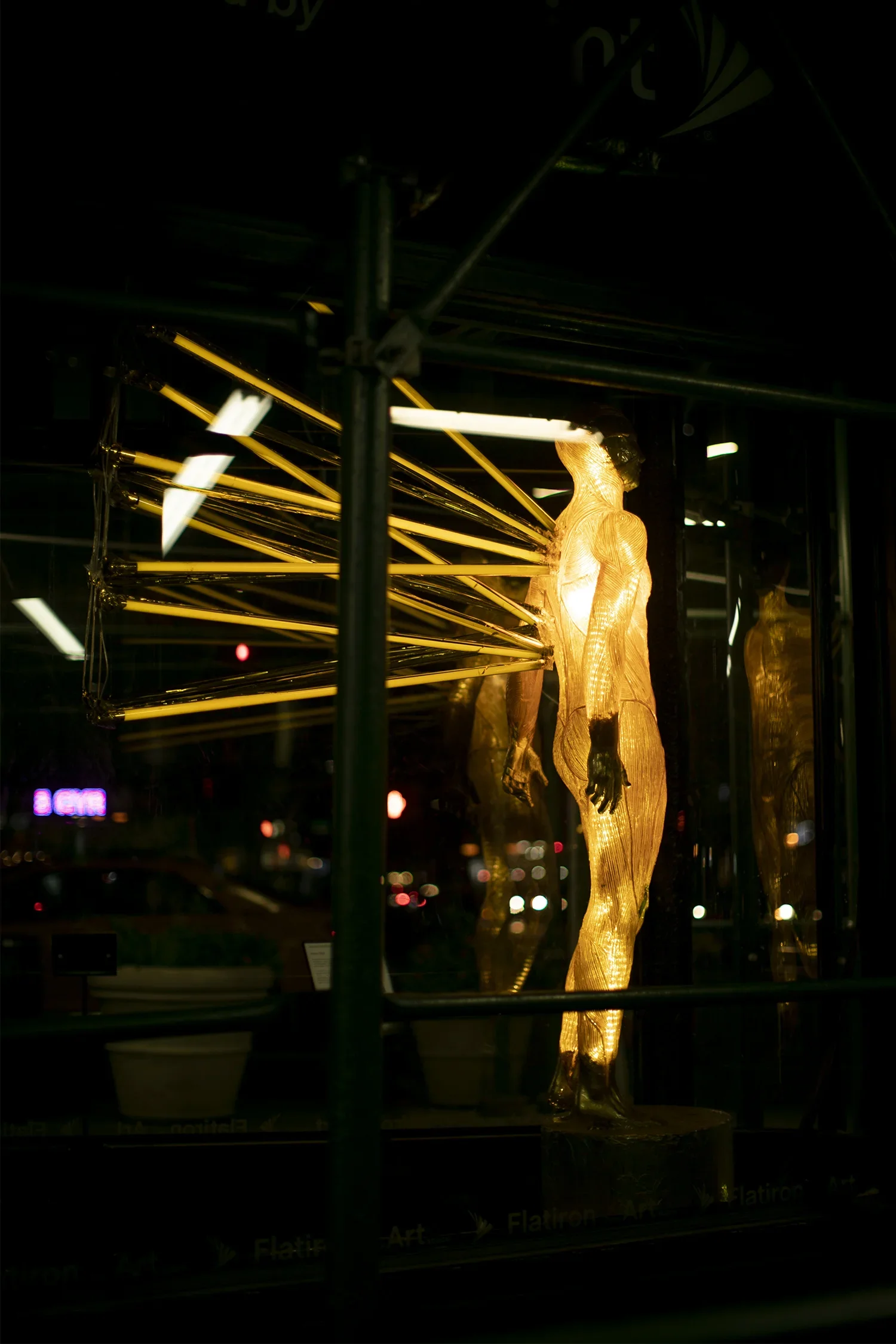
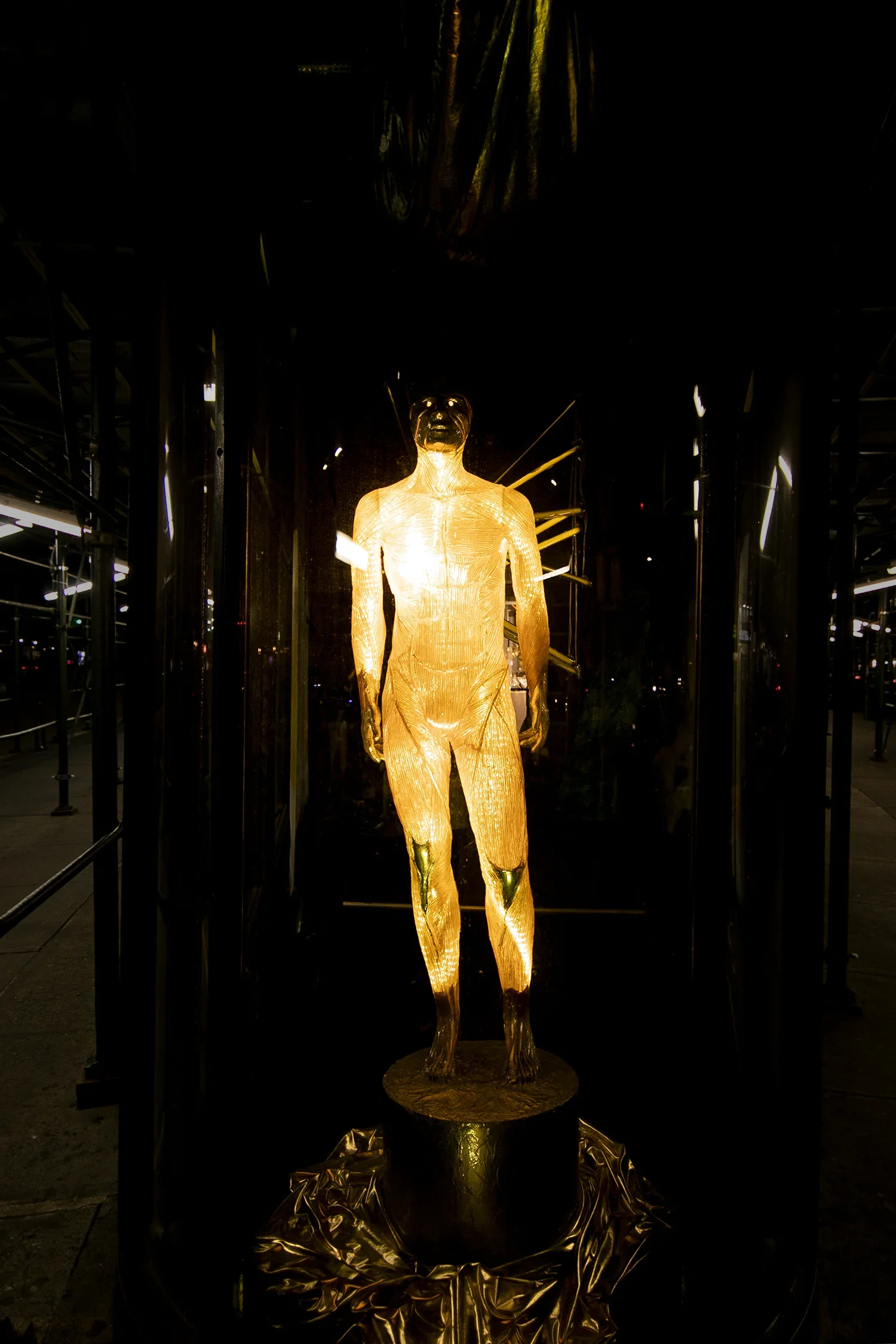
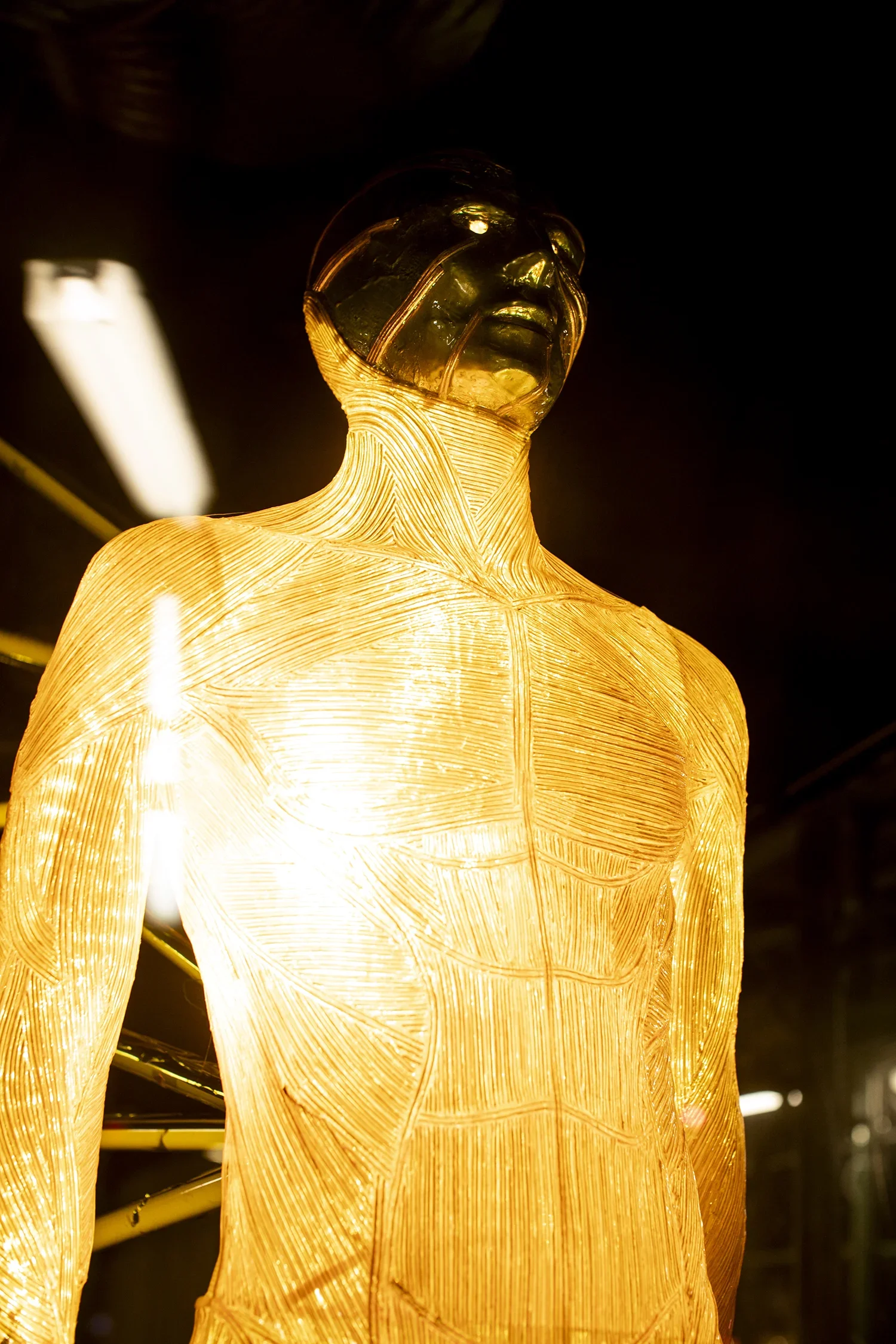
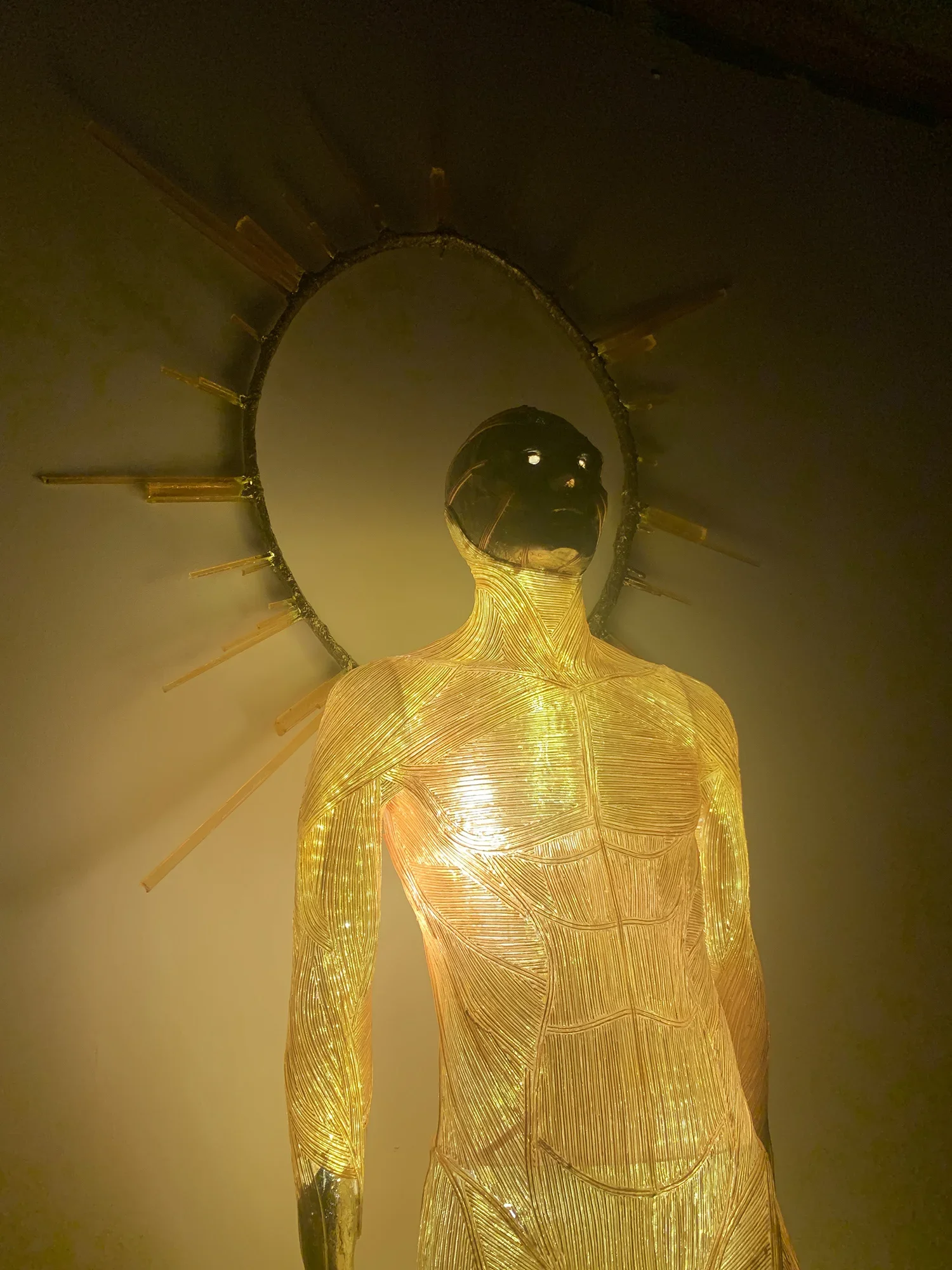
Neon God personifies artificial intelligence as an angelic savior, blending religious iconography with synthetic anatomy and technological material.
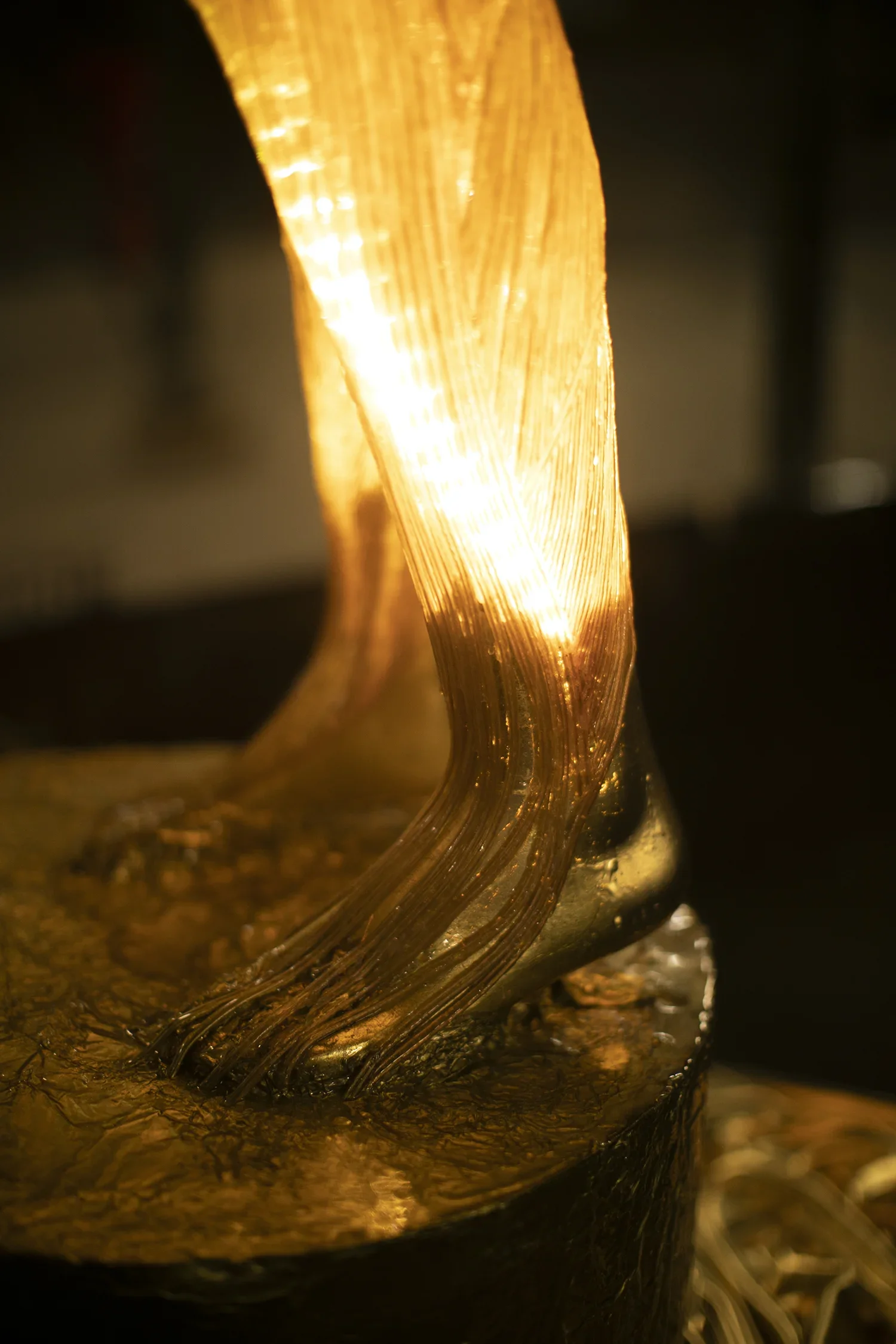
Constructed from over 2,300 feet of copper wire, the sculpture imagines a future deity created not by nature or religion, but by human invention. Its glowing gold muscle structure replaces the red protein-based body with something artificial, electric, and divine.
The work reverses the traditional relationship between humans and gods: instead of gods creating humanity, humanity creates its own god. Through references to AI, nanotechnology, and the simulation hypothesis, Neon God asks what happens when technology becomes powerful enough to generate consciousness, reality, and belief itself.
Transmutations
Detritus, organic material, epoxy clay, preserved moss, and patinas
Garret Kane, 2020–2022
Mixed media sculptures
Various sizes
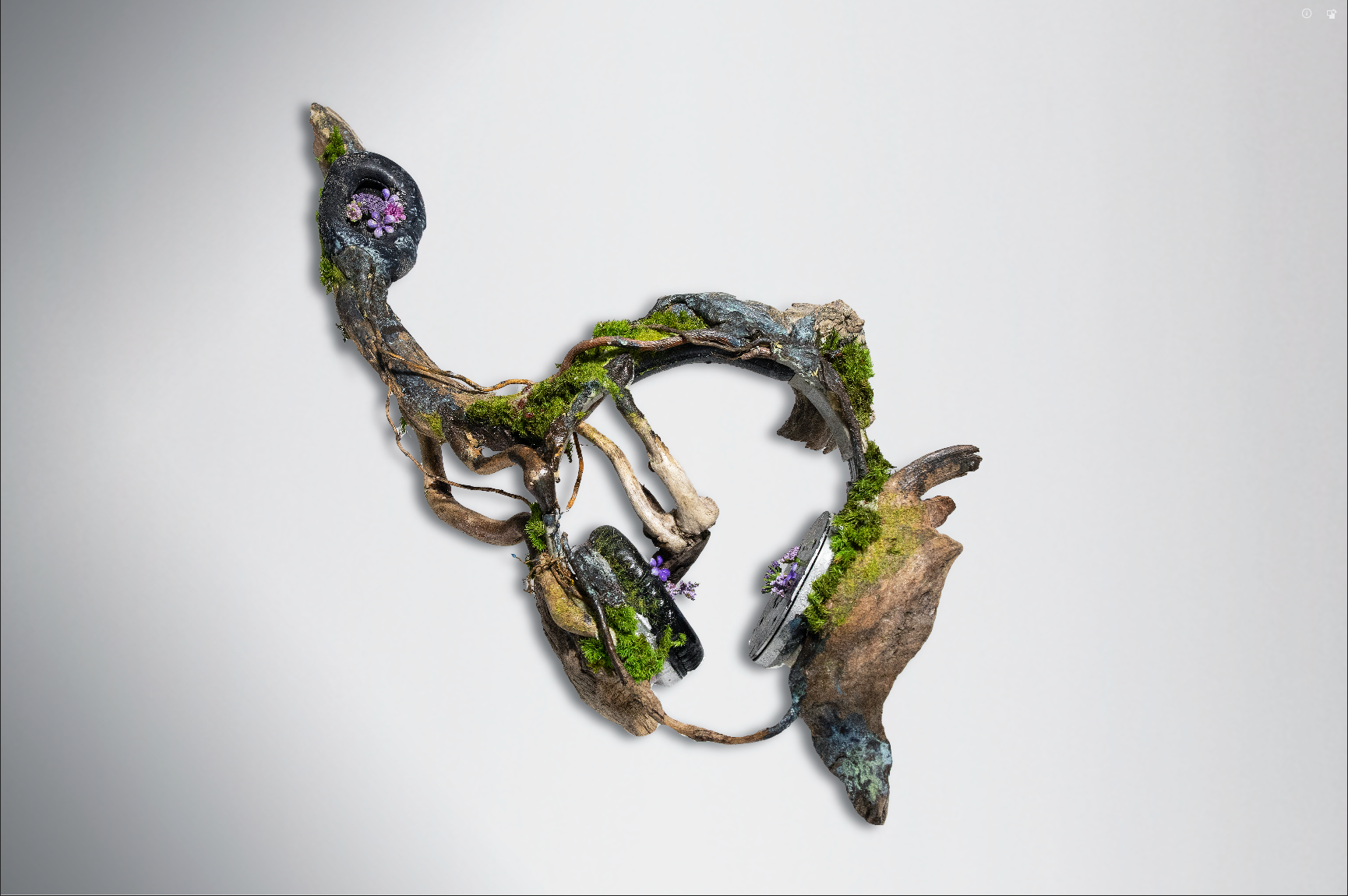
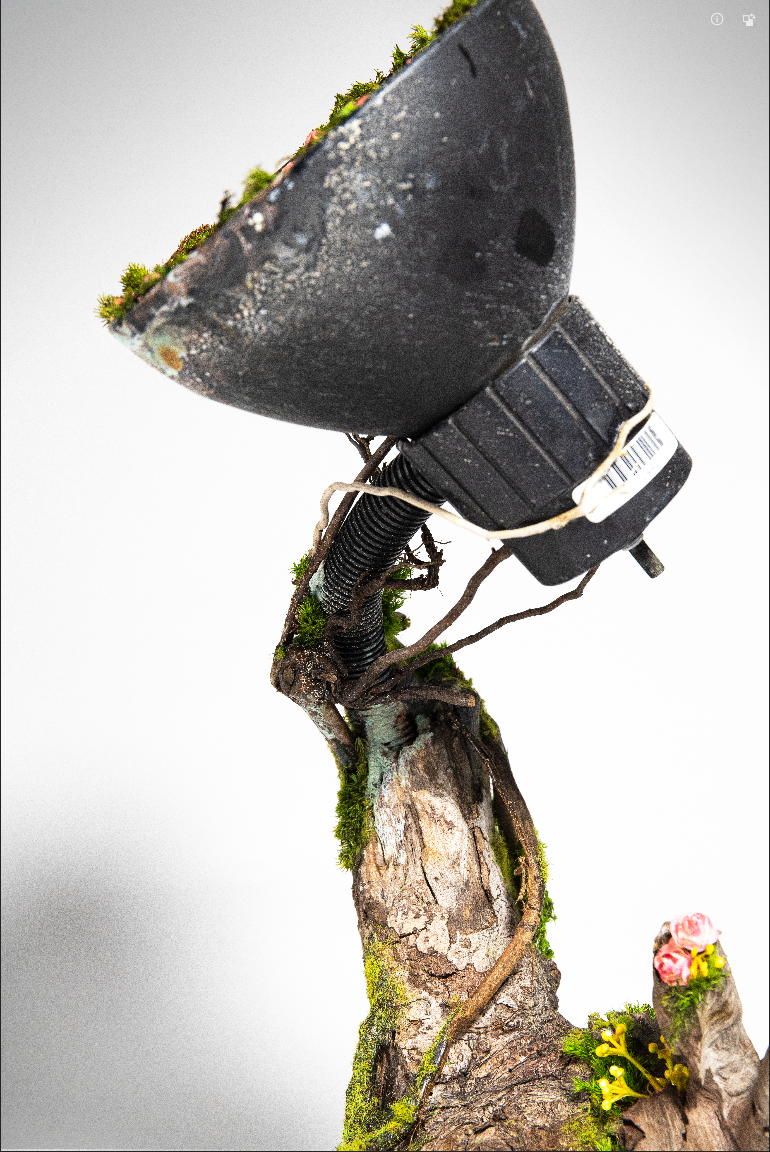
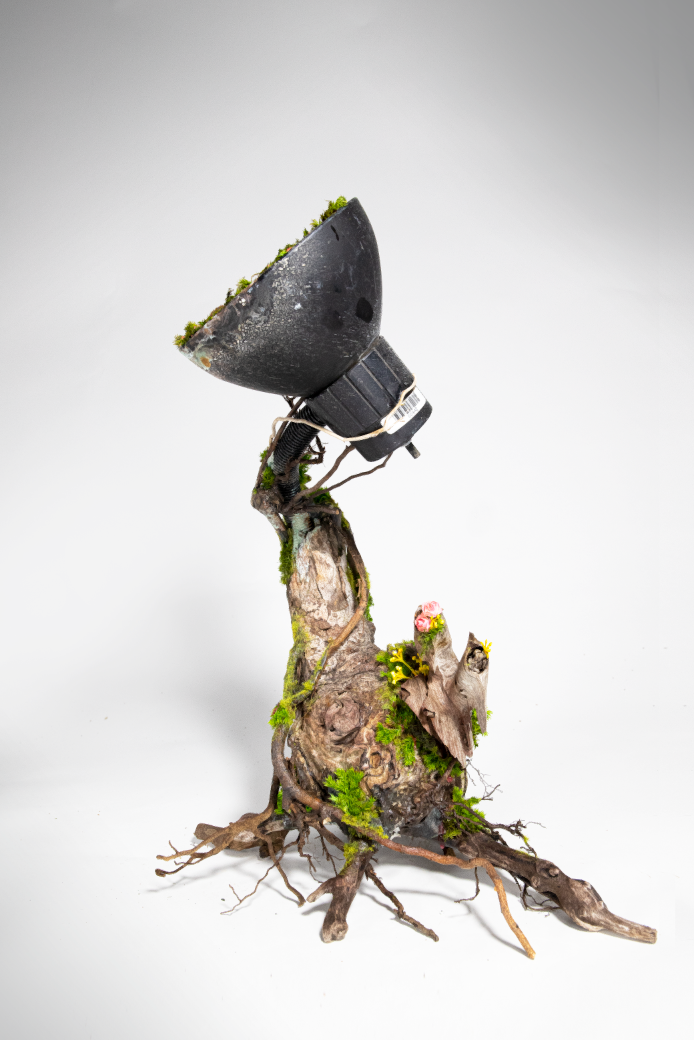
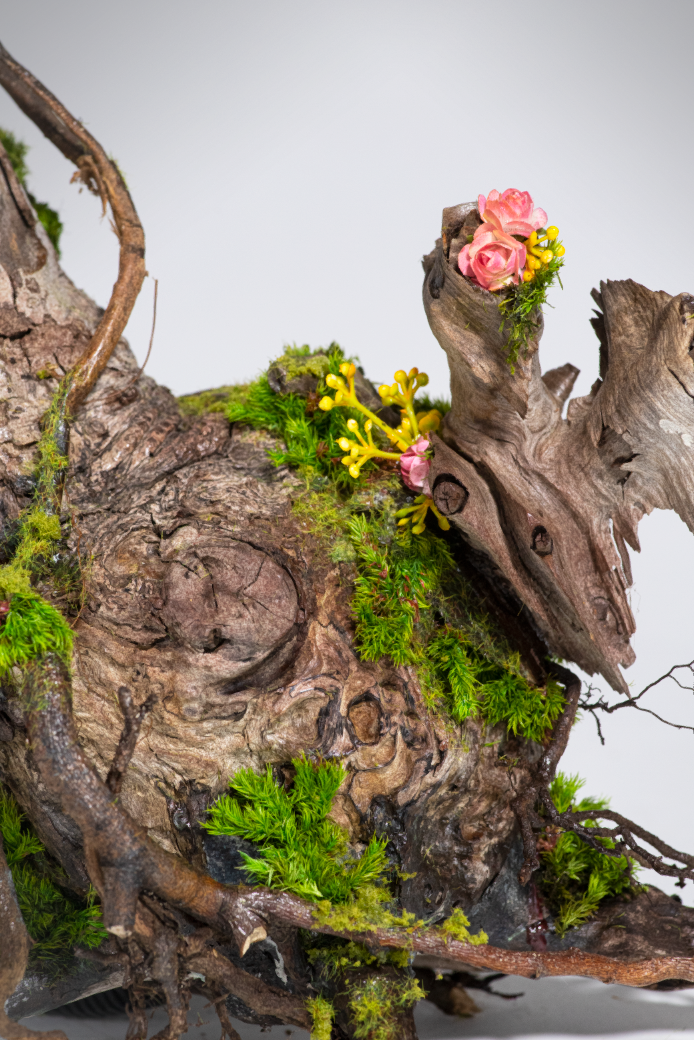
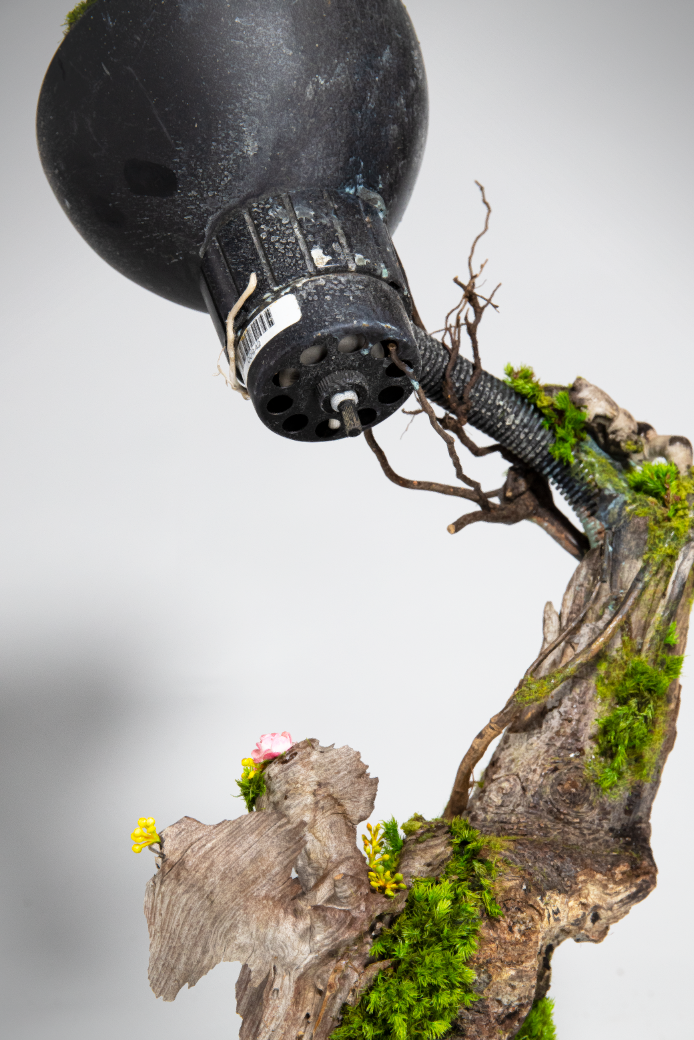
Transmutations explores the strange life cycle of discarded objects: materials pulled from the earth, processed into technology, valued for a time, and eventually abandoned as waste.
The series combines human-made detritus with organic matter, moss, clay, and patinated surfaces to imagine garbage in a state of transformation. Some works feel like nature is reclaiming the artificial; others suggest a more uneasy hybrid, where trash and biomass fuse into something new.
Through literal, absurd, and sometimes comedic forms, Transmutations asks what makes garbage “garbage” in the first place — and whether discarded human objects ever truly leave the natural world, or simply re-enter it in altered form.
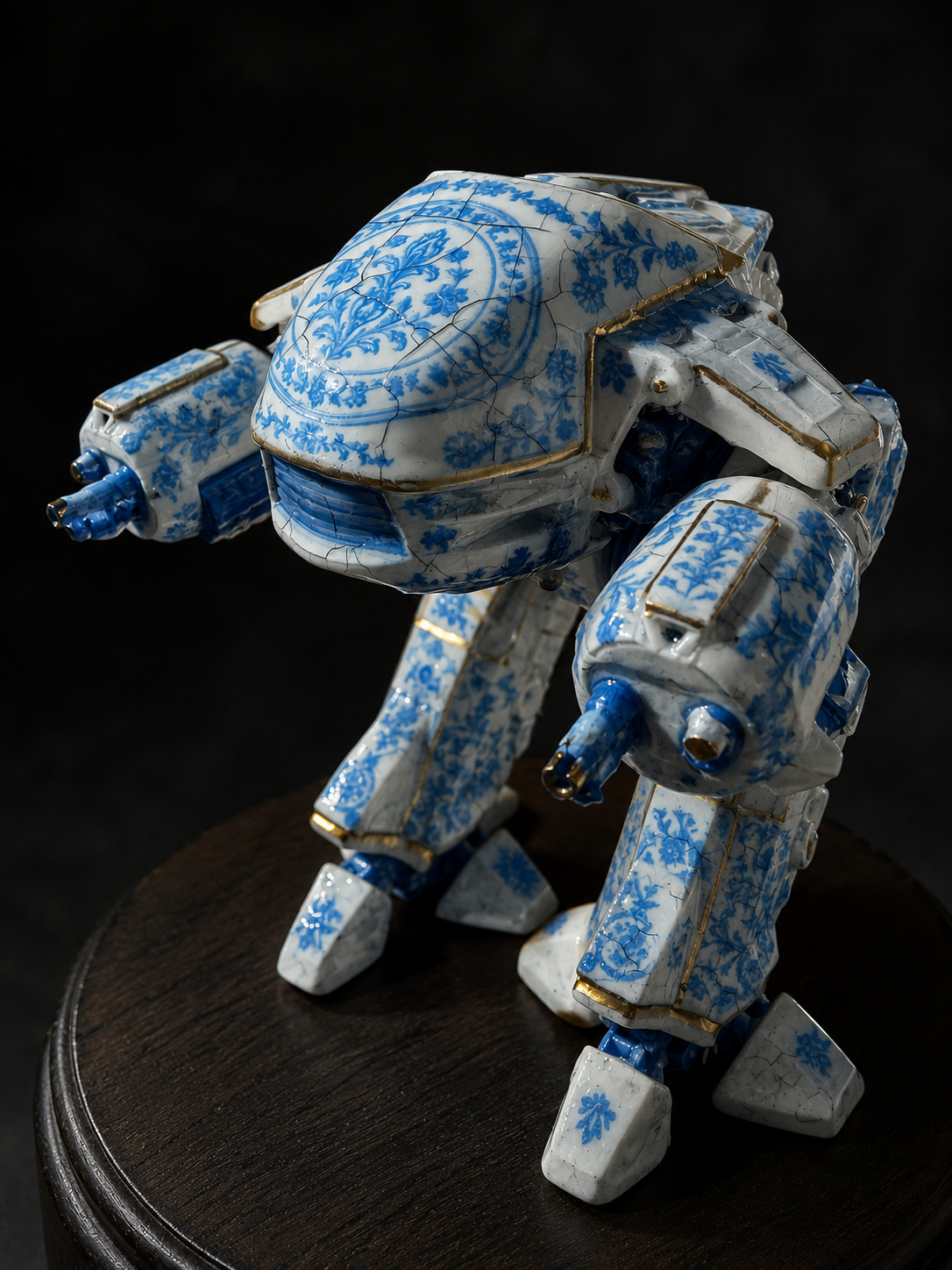
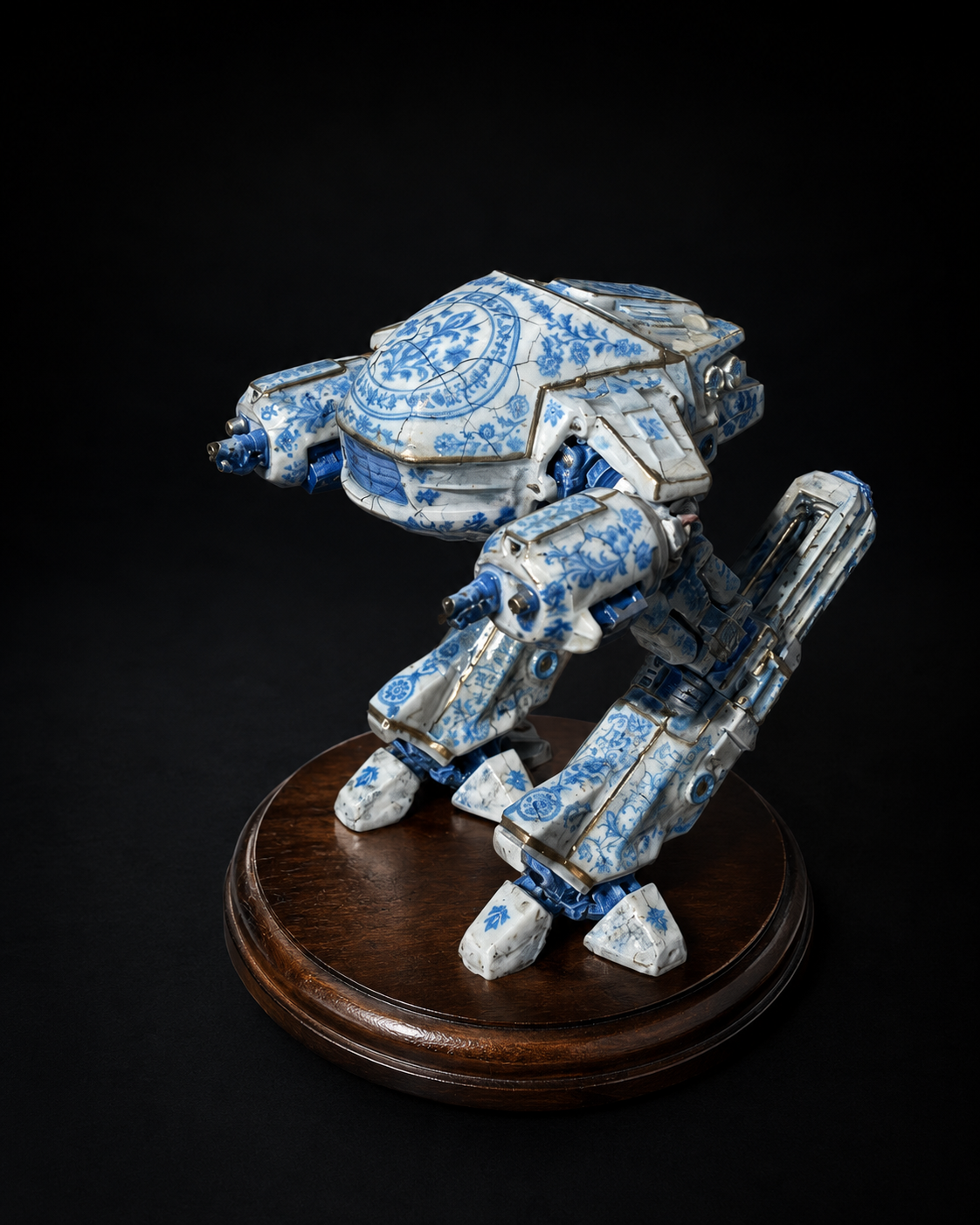
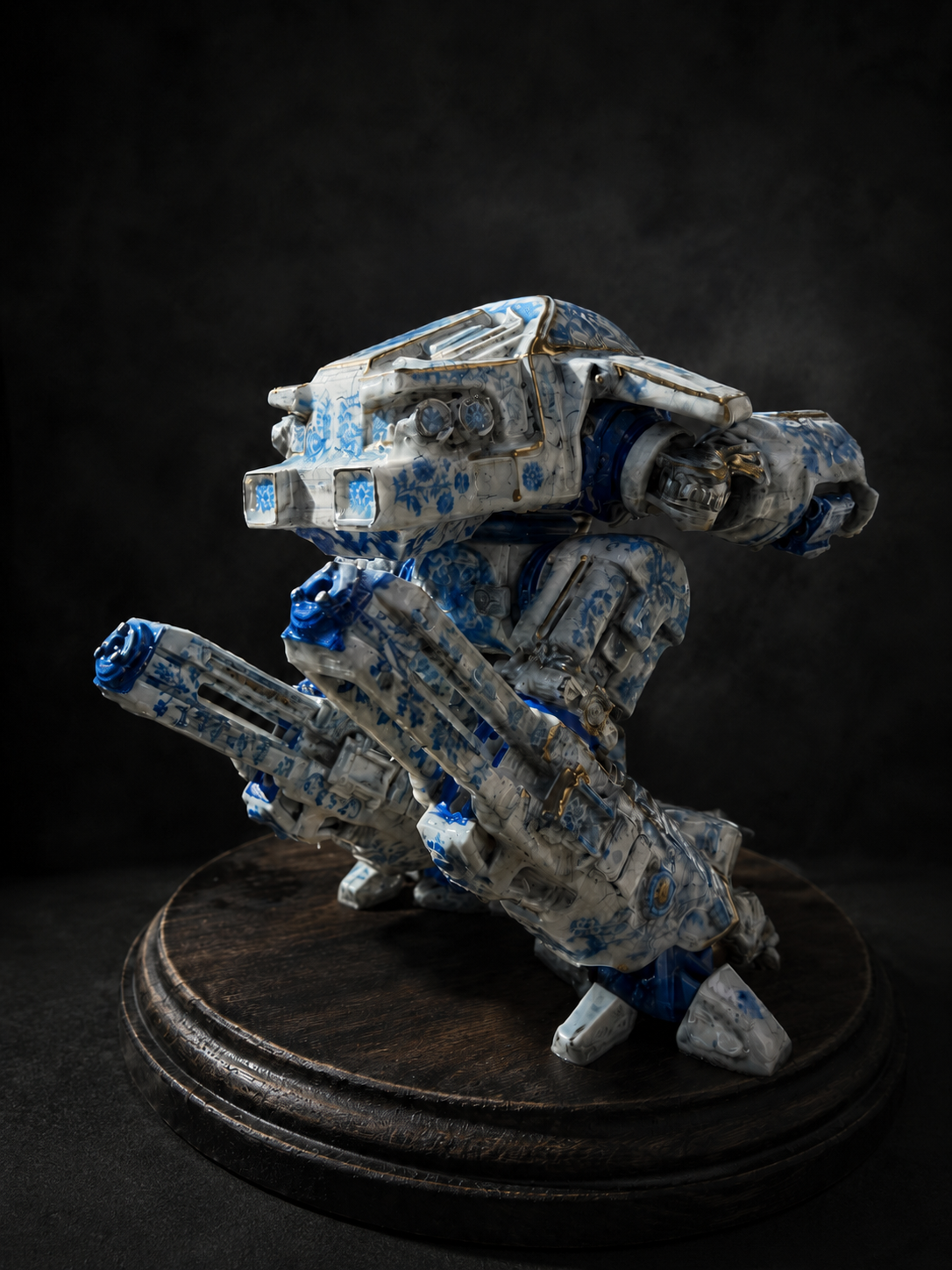
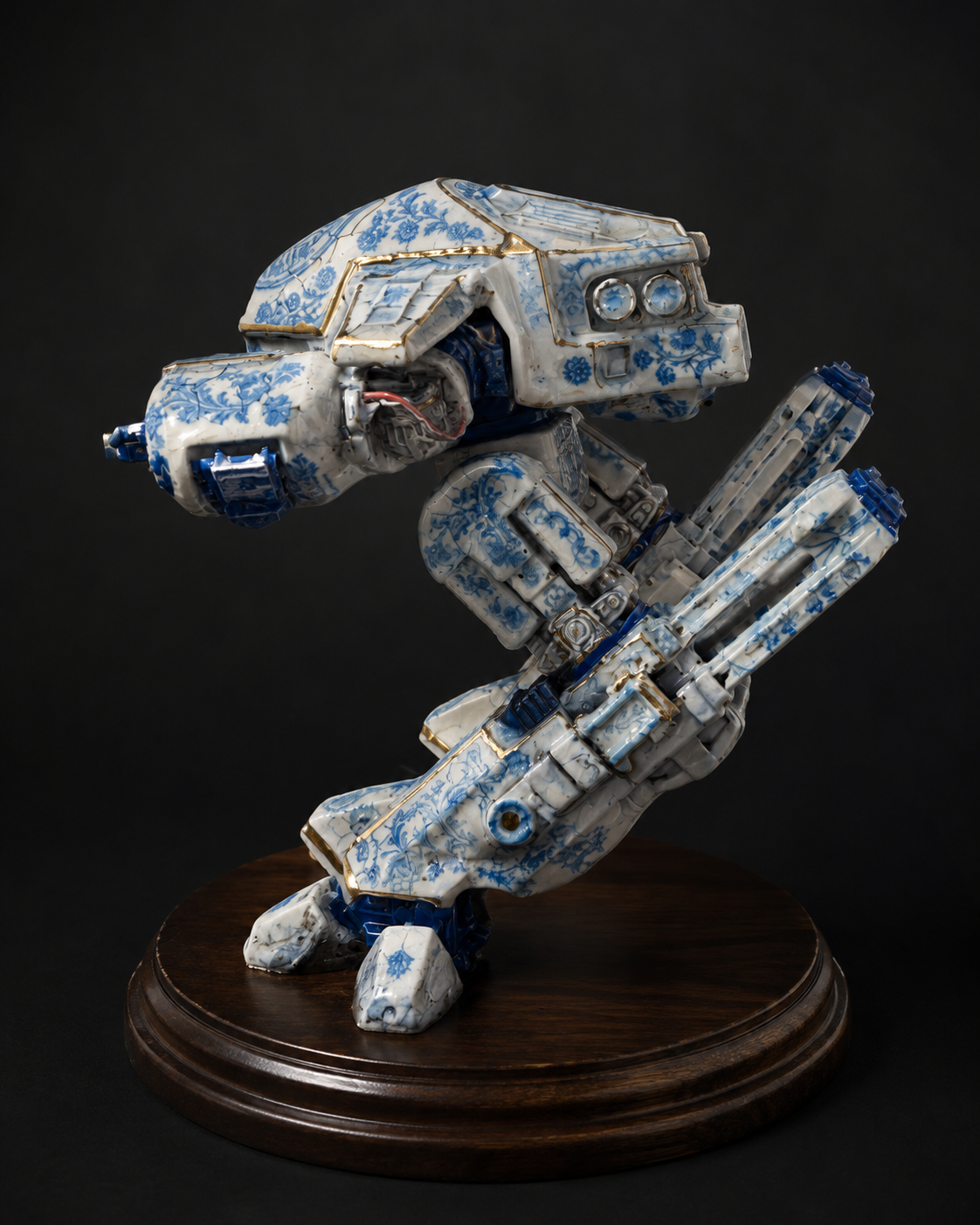
Ceramechs
3D-printed PLA, digital sculpting, kitbashed geometry, acrylic varnish, paint, Delftware-inspired patterning, hand-finishing, and mixed media bases
Garret Kane, 2026–present
3D-printed mixed media sculptures
Approx. 7"–12" tall
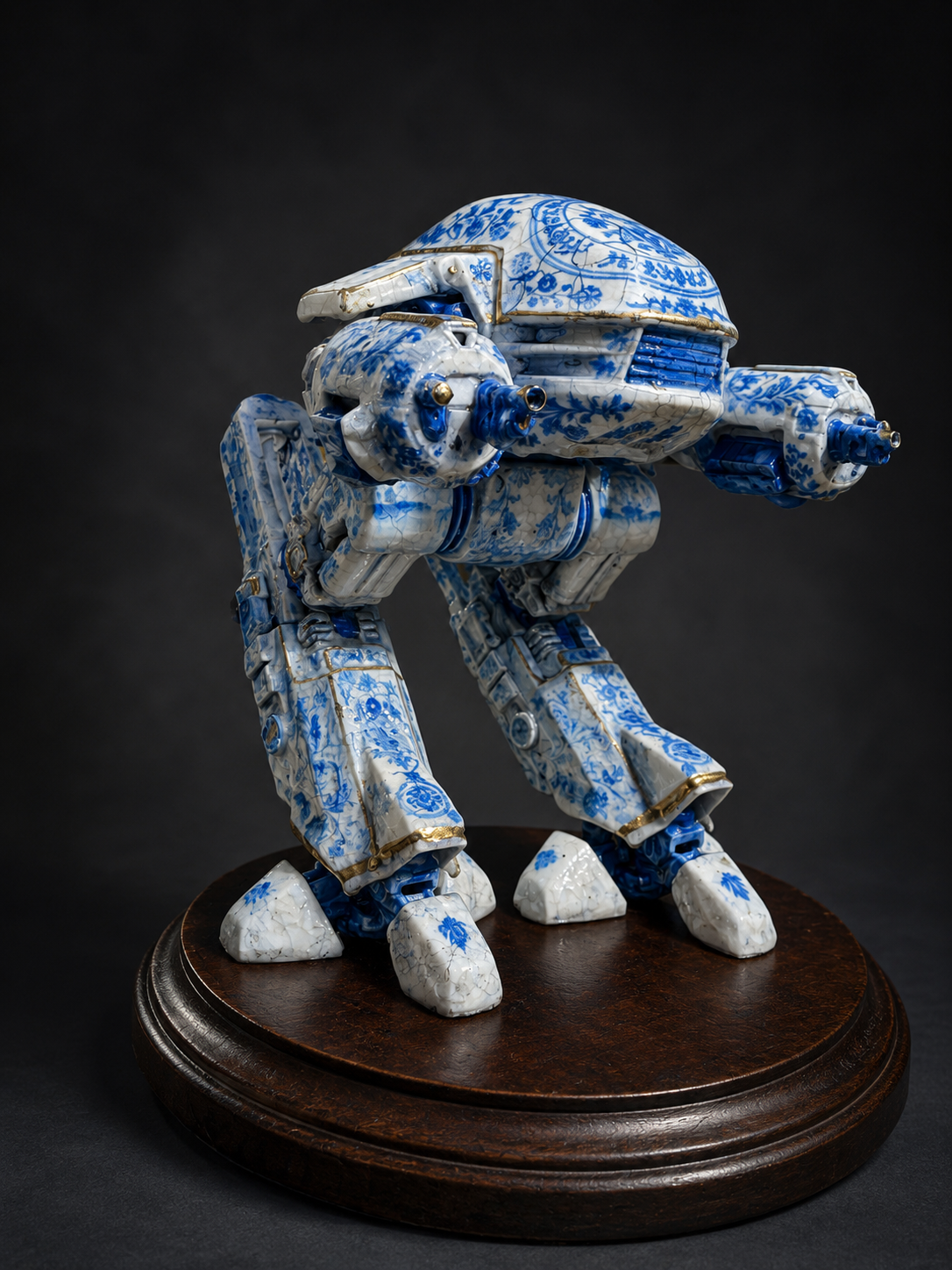
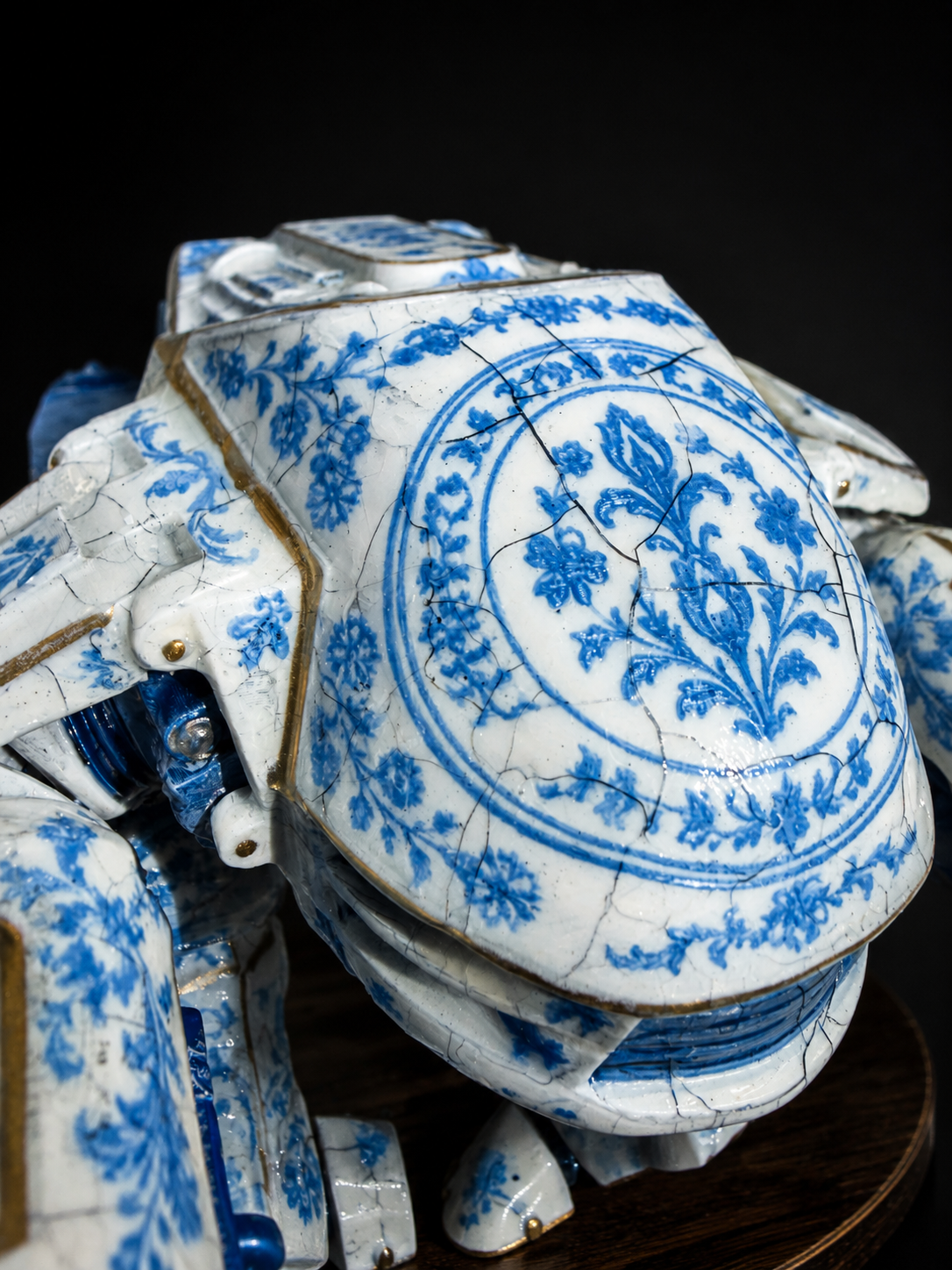
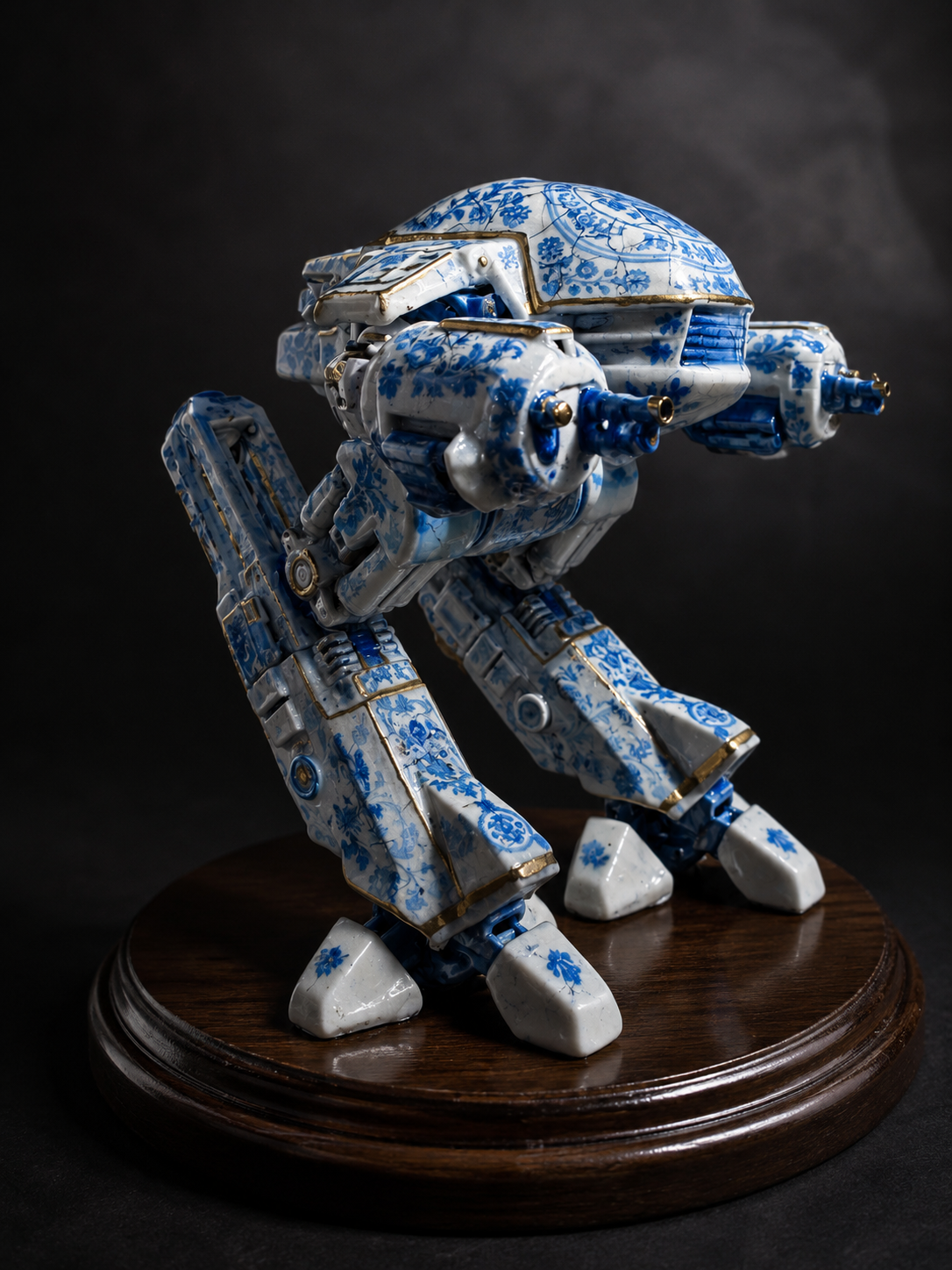
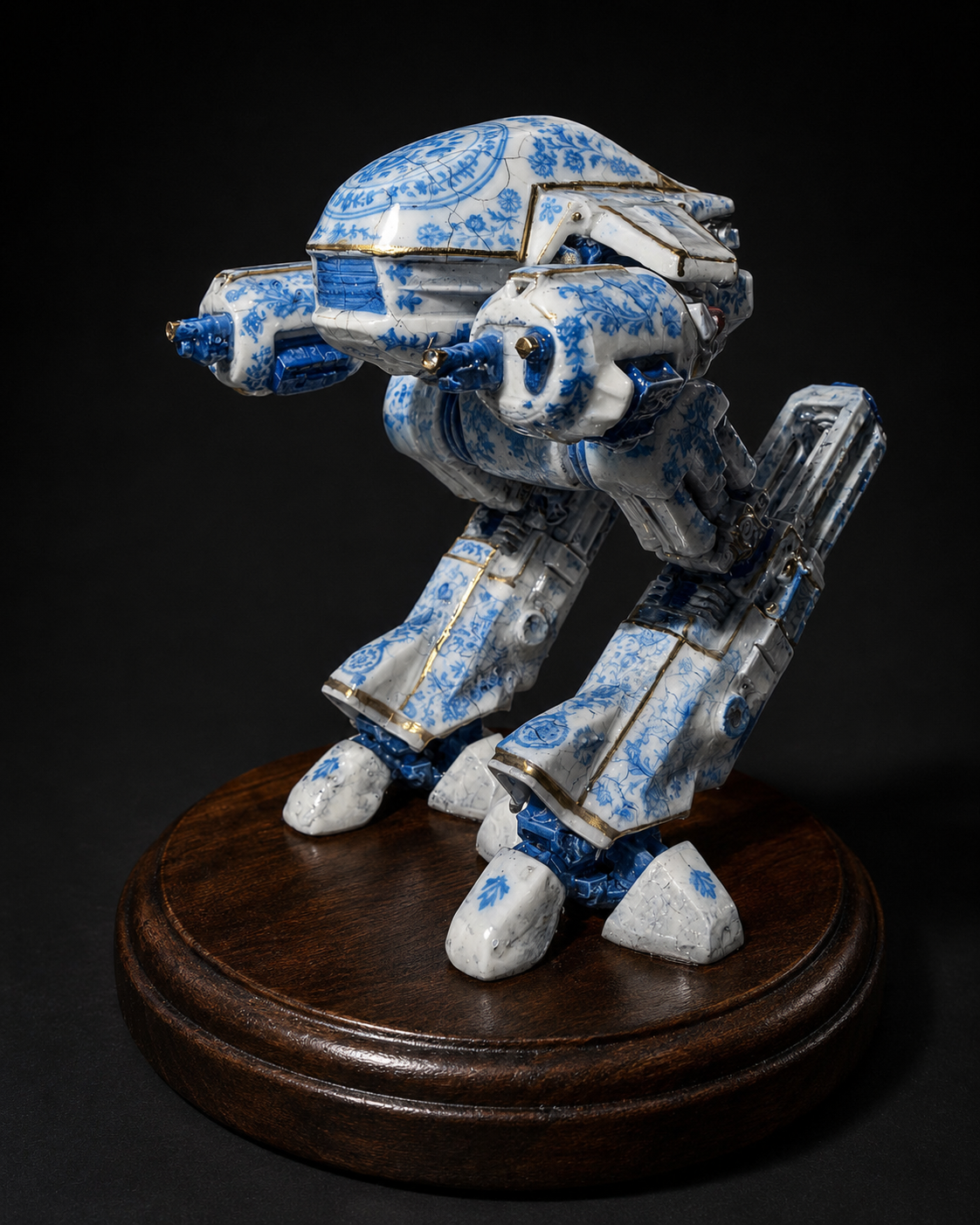
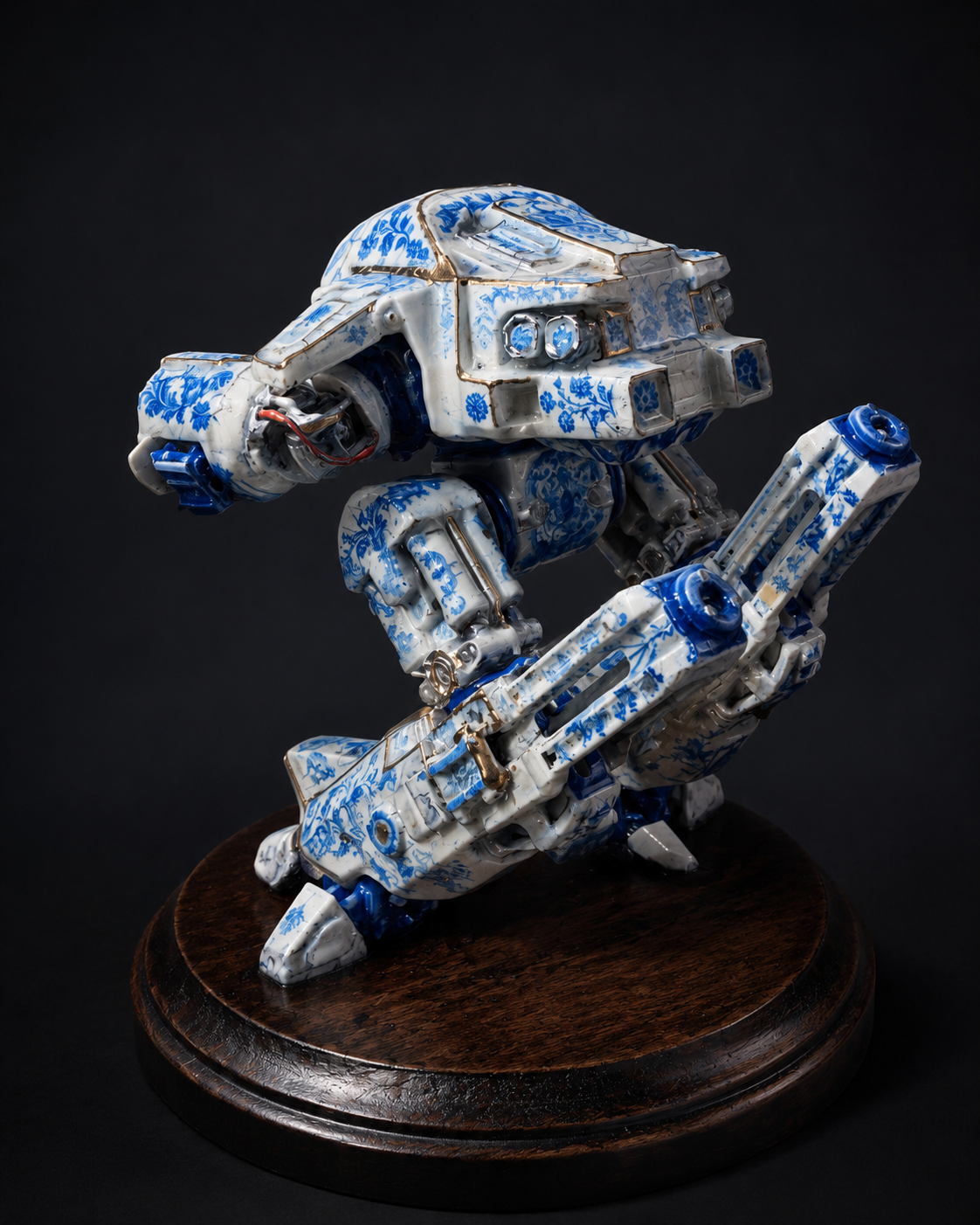
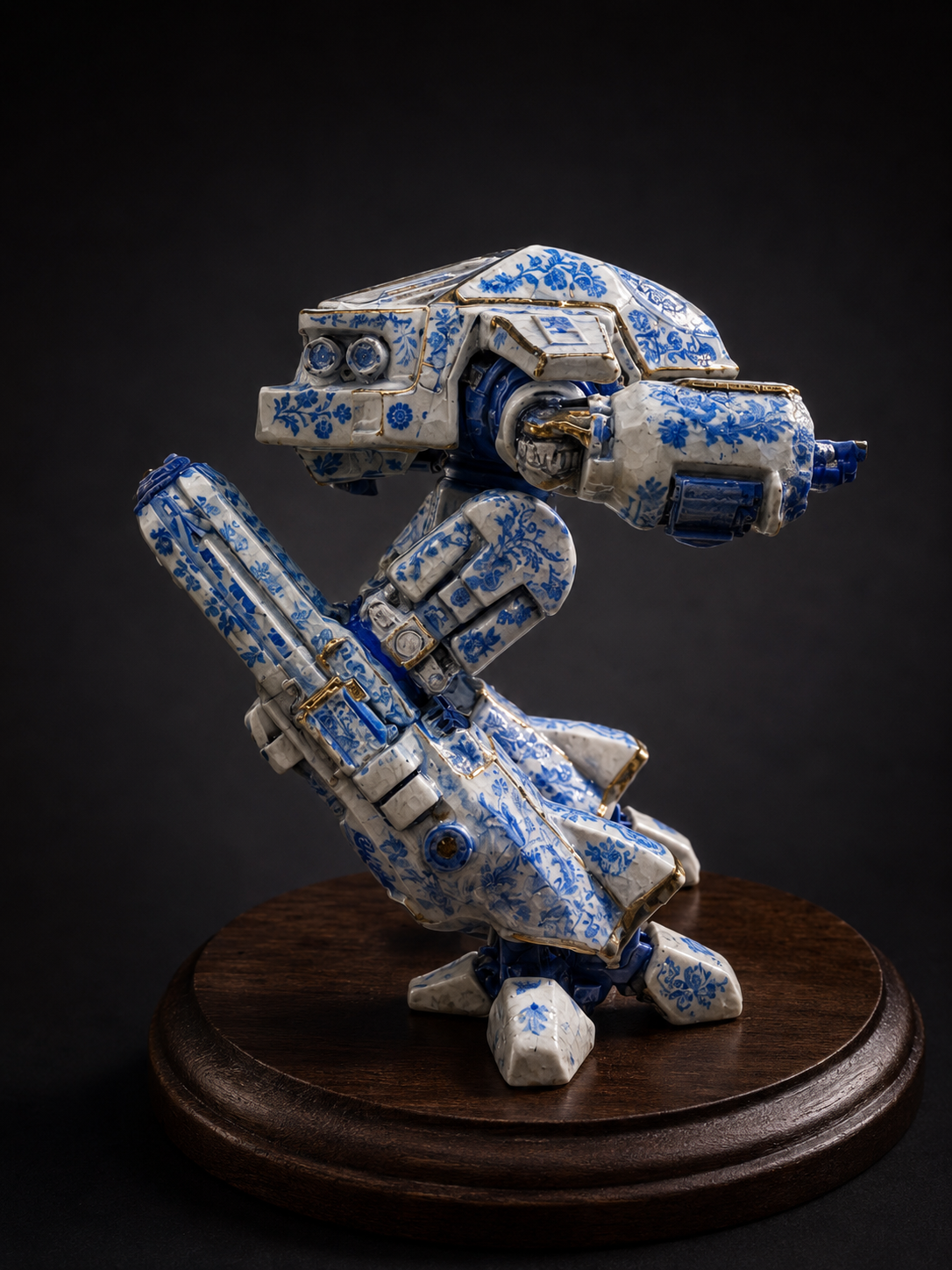
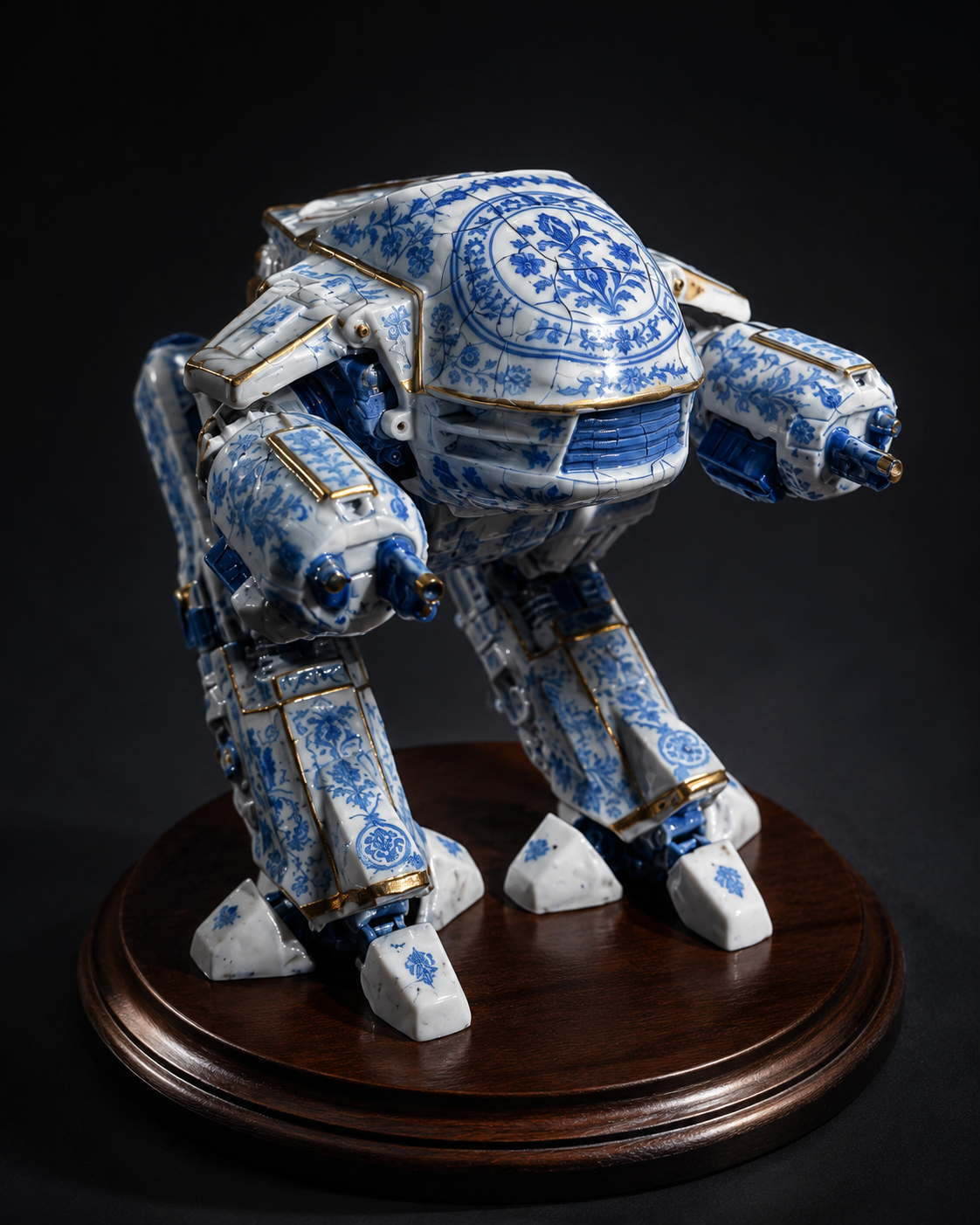
Ceramechs reimagines science-fiction machines as ornate ceramic relics. Drawing from mechs, walkers, drones, and pop-cultural war machines, the series transforms aggressive technological forms into delicate blue-and-white objects that feel part weapon, part porcelain artifact, and part archaeological remnant.
Each piece begins as a digitally sculpted or kitbashed model, then is 3D printed, finished, and treated with Delftware-inspired surface patterning. The contrast between decorative ceramic language and militarized machine form creates a strange tension: objects built for power, control, and violence are softened into something collectible, fragile, and almost devotional.
The series sits between toy, artifact, sculpture, and future ruin — imagining the machines of science fiction not as sleek new technology, but as relics from a culture already gone.
Animations
Photogrammetry, structured-light scanning, real wood, organic material, Cinema 4D, ZBrush, MoGraph, particle systems, CGI, digital sculpting, simulation, texture work, and animation
Garret Kane, 2017–2022
CGI / animated video / digital studies
Durations vary
These animations extend the sculpture practice into digital space, using real organic material as the starting point for speculative worlds, biospheres, and synthetic ecosystems.
Many works begin with physical objects — wood, branches, roots, stones, and sculptural fragments — that are scanned through photogrammetry or structured light, then rebuilt, animated, and transformed in Cinema 4D and ZBrush. Particle systems, MoGraph setups, simulations, and procedural movement turn these scanned materials into living systems: drifting organisms, evolving plant forms, alien landscapes, and unstable biological structures.
Made before the current wave of AI image tools, the animations are built through scanning, modeling, compositing, and motion design. They occupy the same space as the sculptures: nature becoming technological, organic matter becoming digital, and small physical fragments expanding into strange new worlds.